Most people arrive at this page with a specific worry, so here is the answer to it first.
A shell that is pitting, going thin at the edge, or eroding at the pointed tip is almost always a water story rather than a snail story, and the damage already done does not heal. What can change is what happens next: new growth at the opening can come in smooth and solid while the old whorls stay pitted, and a snail with a scarred spire and a healthy new edge is a recovering animal, not a failing one.
The rest of this page is what feeds that new growth, plus the things about this species that surprise people.
What they are, and what they are not
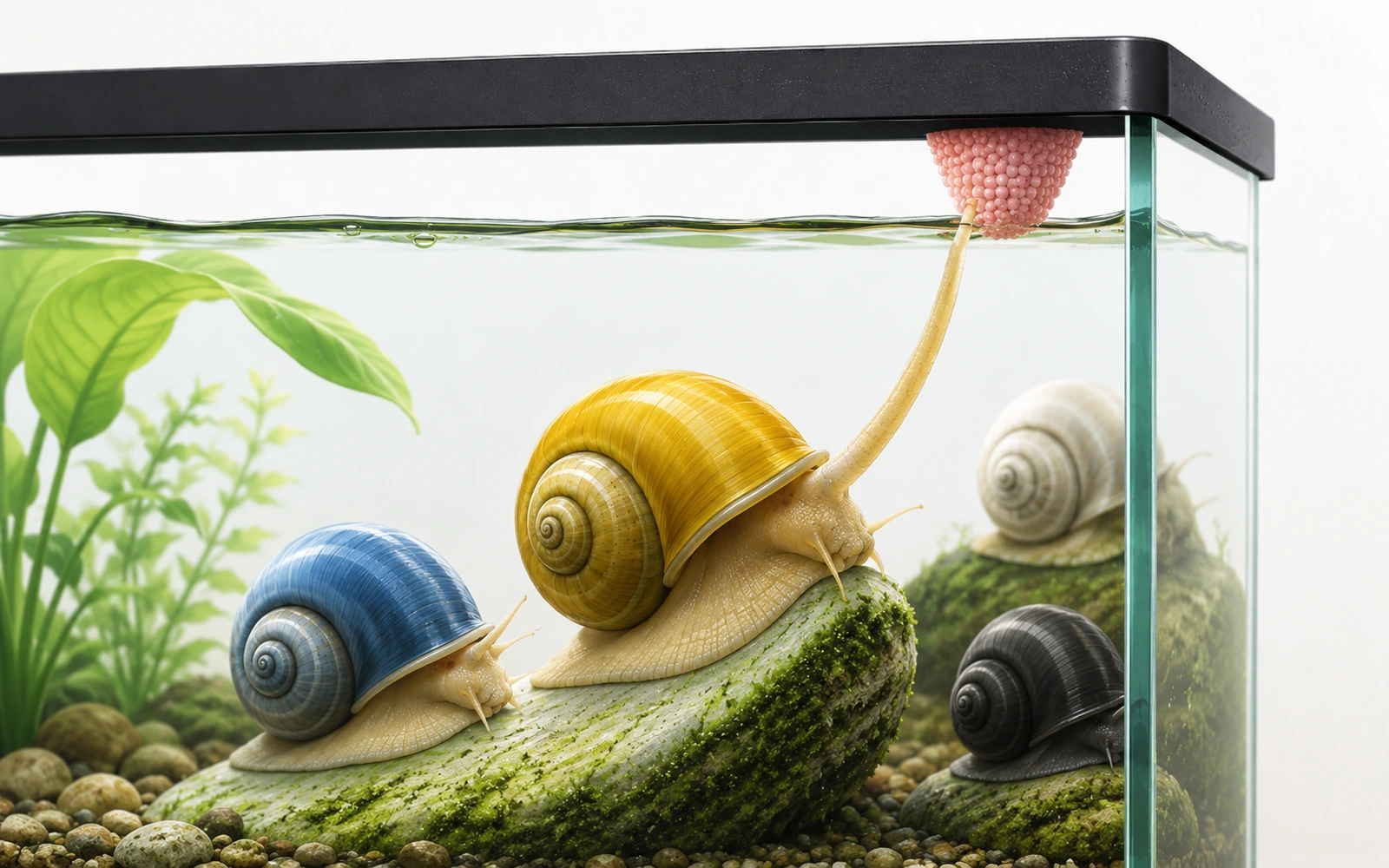
Mystery snails are apple snails of the genus Pomacea, sold in a range of colors: gold, blue, ivory, black, magenta. Same animal, different color morphs, same care.
They are noticeably larger than nerites, they are active, and they are visibly curious in a way that makes people fond of them quickly. Two features that catch keepers out:
They breathe air. A mystery snail extends a siphon to the surface and takes in air. This is normal and it is not a distress signal. It also means the tank needs a gap between the water surface and the lid, and it means a completely full, tightly sealed tank is a problem rather than a tidy setup.
They lay eggs above the water line. A hard pink or white clutch stuck to the glass or the lid, out of the water. Unlike nerite eggs, these do hatch. If you do not want more snails, remove the clutch; if you are unsure whether you have two sexes, assume you might.
The shell, in detail
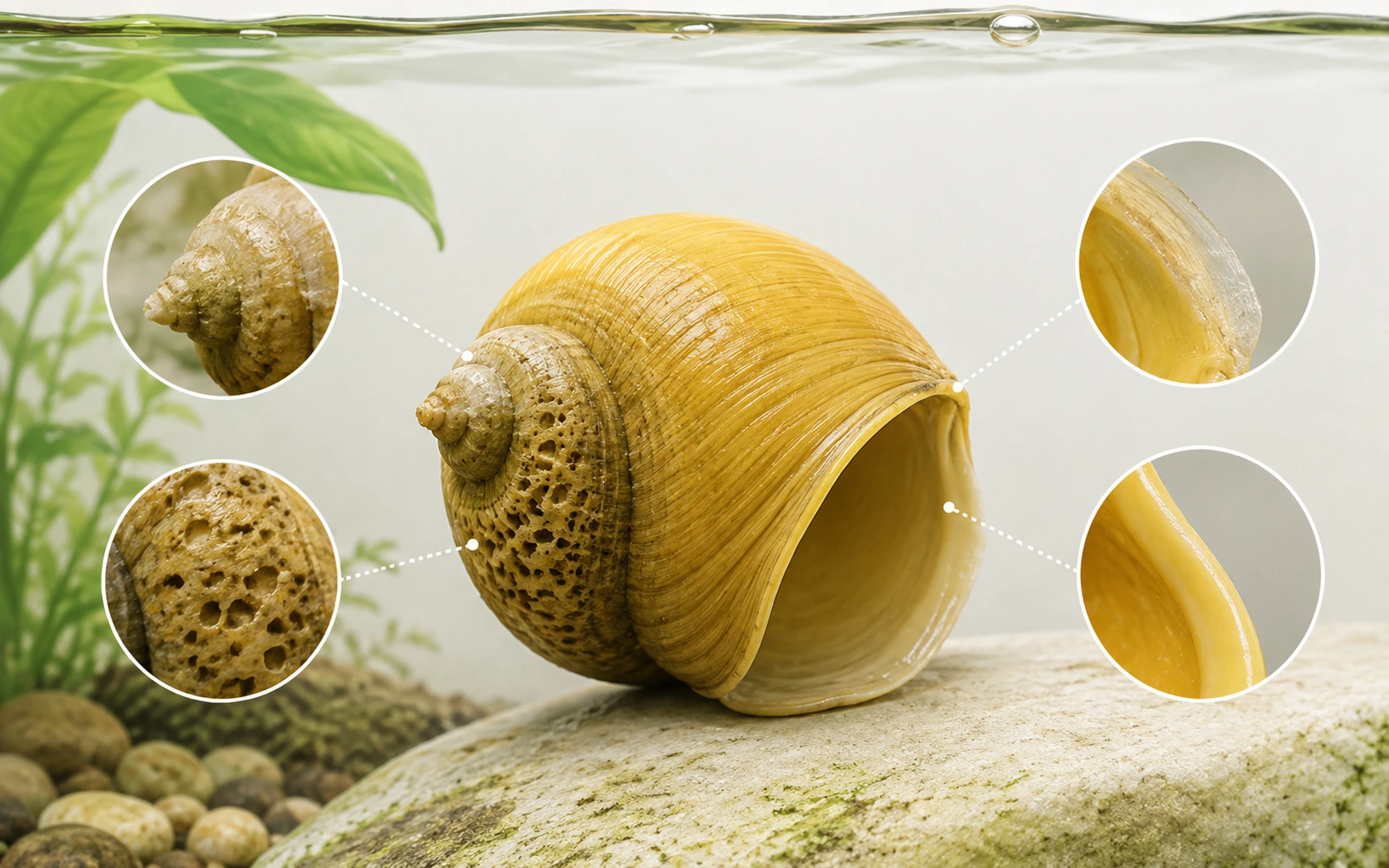
The shell is calcium carbonate that the snail builds from what it takes out of the water and the food. Three separate things damage it, and they look different.
Erosion at the tip. The oldest part of the shell, at the pointed end, wearing away and going chalky or white. This is the classic sign of water that is too soft or too acidic for the animal to maintain what it has built.
Pitting across the whorls. Small dents and holes in the older shell. Same underlying cause, further along.
A thin, translucent, brittle new edge. This is the current one. The margin at the opening is where new shell is laid down, and if that is coming in weak, the problem is happening now rather than historically.
The general direction is well established and is worth stating without a number attached to it: shells suffer in soft, acidic water and hold up in harder water with more dissolved mineral content. This site does not publish a target hardness, because the published recommendations disagree with each other and because a snail that has adapted to one water is not evidence about another. What you can do is find out what your water actually is, and GH and KH explained is the page for that, because those two measurements are the ones that matter here and most keepers have never read either.
If your water is soft, the answer is to raise the mineral content deliberately and slowly, and to be aware that doing so also changes conditions for everything else in the tank. A slow change is the requirement, and aquarium pH for beginners makes the more general version of the same argument: stability beats the number.
Two things not to do. Do not scrub the damaged shell. And do not dump a mineral supplement in as a correction, because a fast chemistry change is its own harm and this site publishes no dose for anything.
Feeding, which is where people go wrong in both directions
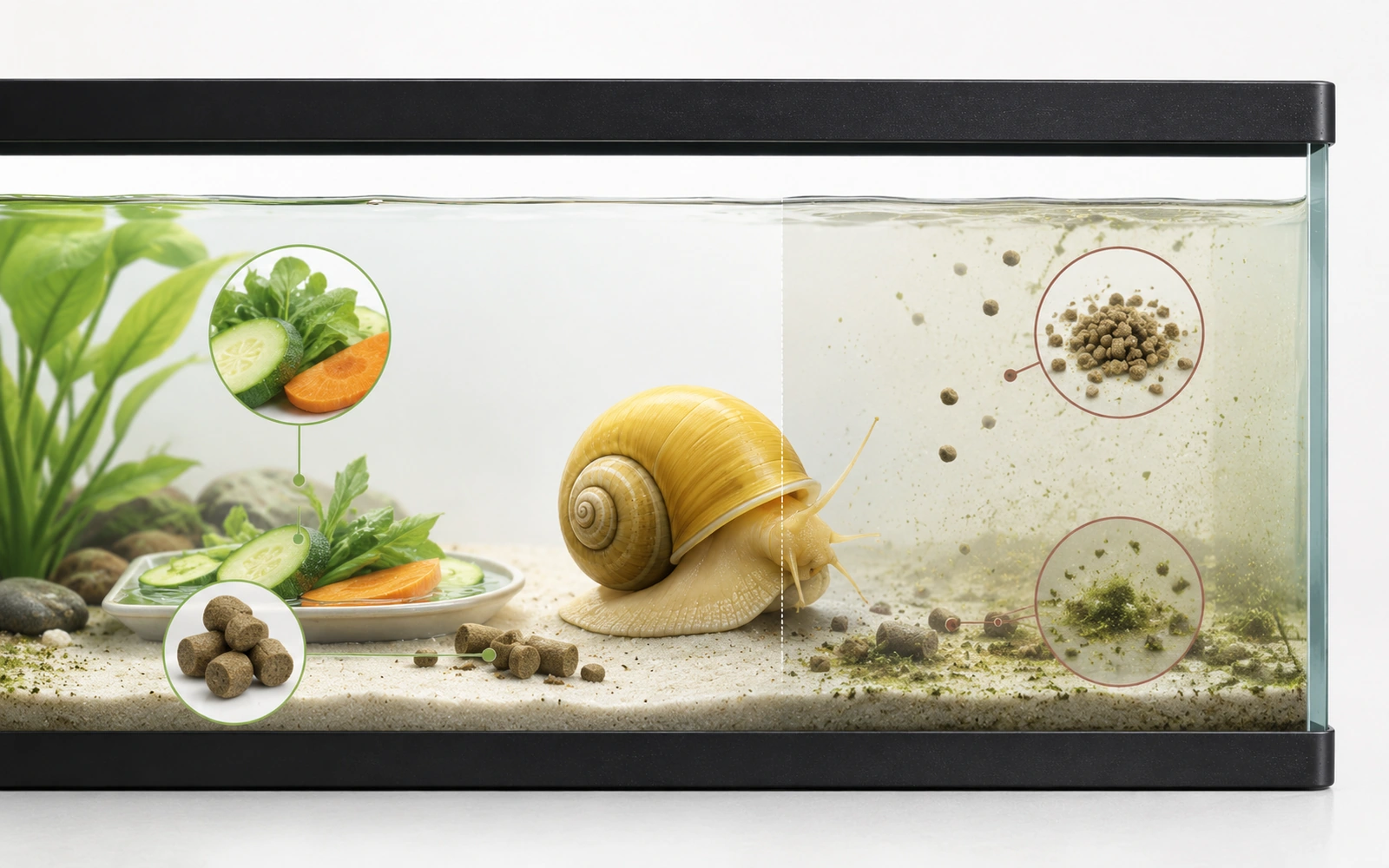
Mystery snails are much bigger eaters than nerites and they are not primarily algae eaters. This is the first misconception: people buy them as a cleanup crew and then wonder why the algae is unchanged.
They will graze biofilm and soft algae, and they are genuinely useful for eating uneaten food and decaying plant matter. But a mystery snail in a clean tank needs to be fed, and an underfed one is a snail that cannot build shell.
Reasonable things to offer: blanched vegetables, sinking prepared foods, foods intended for bottom dwellers. Calcium-rich additions are the specific thing that supports shell growth, and the practical version is to feed a varied diet that includes vegetable matter rather than to buy a supplement.
The overfeeding side is real too. Uneaten food fouls water in a way that comes back around to the snail, and how much to feed aquarium fish covers the amount, which almost everyone overestimates in the same direction.
Whether they eat live plants is the perennial argument. The honest answer is that they mostly do not, that individuals vary, and that a hungry snail is much more likely to try than a well-fed one. Feed them properly and the question mostly goes away.
Water, and the thing that is not a parameter
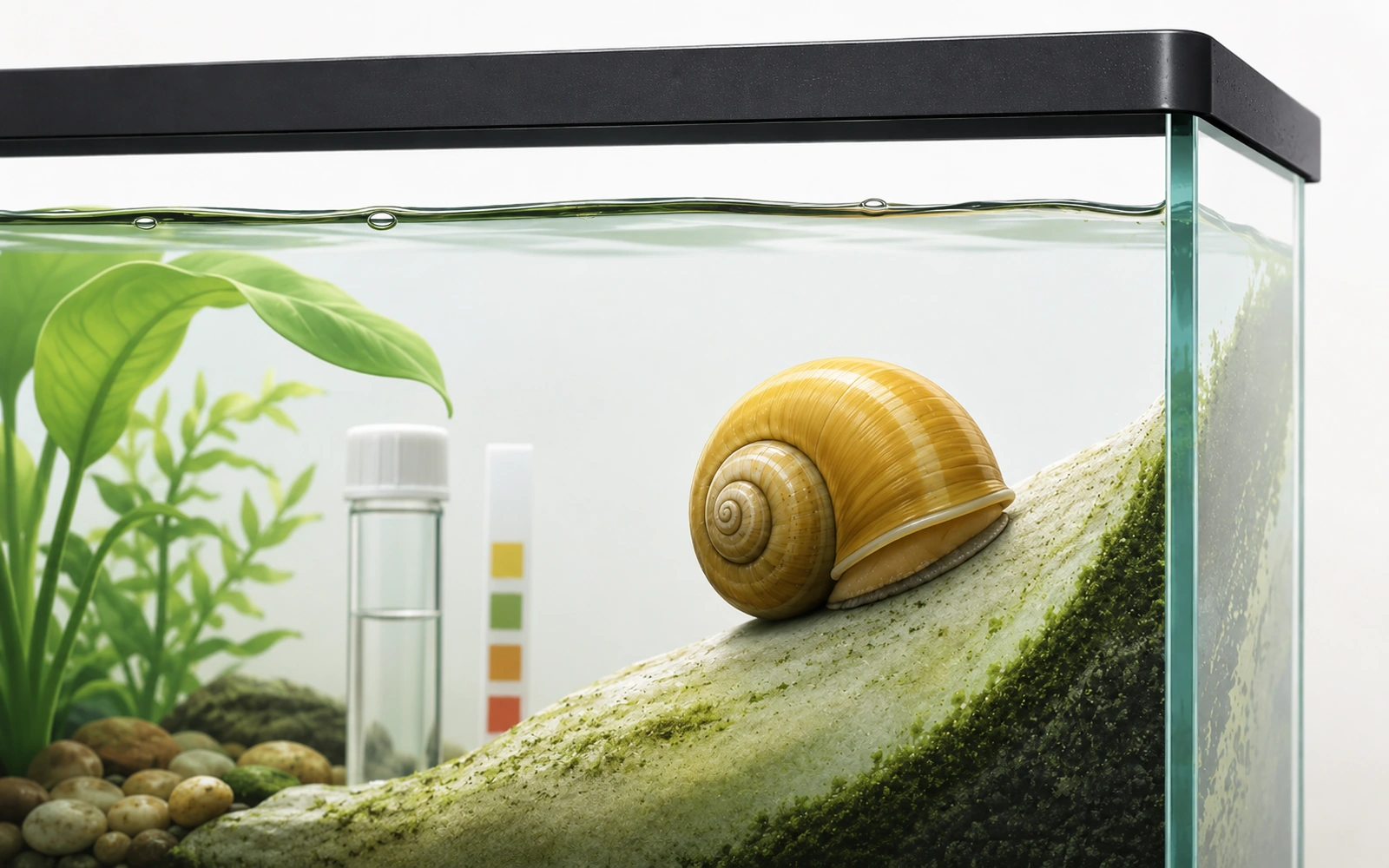
Everything above is about mineral content. The other half of snail keeping is the same as everything else in this hobby: a stable tank with no ammonia and no nitrite.
Snails are often described as hardy and they are, right up until they are not. They tolerate a wide range of conditions and they tolerate change badly. A snail sealed up in its shell and not moving for a day is frequently the first visible sign that something has shifted in the water, before any fish shows anything.
So when a mystery snail stops moving: test the water before you conclude anything. Aquarium water parameters covers what to read, and this site publishes no threshold at which snails are affected, because ammonia toxicity depends on pH and temperature and a single figure would be dishonest. What is reliable is that detectable ammonia or nitrite in a tank with an inactive snail is the finding, whatever the number is. Ammonia reading above zero is the next page if that is what you have.
Is it dead?
This is the second most common question and it has a practical answer.
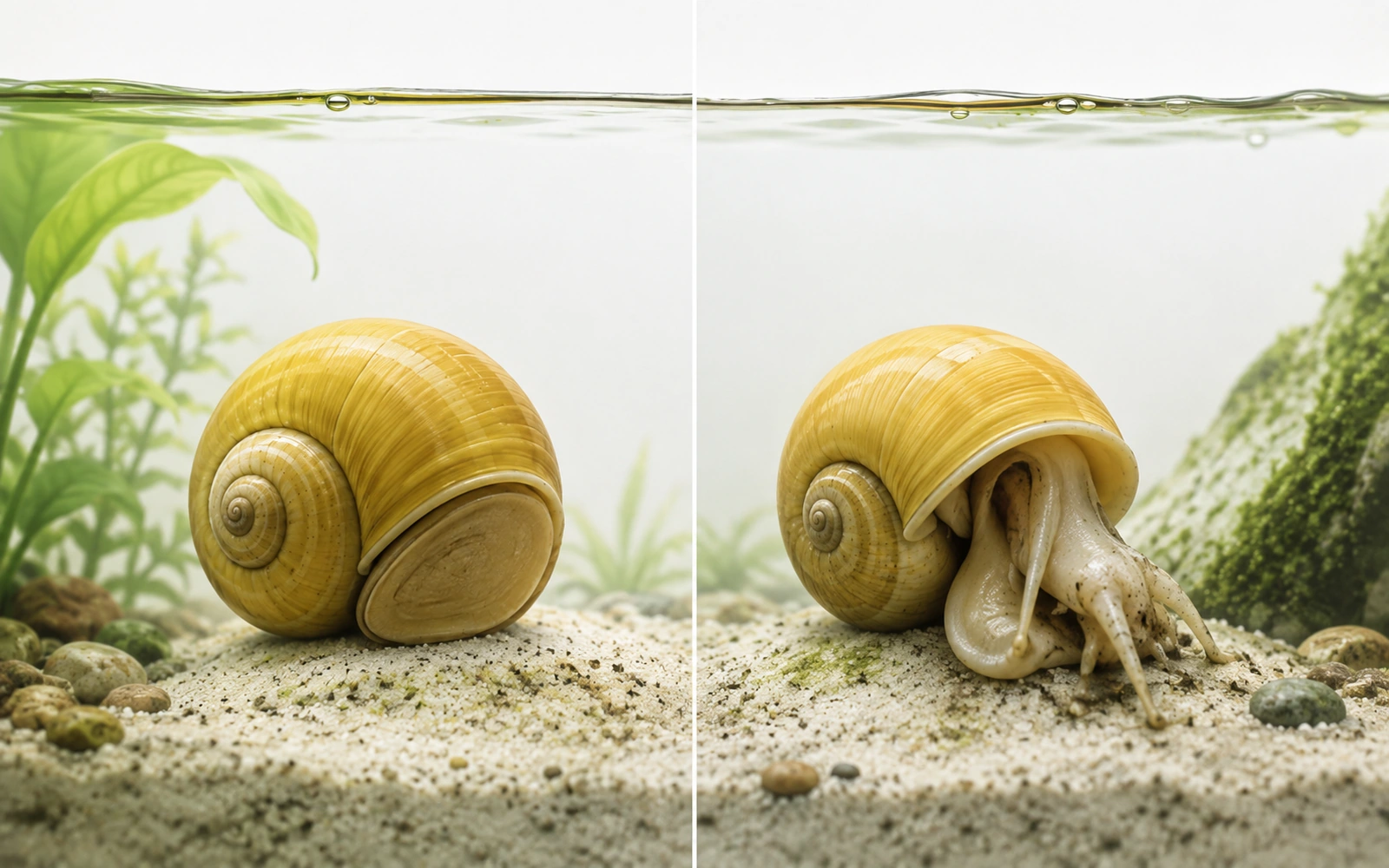
A living snail resists. If you lift it, the operculum, the hard door on its foot, stays shut and the animal holds on. A dead snail hangs open, the body is loose, and there is a distinctive strong smell within a day.
When in doubt, wait a day rather than throw it away. Mystery snails go inactive for extended periods for reasons that turn out to be nothing.
When it is definitely dead, take it out promptly. A decomposing snail is a substantial ammonia load in a small tank, and the death of one snail has finished off tanks by way of what it did to the water afterward.
The rule that ends every page in this cluster
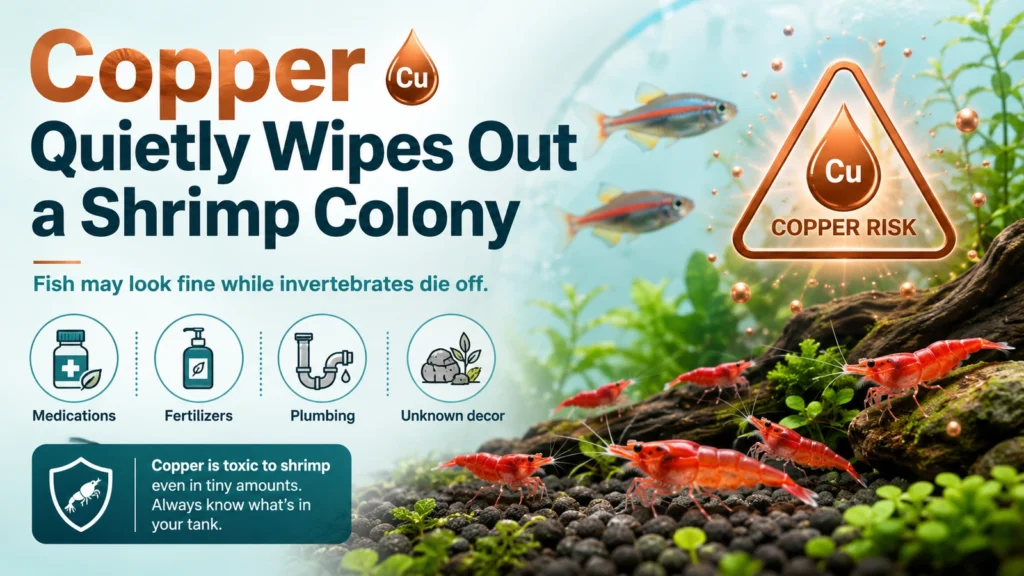
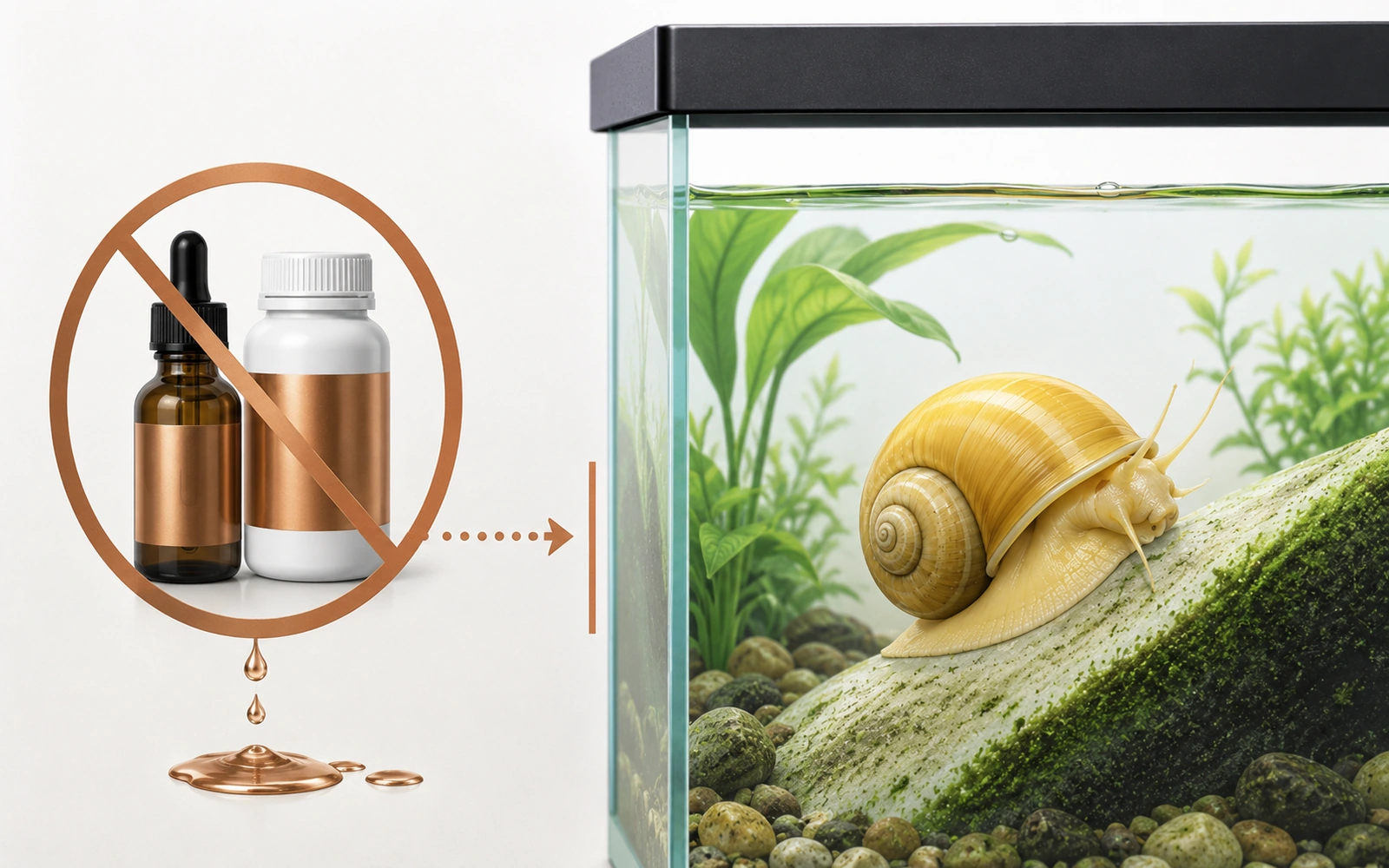
Copper. Not in a tank with snails, in any amount, for any reason. It arrives in fish medications, in snail treatments sold specifically to kill animals like this one, in some plant fertilizers and in some foods. It is lethal to invertebrates at exposures that fish do not react to.
Read the label of anything you add and look for what it says about invertebrates. If it says nothing at all, assume the answer is bad, because a manufacturer with a safe product generally says so.
If a fish in the tank is unwell, treating the display tank is how a fish problem becomes a snail loss. That is a diagnosis question, and this site names no medication and publishes no dose anywhere. When to contact an aquatic veterinarian and how to find one covers who can answer it and what to have ready.
The short version
- Shell damage does not reverse. New growth at the opening is what to watch.
- Soft acidic water erodes shells. Find out what your water is before changing it, and change it slowly.
- They are not an algae crew. Feed them, including vegetable matter.
- They breathe air and lay eggs above the water line. Leave a gap under the lid.
- An inactive snail is a prompt to test the water, not a diagnosis.
- Remove a dead one promptly. Wait a day before deciding it is dead.
FAQ
Can a damaged mystery snail shell heal? The damage already done does not reverse. What can change is what happens next: new growth at the shell opening can come in smooth and solid while the old whorls stay pitted, and that is a recovering animal rather than a failing one.
Do mystery snails eat algae? Not primarily. They graze biofilm and soft algae and are genuinely useful for eating uneaten food and decaying plant matter, but they are not a cleanup crew, and a mystery snail in a clean tank needs to be fed a varied diet that includes vegetable matter.
Why is my mystery snail at the surface with a tube sticking out? It is breathing. Mystery snails extend a siphon to the surface and take in air, which is normal and not a distress signal. It does mean the tank needs a gap between the water surface and the lid.
How do I know if my mystery snail is dead? A living snail resists: the operculum stays shut and the animal holds on when lifted. A dead one hangs open, the body is loose, and there is a distinctive strong smell within a day. When in doubt, wait a day, and remove a definitely dead snail promptly because a decomposing snail is a substantial ammonia load.
Will mystery snails fill my tank with babies? They lay a hard pink or white clutch above the water line, and unlike nerite eggs these do hatch. If you do not want more snails, remove the clutch, and if you are unsure whether you have two sexes, assume you might.