Two questions arrive together. Where did hundreds of snails come from in a tank you never put a snail in, and how do you get rid of them.
The answers are connected, and the second one is more useful once you have accepted the first.
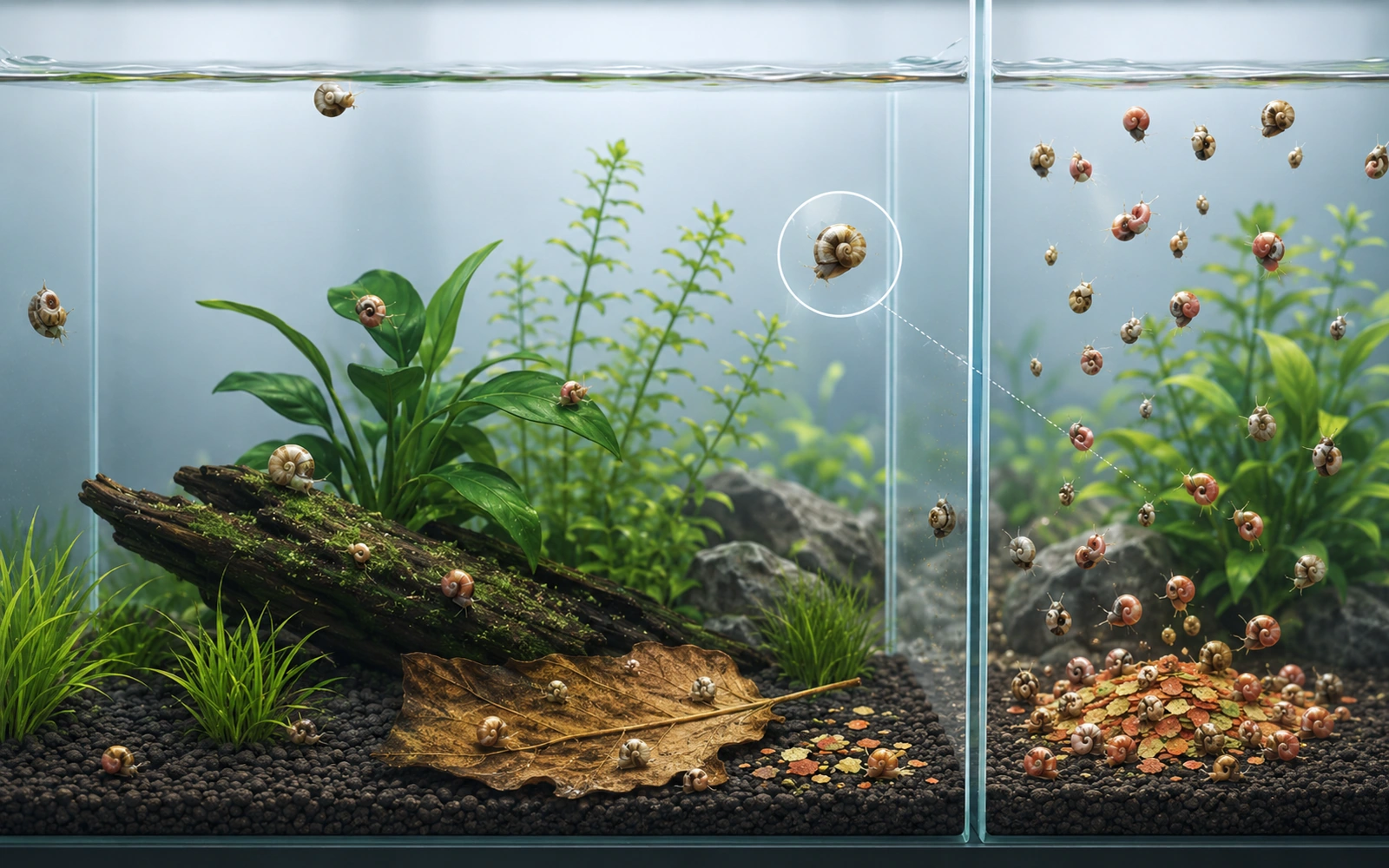
They came in on a plant, and they multiplied because you are feeding them. A snail population is limited by food, not by whether you like it. Hundreds of snails is a tank with hundreds of snails' worth of surplus food in it, and the fastest way to reduce the population permanently is to reduce the surplus.
Where they actually arrived from
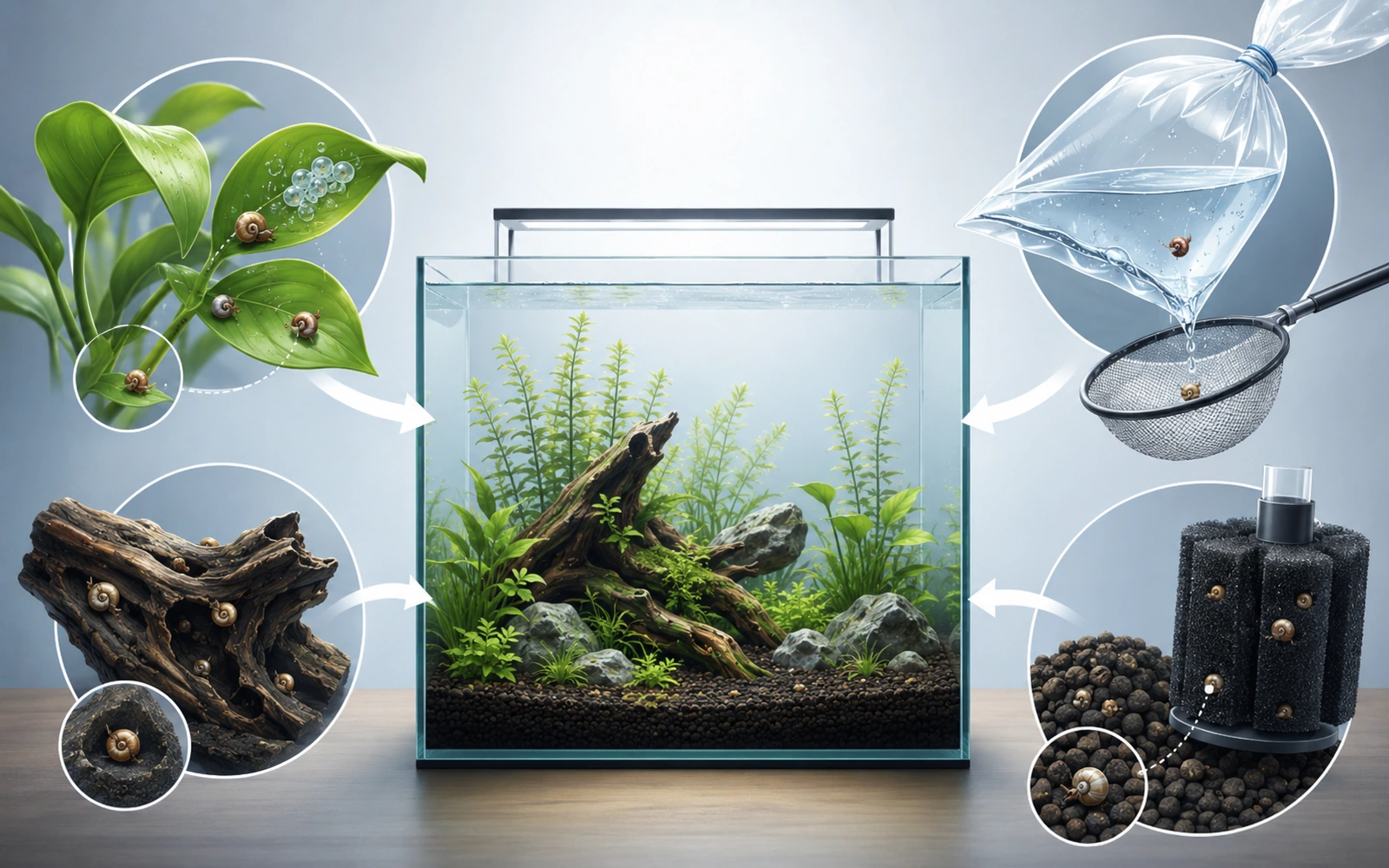
- On plants. By far the most common route. Eggs are laid in clear jelly on the underside of leaves, they are small, and they survive a rinse. A single leaf can carry a founding population.
- On decor or hardscape from another tank.
- In the water from a shop bag, which is one more reason not to pour it in.
- On second-hand equipment, in a filter, in a sponge, in gravel.
Nobody sold you snails. They arrived as passengers, and by the time you see the first one there are already eggs.
They are mostly not a problem, and that is worth saying
Before the removal section, the honest position: pond snails, bladder snails and ramshorns are largely harmless. They eat detritus, uneaten food, decaying plant matter and biofilm. They do not eat healthy plants, though they will strip a dying leaf and be blamed for killing it.
They are also a useful signal. A population that suddenly explodes is telling you that the food supply has increased, and the food supply is usually uneaten fish food. A tank with a steady, modest number of snails and no explosion is a tank that is being fed correctly.
So there is a legitimate answer that is "leave them", and there is a legitimate answer that is "reduce them", and there is not really an answer that is "eliminate them permanently while changing nothing else".
The thing that actually works: cut the food
This is not the exciting answer and it is the one that holds.
Feed less. The population is limited by what is available. Most tanks are overfed, and the visible surplus is what you can see going uneaten and settling; the invisible surplus is what has already gone under the substrate. How much to feed aquarium fish covers the amount, and almost everyone is over it.
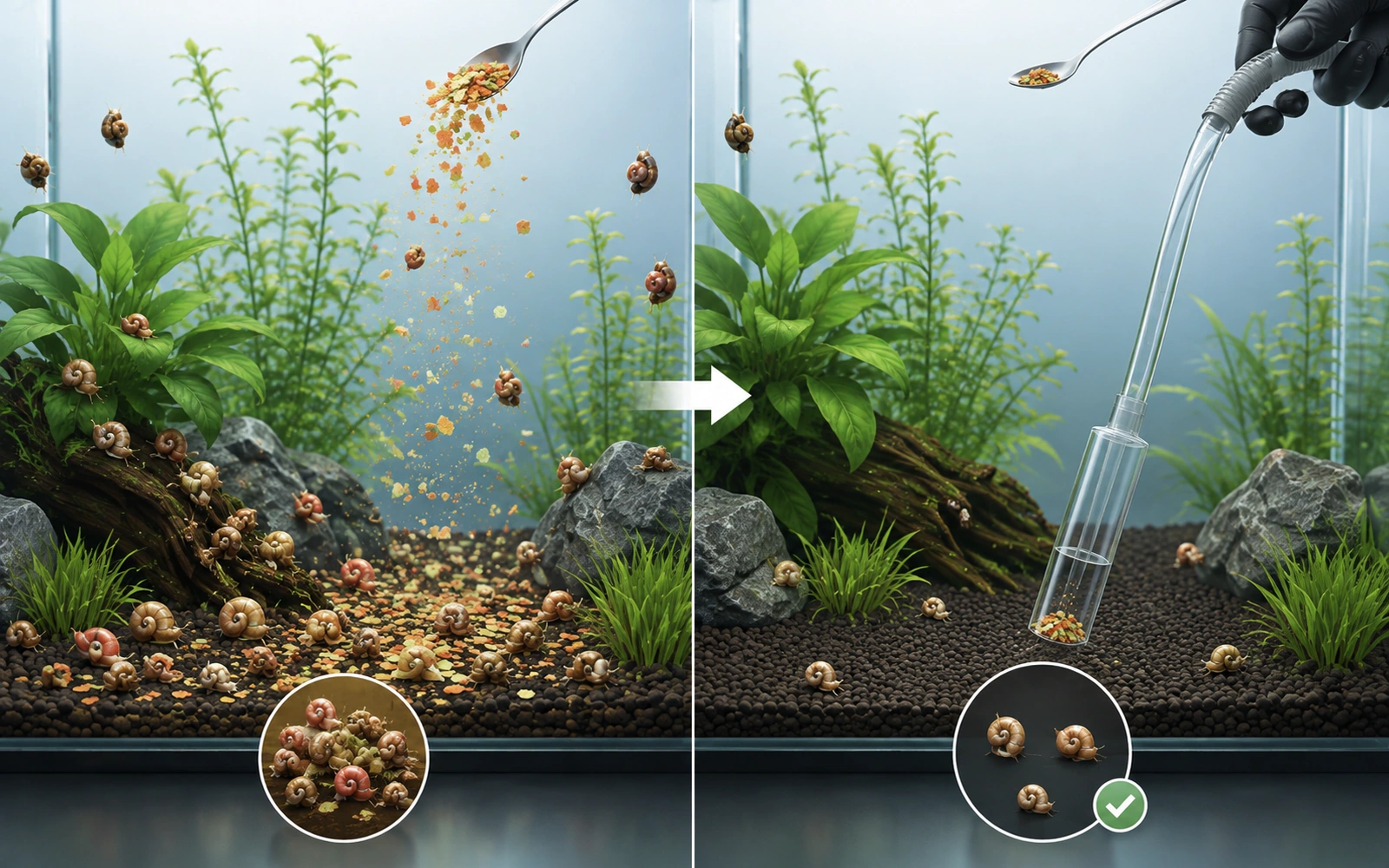
Remove uneaten food. Anything not eaten within a couple of minutes comes out. This single habit changes the population within weeks.
Vacuum the substrate properly. Food and waste that has worked its way into gravel is a snail buffet you cannot see. How to vacuum aquarium gravel covers doing it without disturbing the tank more than necessary.
Remove dying leaves. Decaying plant matter is food. A tank with plants that are melting is a tank with a growing snail population, and the two are related.
Do this consistently and the population falls to whatever the reduced food supply supports. That is the equilibrium, and it is stable.
Manual removal, which works better than it sounds
Combine the food reduction with physical removal and you get results quickly.
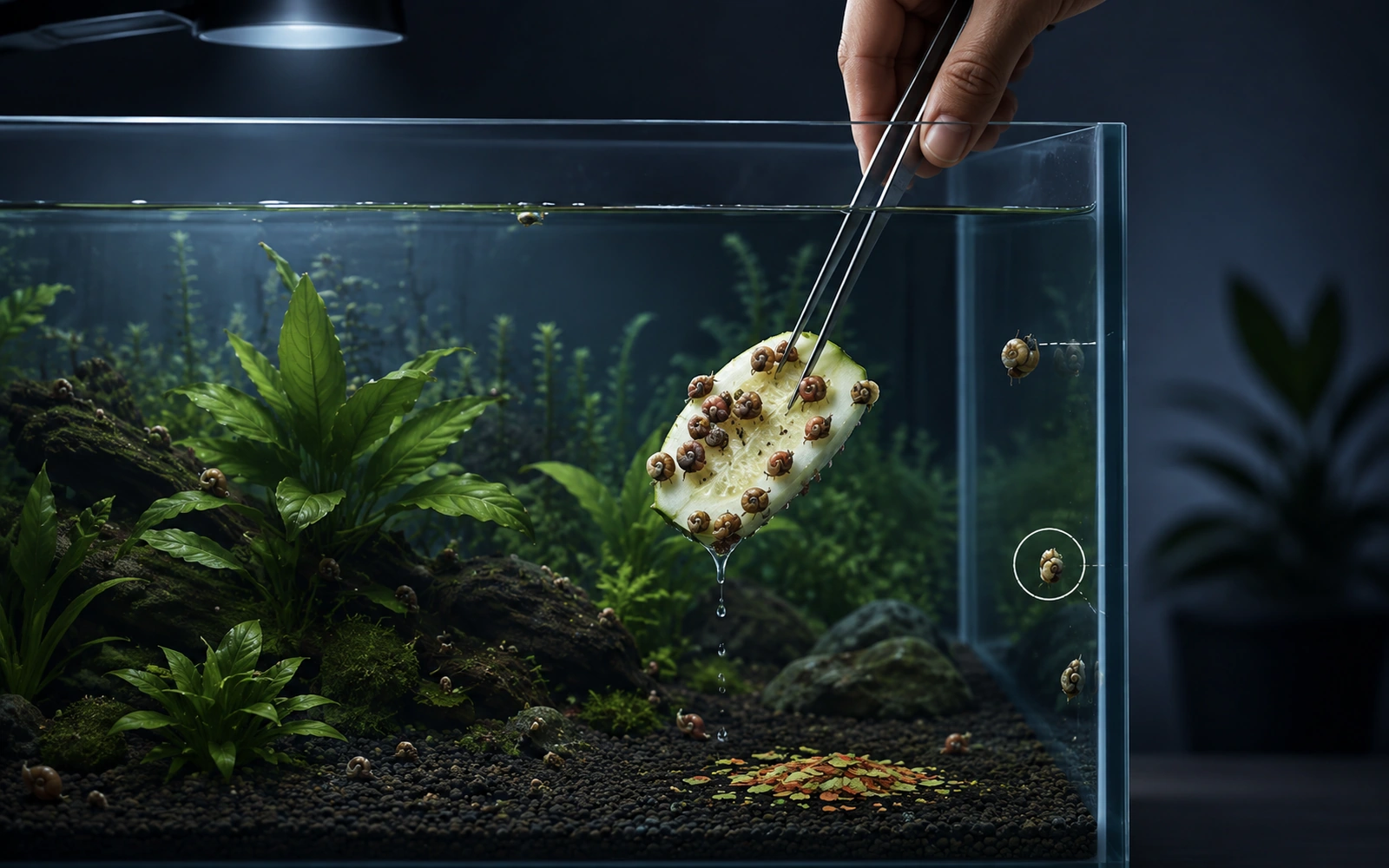
The overnight vegetable trap. A blanched slice of something dense, put in at lights-out, weighted or clipped so it stays put. In the morning it is covered in snails. Lift it out with the snails on it. Repeated over a week this removes a large fraction of the population, and it costs nothing.
Pick them off the glass whenever you are in the tank anyway. Unglamorous, effective, no side effects.
Squash them against the glass and let the fish eat them, if you have fish that will. This works and some people find it unpleasant, which is a reasonable objection.
None of this eliminates the eggs, which is why removal alone plateaus and why the food reduction is the part that lasts.
The predator option, and what it costs you
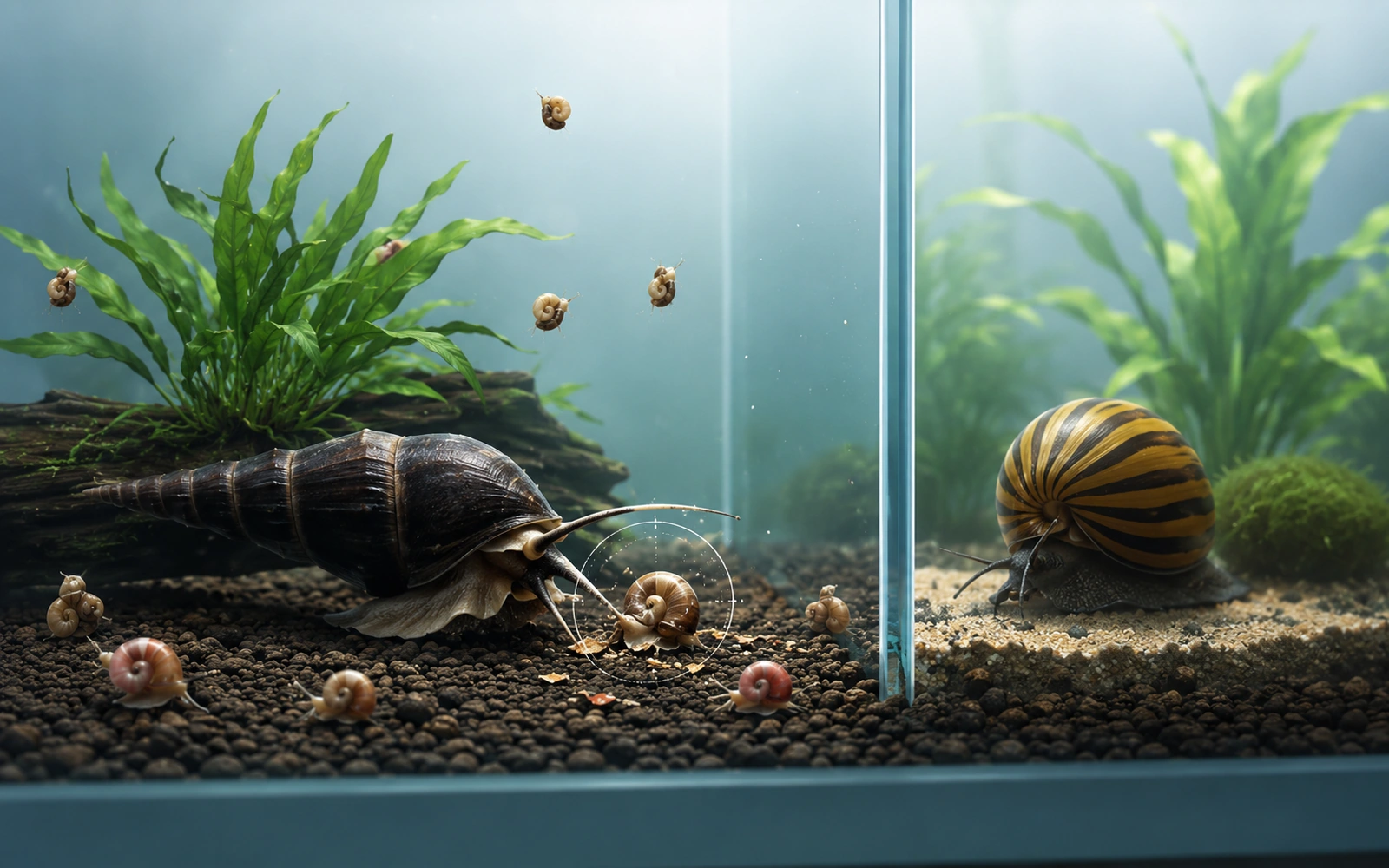
Assassin snails eat other snails. They are effective and they are slow, and there is a catch worth thinking about before you buy any.
When they run out of pest snails, they are still there, and they will take an interest in any other snail you keep. If you have or ever want nerites or mystery snails, you have introduced a permanent constraint on that.
They also breed, more slowly than a pest snail but not never, so the solution has a population of its own.
Some fish eat snails too, and the standard recommendations here come with a much bigger caveat: a fish bought as a tool is a fish you now have to house for its lifetime. Several of the species commonly suggested for snail control grow larger than the tanks they are sold into, need groups, or become aggressive as adults. Adding an animal to solve a maintenance problem, and then rehoming it when the problem is gone, is a poor trade and this site will not recommend it.
The chemical answer this site does not publish
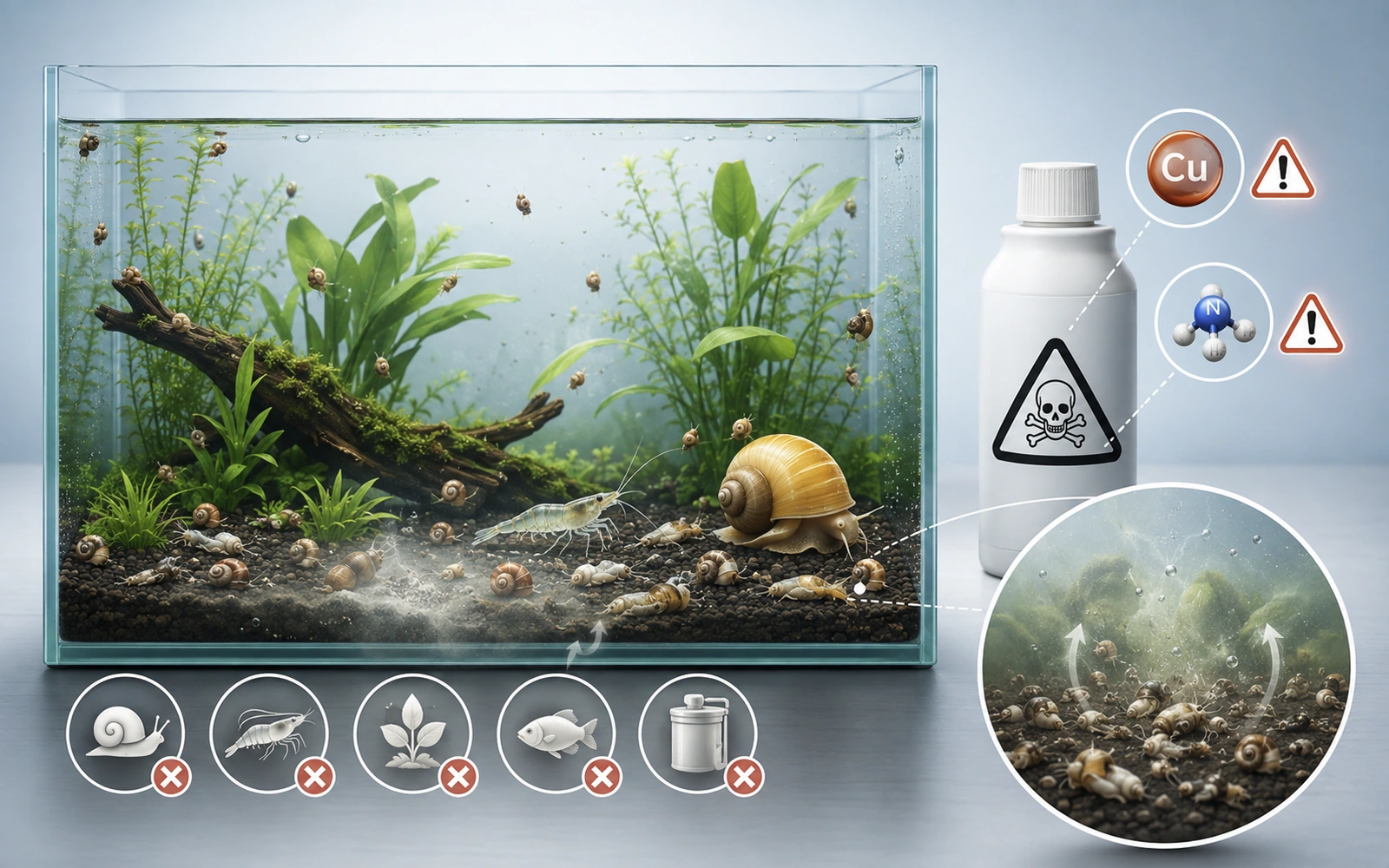
You will find products sold to kill snails, and you will find home remedies with concentrations and soak times attached. This page names none of them and publishes no dose, no concentration and no plant-dip recipe. That is a deliberate refusal and it deserves the explanation rather than a silence.
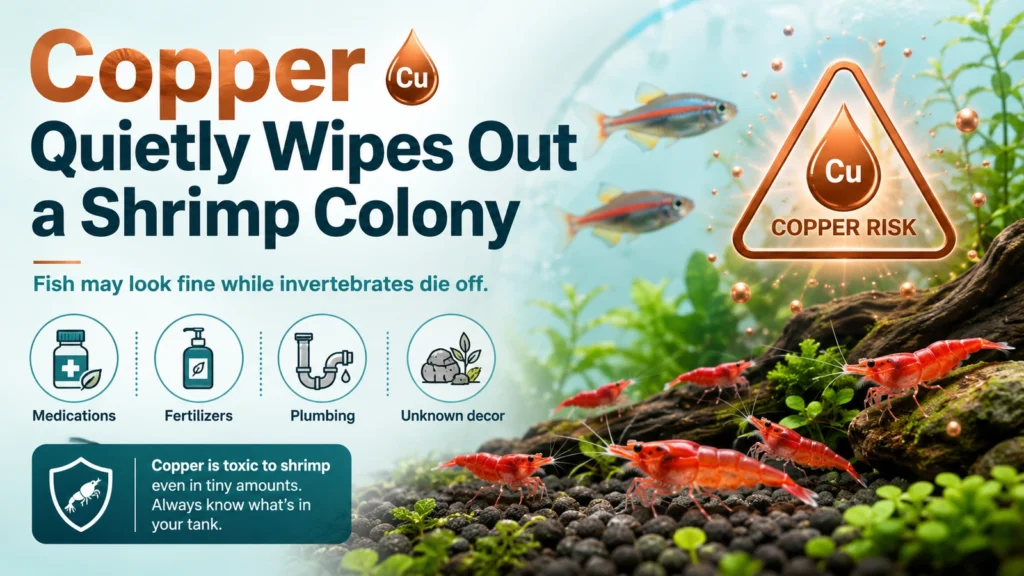
They kill the animals this site's own readers keep. Chemical snail treatments do not distinguish between a pest snail and a nerite, a mystery snail or a shrimp colony. They are formulated to be lethal to exactly this kind of animal, and many of them work through copper, which is lethal to invertebrates at exposures fish do not react to. A keeper who has both a pest snail problem and a shrimp tank is one bottle away from losing the colony.
A mass die-off is an ammonia event. Hundreds of snails dying at once in a closed system is a large quantity of decomposing tissue, and the ammonia spike that follows has killed the fish that the treatment was never aimed at. If the fish survive it, the filter bacteria may not, and then you have a cycle problem on top of it. An aquarium cycle crash covers what that looks like from the inside.
It does not fix the cause. The snails were the symptom of a food supply. Kill them all and leave the feeding unchanged, and the next passenger repopulates the tank.
And a dip strength is not something a page can responsibly publish, because it is applied to living plants by a person estimating, and the failure mode is a dead plant and a dead snail population dumped into the tank together.
If you have already used something and the tank is now in trouble, test the water and treat it as a water quality event: ammonia reading above zero is the page, and this site publishes no threshold because ammonia toxicity depends on pH and temperature and a single number would be misleading. If fish are visibly suffering and the water tests clean, when to contact an aquatic veterinarian and how to find one covers who can help.
Prevention, for the next plant
The population you have now came in on something. The next one does not have to.
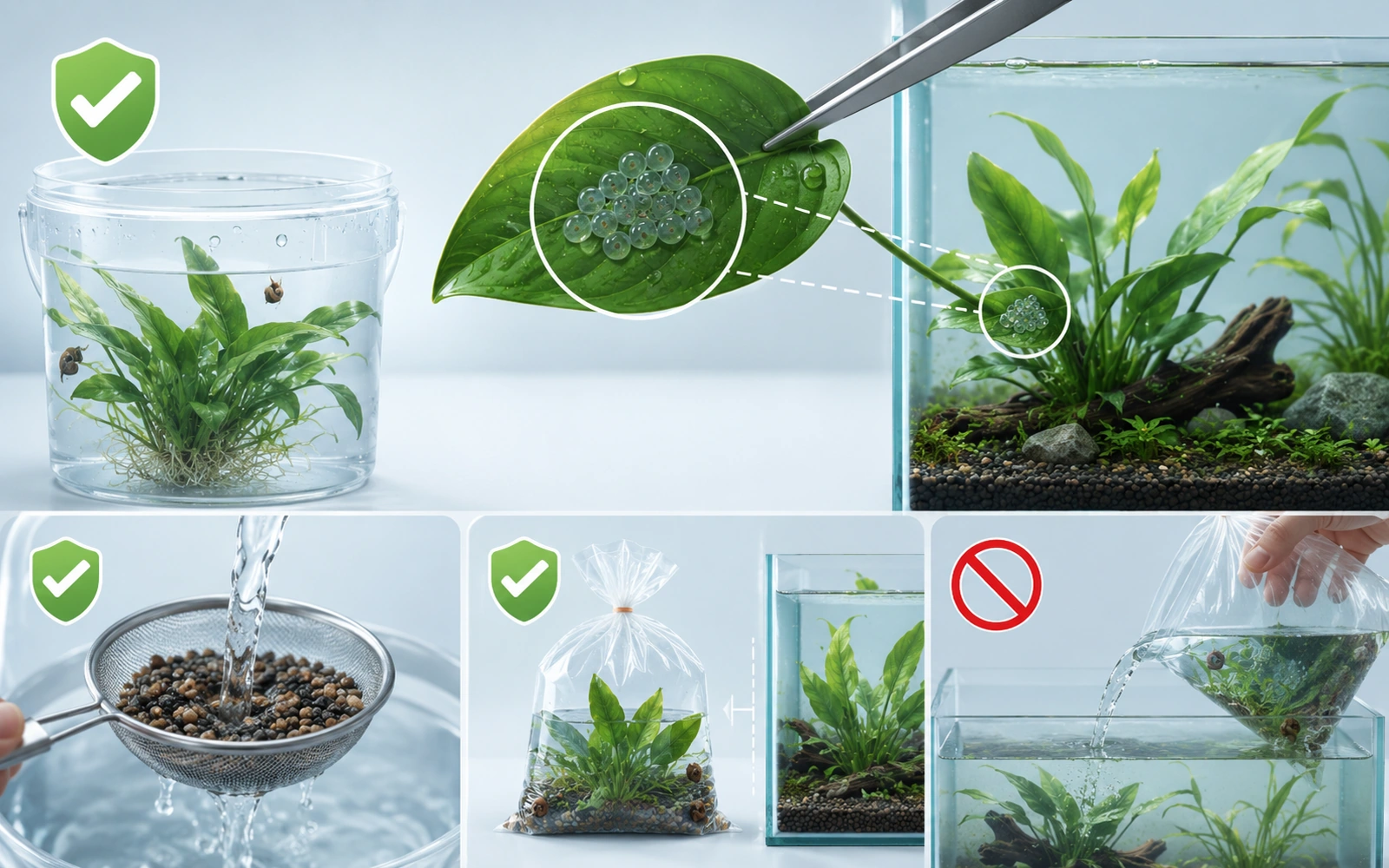
- Inspect new plants under good light, both sides of every leaf, before they go anywhere near the tank. Clear jelly blobs are eggs.
- Quarantine plants separately in a bucket or spare container for a couple of weeks. This is the reliable method and it costs nothing but patience.
- Never pour shop bag water into the tank, for plants or for livestock.
- Rinse and inspect anything second-hand, including filter media and gravel.
The short version
- They arrived on a plant. Nobody sold them to you.
- The population size is set by the food supply, and the food supply is usually overfeeding.
- Feed less, remove uneaten food, vacuum properly. That is the fix that holds.
- Vegetable traps and picking work well alongside it.
- Assassin snails work and are permanent housemates with opinions about your other snails.
- No chemical dose is published here, because those products kill shrimp and snails and because a mass die-off is an ammonia event.
FAQ
Where did the snails come from if I never bought any? They arrived as passengers, most often as eggs laid in clear jelly on the underside of plant leaves, and also on decor, second-hand equipment or in shop bag water. By the time you see the first snail there are already eggs.
What actually gets rid of pond snails? Cut the food supply. Feed less, remove anything not eaten within a couple of minutes, vacuum the substrate properly and remove dying leaves, and combine that with vegetable traps and picking them off the glass. The population falls to whatever the reduced food supply supports.
Are pond snails harmful to my fish or plants? Largely not. They eat detritus, uneaten food, decaying plant matter and biofilm, and they do not eat healthy plants. A sudden population explosion is a signal that the food supply has increased, usually from overfeeding.
Do assassin snails work? They are effective and slow, and they are permanent: when the pest snails run out they are still there, they will take an interest in any nerite or mystery snail you keep, and they breed as well, more slowly than a pest snail but not never.
Why does this site not name a chemical snail killer? Because those products are lethal to the shrimp and snails this site's own readers keep, many work through copper, a mass die-off is an ammonia event that can take the fish and the filter bacteria with it, and killing the snails without fixing the feeding means the next passenger repopulates the tank.