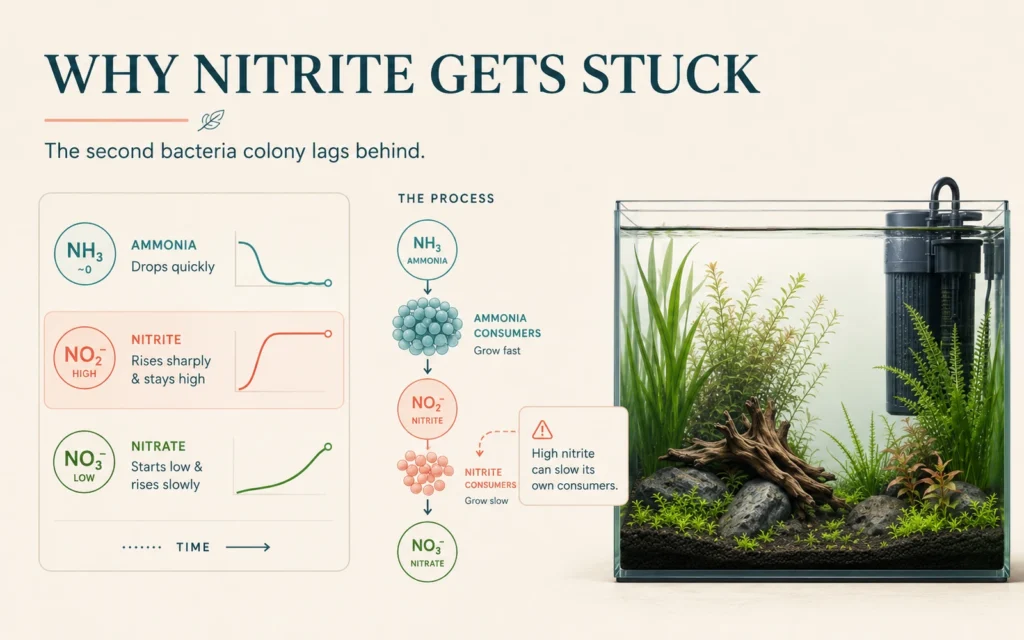
If ammonia has cleared but nitrite is pinned at a high reading and will not fall, the most likely cause is that the nitrite itself has climbed high enough to slow down the very bacteria that consume it, a self-reinforcing stall commonly reported at concentrations above roughly 5 ppm on hobby test kits. The fix most consistently reported across cycling troubleshooting sources is a partial water change to dilute nitrite back below that range, then patience: this stage is well known for being the longest, slowest part of a fishless cycle, sometimes running a week or more even in a cycle that is otherwise progressing normally.
Why Nitrite Gets Stuck at High Concentrations
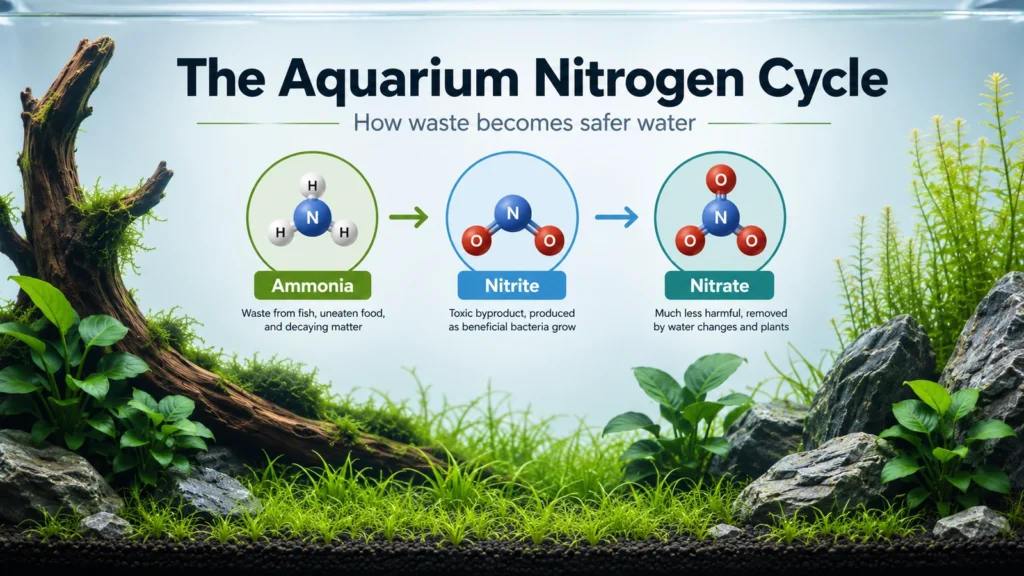
The two bacteria colonies involved in cycling do not establish at the same pace. The first colony, which converts ammonia into nitrite, tends to establish relatively quickly. The second colony, which converts nitrite into nitrate, is slower to build up, so nitrite frequently spikes well before the second colony is large enough to keep pace with it. Left to spike unchecked, especially in a cycle that was dosed aggressively or seeded with a lot of bacteria that raced through the ammonia stage, nitrite can climb high enough that the concentration itself becomes inhibitory to the nitrite-consuming bacteria. That creates a loop: high nitrite slows the bacteria that would otherwise reduce it, which keeps nitrite high. This is the mechanism behind why nitrite is often described as the more frustrating half of a cycle, a pattern explained in more depth in the nitrogen cycle explainer.
The Water-Change Fix, and Why "Below 5 ppm" Matters
The most commonly repeated fix across independent troubleshooting sources is a partial water change, roughly a third to half of the tank, without disturbing the substrate or filter media where the bacteria colonies live. The goal is not to eliminate nitrite outright in one change, which is unlikely at a genuinely high reading, but to bring the concentration down below the point where it inhibits the bacteria, commonly cited as somewhere around 5 ppm on typical hobby test kits. Once below that rough threshold, the existing bacteria colony can usually resume consuming nitrite at something closer to its normal pace, and the reading should start trending down between tests rather than sitting flat.
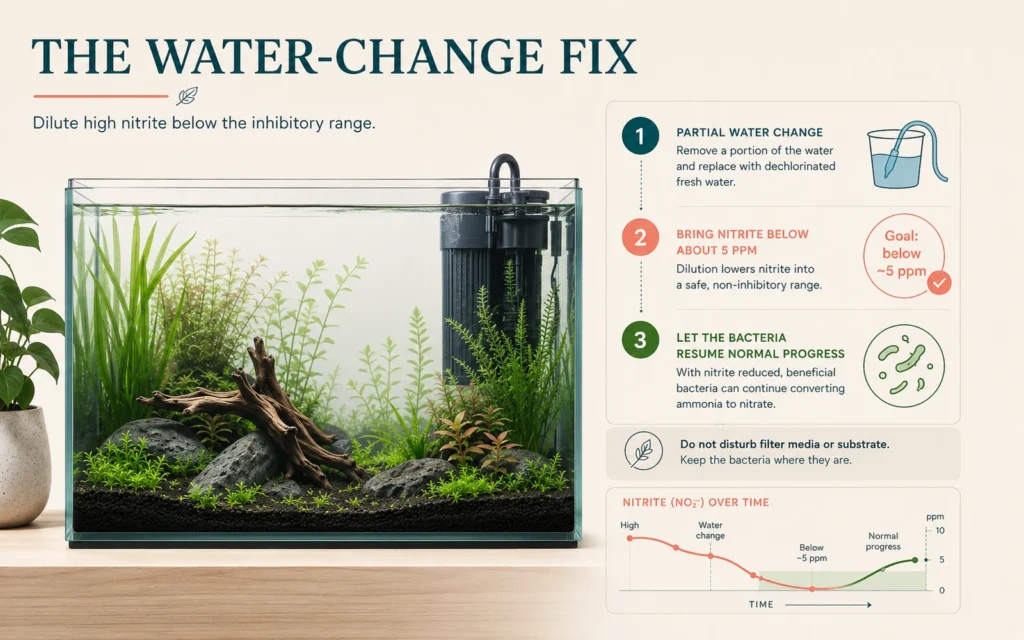
This figure is a commonly reported pattern from hobby troubleshooting sources, not a precise, universally verified number, and your own test kit's exact scale may read differently. Treat it as a signal that dilution helps at meaningfully high readings, not as a line with special significance at exactly 5.0.
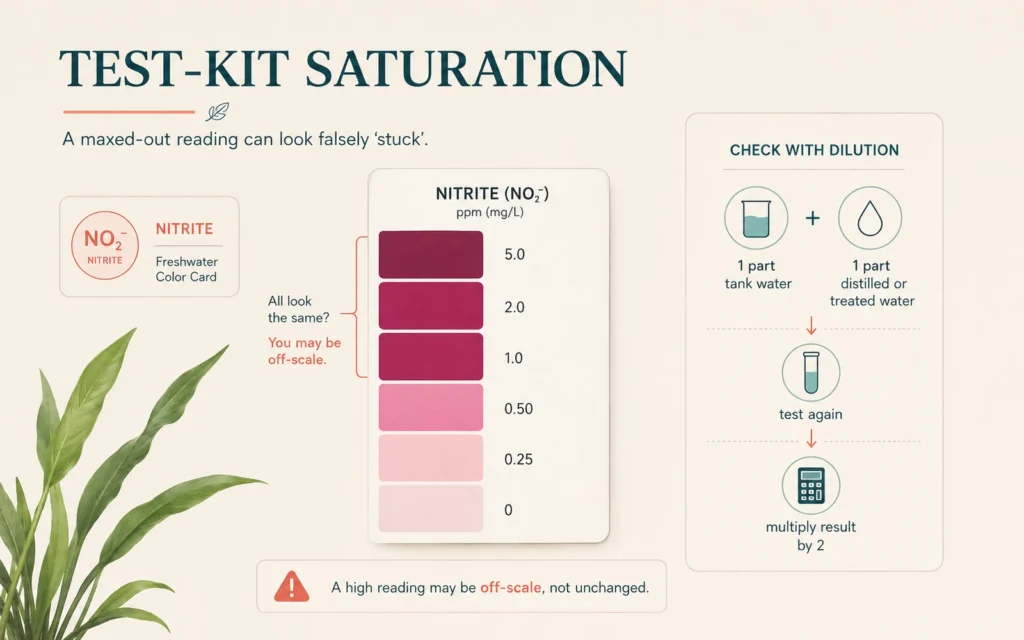
A related, purely practical issue: many liquid test kits simply cannot read nitrite accurately once it climbs high enough, because the color reaction saturates at the top of the kit's scale and everything above that point looks the same shade. If your test result has looked identical for several days running, it is worth diluting a small water sample with an equal amount of distilled or treated water, testing that, and multiplying the result, rather than assuming the reading itself has stopped changing. A kit that has been maxed out for a week can look exactly like a stall even when nitrite has actually been falling the whole time.
The Product to Avoid: "Nitrite Remover"
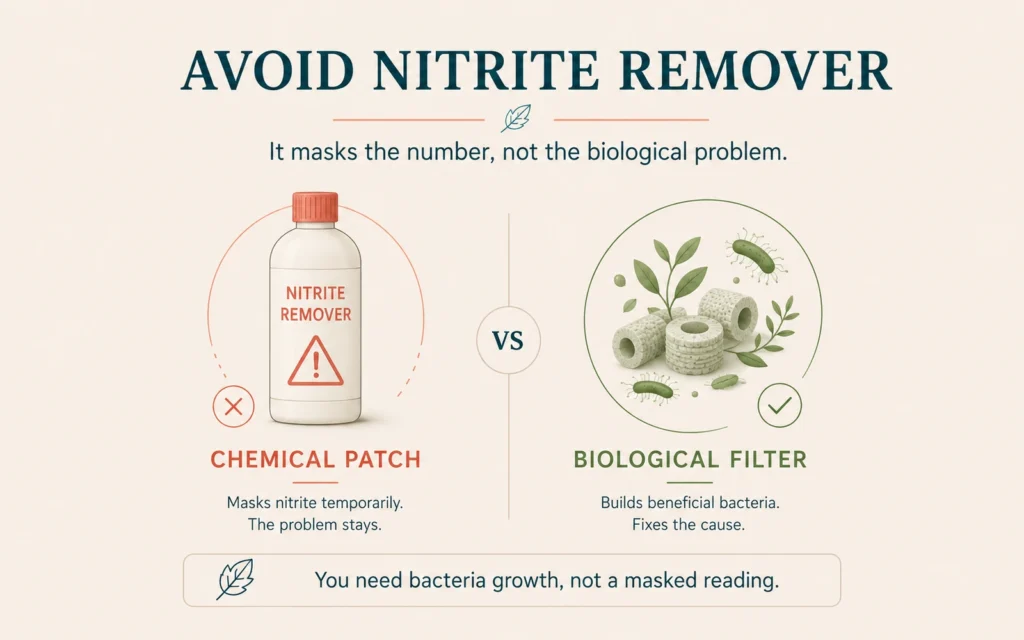
Products marketed as "nitrite remover" or similar chemical additives are worth naming directly, because they show up as a genuine mistake in multiple troubleshooting threads. These additives generally work by binding nitrite into a less detectable form, or by other chemical means, rather than by helping your bacteria colony establish. Using one during a stall does not speed up the biological process, and several sources report it can actually inhibit the bacteria further. If your goal is a tank that can handle nitrite on its own once fish arrive, a chemical patch that just masks a test reading works against that goal rather than toward it.
How Long This Stage Actually Takes
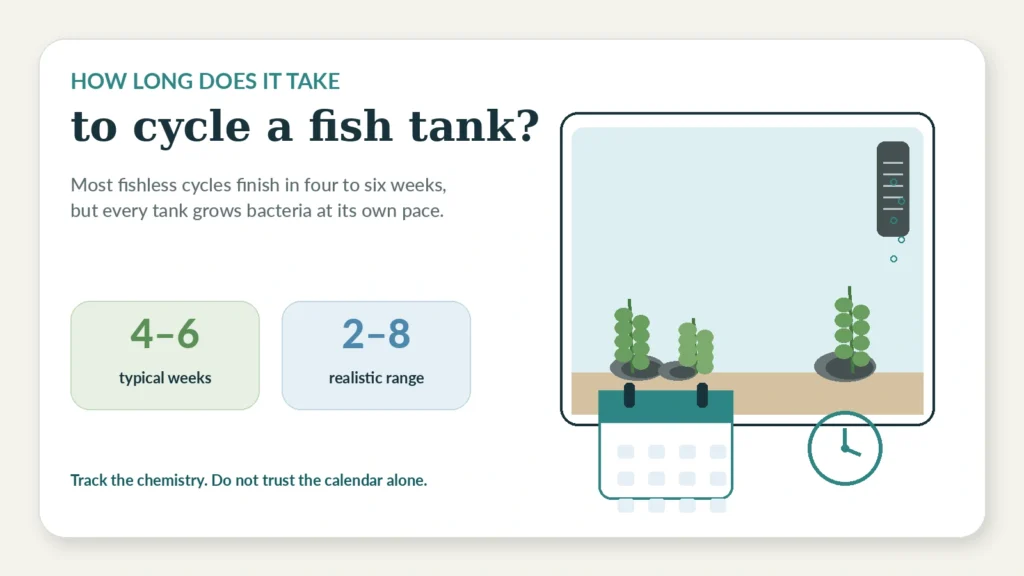
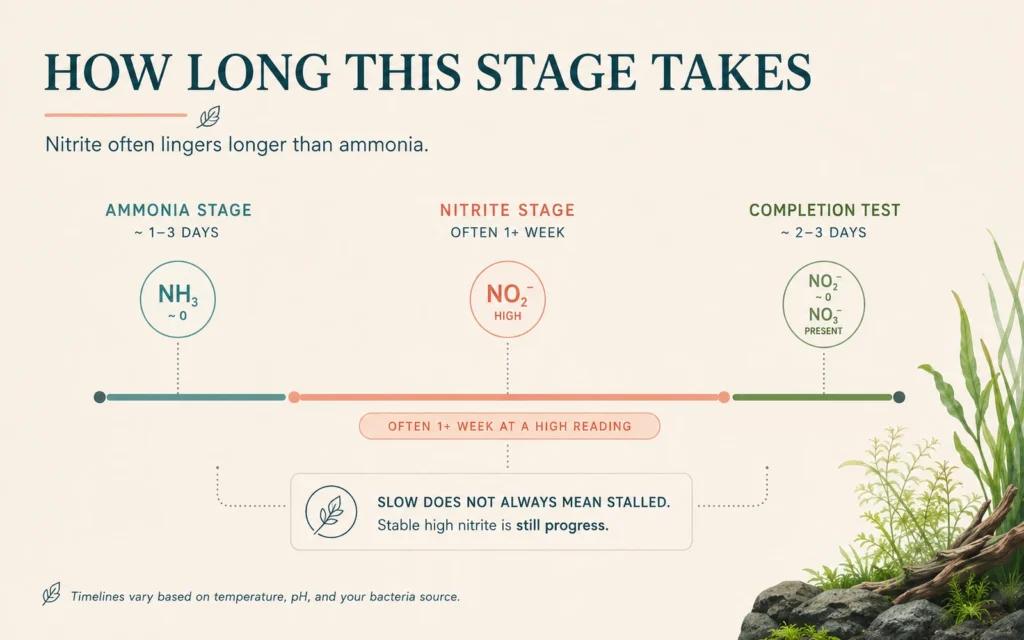
Set your expectations here differently than you did for the ammonia stage. It is common and normal for nitrite to sit at a high reading for a week or more, sometimes longer, even in a cycle that is not stalled at all, simply because the second bacteria colony genuinely takes longer to build up. If you are comparing your nitrite stage to how quickly ammonia cleared earlier in the same cycle, expect it to take longer, not the same amount of time. How long does it take to cycle a fish tank covers overall timeline expectations in more depth, including how to tell a genuinely slow-but-normal stretch from a real stall.
Keep Dosing Ammonia While You Wait
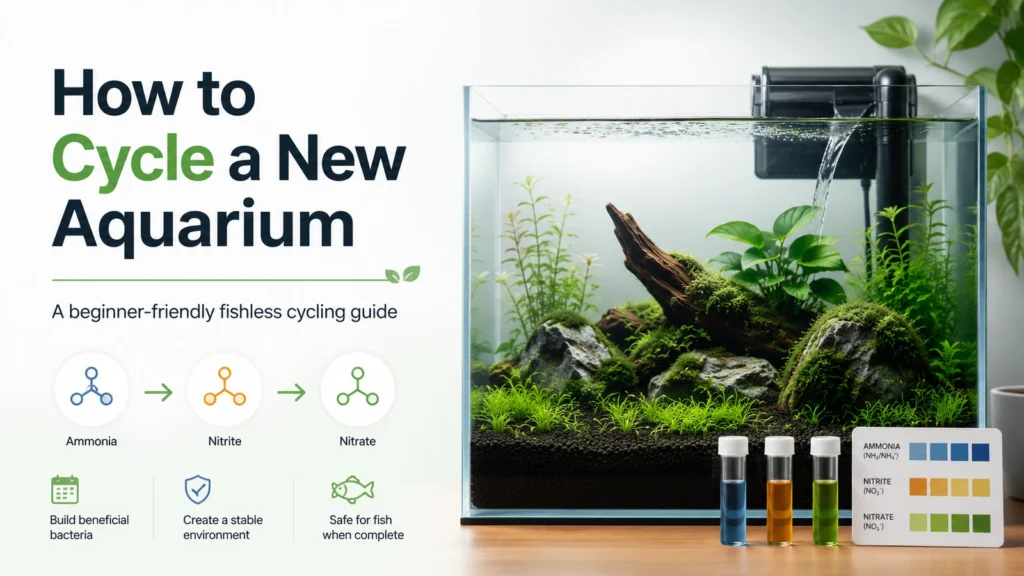
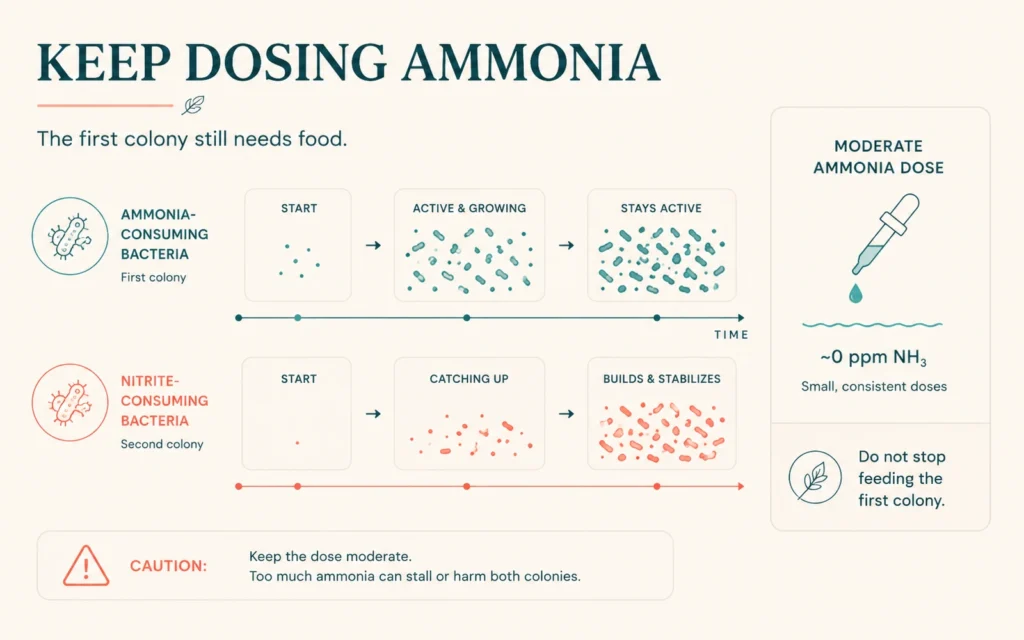
It can feel counterintuitive to keep adding ammonia while nitrite is already a problem, but the first bacteria colony still needs a steady food source to stay active, and starving it does not help the second colony catch up. Continue redosing ammonia to a moderate level, as covered in how to cycle a new aquarium, while you wait for nitrite-consuming bacteria to establish. The two processes run in parallel, not in sequence, even though the finish times can look staggered from the outside.
When It Really Is a Different Problem
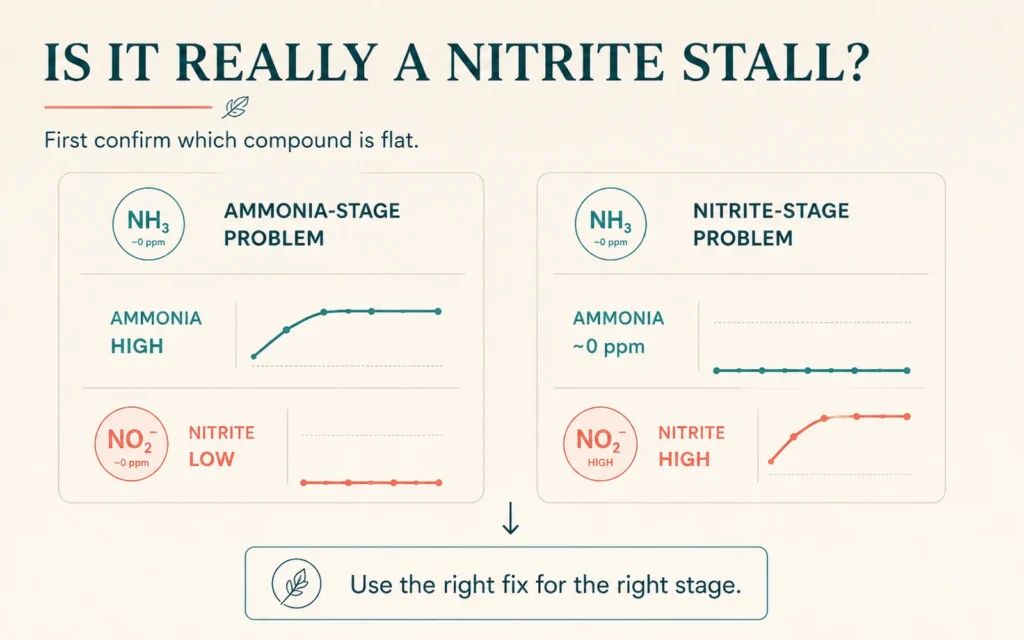
Everything above assumes ammonia has actually cleared and nitrite is the compound that will not move. If ammonia itself is still stuck and has not started dropping in the first place, that is a different, earlier-stage problem with its own set of causes, covered in why a cycle stalls on ammonia. Confirm which compound is actually flat before troubleshooting, since the fixes for each stage are different and a nitrite-stage fix will not resolve an ammonia-stage stall.
It is also worth ruling out an unrelated cause: if you dosed a fresh, large batch of ammonia right as nitrite was already climbing, you may simply be looking at the combined effect of two things happening at once rather than a true stall. Wait until the most recent ammonia dose has had a full day or two to be processed, retest, and judge the nitrite trend from there rather than mid-dose.
FAQ
Why is my nitrite stuck high during cycling?
Most commonly because nitrite itself has climbed high enough (commonly cited around 5 ppm on hobby test kits) to slow the bacteria that consume it, creating a self-reinforcing stall. A partial water change to dilute nitrite, followed by patience, is the typical fix.
Should I do a water change if nitrite is high during cycling?
Yes, a partial change, roughly a third to half of the tank, without disturbing the filter media or substrate, is the most commonly recommended fix for a nitrite reading high enough to be inhibiting the bacteria.
Does a "nitrite remover" product actually fix a stalled cycle?
No. These products generally mask or bind nitrite rather than helping the bacteria colony establish, and several troubleshooting sources report they can inhibit the bacteria further. They do not build the colony you actually need.
Why is nitrite taking so much longer than ammonia did?
The bacteria that consume nitrite establish more slowly than the bacteria that consume ammonia. It is common and normal for this stage to run a week or more even when the cycle is not stalled at all.
Should I stop dosing ammonia while nitrite is high?
No. The first bacteria colony still needs a steady ammonia supply to stay active. Continue redosing to a moderate level while the second colony catches up on nitrite.