If your pH is steady and sits somewhere in the broad range most community fish are kept in, leave it alone. A stable reading that is slightly off a species chart is safer for your fish than a reading you keep correcting, because it is the movement that harms them rather than the position. Aquarium sources are unusually consistent on this point, and several of them advise specifically against the pH Up and pH Down products sold to solve a problem most beginners do not actually have.
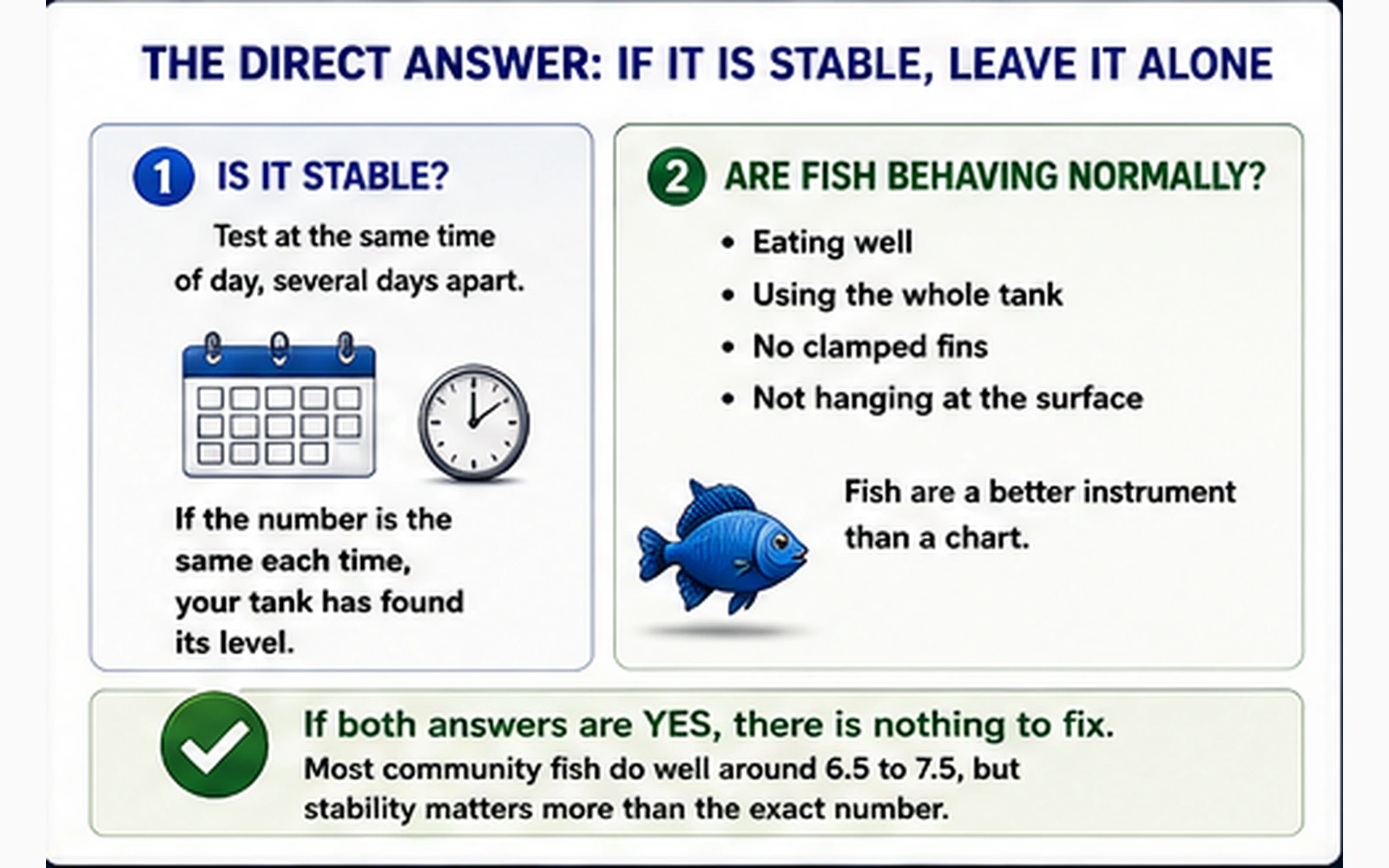
The Direct Answer: If It Is Stable, Leave It Alone
Two questions decide this, and neither of them is "what does the chart say."
Is it stable? Test at the same time of day, several days apart. If the number is the same each time, your tank has found its level and the fish have adjusted to it.
Are the fish behaving normally? Eating, using the whole tank, no clamped fins, no hanging at the surface. Fish are a better instrument than a chart for this parameter, because a great many aquarium fish sold today are captive-bred and generations removed from the water their wild ancestors evolved in.
If both answers are yes, there is nothing to fix. Most freshwater community fish are commonly described as doing well somewhere around 6.5 to 7.5, and plenty of tanks sit outside that and run perfectly well for years. What follows is why that is true, and the narrow set of cases where pH genuinely does need attention.
What pH Is, in the Only Detail You Need
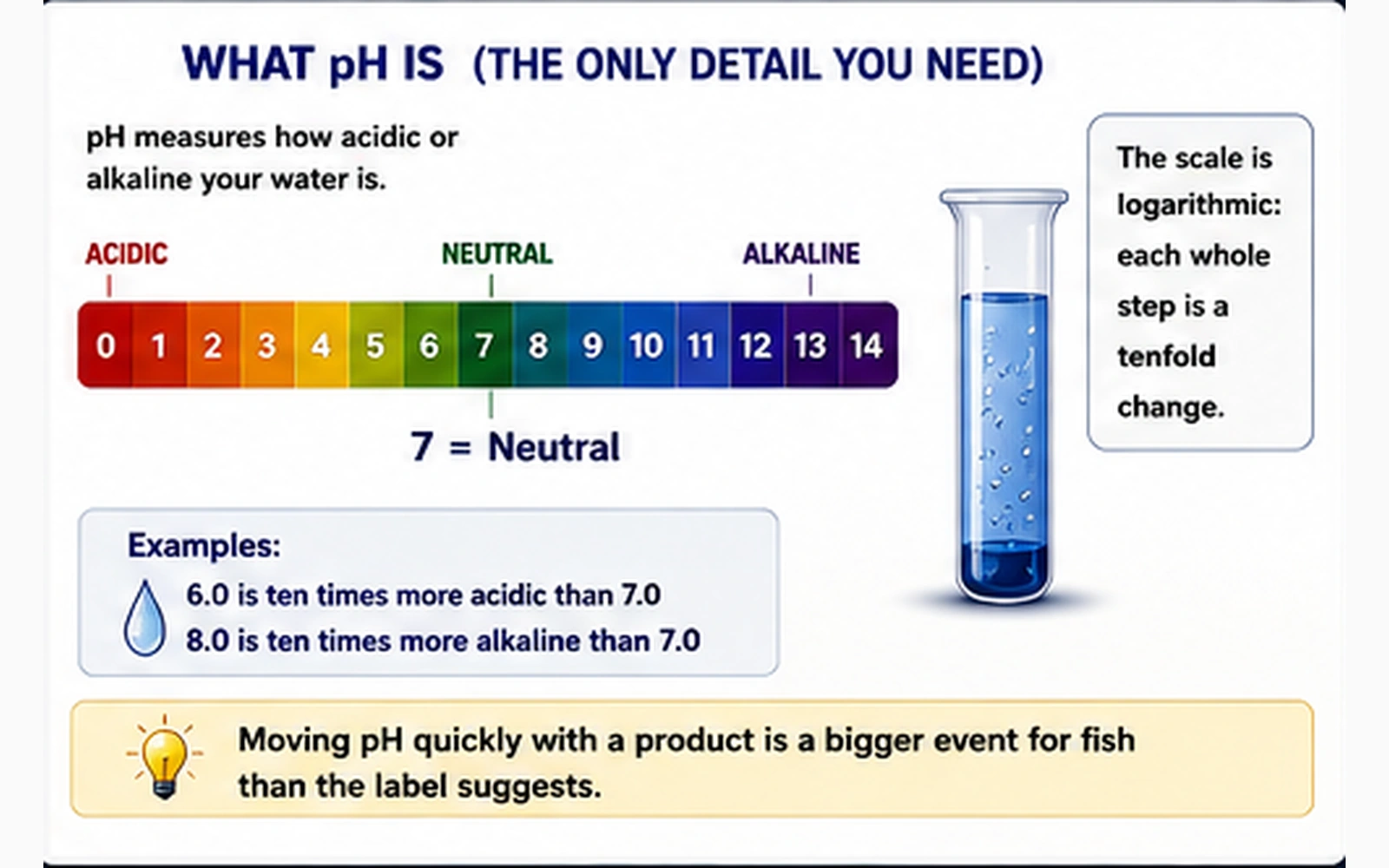
pH measures how acidic or alkaline water is on a scale where 7 is neutral, lower is acidic and higher is alkaline. The one thing worth knowing beyond that: the scale is logarithmic, so each whole step is a tenfold change. Moving a tank from 7.0 to 6.0 is not a small nudge, which is exactly why a bottled product that moves the number quickly is a bigger event for a fish than the label suggests.
That is the entire chemistry lesson this page needs. Aquarium water parameters covers where pH sits among the five numbers worth tracking.
Why the Swing Hurts More Than the Number
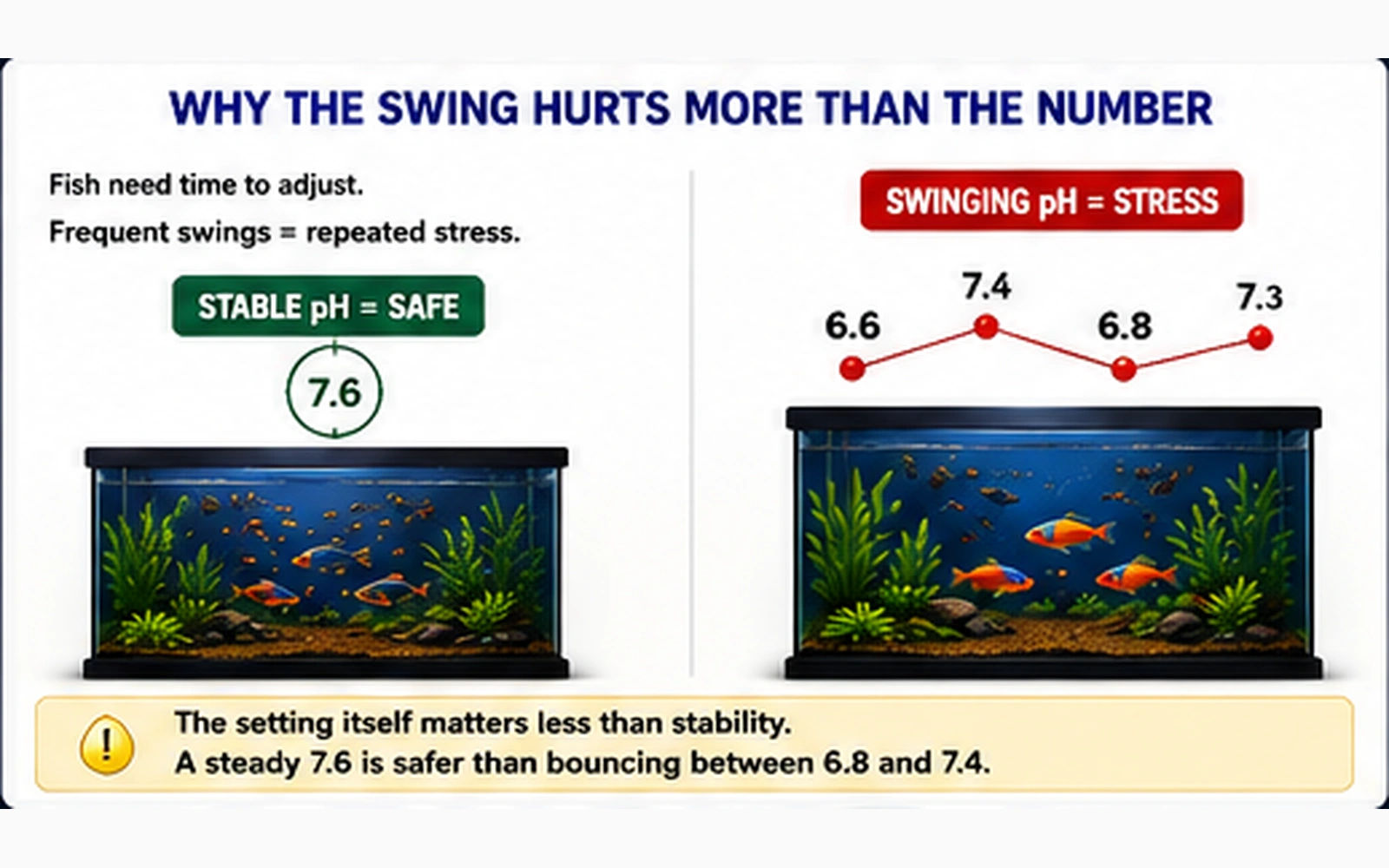
Fish regulate their internal chemistry against the water around them, and that adjustment takes time. A fish living at a steady 7.8 has made it once. A fish in a tank that gets corrected to 7.2 on Saturday and drifts back by Wednesday makes it repeatedly, and each swing is a stress event.
This is why the most damaging thing a beginner can do with pH is treat it actively. The published advice is blunt about it: a steady 7.6 is safer than a pH bouncing between 6.8 and 7.4 because somebody is chasing a number off a website. The tank that keeps getting "fixed" is worse off than the tank nobody touched.
The same logic applies to water changes. Large, infrequent changes with water whose pH differs from the tank's move the number further per event than smaller, regular ones do, which is one more reason a steady water-change routine beats an occasional big intervention.
KH Is Why Your pH Adjustment Did Not Hold
Here is the part almost every pH article leaves in a different article, and it is the reason people end up dosing repeatedly.
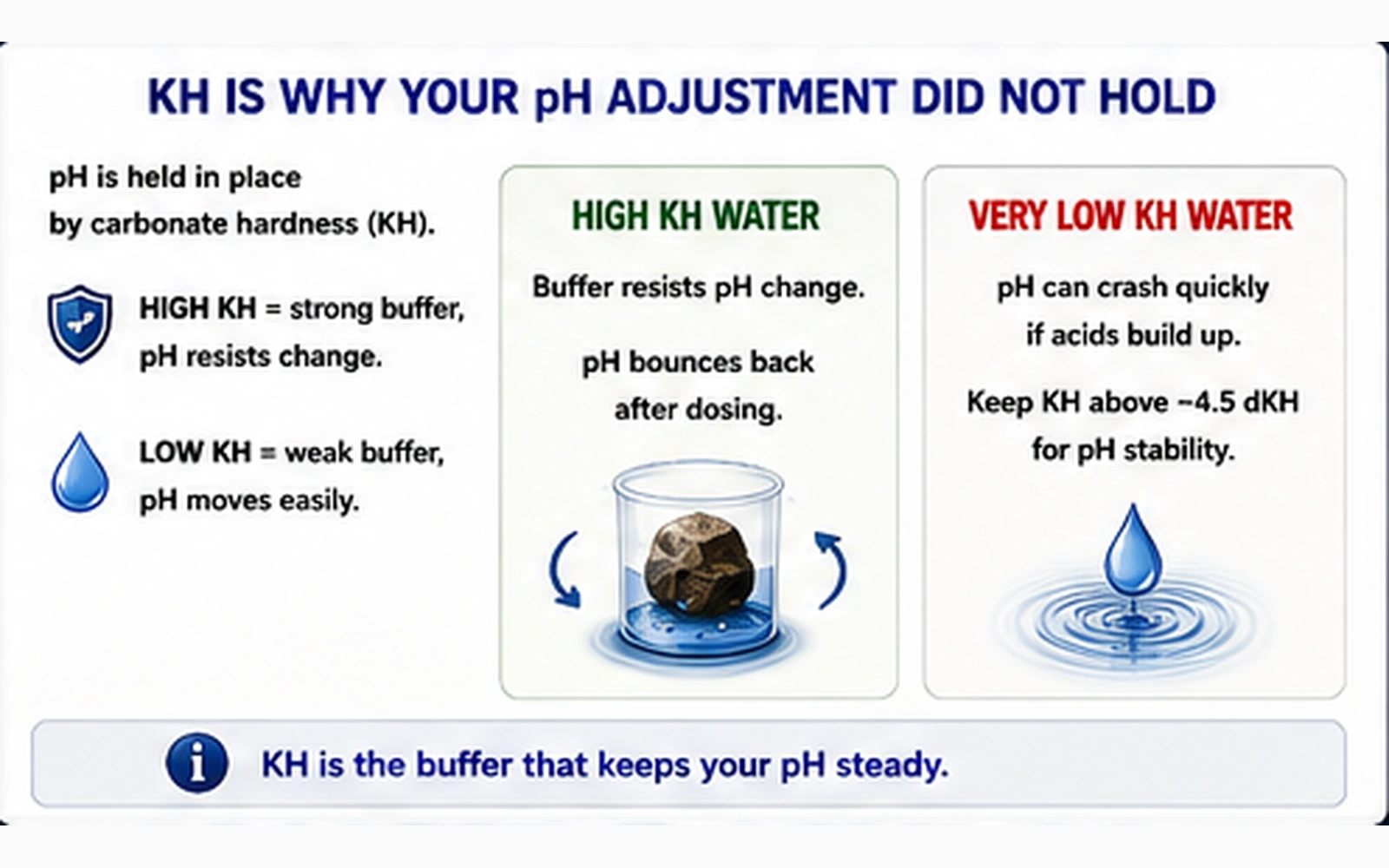
pH is not an independent setting. It is held in place by the water's carbonate hardness, KH, which acts as a buffer by absorbing the acids that would otherwise push pH down. High KH means a pH that resists being moved. Low KH means a pH that moves easily and can fall quickly.
Two consequences follow, and both explain common frustrations:
- Adding a pH-lowering product to hard, high-KH water usually fails. The buffer absorbs the change and the reading rebounds within a day or two. The reader then doses more, which produces exactly the swing they were trying to avoid.
- A tank with very low KH can crash rather than drift. With nothing buffering it, accumulated acids from waste can drop pH sharply and fast. Published guidance commonly suggests keeping KH above roughly 4.5 degrees for pH stability.
So if your pH will not stay where you put it, the number to look at is not pH. GH and KH without the chemistry lecture covers what those readings mean and how they behave.
Things That Change Your pH Without You Doing Anything
Before assuming a reading is wrong or a fault, check whether one of these explains it.
- Driftwood releases tannins that gradually lower pH, which is a normal and generally harmless effect in a freshwater tank.
- Rocks, shells, coral sand and some substrates dissolve slowly and raise both hardness and pH. A tank that has crept upward over months often has limestone-type rock in it.
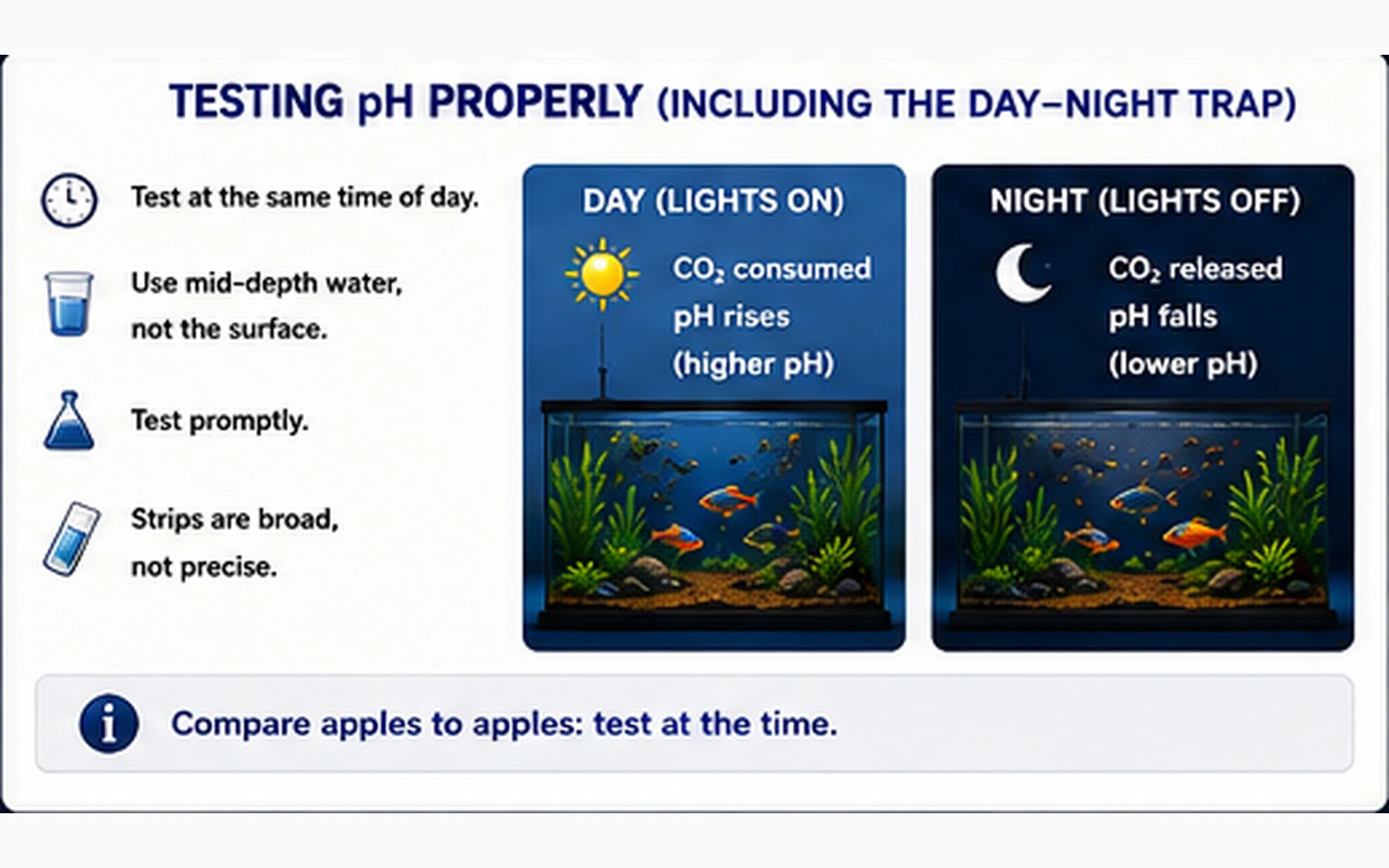
- Photosynthesis over the day. Plants consume CO2 in the light and release it in the dark, and CO2 dissolved in water is mildly acidic. The result is a daily rhythm: pH is typically at its lowest before the lights come on and its highest late in the photoperiod. In a heavily planted tank this can be a visible difference, and it is not a fault.
- Aeration of a sample. Tap water that has been standing or agitated releases dissolved CO2 and its pH can rise noticeably, which is why the tap reading and the tank reading may not match.
- Accumulated waste in a tank that is overdue for maintenance pushes pH down over time, especially where KH is low.

Testing pH Properly (Including the Day-Night Trap)
Test at the same time of day each time. Given the daily rhythm above, comparing a morning reading with an evening one and concluding your pH is unstable is a common and avoidable mistake.
Use tank water taken from mid-depth rather than the surface, test it promptly, and if you use strips, remember they read broad rather than precise, which is fine for pH stability but poor for detecting a small drift. Test strips vs liquid test kits covers where each is reliable, and why two test kits disagree covers what to do when two results conflict.
For how often, how often should you test your water puts pH in context with the other parameters; it is a monthly-ish check in a stable tank rather than a weekly one.
When pH Genuinely Does Need Attention
There are real cases, and they are narrower than the SERP implies.
- The number is moving on its own. A drifting or falling pH means something is changing, usually a KH that has been exhausted or waste that has accumulated. Fix the cause. Water changes with your normal source water restore buffering; a chemical does not.
- A crash. A sharp drop is an event, not a parameter question, and it belongs with the other emergency checks in something is wrong with my tank.
- You keep a species with genuinely specific requirements, or you are breeding. This is where the species chart earns its place, and it is a deliberate project rather than a correction.
- Your tap water is at an extreme. Then the honest answer is to keep fish that suit it rather than to run a permanent chemical program. Choosing stock around your water is the one solution that never fails and never needs maintaining.
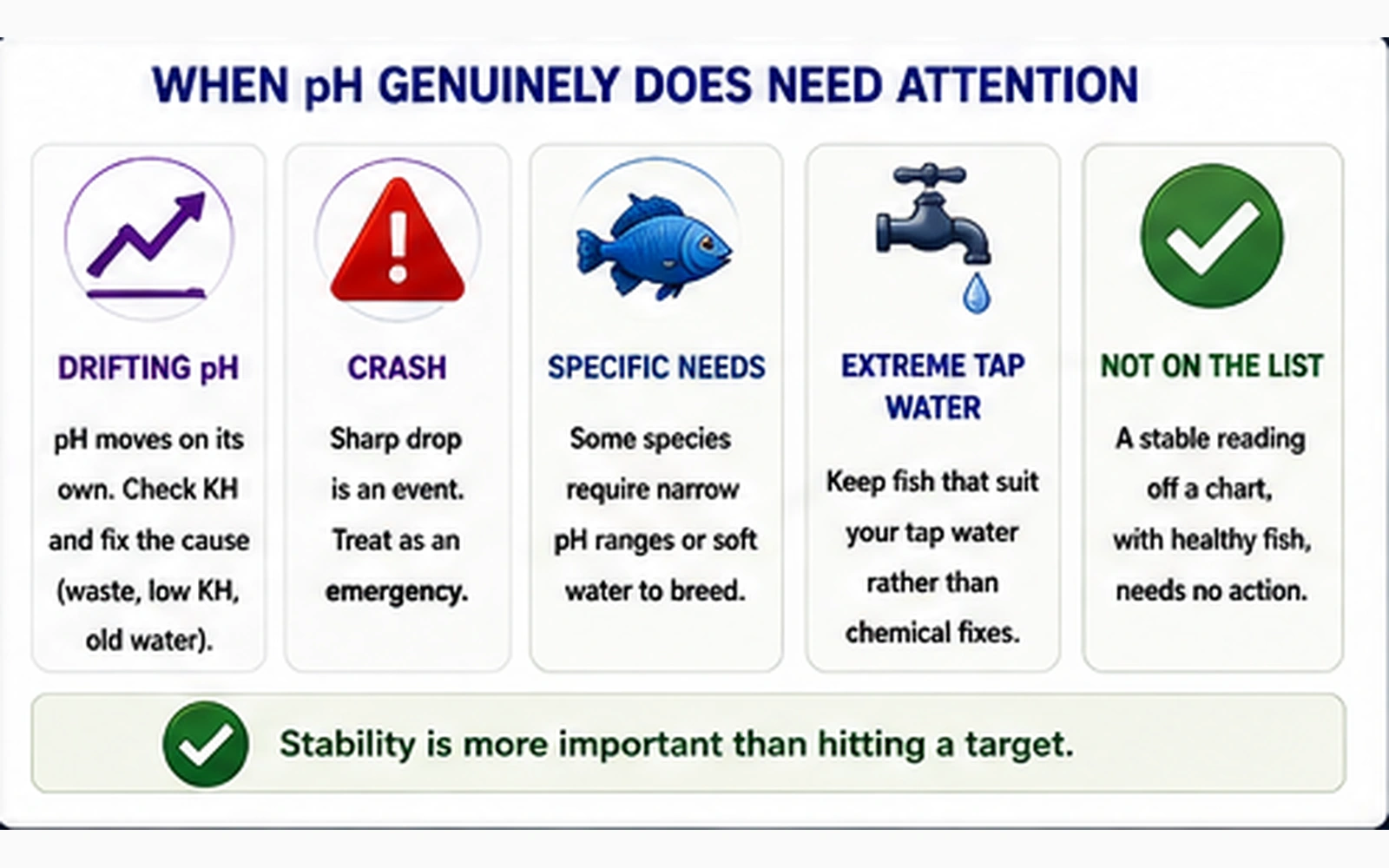
What is not on that list: a stable reading that does not match a chart, in a tank of healthy captive-bred community fish. That is the situation most people are in when they search this, and the correct action is none.
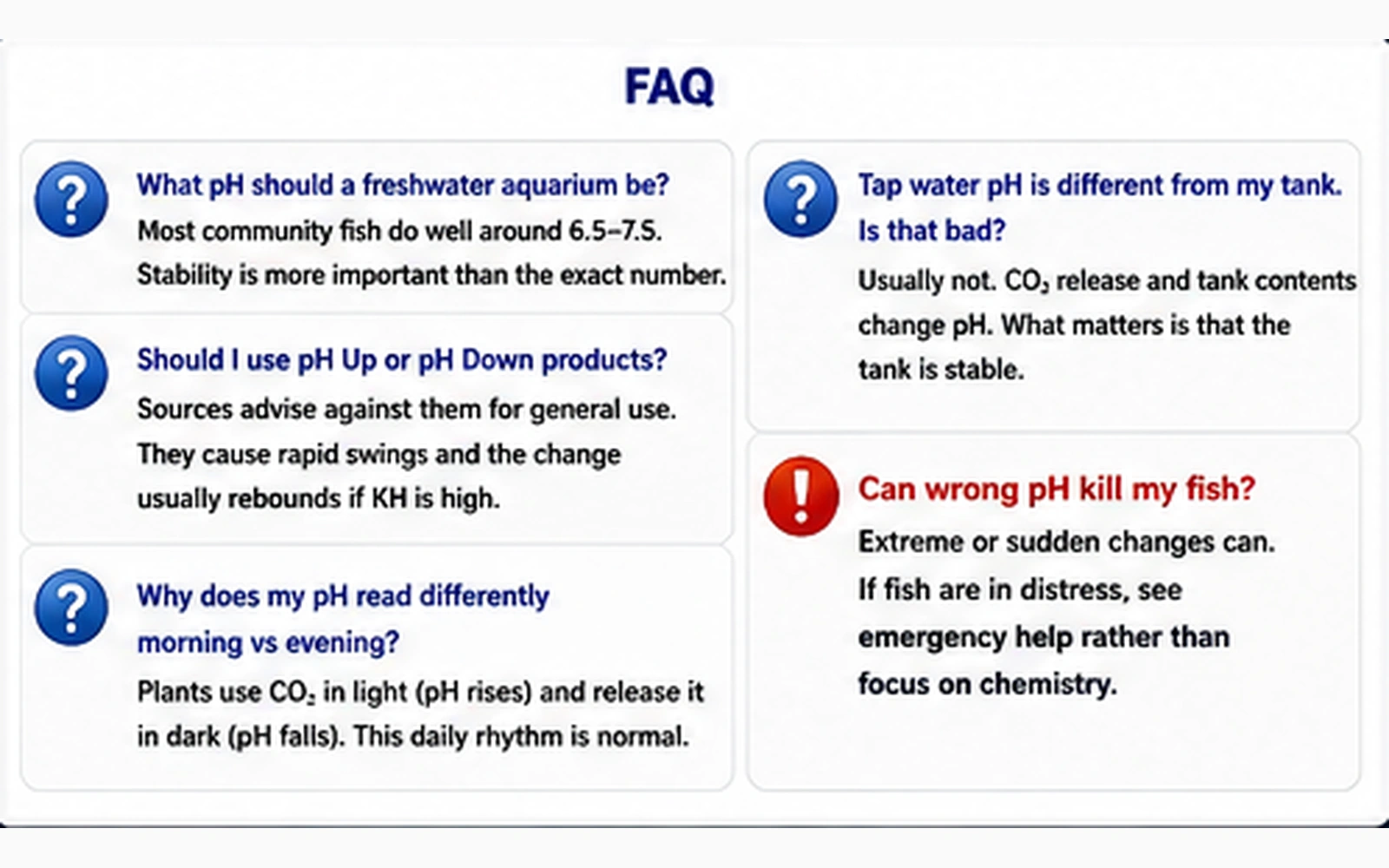
FAQ
What pH should a freshwater aquarium be?
Commonly cited guidance puts most freshwater community fish somewhere around 6.5 to 7.5, but stability matters more than the exact figure. A steady reading slightly outside that band, with healthy fish, is not a problem to solve.
Should I use pH Up or pH Down products?
Several aquarium sources advise against them for general use, because they produce rapid swings that stress fish and because the change usually rebounds if the water's KH is high. If pH will not hold where you put it, the buffer is the thing to understand, not the dose.
Why does my pH read differently in the morning and the evening?
Plants and other photosynthesis consume CO2 during the lit hours and release it in the dark, and dissolved CO2 is mildly acidic. A daily rhythm is normal, especially in planted tanks. Compare readings taken at the same time of day.
My tap water pH is different from my tank pH. Is that a problem?
Usually not. Tap water releases dissolved CO2 once it stands or is agitated, which changes its reading, and the tank's own contents, driftwood, rock, substrate and waste, move it further. What matters is that the tank is stable.
Can a wrong pH kill my fish?
An extreme value or a sudden swing can cause serious harm; a stable reading modestly off a chart generally does not. If fish are in visible distress, treat it as an emergency rather than a chemistry question and see something is wrong with my tank.