If ammonia has held the same reading for five or more days despite consistent dosing and a running filter, work through this order before assuming the cycle has genuinely failed: confirm you are dechlorinating every water addition, check whether your pH is low enough to be slowing the bacteria, confirm you have not overdosed the ammonia, check that your filter has enough surface area and has not lost power, and rule out a bottled-bacteria product that never actually seeded the filter media. Most stalls trace back to one of these five causes, checked in this order, rather than to a mysteriously "broken" tank.
This is one of the most common questions in the hobby, and it is also one of the most poorly organized on the open web: the honest answer is scattered across dozens of forum threads with contradictory replies. What follows is that scattered advice, checked against multiple independent troubleshooting sources and organized into a single order of operations.
The Direct Answer: What to Check, in Order
- Are you dechlorinating every bit of tap water that goes in the tank?
- Is your pH low enough to be interfering with the bacteria?
- Have you dosed ammonia well above a moderate target?
- Does your filter have enough media surface area for bacteria to colonize?
- Did the filter lose power or flow at any point?
- Did you add a bottled bacteria product and assume it "seeded" the filter on its own?
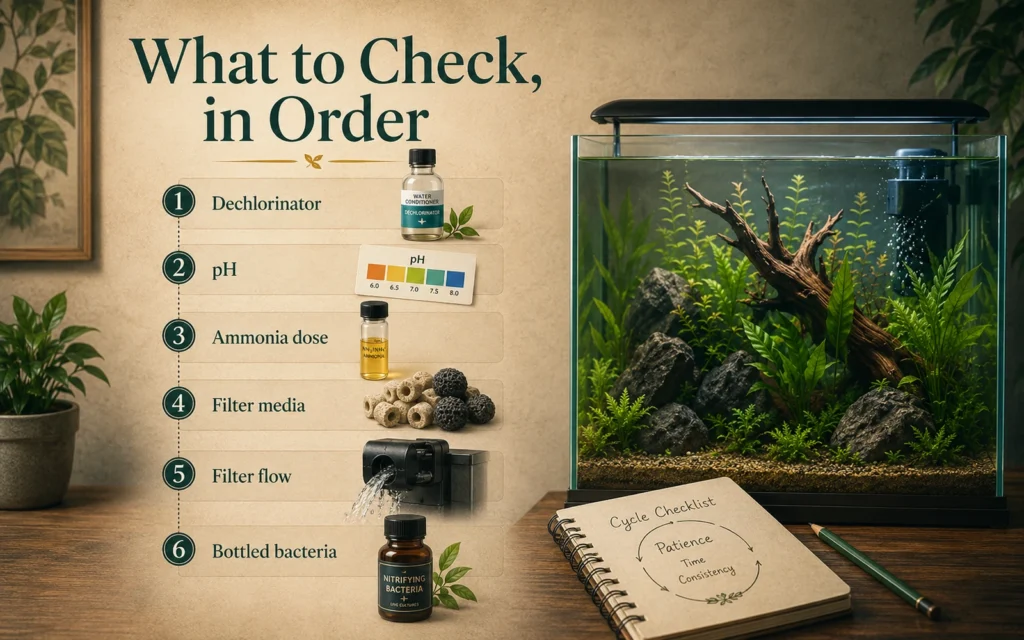
Work down this list in order rather than jumping to whichever cause sounds most interesting. The first two catch the large majority of genuine stalls.
Did You Actually Add a Dechlorinator?
This is the single most common miss reported across cycling troubleshooting threads, and it is worth checking first because it is the easiest to fix. Municipal tap water typically contains chlorine or chloramine, both of which are added specifically to kill bacteria, including the beneficial bacteria you are trying to grow. If you topped off evaporated water, did a partial water change to dilute an overdose, or refilled after any maintenance without treating the new water with a dechlorinator (water conditioner), you may have repeatedly knocked back the very colony you were waiting on. Confirm every drop of new water gets dechlorinator before it touches the tank, and give the colony a few more days to recover before assuming a different cause.
Is Your pH Low? Why That Specifically Stalls Ammonia
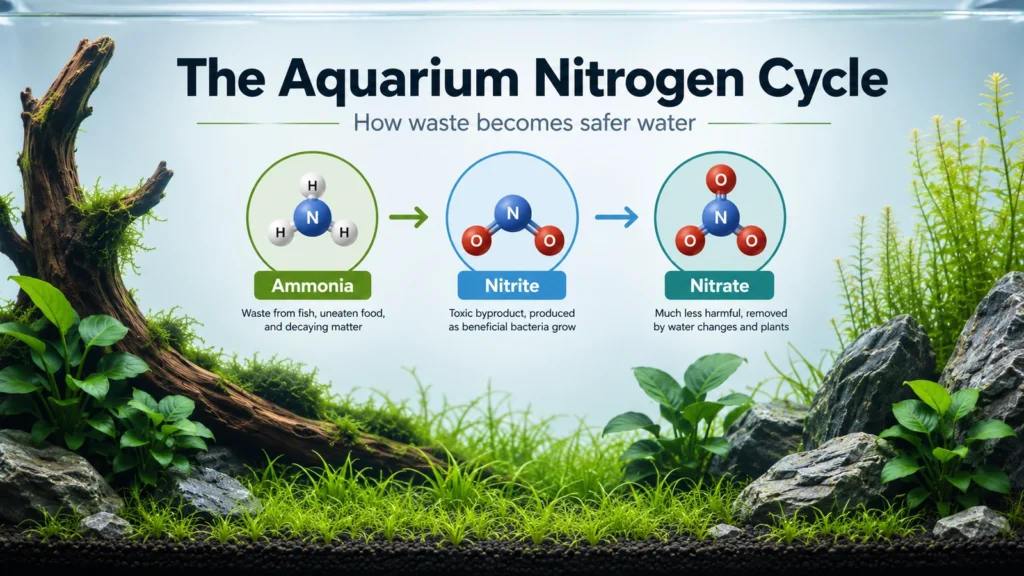
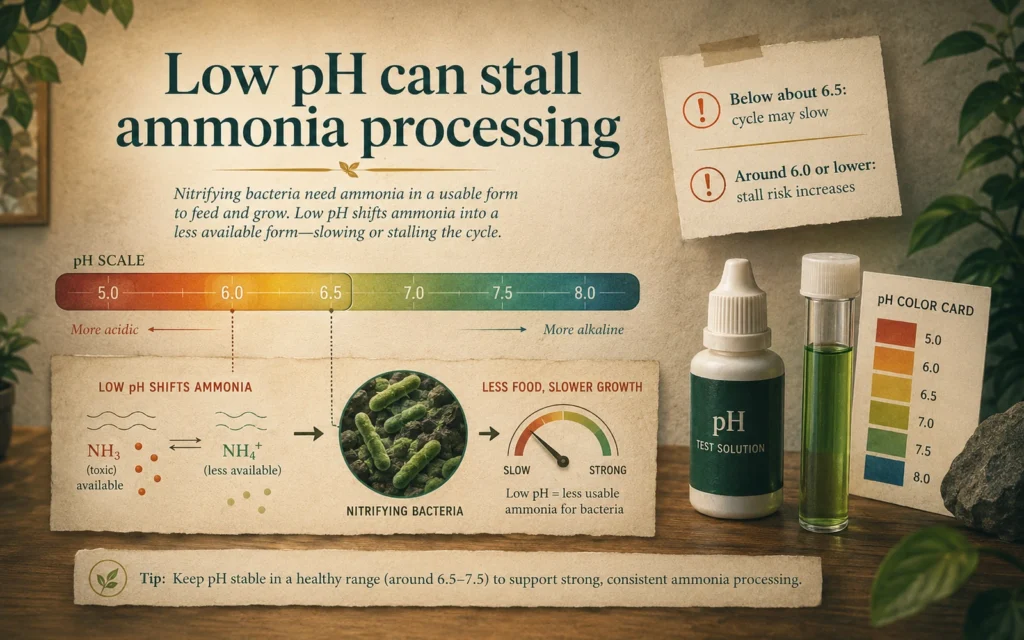
Ammonia exists in water as two related forms, and the balance between them shifts with pH. At lower pH, more of the total ammonia sits in a less reactive form, which leaves the nitrifying bacteria with less to actually feed on and can measurably slow their growth. Hobby troubleshooting sources commonly report that a pH at or below roughly 6.5 can slow a cycle, and a pH at or below roughly 6.0 can stall it outright, though the exact threshold varies by source and by tank. This is not a fixed law of chemistry stated as a guaranteed number here; it is a commonly reported pattern, and the mechanism (the ammonia-to-ammonium balance) is explained in more depth in the nitrogen cycle explainer.
Test your pH. If it is low, particularly if your source water is naturally soft and acidic, that is a strong candidate for your stall. Raising pH deliberately mid-cycle is its own topic with its own risks, so if this looks like your cause, treat it as information to bring to a knowledgeable source rather than something to fix by guessing with additives.
Did You Overdose the Ammonia?
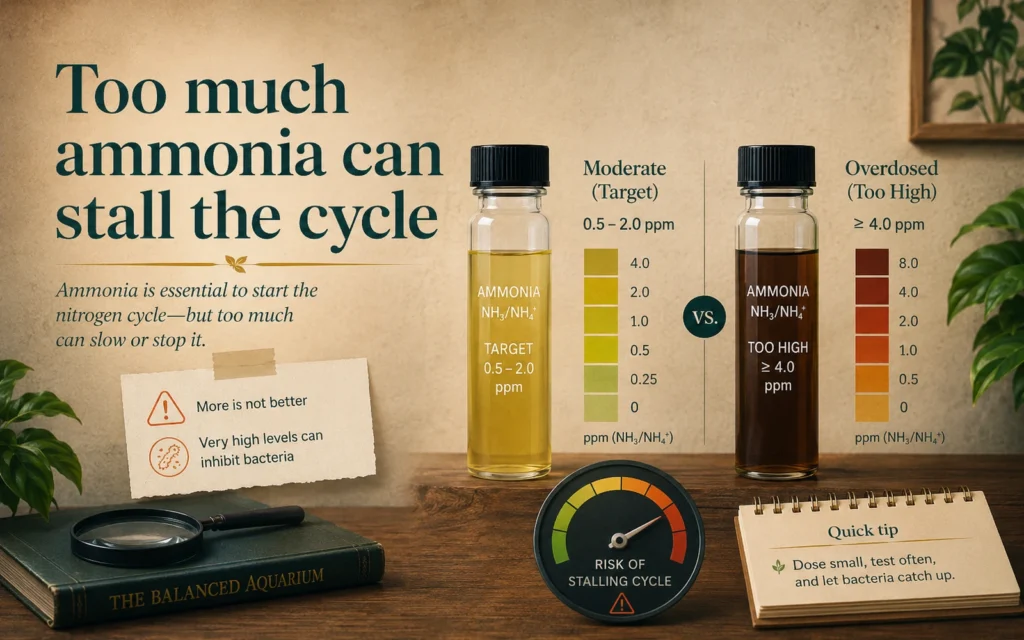
More ammonia is not more food in a useful sense once you go well past a moderate dosing target. Multiple troubleshooting accounts describe cycles stalling specifically because ammonia was dosed far higher than needed, likely because very high concentrations become inhibitory to the bacteria themselves rather than simply providing more to consume. If your ammonia reading has been sitting at an unusually high level from the start, a partial water change to bring the concentration down to a more moderate level, described in how to cycle a new aquarium, is commonly reported as the fix that lets a stalled cycle resume.
Is There Enough Surface Area for Bacteria to Colonize?
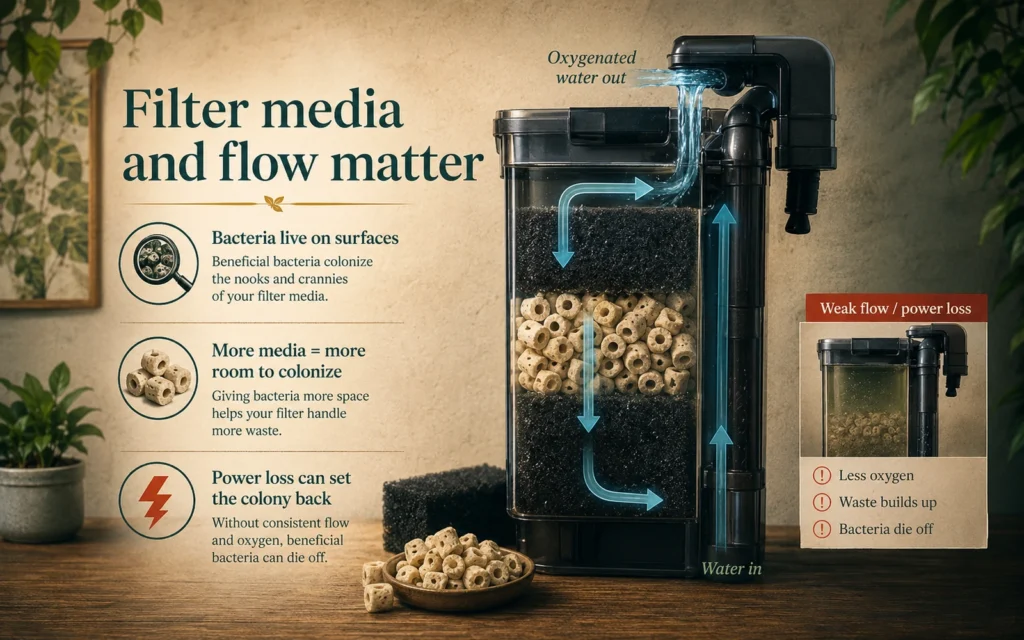
Nitrifying bacteria live on surfaces, not free-floating in the water column. If your filter is undersized for your tank, uses very little actual media, or relies mostly on a thin cartridge with limited surface area, the colony may simply have less room to establish than a larger tank's waste load requires. This is harder to fix mid-cycle than the causes above, but it is worth confirming your filter is appropriately sized for your tank before assuming the problem is biological rather than mechanical.
Did the Filter Lose Power or Flow?
Bacteria need continuous, oxygenated flow across the surfaces they are colonizing. A filter that stopped running for an extended stretch, even during a cleaning, a power outage, or maintenance, can set the colony back to something close to its starting point. If you can identify a specific interruption, that is a likely explanation on its own, and the fix is simply to keep the filter running continuously and give the colony time to recover, rather than to search for an additional cause.
Bottled Bacteria That Never Actually Seeded the Filter
Some bottled "starter" bacteria products add bacteria into the water column rather than directly onto filter media, and bacteria that never actually establish on a surface can die off over time rather than building a lasting colony. If you used one of these products and assumed the cycle was effectively "done" because of it, and ammonia is still not moving weeks later, that assumption may be the actual issue rather than anything wrong with your tank. The most reliable way to seed a filter directly, discussed in how to cycle a new aquarium, is to add filter media, gravel, or a squeezed-out sponge from an established, healthy, disease-free tank.

If Every Box Is Checked and It Is Still Stalled
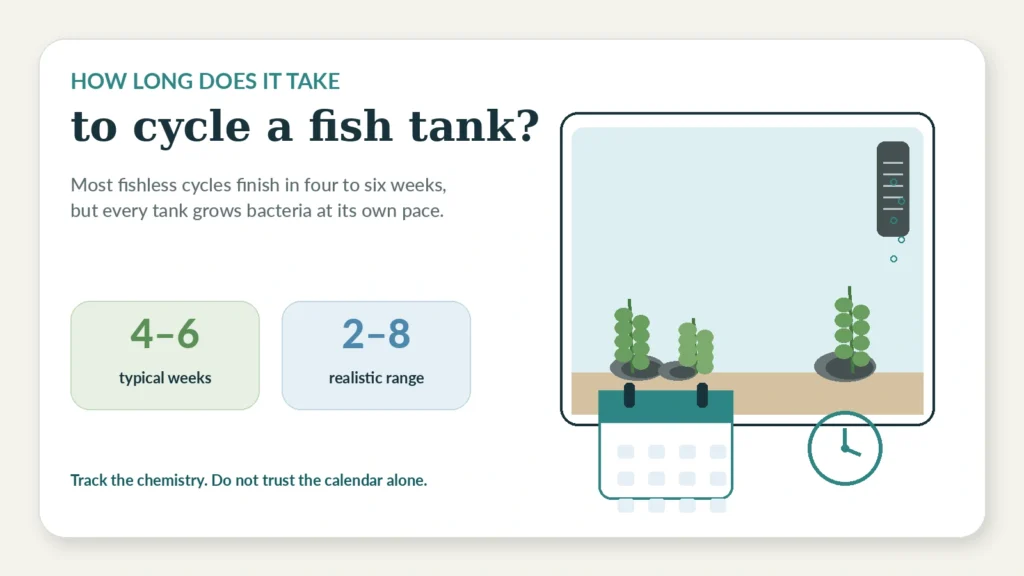
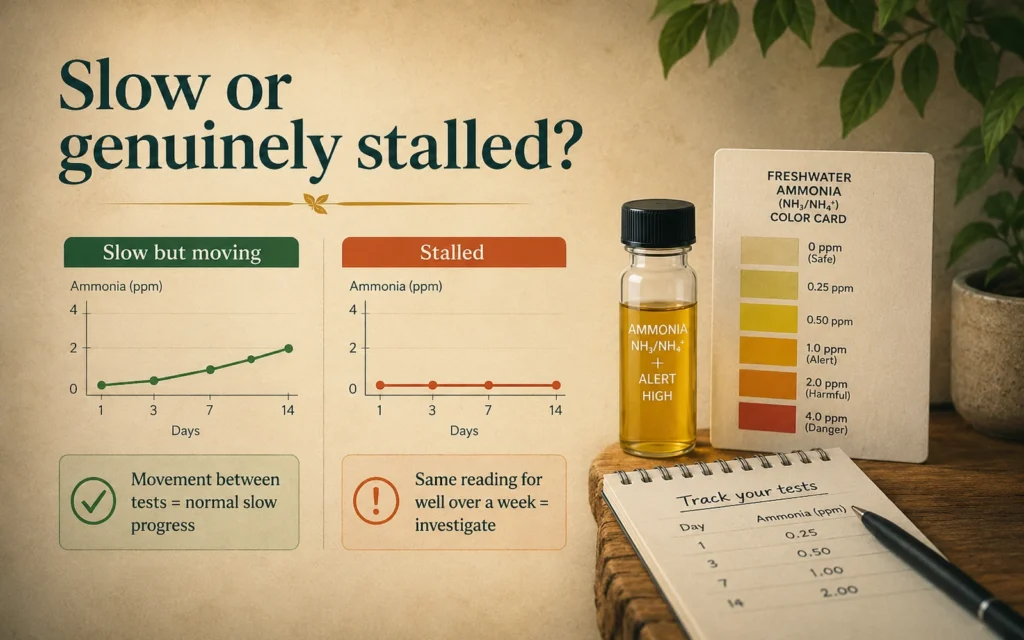
If you have confirmed dechlorinator use, checked and ruled out low pH, confirmed you have not badly overdosed ammonia, confirmed your filter has adequate media and has run continuously, and it is still not moving after working through all of the above, it is worth distinguishing a genuine stall from the normal slow stretch every cycle goes through. How long does it take to cycle a fish tank explains that distinction and what a normal slow patch actually looks like versus a true stall.

If there is already a fish in the tank while you are working through this (a fish-in cycle rather than a fishless one) and it is showing signs of distress right now, stop troubleshooting the chemistry first and go to aquarium emergency help for the immediate steps, then come back to this list once the fish is stable.
FAQ
Why is my ammonia stuck at the same reading during a fishless cycle? Most stalls trace back to one of five causes: not dechlorinating every water addition, low pH slowing the bacteria, an overdosed ammonia level, insufficient filter surface area, or an interruption in filter flow. Working through them in that order resolves the large majority of stalls.
Does low pH really stall an aquarium cycle? It can. Ammonia's balance between its two chemical forms shifts with pH, and hobby troubleshooting sources commonly report that a pH at or below roughly 6.5 can slow a cycle, with pH at or below roughly 6.0 sometimes stalling it. The exact threshold varies by tank and by source.
Can I add too much ammonia and stall the cycle myself? Yes. Dosing ammonia well above a moderate target is commonly reported as inhibiting the bacteria rather than feeding them faster. A partial water change to bring the level down to a more moderate dose is the typical fix.
I used a bottled bacteria product, so why is my ammonia still not moving? Some of these products add bacteria to the water column rather than directly seeding the filter media, and bacteria that never establish on a surface can die off rather than build a lasting colony. Seeding directly from an established tank's filter media is a more reliable route.
How long should I wait before deciding my cycle is actually stalled rather than just slow? If ammonia has held the exact same reading for well over a week despite consistent dosing and a continuously running filter, and you have checked the causes above, that is reasonable grounds to treat it as a genuine stall rather than simply a slow patch.