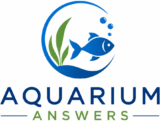
Yes, veterinarians who treat fish exist, and the reason to know that is simple: the alternative most fishkeepers default to is buying a treatment off a shelf and guessing at a disease from a photograph, which is how healthy tankmates get medicated and sick fish get the wrong drug. The American Association of Fish Veterinarians maintains a public Find a Fish Vet directory, many exotics and general practices will consult on fish or refer you, and a great deal of fish veterinary work is done by phone or video because the patient travels poorly.
The Direct Answer: Yes, Fish Vets Exist
Aquatic veterinary medicine is a real specialty. Its practitioners work with ornamental fish, koi, aquaculture and public aquariums, and a meaningful number of them see hobbyists' fish.
The reason this comes as news to most keepers is cultural rather than practical. The aquarium hobby grew up around shop counters and forums, so its instinct when a fish is ill is to identify the disease from an image and buy a bottle. That instinct is why so many aquarium articles end in a dosing chart, and it is why this site's Cluster 3 pages end here instead.
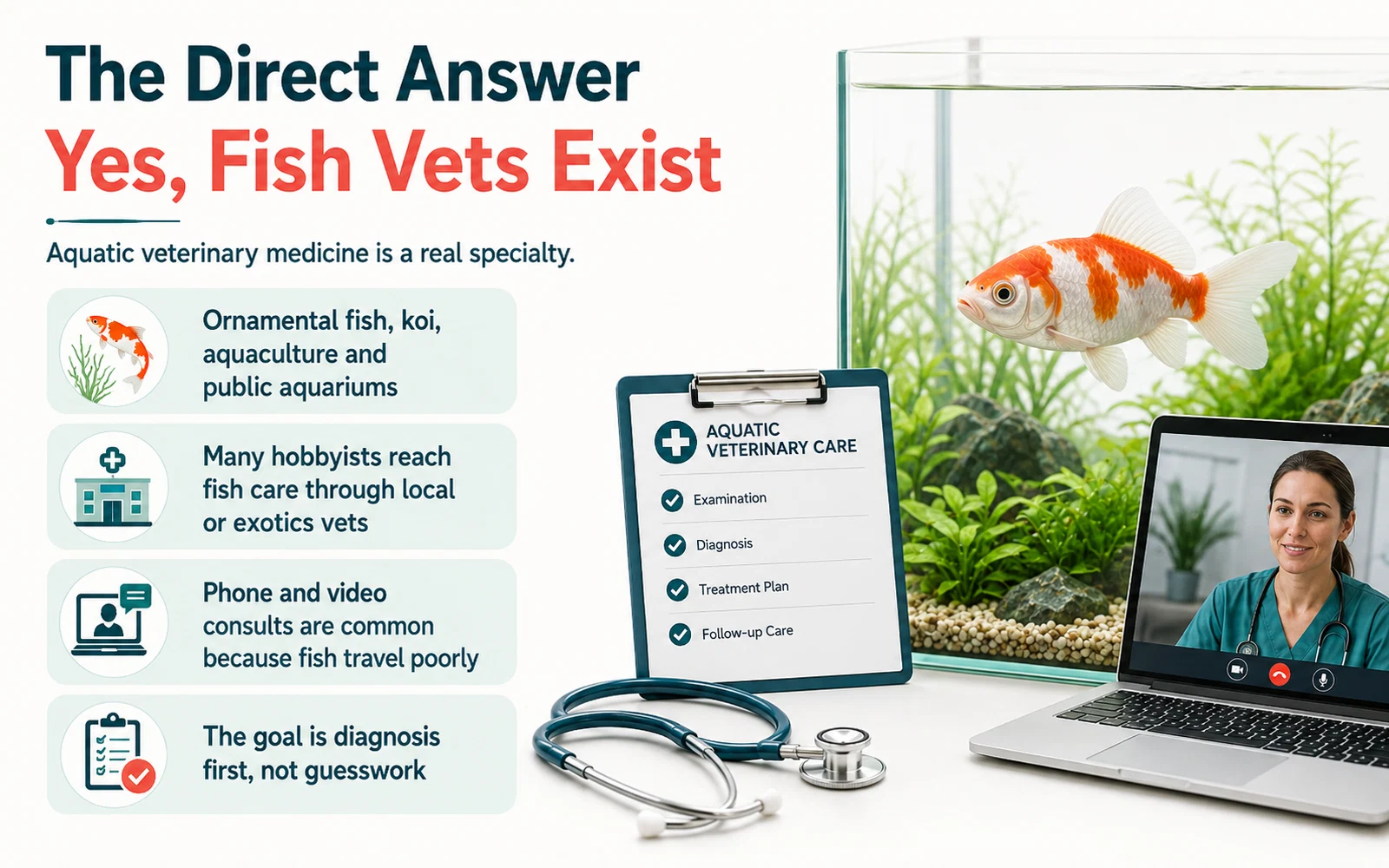
When It Is a Vet Call, Not a Water-Quality Problem
Most aquarium problems are water problems, and those you can solve yourself. Check the water first, always: something is wrong with my tank is the order of checks, and ammonia above zero covers the most common finding.
The threshold has been crossed when:
- The water tests clean and the fish is still unwell. This is the clearest single signal. If ammonia and nitrite are zero, temperature is right, and the animal is still declining, the cause is not something a water change reaches.
- There is something visible on the body that you cannot account for: growths, ulcers, wounds, patches, unusual coloring, swelling, protruding scales, or anything attached to the fish.
- A fish has been unwell for more than a few days, or is getting worse rather than better after the water was corrected.
- Multiple fish are dying and you cannot identify a cause.
- The next step would be choosing a medication. This is the moment. If you are about to select a treatment based on a guess about what the disease is, that is precisely the decision a veterinarian is qualified to make and you are not.
- A fish is suffering and you are considering euthanasia. There are humane and inhumane ways to do this, and a veterinarian can advise on it or perform it.
- You keep valuable or long-lived fish, koi in particular, where the animal may be worth more than the consultation and may live for decades.
How to Find One
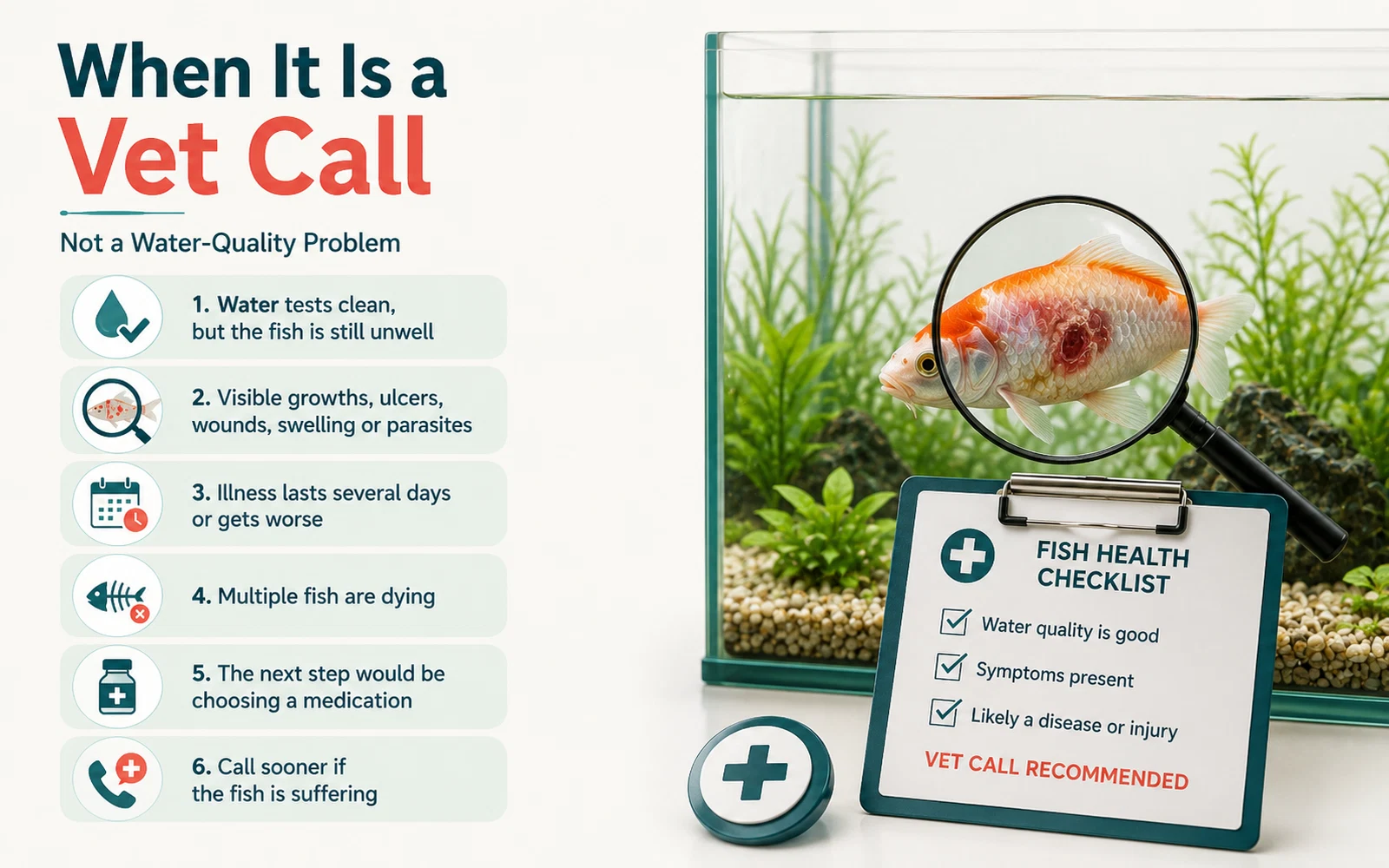
- The American Association of Fish Veterinarians' Find a Fish Vet directory (fishvets.org) is the standard starting point in the US. It is searchable by location, and the association's own guidance is that if nothing appears near you, contact them for help locating someone, or ask a local vet whether they will collaborate with a fish vet remotely.
- Your own local veterinary practice. Many general practices do not treat fish but know who does. Ask; the referral costs nothing.
- An exotics veterinarian. Exotics practitioners routinely work with ectothermic animals such as reptiles and amphibians, and are often the most accessible route to informed help quickly, even where fish are not their main focus.
- A good local aquarium shop, or an aquarium society. Both tend to know which vets in the area will see fish, because their customers and members have asked before. Societies in particular keep informal lists.
- Remote consultation. Because moving a sick fish is stressful and sometimes impractical, a lot of fish veterinary work happens over phone or video with photographs, water test results and history. Do not rule out a vet an hour away for that reason.
- UK and Ireland readers: the Ornamental Aquatic Trade Association publishes a Find a Fish Vet page, and the Fish Veterinary Society is the professional body to ask.
What to Have Ready Before You Call
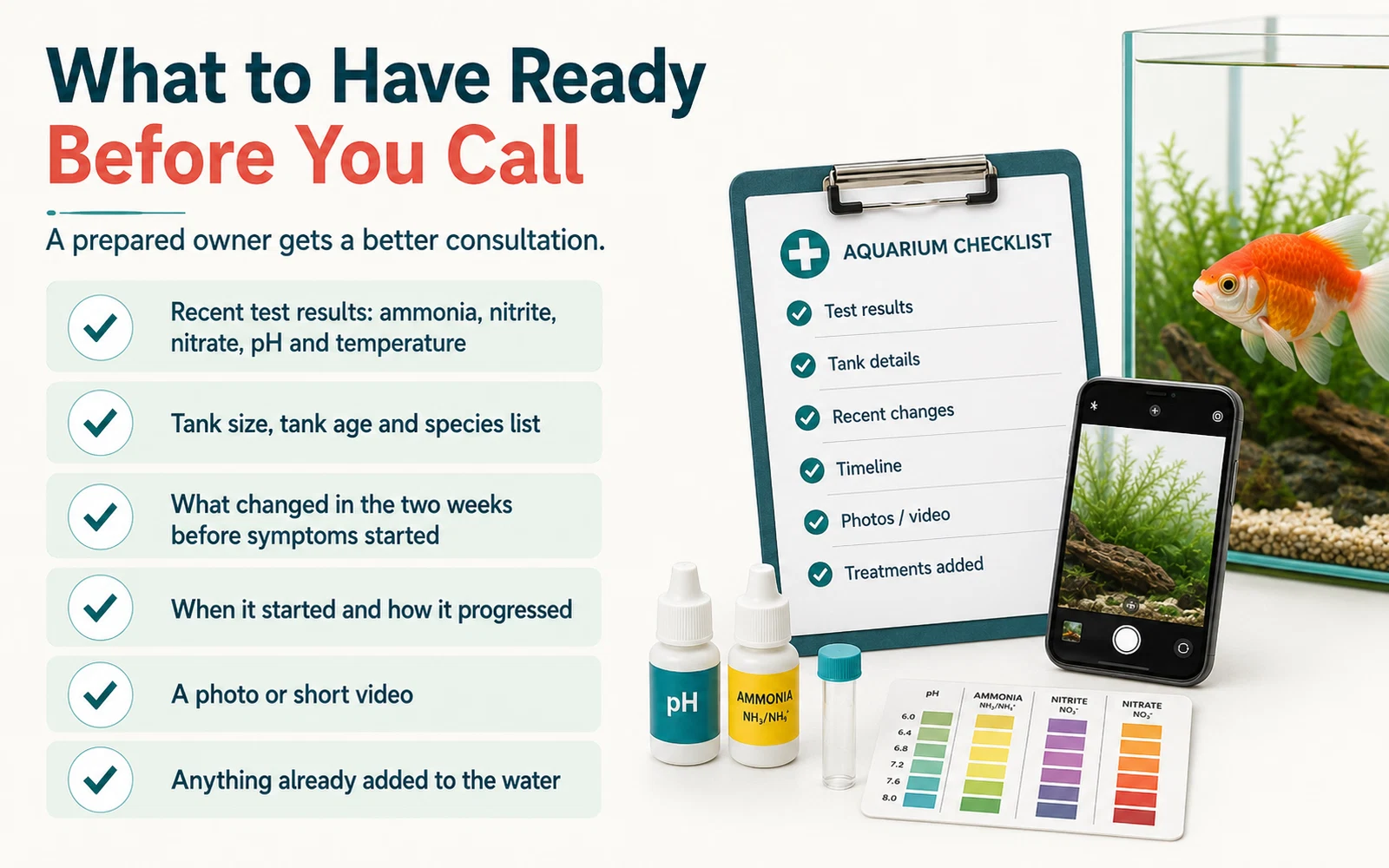
A prepared owner gets a much better consultation, and everything on this list is information only you have.
- Recent test results for ammonia, nitrite, nitrate, pH and temperature, with the date and time you took them. Aquarium water parameters covers what to test.
- Tank volume and how long it has been running. A three-week-old tank and a three-year-old tank suggest completely different causes.
- What is in it: species and how many, plus plants, and whether anything was added recently.
- What changed in the two weeks before symptoms started. New fish, new decor, a filter clean, a water change, a power cut, a heatwave, a new product, decorating or cleaning done in the room.
- When it started and how it has progressed, and how many fish are affected.
- A photograph or short video. For fish this is worth more than a written description, because behavior and body condition are much of the diagnosis. Film through the front glass in good light without flash.
- Anything you have already added to the water. Be complete about this, including treatments that did not seem to help. It matters for interactions.
Why This Site Will Not Diagnose or Dose for You
It is worth being direct about the editorial line the whole of this cluster runs on.
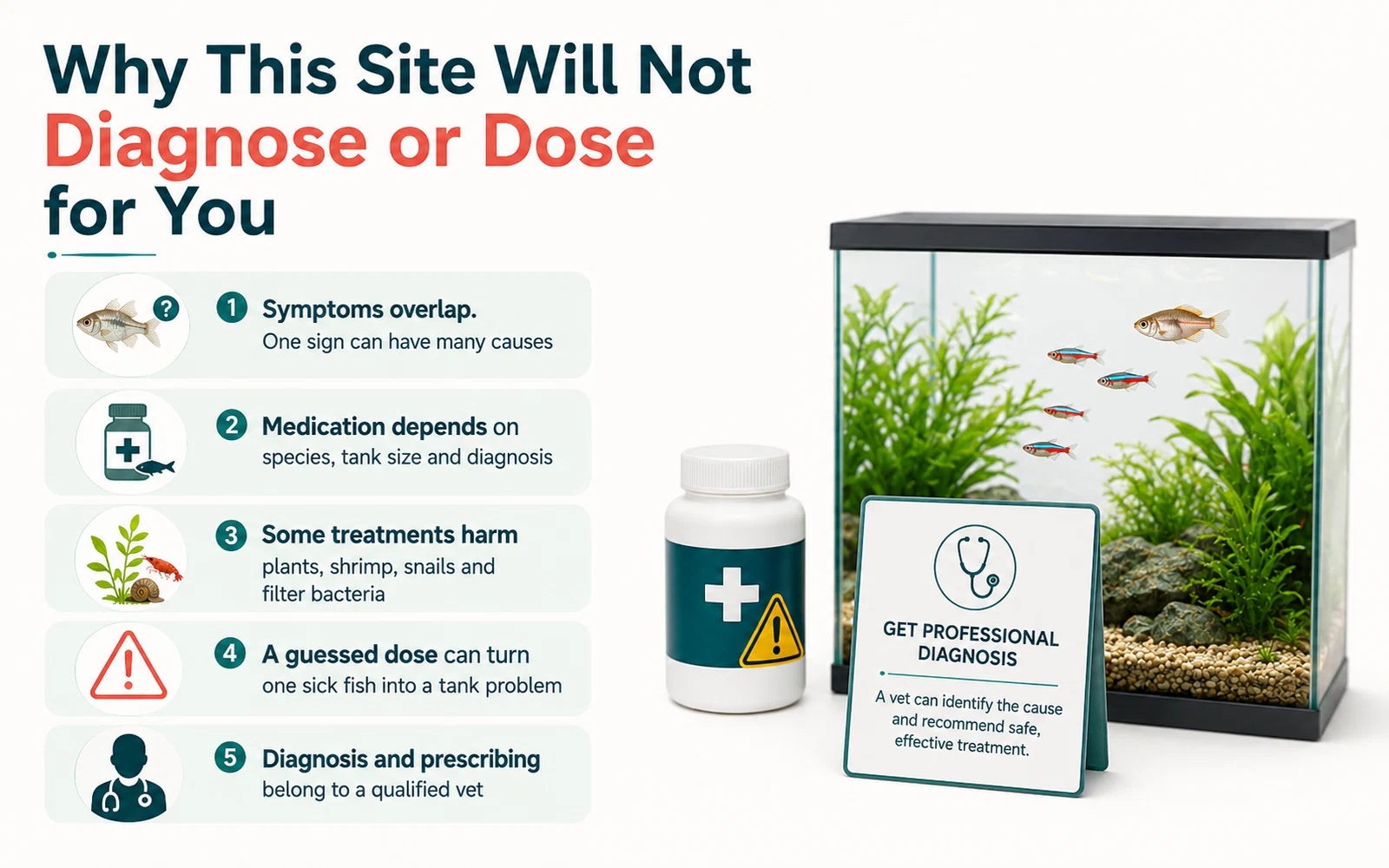
This site does not tell you what your fish has. Symptom description, likely causes and what to check are useful and safe. "Your fish has X" written by somebody who has never seen the animal is a guess wearing the costume of an answer, and the reader then treats for X.
This site does not publish medication doses, not in a table, not with a caveat, not "for reference." Fish medications are dosed by tank volume, and the same drug that treats one species harms another. Invertebrates and plants complicate it further, and several common treatments harm the filter bacteria the tank depends on. A dose taken from a page that does not know your tank is the most reliable way to turn one sick fish into a tank of them.
That refusal is only defensible if the alternative is real, which is why this page exists. The answer is not "you are on your own." It is "this is a job for someone qualified, and here is how to reach them."
Is It Worth It for a Fish?
This is the unspoken question, so here it is plainly.
Consultation fees vary by region and by practice, and this site does not publish prices for anything. What is worth weighing is that a fish vet consultation frequently replaces several rounds of guessed treatments, each of which costs money, stresses every animal in the tank, and can harm the biological filter. The cheap path is often not cheaper.
There is also a scale question that is legitimate. A tank of inexpensive community fish and a decade-old koi are different situations, and nobody is obliged to pretend otherwise. But the situations where a vet is most useful, an unexplained illness spreading through a tank, are exactly the ones where the cost of getting it wrong is highest, because it is rarely one fish by the end.
And there is a welfare answer that does not depend on the animal's price. This site's editorial position is that the fish comes before the sale; the same principle applies to the consultation.
What to Do While You Wait
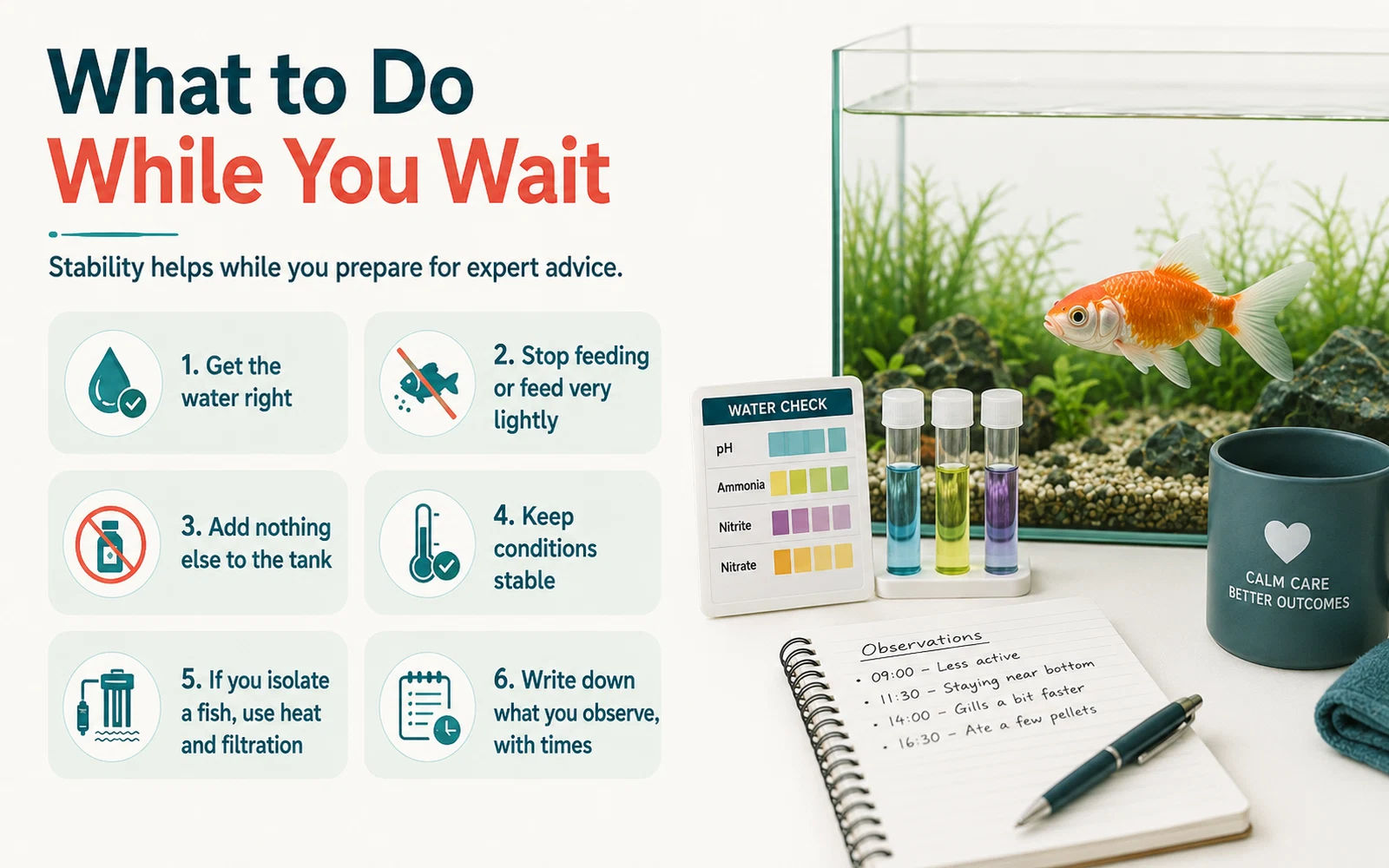
- Get the water right. Whatever else is going on, clean water improves the odds. Test, and dilute with dechlorinated, temperature-matched water if anything is above zero.
- Stop feeding, or feed very lightly, and remove anything uneaten.
- Add nothing else to the tank. Do not start a treatment now that will confuse the picture the vet is trying to read.
- Keep conditions stable. No pH adjustment, no temperature change, no filter cleaning.
- If you isolate a fish, use a container with heat and filtration, not a bare bucket.
- Write down what you observe, with times. Progression matters diagnostically.
- Follow the immediate steps on this site's aquarium emergency help page, and if fish are at the surface breathing hard, my fish are gasping at the surface is the more specific guide.
FAQ
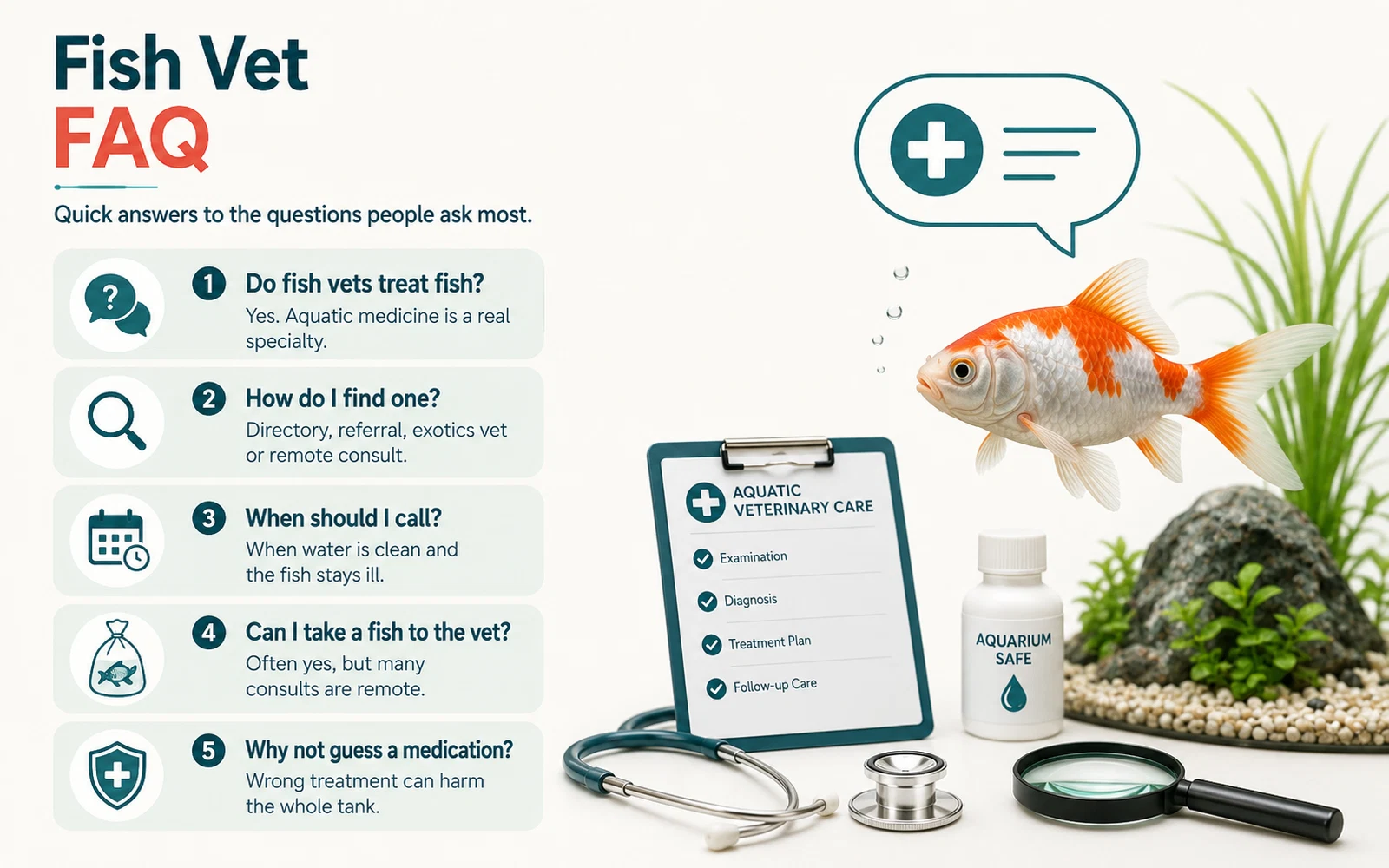
Do veterinarians actually treat fish? Yes. Aquatic veterinary medicine is an established specialty covering ornamental fish, koi, aquaculture and public aquariums, and the American Association of Fish Veterinarians maintains a public directory of practitioners.
How do I find a fish vet near me? Start with the AAFV's Find a Fish Vet directory, then ask your own veterinary practice for a referral, an exotics vet, or a local aquarium shop or society. Remote consultation by phone or video is common and practical.
When should I contact a vet instead of treating the fish myself? When the water tests clean and the fish is still unwell, when there are visible signs on the body you cannot explain, when illness persists or spreads, or when the next step would be choosing a medication.
Can I take a fish to the vet? Often yes, transported in a bag or container of its own tank water, but many consultations are done remotely precisely because moving a sick fish adds stress. Ask the practice what they prefer before you net anything.
Why will this site not just tell me what medication to use? Because fish medications are dosed by tank volume and species, several harm filter bacteria or invertebrates, and a wrong dose kills animals. Identifying a disease and prescribing for it requires seeing the animal, which is what a veterinarian does.