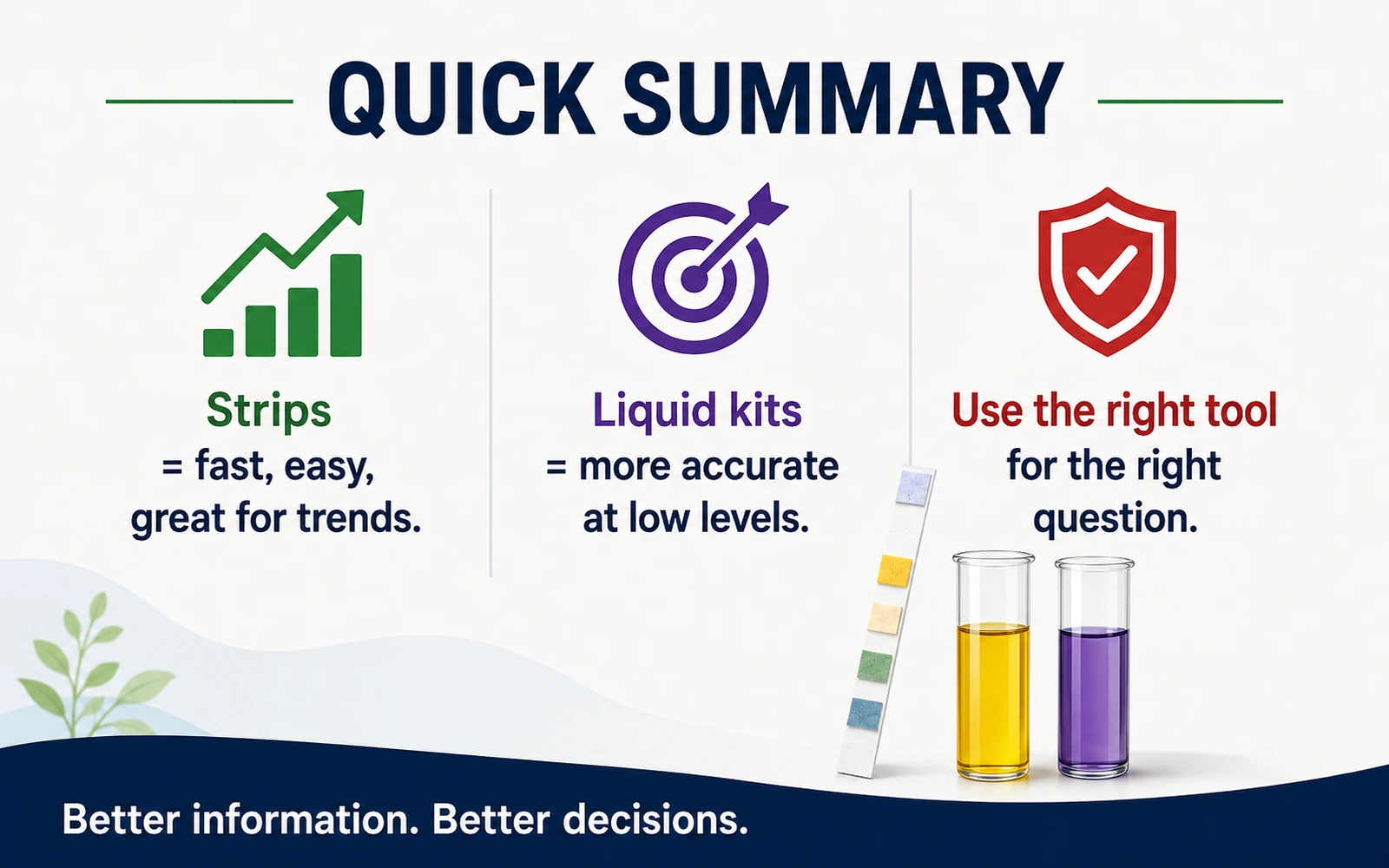
Trust a test strip to tell you whether something is roughly where it was last week. Do not trust it to tell you a number is truly zero. Liquid reagent kits are consistently described as more accurate at low concentrations, which is exactly where ammonia and nitrite readings decide whether a tank is safe, while strips are quicker, easier and adequate for following a trend such as a slowly climbing nitrate. The distinction is not "strips are useless." It is that the two tools fail in different places.
The Direct Answer: Trust a Strip for Trends, Not for a Zero
Most comparisons on this topic hand down one verdict for all parameters at once, and that is why the advice feels contradictory in practice. It is more useful to split it by what you are asking the water.
If your question is "is this number moving?" a strip generally answers it. Nitrate creeping up between water changes, pH sitting in the same place week after week, hardness that has not changed since you moved house. A strip is fast, needs no counting of drops, and is good enough to show direction.
If your question is "is this genuinely zero?" a strip is the wrong instrument. That question comes up during cycling and any time fish look unwell, and it is the one where the difference between the technologies is largest. Aquarium water parameters covers what each of the readings means once you have it.
Why the Two Technologies Give Different Answers
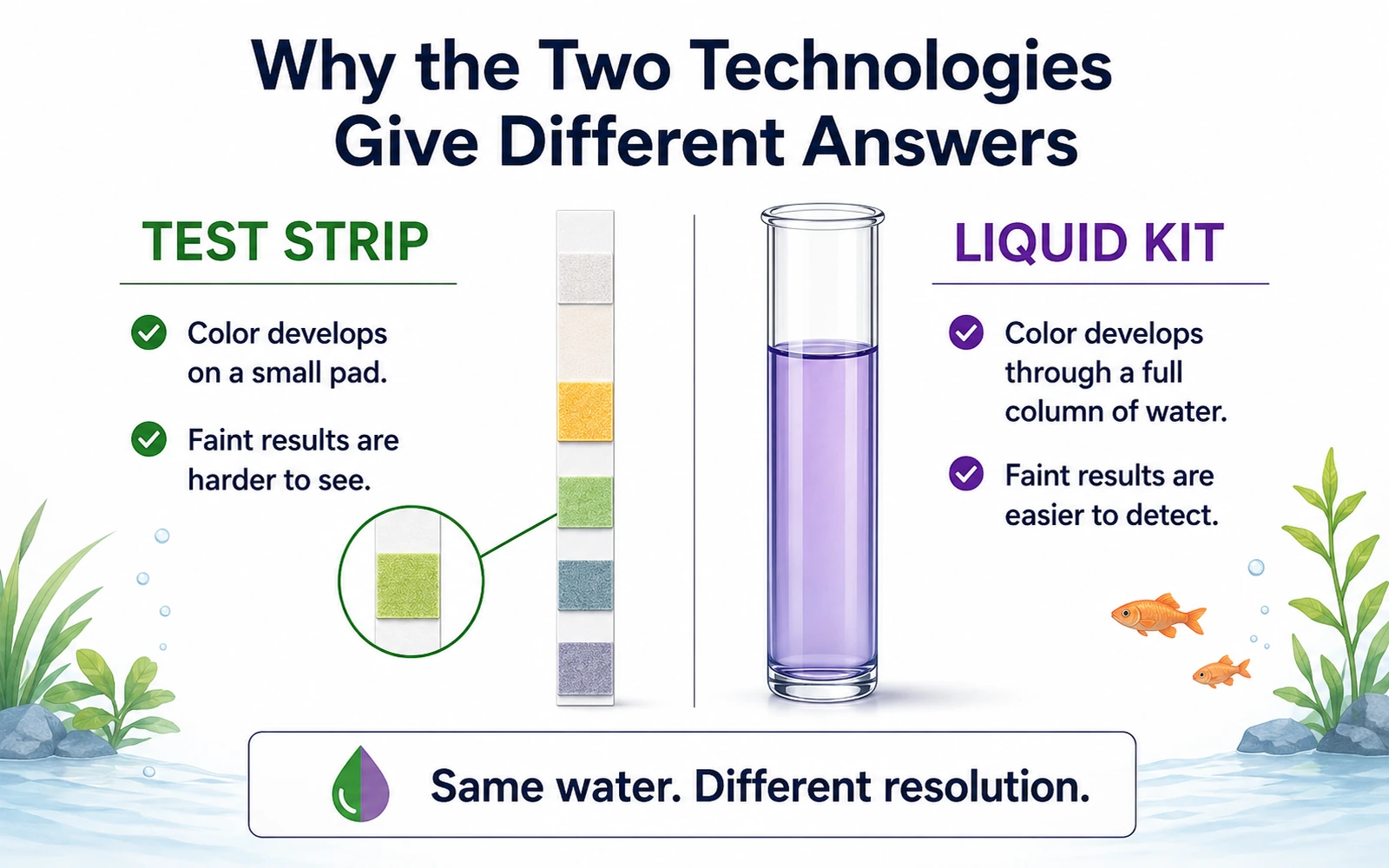
A dip strip carries dried reagent on a paper pad. You wet it, the pad changes color, and you match that color against a printed chart. A liquid kit adds measured reagent drops to a fixed volume of tank water and you match the resulting color of the whole sample against a chart.
The gap comes from the sample. A liquid test develops color through a column of water, so a faint result is still visible as a tint. A strip develops color on a small piece of paper that has just been through moving water, and a very faint result is harder to distinguish from the pad's unreacted color. Published comparisons describe liquid kits as offering clearer calibration points, while strip results depend more on lighting and on the reader's interpretation of a subtle shade.
That is a difference in resolution, not honesty. Both are reading the same water.
Where the Gap Actually Matters: Ammonia and Nitrite Near Zero
This is the part worth knowing, because it is where the choice of tool changes what you would do next.
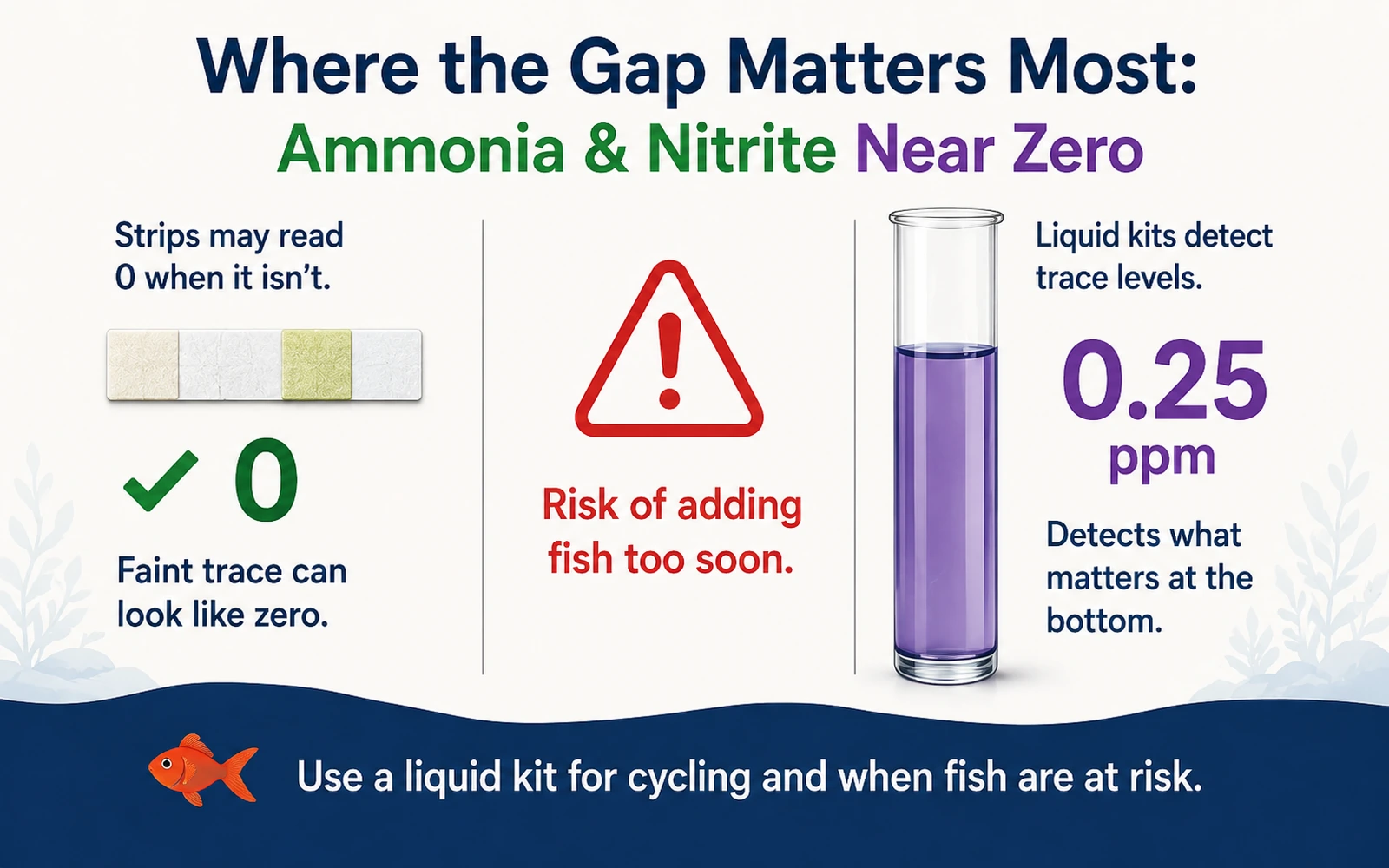
Ammonia and nitrite matter most at the very bottom of their scales. The practical question is never "is ammonia high" but "is there any at all," because the answer determines whether a tank is finished cycling and whether fish should go in. Reviewers testing kits against laboratory results, including Modestfish's comparison, report that liquid reagents resolve trace concentrations that dry pads can miss, with a low ammonia reading such as 0.25 ppm given as the example of what strips are most likely to record as nothing.
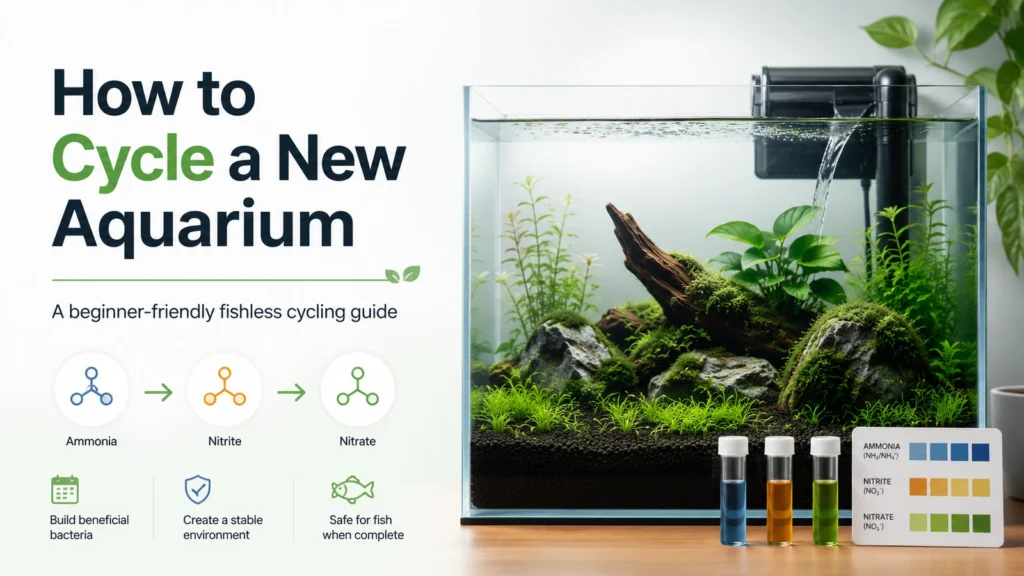
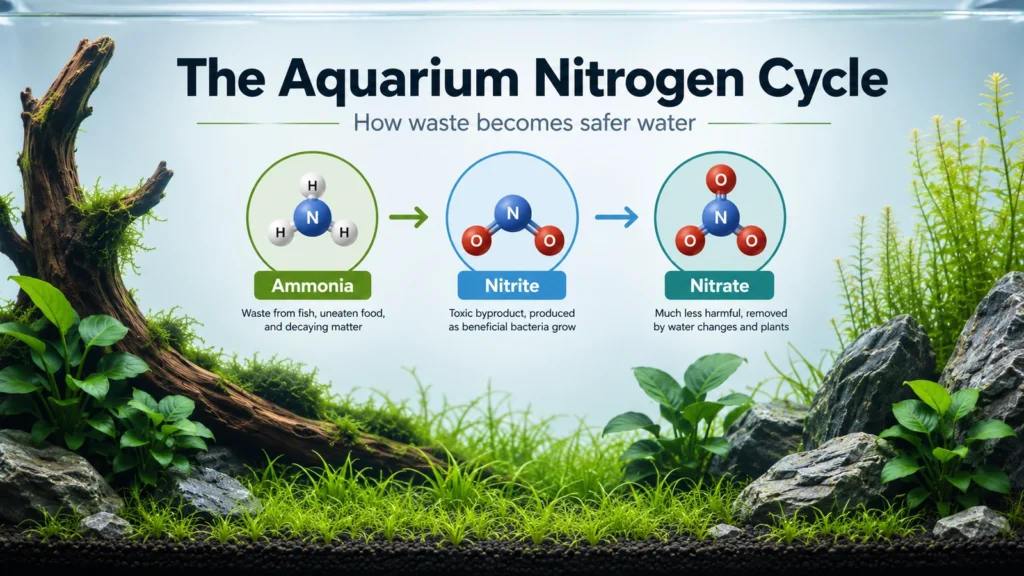
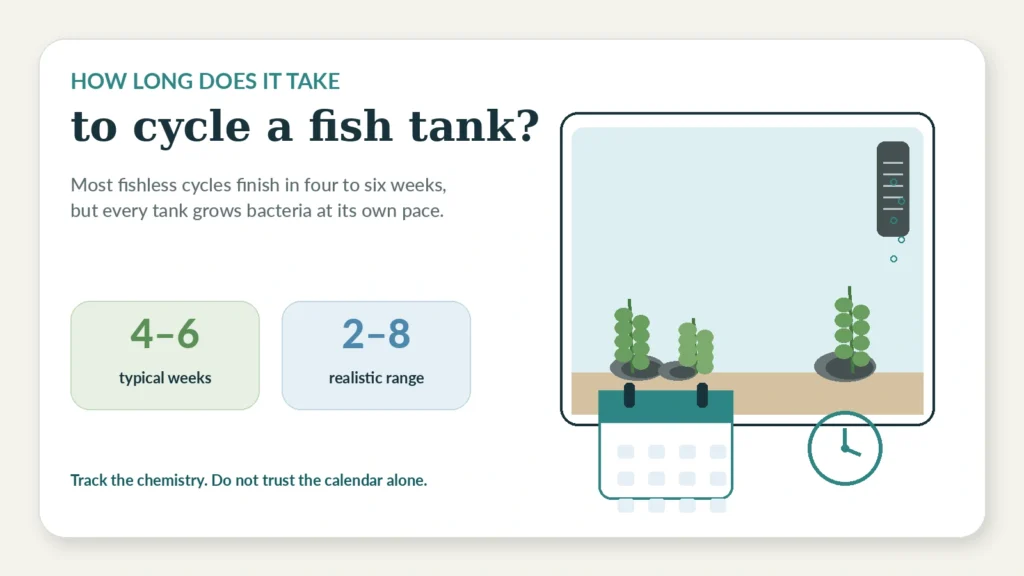
The consequence is specific. A strip reading a faint trace as zero looks identical to a genuinely finished cycle, and that is the exact moment somebody adds fish. If you are cycling a tank, or checking whether a cycle has stalled, how to cycle a new aquarium explains why those two readings carry the whole decision. It is the strongest argument for having a liquid kit available at least for these two parameters, even if strips handle your routine checks.
This page will not tell you what a safe ammonia or nitrite level is, because there is no threshold worth publishing as one. The target is zero, and how close you actually are to it is the question a strip struggles to answer.
Where Strips Are Genuinely Fine
The review pages that condemn strips tend to skip this part.
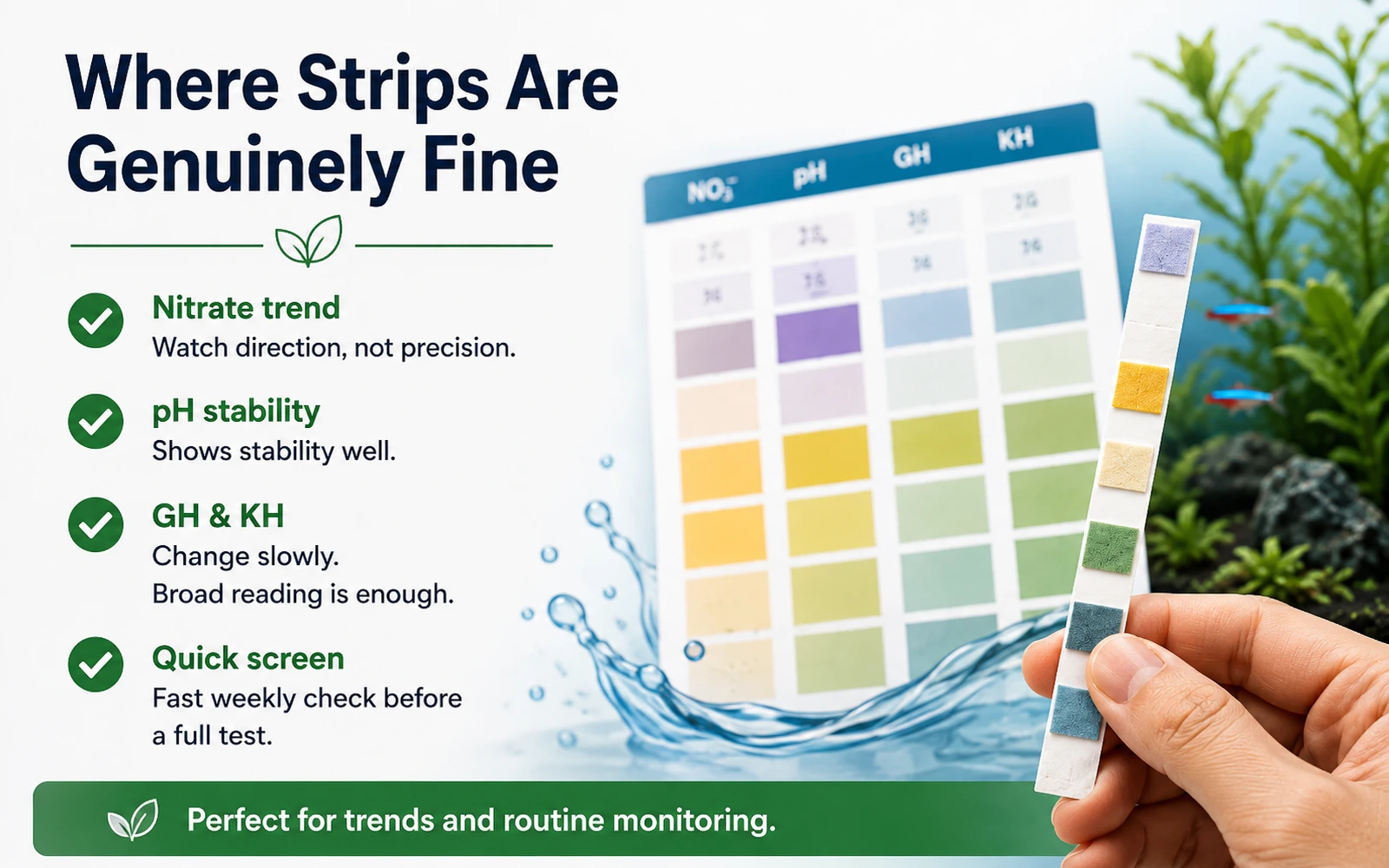
- Nitrate trend. You are watching for a direction and a rough magnitude, not a precise figure. Nitrate is also the reading that is least precise on any home test, liquid included, since the liquid nitrate test is the one that requires vigorous shaking and is commonly misread for that reason.
- pH stability. What matters in a freshwater tank is usually whether pH is stable rather than what the exact number is, and a strip shows stability perfectly well.
- GH and KH. These change slowly, if at all, and a broad reading is usually sufficient.
- A quick screen before a full test. Many keepers use a strip as a fast weekly check and reach for liquid only when something looks off, which is a reasonable use of both.
What Makes a Strip Read Wrong When the Strip Is Not the Problem
Several sources note that strips read much closer to liquid results when handled properly, which means a chunk of their bad reputation is procedure, not product.
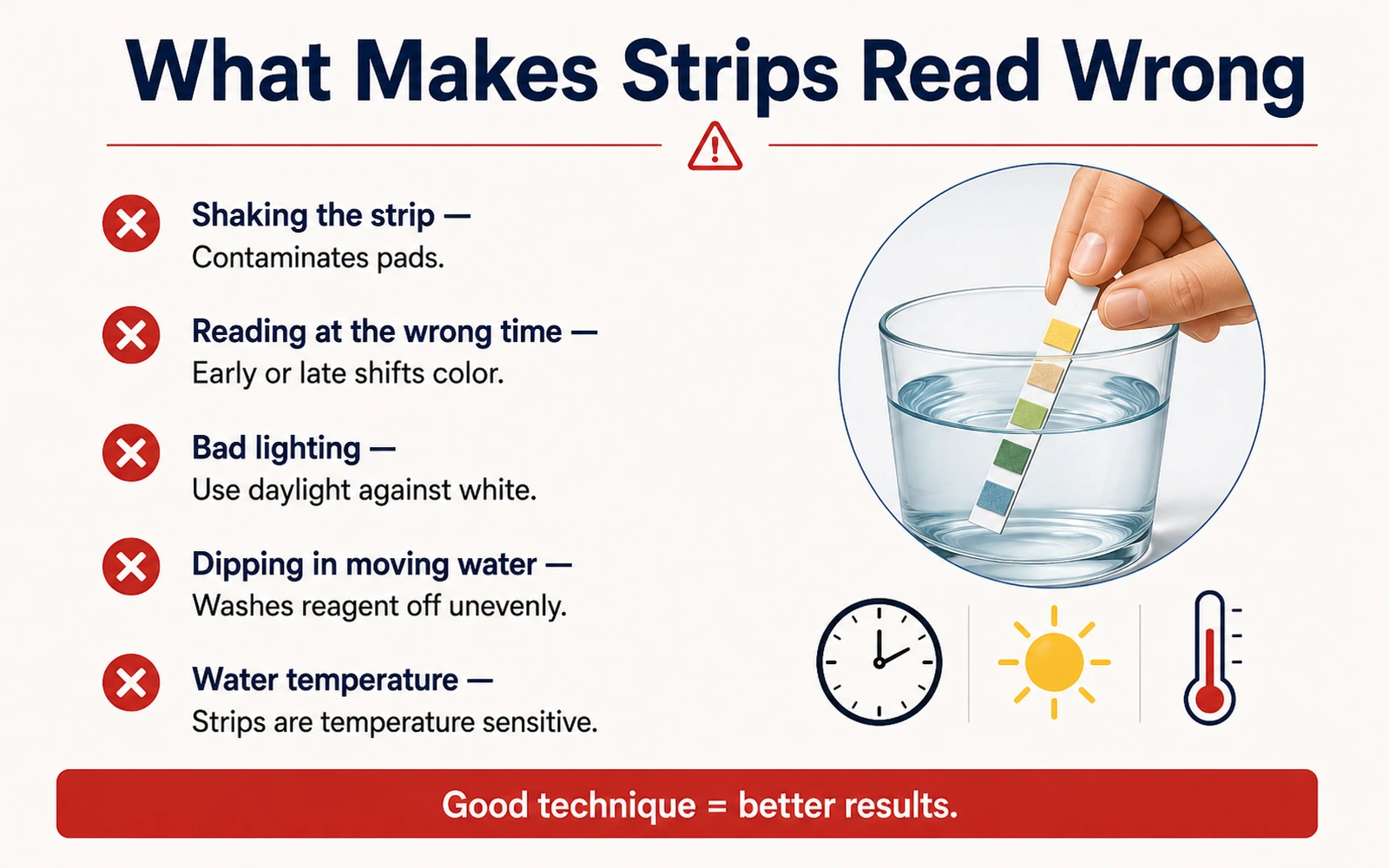
- Shaking the strip after dipping. Reagents run between pads and contaminate neighboring results. Laying the strip flat on a paper towel is the commonly recommended alternative.
- Reading at the wrong time. Each pad has a development window. Reading early or late shifts the color.
- Bad light. Color matching under warm indoor light, or against a colored surface, moves the result. Daylight against white is the fair test.
- Dipping into a moving surface. Water flow washes reagent off the pad unevenly.
- Water temperature. Published guidance notes that strip results are affected by water and ambient temperature.
None of these turn a strip into a laboratory instrument. They do explain why two people using the same strips on the same tank get different answers.
Shelf Life: The Failure Nobody Notices
This is the failure mode that catches careful people, because nothing about it looks wrong.
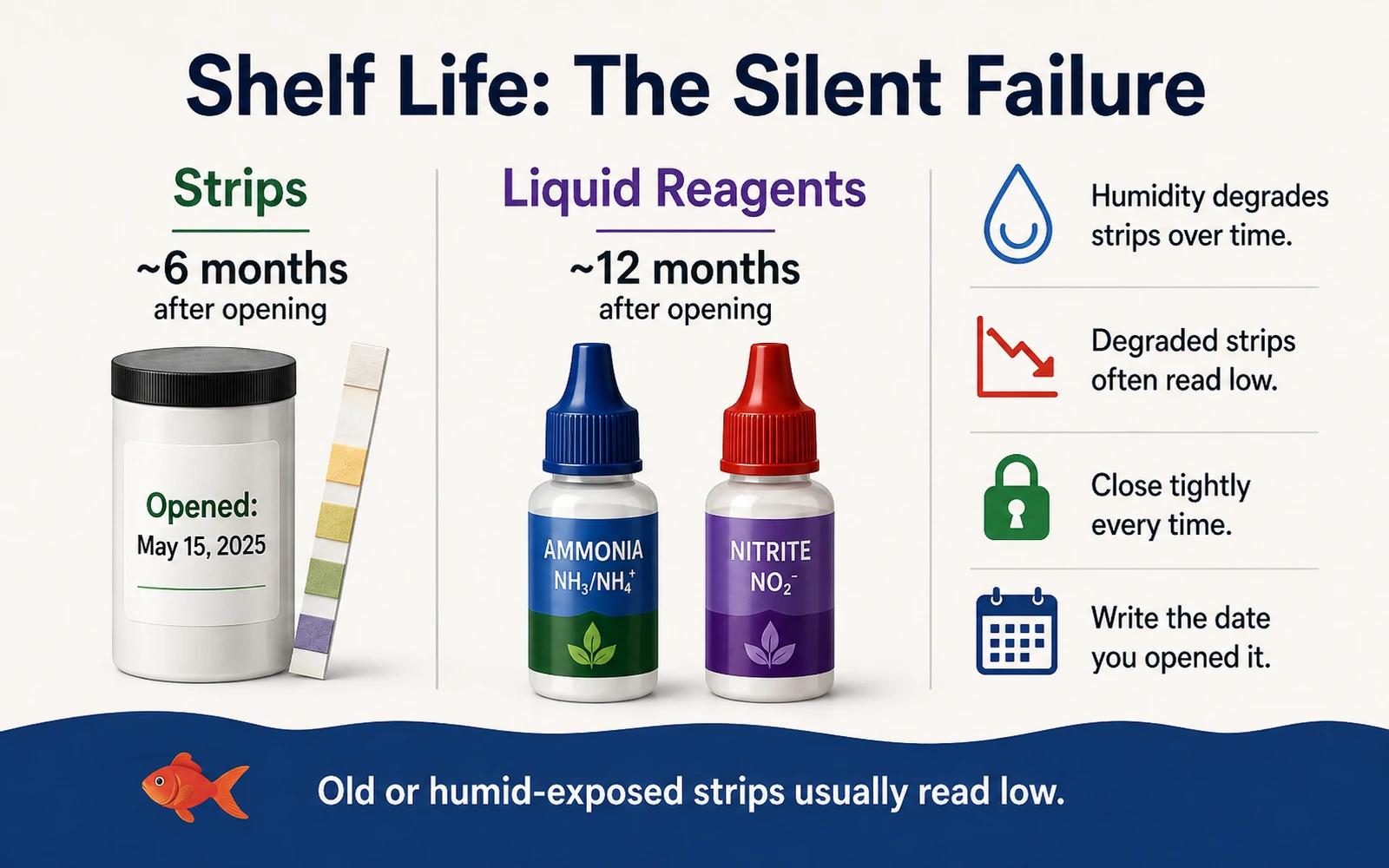
Strips absorb moisture from the air once the container has been opened. Published guidance commonly gives around six months after opening before humidity noticeably affects them, against roughly a year for liquid reagents after opening. A tube left open on a humid shelf degrades faster still.
A degraded strip does not announce itself. It gives a plausible reading that is simply wrong, and it usually errs toward reading low, which is the dangerous direction. If your strips are old, have lived in a bathroom or beside the tank, or the container has been left open, the reading you are looking at may be telling you about the strip rather than the water.
Two habits deal with it: close the container immediately every time, and write the date you opened it on the label.
What to Do If Strips Are What You Own Right Now
You do not have to throw them away, and this site is not going to tell you what to buy.
Use what you have for routine trend checks, and treat any near-zero ammonia or nitrite result as provisional rather than confirmed, especially in a tank that is new, recently disturbed, or holding fish that look unwell. If a strip says everything is fine and your fish say otherwise, believe the fish and get the reading confirmed by a different method.
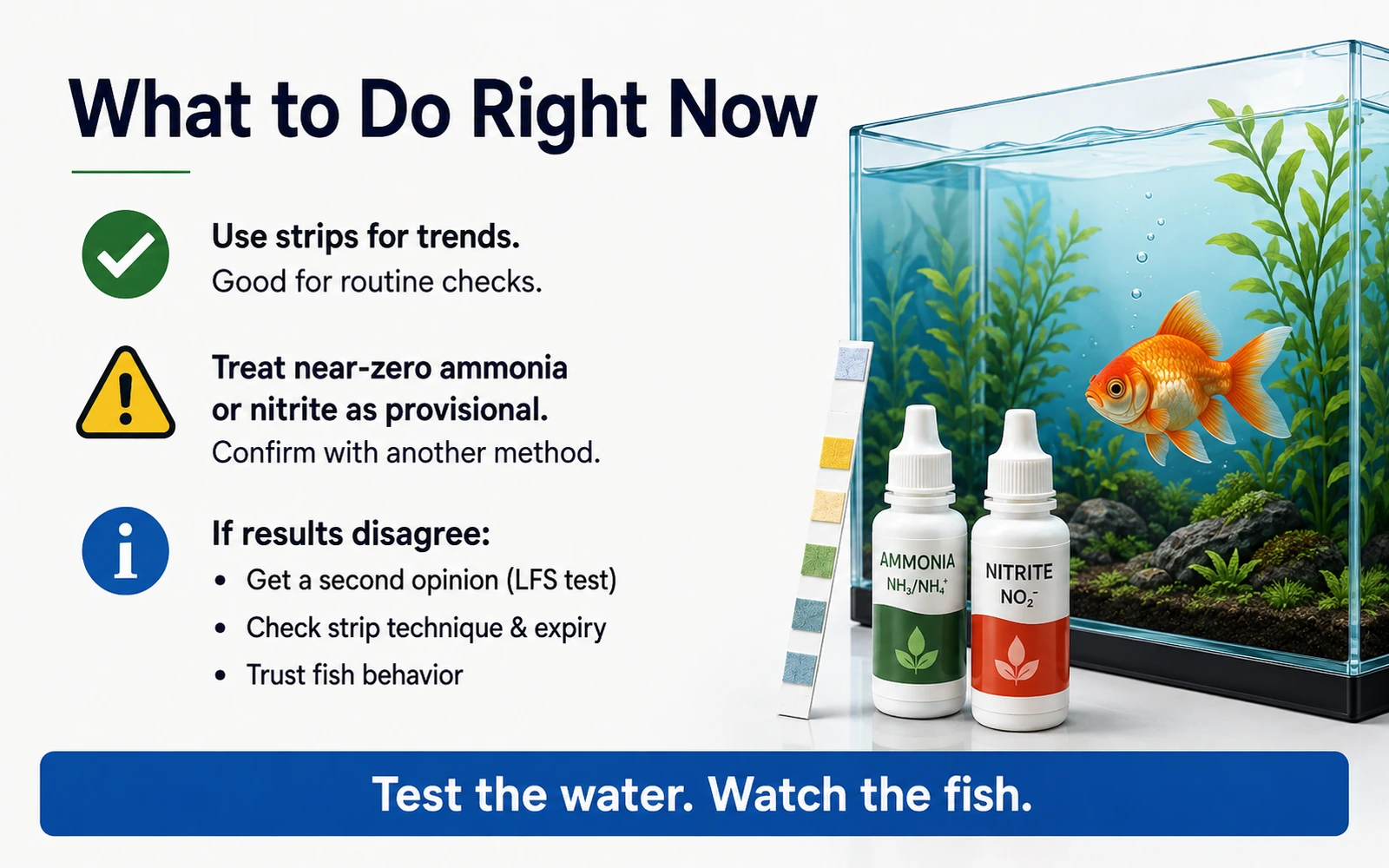
Confirming does not necessarily mean buying anything today. Many local aquarium shops will test a water sample, and knowing whether your strip and their result agree tells you something useful about your strips as well as about your tank. When two tests disagree, did my cycle crash, or is my test kit lying walks through which reading to act on, and nitrite stuck during cycling covers one of the situations where a misread strip most often sends people in the wrong direction.
FAQ
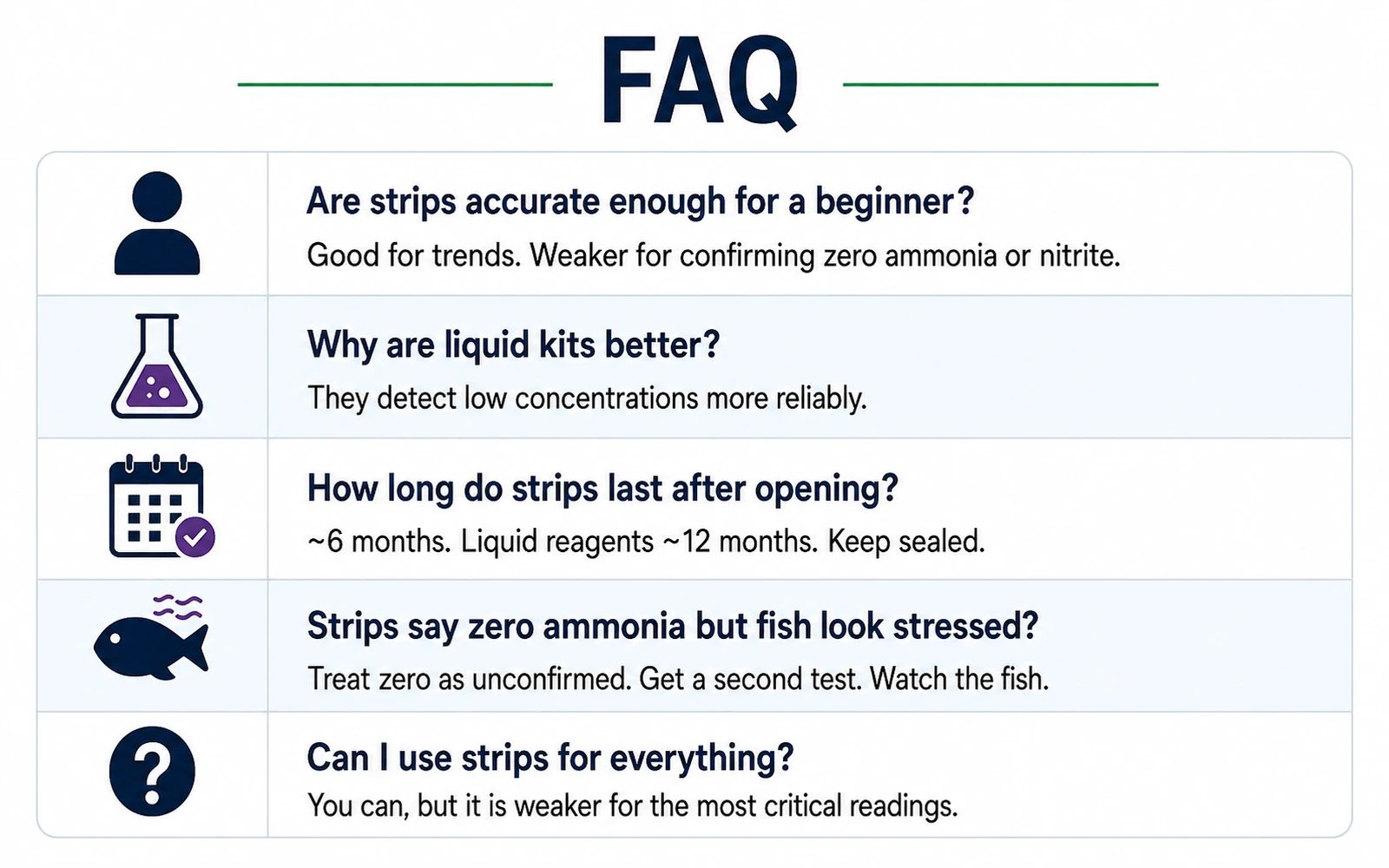
Are aquarium test strips accurate enough for a beginner?
For following trends, generally yes. For confirming that ammonia or nitrite is truly zero, they are the weaker tool, and that is the reading a beginner most needs to get right while a tank is cycling.
Why do people say liquid test kits are better?
Because they resolve low concentrations more reliably. Liquid tests develop color through a full water sample rather than on a small paper pad, which published comparisons describe as giving clearer calibration points and better detection of trace amounts.
How long do test strips last after opening?
Commonly cited guidance is around six months after opening, because humidity degrades the dried reagent. Liquid reagents are usually described as good for about a year after opening. Keep the container sealed and note the opening date.
My strips say zero ammonia but my fish look stressed. What should I do?
Treat the zero as unconfirmed. Have the water tested by another method, check that the strips are in date and were read correctly, and look at the readings alongside the fish's actual behavior rather than instead of it. Persistent stress in fish is a reason to consult an aquatic veterinarian.
Can I use strips for everything and liquid for nothing?
You can, but you accept a weaker answer on the two parameters where being wrong causes the most harm. Many keepers use strips for weekly screening and a liquid method for ammonia and nitrite when a tank is new or something changes.