Watching a fish struggle to stay upright is one of the more distressing things that happens in this hobby, partly because it looks so wrong and partly because the fish is usually still alert while it happens.
The internet will hand you a single label for it, and that label is the problem. "Swim bladder disease" is not a diagnosis. It is a description of what you are looking at, and the things that produce it range from a meal that was too large to an injury to a bacterial infection to poor water. They do not respond to the same thing.
What this page can do is tell you what the pattern points at and what to check, in what order.
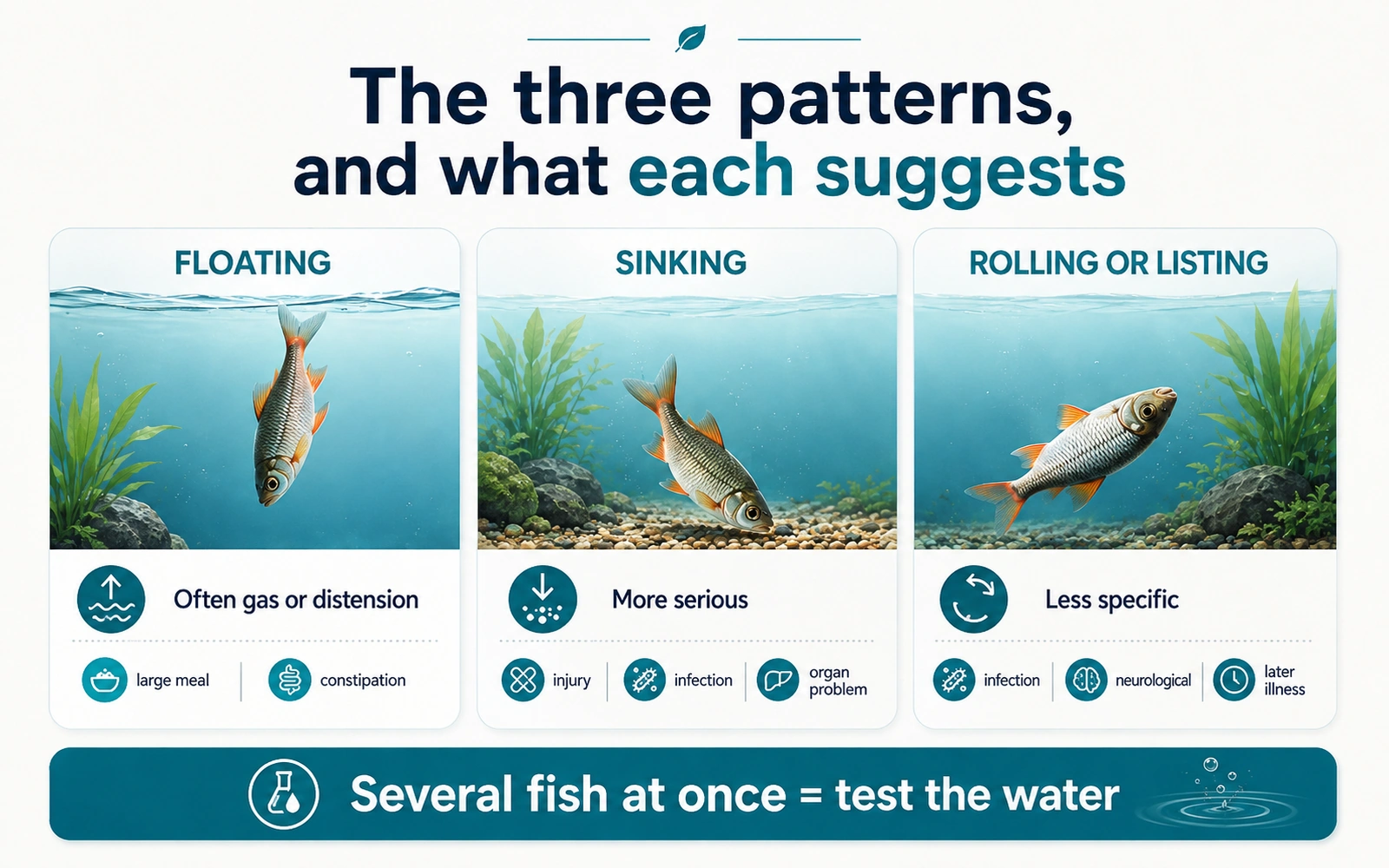
The three patterns, and what each suggests
Watch for two or three minutes and note which one you have.
Floating, and unable to get down. The fish is at or near the surface, often tail-up, and swimming downward takes visible effort that it loses the moment it stops. Most commonly associated with gas or with distension inside the body cavity: a large meal, food that swelled after being eaten, constipation, or trapped air.
Sinking, and unable to get up. The fish rests on the substrate and rises only with continuous effort. Less commonly discussed and generally more serious, because the everyday causes of positive buoyancy do not explain it. Infection, organ problems and injury are more likely here.
Rolling or listing sideways. The fish cannot hold its axis and tips or rolls, sometimes intermittently. This one is the least specific of the three and is seen with infection, with neurological problems, and in the later stages of several unrelated illnesses.
Any of the three appearing suddenly in several fish at once is not a buoyancy problem at all. It is a water problem, and it needs the water tested immediately rather than the fish examined.
Check the water first, every time
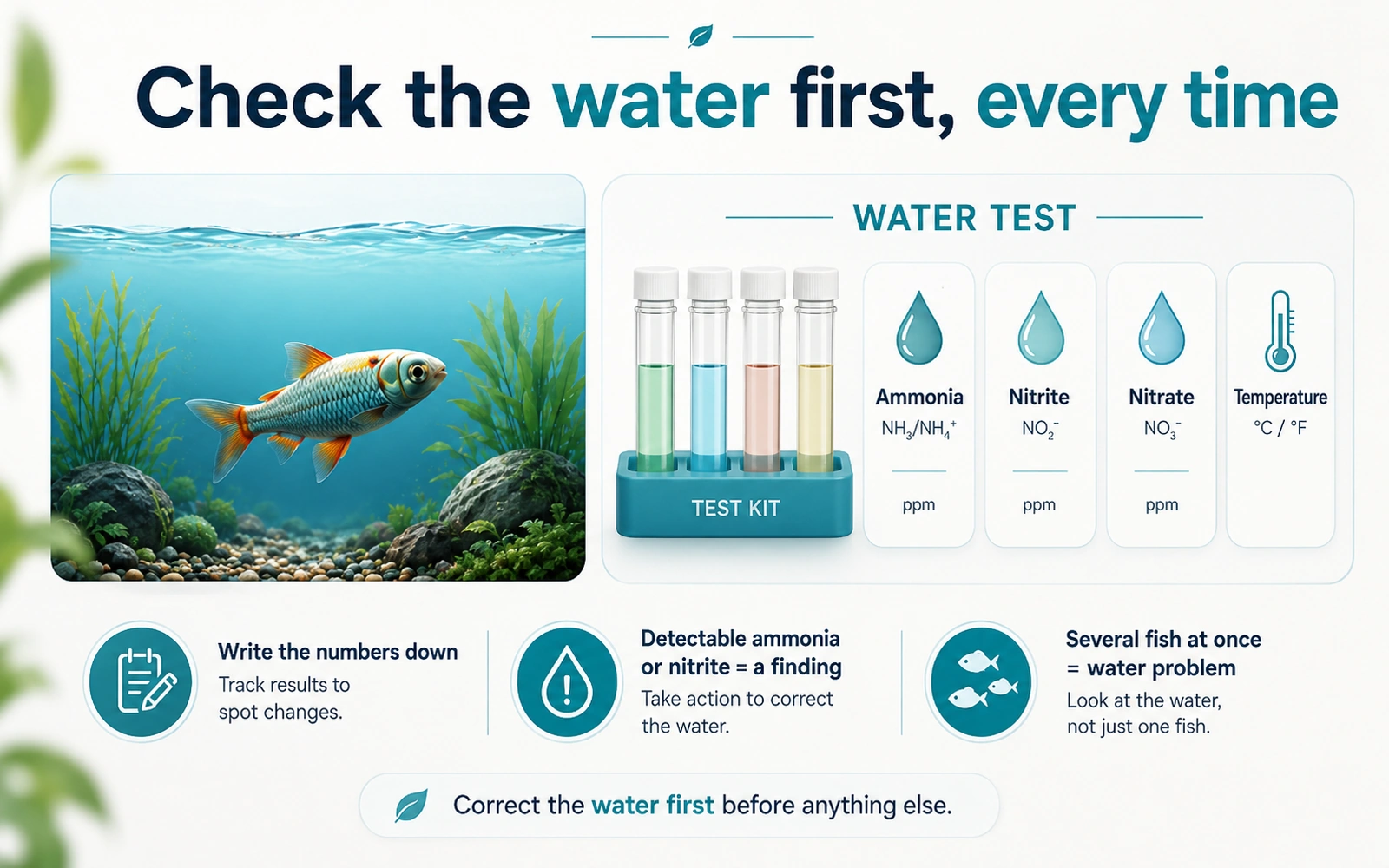
This is not a formality. It is the step that most often changes what you do next.
Test ammonia, nitrite, nitrate and temperature and write the numbers down. Aquarium water parameters explains what each one is telling you and how often to test aquarium water covers the routine that would have caught it earlier.
Two things this site will not do here. It will not give you a figure at which fish begin to lose buoyancy control, because no honest single figure exists: ammonia toxicity depends on pH and temperature, so the same reading is a different exposure in two different tanks. And it will not tell you that a particular reading is fine. What is reliable is simpler: detectable ammonia or nitrite in a tank with an unwell fish is a finding, and correcting it comes before anything else you might try. Ammonia reading above zero is where to go if that is what you found.
Temperature deserves its own look. A fish that is much colder than its species is comfortable at digests slowly, and slow digestion is behind a large share of the floating cases. A tank that has drifted cold, or that swings several degrees between day and night, is worth correcting on its own account, and aquarium water temperature covers what stable actually means.
Then look at the feeding
If the water is clean and one fish is floating, feeding is the next place to look, and it is the most commonly involved factor in the everyday version of this.
The things that come up repeatedly:
- Too much food, too fast. A fish that gulps a large meal takes in air with it and swallows more than the gut can move.
- Dry food that expands. Flakes and pellets absorb water. Food that swells after it is eaten rather than before is a mechanical problem inside a small animal.
- Food taken at the surface by a fish that gulps air along with it.
- A diet that is entirely dry, with nothing that moves through the gut easily.
- Species that are built for this. Fancy goldfish and some short-bodied, round-bodied varieties have compressed internal anatomy as a consequence of how they were bred, and buoyancy trouble is much more common in them. That is a conformation issue, not something you did.
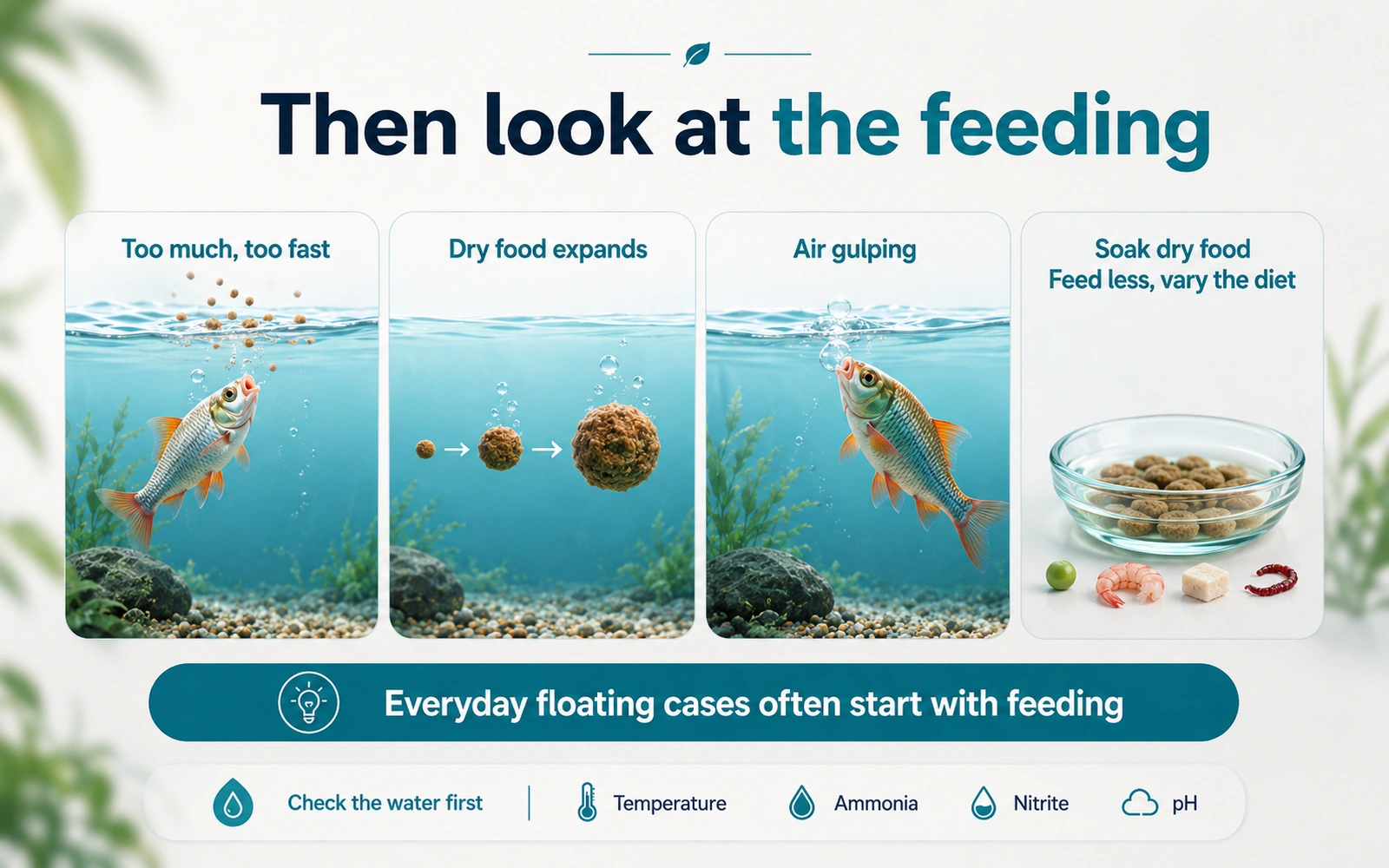
The general corrections are unglamorous and they are within your control: feed less at a time, soak dry food before it goes in so it swells in the water rather than in the fish, and feed a varied diet rather than one dry product. How much to feed aquarium fish covers the amount, which is the part almost everybody gets wrong in the same direction.
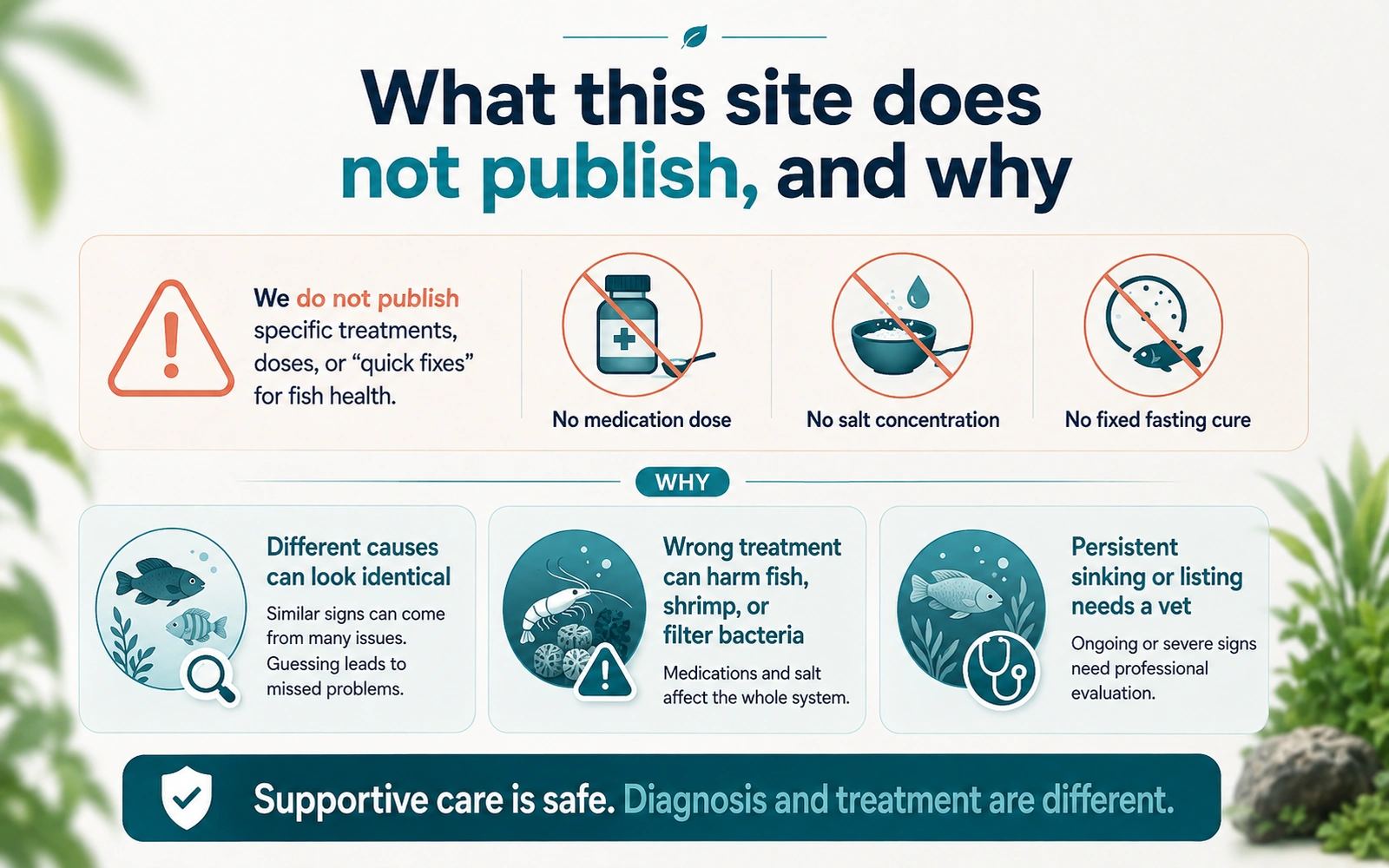
You will find pages recommending a specific fasting period followed by a specific vegetable in a specific quantity. This site does not publish that protocol, for reasons set out below.
Supportive care, which is not treatment
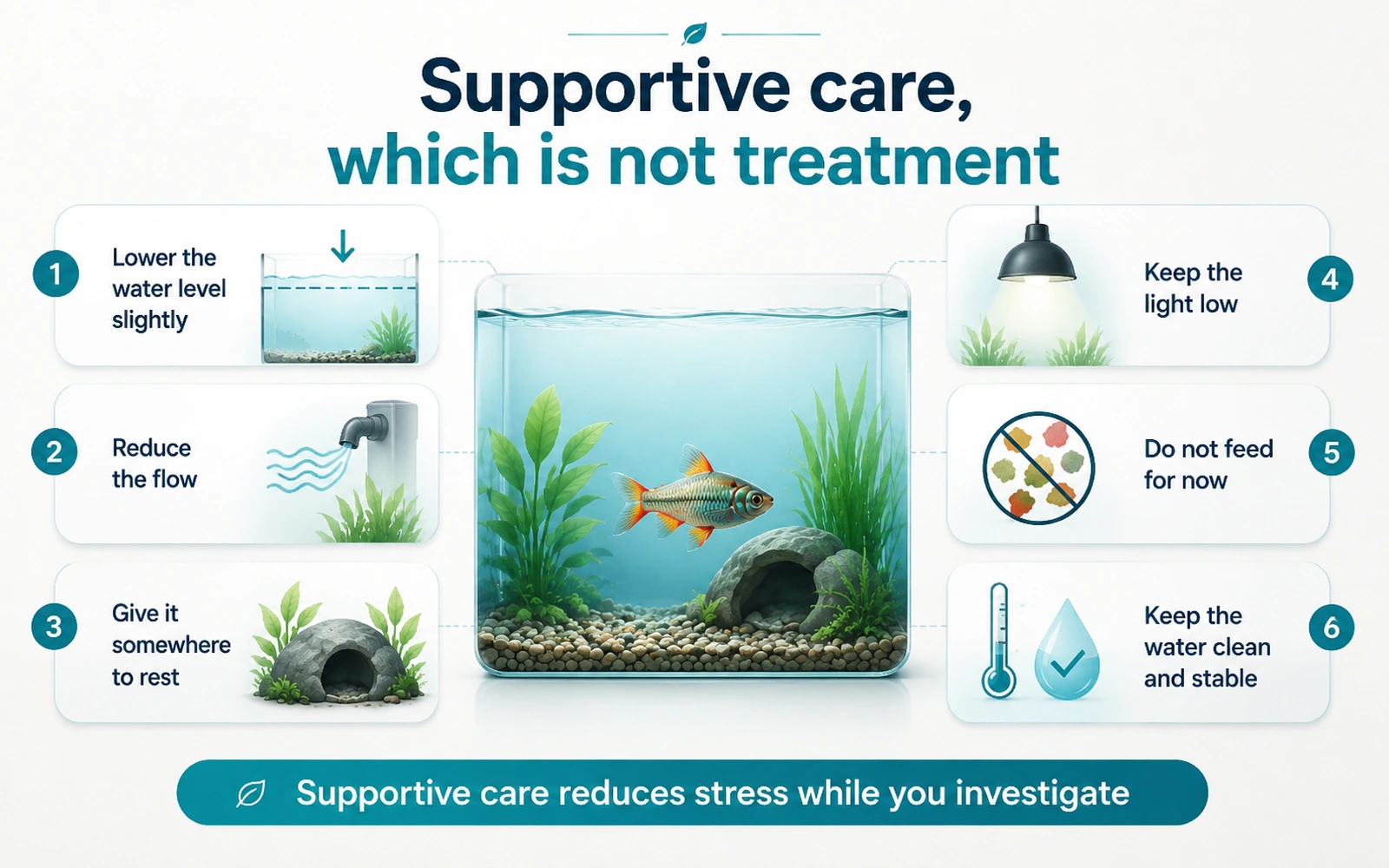
While you work out the cause, there are things that reduce harm and none of them involve adding anything to the water.
- Lower the water level slightly in a tank where a sinking fish is struggling to reach the surface, or make sure a floating fish is not stranded in air. A fish held out of water dries and damages.
- Reduce the flow. A fish that cannot control its position is being pushed around by a current it would normally handle.
- Give it somewhere to rest, low and soft. A broad plant leaf or a smooth surface near the bottom.
- Keep the light low and the room quiet. A stressed fish that cannot swim away from disturbance is in a worse position than a healthy one.
- Do not feed for now. If digestion is implicated, adding more is the wrong direction. This is a pause while you investigate, not a treatment schedule.
- Keep the water clean and stable. Steady conditions are the environment recovery happens in, and how to do a water change is the method.
What this site does not publish, and why
No medication, no dose, no fasting duration presented as a cure, no salt concentration, no temperature protocol.
The reason is specific to this symptom rather than general. Buoyancy loss has causes that look identical from outside and need opposite responses. A fish that floated after a large meal and a fish that is listing because of an internal infection present in a very similar way to an owner watching through glass. A protocol aimed at the first does nothing for the second while days pass. Worse, several of the treatments circulated for this are dosed by tank volume, are harmful to invertebrates, and damage the filter bacteria the tank depends on, which turns one unwell fish into a tank with an ammonia problem.
There is also a hard limit on what anyone can determine from a description. Distinguishing gas from an organ problem from an injury is a physical examination, and in some cases an imaging question. That is not something a page can do, and a page that pretends otherwise is selling confidence rather than information.
A fish that is sinking rather than floating, that is listing without an obvious feeding trigger, that has been like this for more than a couple of days, or that is one of several affected, is a veterinary question. When to contact an aquatic veterinarian and how to find one covers how to find one, what to have ready, and the fact that a lot of this work is done by phone or video because the patient travels badly. It also covers the humane end of the conversation, which is worth knowing about before you need it.
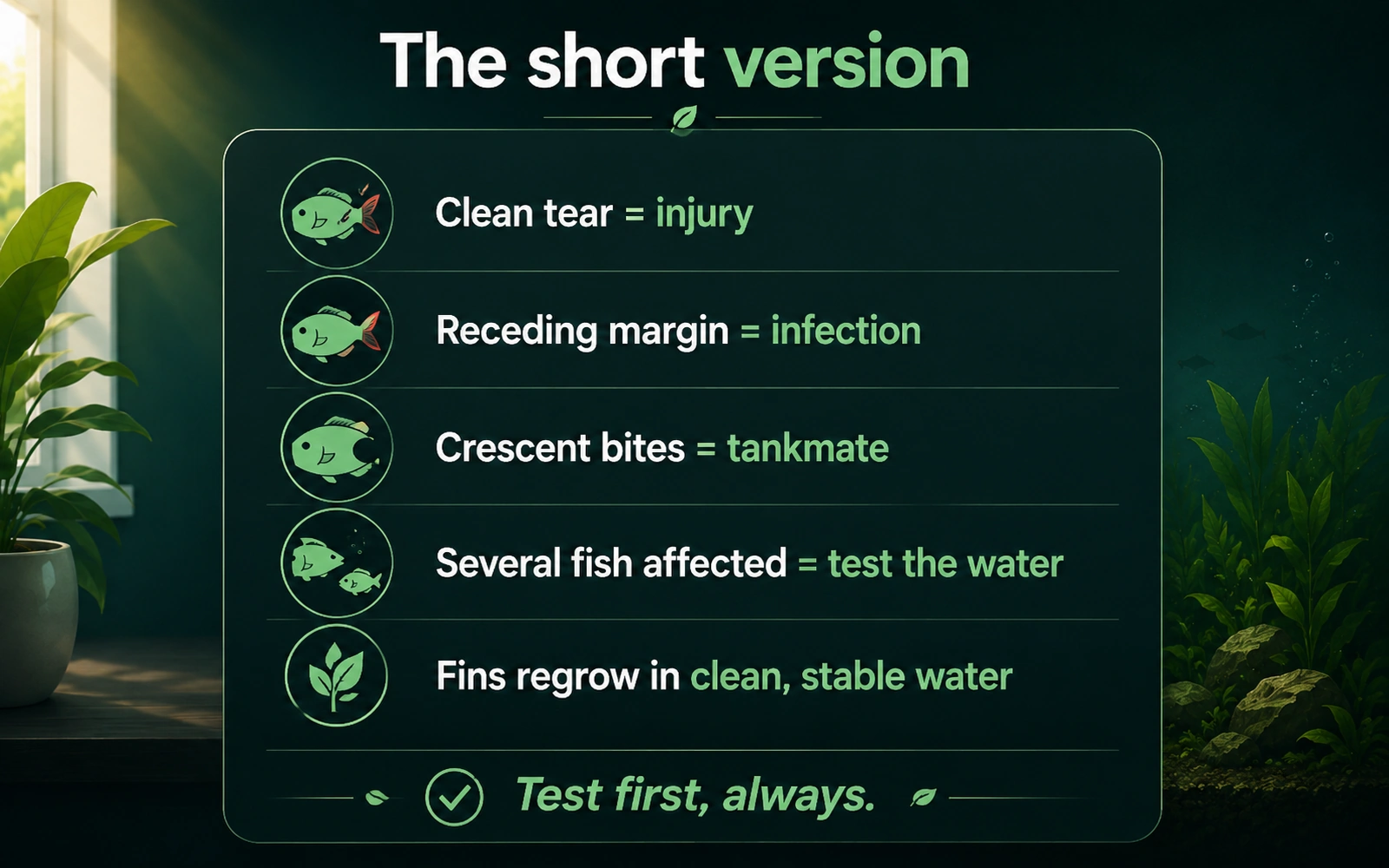
The short version
- The pattern matters. Floating, sinking and rolling suggest different things.
- Several fish at once means the water, not the fish.
- Test first. Correct what the test finds before anything else.
- Feeding is the most common everyday factor in floating, and the corrections are all about less and slower.
- Supportive care is flow, rest and clean water. It is not medication.
- Sinking, listing, or no improvement in a few days is a vet call.
FAQ
Is swim bladder disease an actual diagnosis? No. It is a description of what you are looking at, and the things that produce it range from a meal that was too large to an injury, a bacterial infection or poor water. They do not respond to the same thing, which is why a single label leads people to the wrong response.
What does it mean if several fish lose balance at once? That is not a buoyancy problem at all. It is a water problem, and it needs the water tested immediately rather than the fish examined.
Why is feeding the first suspect when one fish is floating and the water is clean? Because it is the most commonly involved factor in the everyday version of this: too much food too fast, dry food that swells after being eaten, air gulped at the surface, and a diet that is entirely dry. The corrections are to feed less at a time, soak dry food first, and vary the diet.
What can I do for the fish while I work out the cause? Supportive care, none of which involves adding anything to the water: reduce the flow, give the fish somewhere low and soft to rest, keep the light low and the room quiet, pause feeding, and keep the water clean and stable.
When is a floating or sinking fish a vet call? A fish that is sinking rather than floating, that is listing without an obvious feeding trigger, that has been like this for more than a couple of days, or that is one of several affected is a veterinary question. Much of that work is done by phone or video because the patient travels badly.