Some stress after a water change is normal, and most fish settle back to their usual behavior within a few hours to about a day. Brief hiding, a temporary color change, or subdued activity right after a change is a typical, short-lived response to a real shift in the water around them, even when the change was done correctly. What is not normal is stress that lasts well beyond a day, or a fish that looks distressed rather than simply cautious. This guide focuses specifically on why the stress happens and how to reduce it; the mechanical steps of the change itself, siphoning, dechlorinating, matching temperature, are covered in how often to change aquarium water.
Why Even a "Correct" Water Change Still Stresses Fish
Fish are sensitive to shifts in their immediate environment, and a water change, even a well-executed one, is a real event from their point of view: water movement, a change in flow, a slightly different temperature or mineral balance, and often a person's hands and equipment in the tank all at once. None of that is a sign you did something wrong. It is simply a bigger environmental shift, all at once, than the fish experiences on an ordinary day, and a brief, short-lived stress response to that shift is a normal reaction, not evidence of harm.
Some fish are simply more reactive to this kind of disruption than others. Newly added or recently acclimated fish, and species generally described as more skittish or sensitive, often show a more visible stress response than fish that have been settled in the same tank for a long time. This does not mean anything is wrong with a fish that reacts more strongly; it is a reasonable starting expectation, and the steps below are aimed at reducing the size of the disruption for exactly this kind of fish, not at eliminating a reaction entirely.
Smaller, More Frequent Changes Cause Less Stress Than Fewer Big Ones
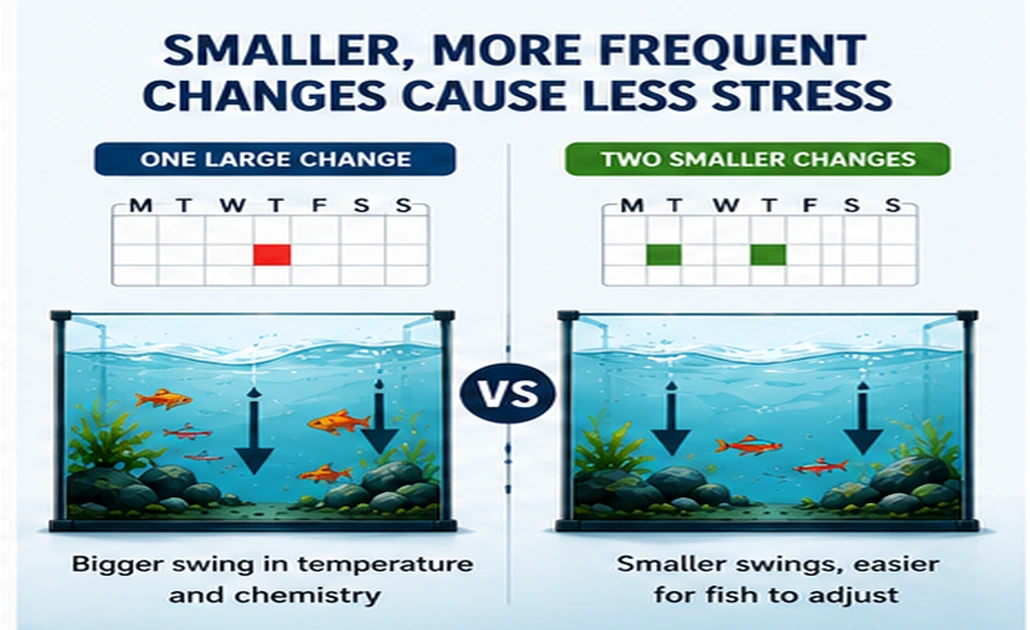
This is one of the more useful, underused levers available. A large, infrequent water change moves your fish through a bigger swing in temperature, pH, and mineral content in one sitting than a smaller, more frequent change does, simply because more of the tank's existing water chemistry is being replaced at once. If your fish seem to hide hard after every change, and your current routine is a large change done rarely, splitting that same total volume into two smaller changes spread across the week can reduce the size of each individual swing without reducing how much water quality improvement you get overall. How often to change aquarium water covers how to set a schedule based on your actual nitrate readings; this is simply a note that the same weekly total, split up, is often gentler on the fish.
A Slower Method for Sensitive Fish: Drip or Slow Siphon
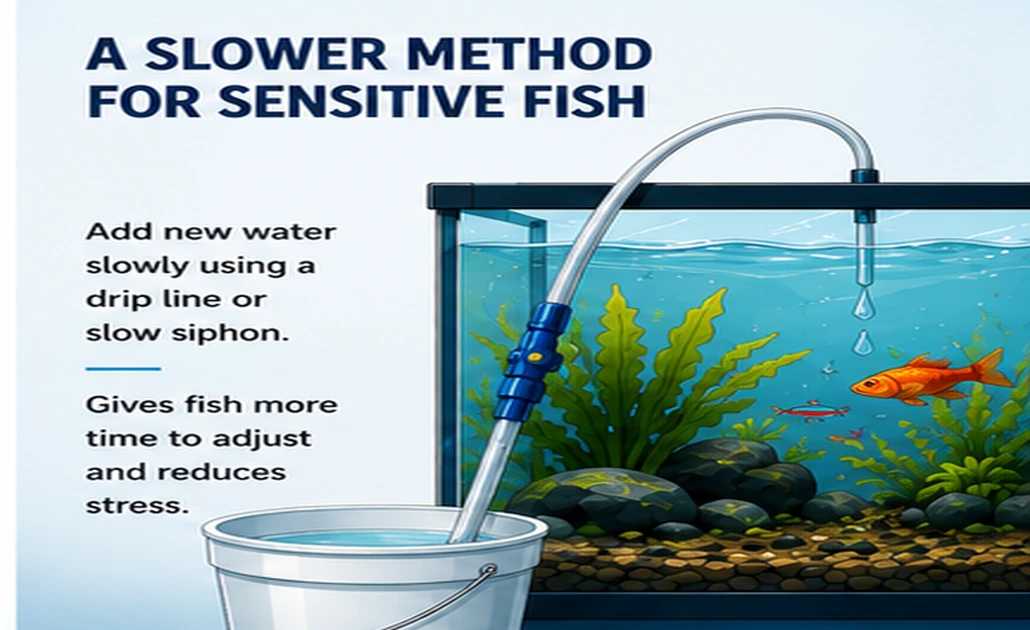
For particularly sensitive fish, or simply as a gentler default, adding the new water back in more slowly than a quick pour gives fish more time to adjust rather than experiencing the change all at once. A slow siphon, or a length of airline tubing used as a simple drip line, lets new water enter gradually over an extended period rather than in one continuous rush. This is not necessary for every tank, but it is a genuinely useful option to have for a tank where stress after changes has been a consistent, noticeable pattern.
Reducing Stress From the Event Itself, Not Just the Water
Some of the stress a water change causes has more to do with the disruption of the event than the water chemistry itself, and a few habits address that side specifically:
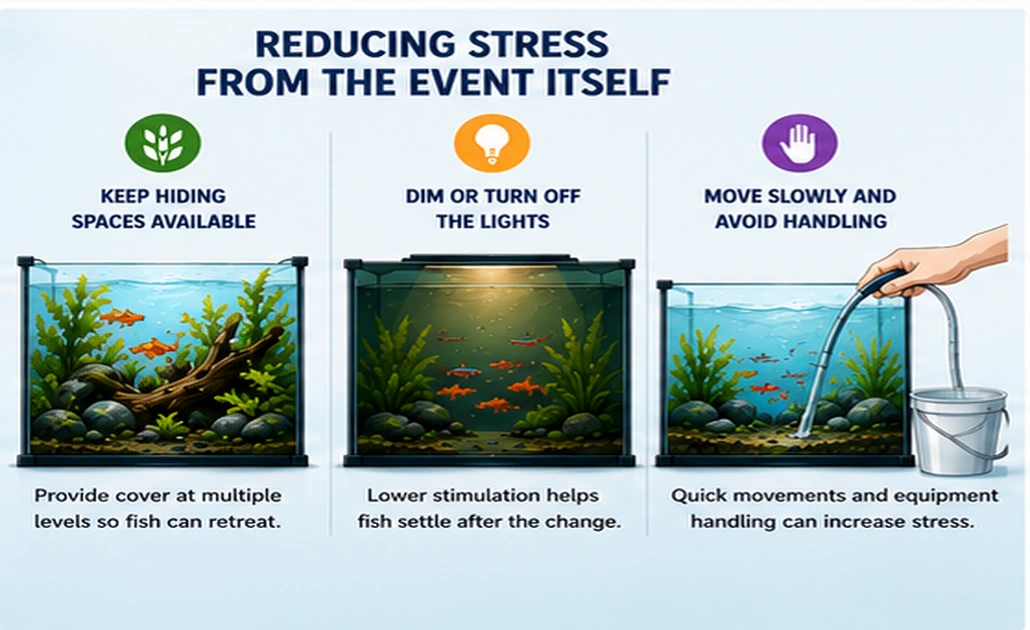
- Keep hiding spaces available at more than one level of the tank (plants, driftwood, rock formations) so a fish that wants to retreat during and immediately after a change has somewhere to go, rather than being fully exposed the whole time.
- Dim or turn off the tank lighting for a while after a change, giving fish a lower-stimulation environment to settle back into normal behavior rather than doing the change and immediately leaving bright lights on.
- Move slowly and avoid unnecessary handling during the change itself. The equipment going in and out of the tank, and any movement near the glass, is itself part of what a fish is reacting to, separate from the water.
When Stress Is a Warning Sign, Not Just an Adjustment Period
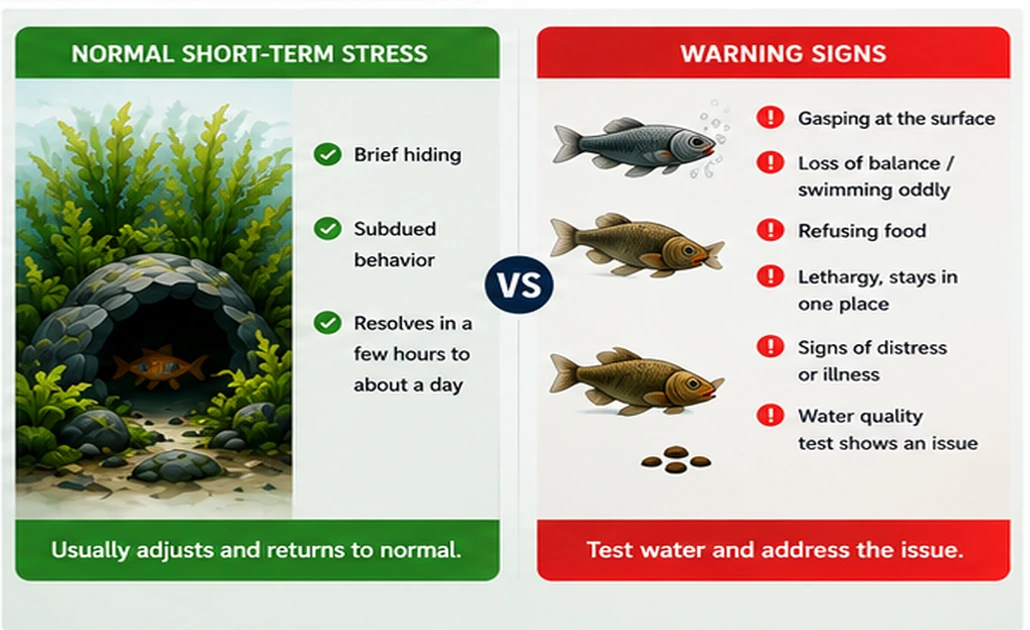
The distinction that actually matters: brief hiding or subdued behavior for a few hours, settling back to normal well within a day, fits the pattern of an ordinary, short-lived stress response. Stress that persists well past a day, or behavior that looks like genuine distress rather than caution, gasping, listing to one side, refusing to eat for an extended stretch, is a different situation and points toward something beyond a normal adjustment period, possibly a water chemistry problem the change did not fully address, or an unrelated issue entirely. If you see that, aquarium emergency help covers the calm, immediate steps to take, and testing your water immediately afterward is a reasonable first move to rule out a chemistry-related cause before assuming anything more serious.
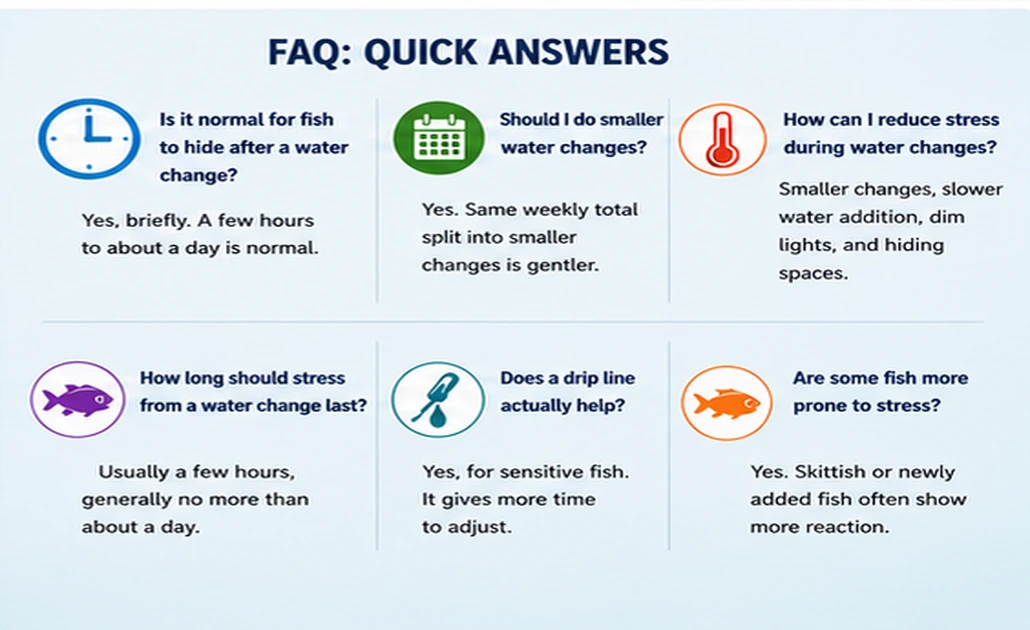
FAQ
Is it normal for fish to hide after a water change?
Yes, briefly. A short period of hiding or subdued behavior, typically resolving within a few hours to about a day, is a common, short-lived stress response even to a correctly done water change. It is not, on its own, a sign of harm.
How can I reduce how stressed my fish get during water changes?
Splitting one large, infrequent change into smaller, more frequent ones reduces the size of each individual shift. Adding new water more slowly, using a drip line or slow siphon, and keeping the lighting dim and hiding spaces available afterward also help.
Should I do smaller water changes if my fish seem to hate the big ones?
It is worth trying. The same total weekly water volume split across two smaller changes instead of one large one still improves water quality, but each individual change is a gentler swing in temperature and chemistry for the fish to adjust to.
How long should stress from a water change actually last?
Typically a few hours, and generally no longer than about a day. Stress that persists well beyond that, or behavior that looks like real distress rather than caution, is a signal to check water parameters and consider whether something beyond a normal adjustment period is going on.
Does a drip line or slow siphon actually help?
For particularly sensitive fish, yes, it is a genuinely useful option, since it gives fish more time to adjust to the new water gradually rather than all at once. It is not a requirement for every tank, but it is worth using if stress after routine changes has been a consistent, noticeable pattern.
Are some fish more prone to water-change stress than others?
Yes. Newly added fish, recently acclimated fish, and species generally described as more skittish tend to show a more visible reaction than fish that have been settled in the same tank for a long time. A stronger visible reaction in these cases is a reasonable expectation rather than a sign something specific went wrong.