The worry is legitimate and the answer is simpler than the SERP makes it look.
Adult shrimp are fine in almost any filter setup. Baby shrimp are not, and they are the ones that decide whether you have a colony or a slowly shrinking group of shrimp. A newly hatched neocaridina is smaller than most people picture, it goes where the current takes it, and an intake slot it fits through is a one-way trip.
So the question is not really "which filter is shrimp-safe". It is "what happens at the intake", and that has a five-dollar answer for the filter you already own.
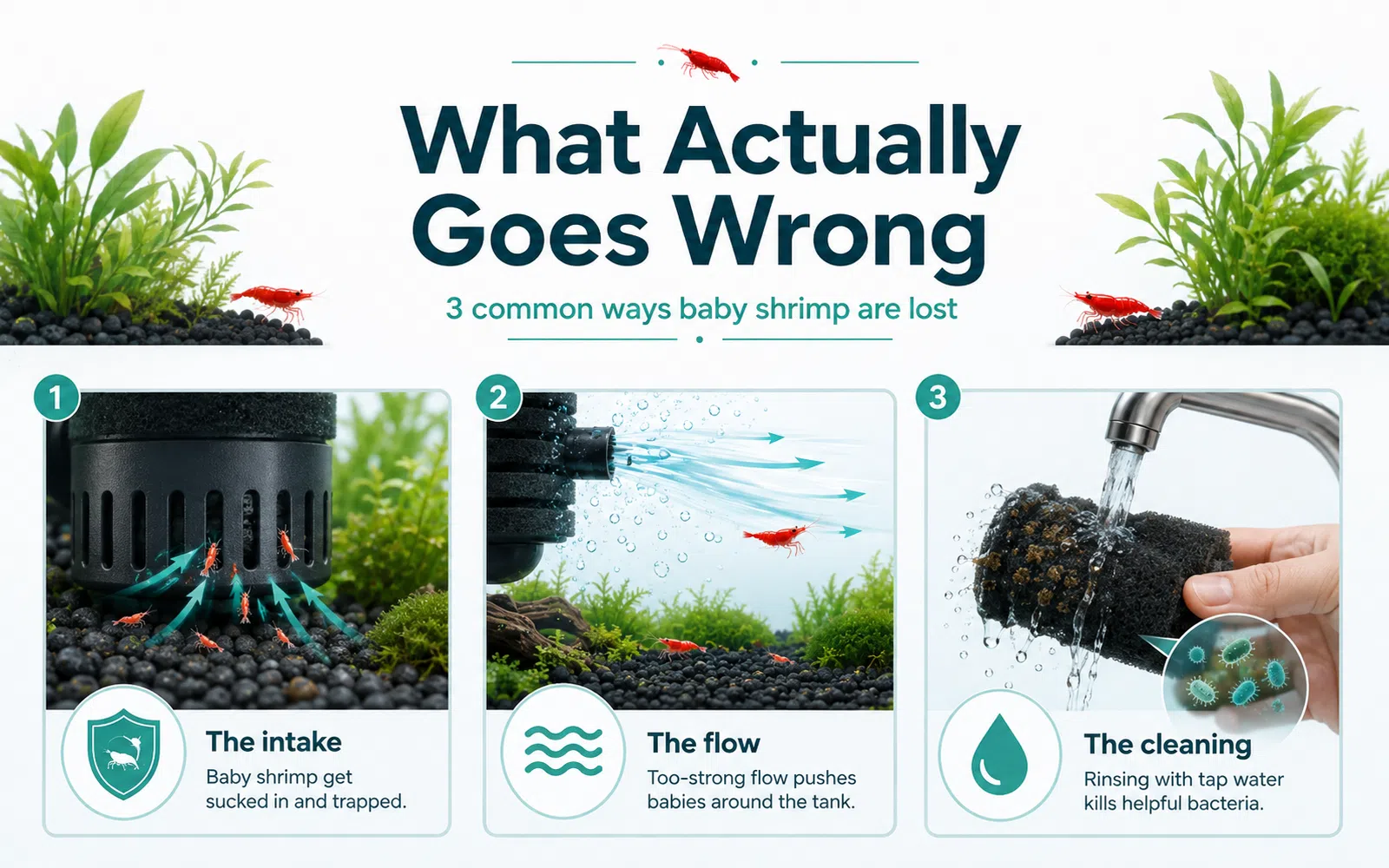
What actually goes wrong
Three separate failure modes, and only one of them is about the filter type.
The intake. Anything small enough to fit through the slots gets pulled in. Some survive inside the filter body and live there quite happily, which is why people find shrimp in their canister when they open it. Many do not, and an impeller is unforgiving.
The flow. Shrimp are not strong swimmers and babies are essentially plankton. A tank with a strong current has areas a colony cannot use, and food that never settles anywhere they can graze it.
The cleaning. This is the one nobody warns you about. Rinsing filter media under a tap kills the bacteria, and if the media is a sponge in a shrimp tank it is also the single richest grazing surface in the system. A filter clean done the wrong way can knock the colony twice: once on the water chemistry, once on the food supply.
The fix that works on the filter you already have
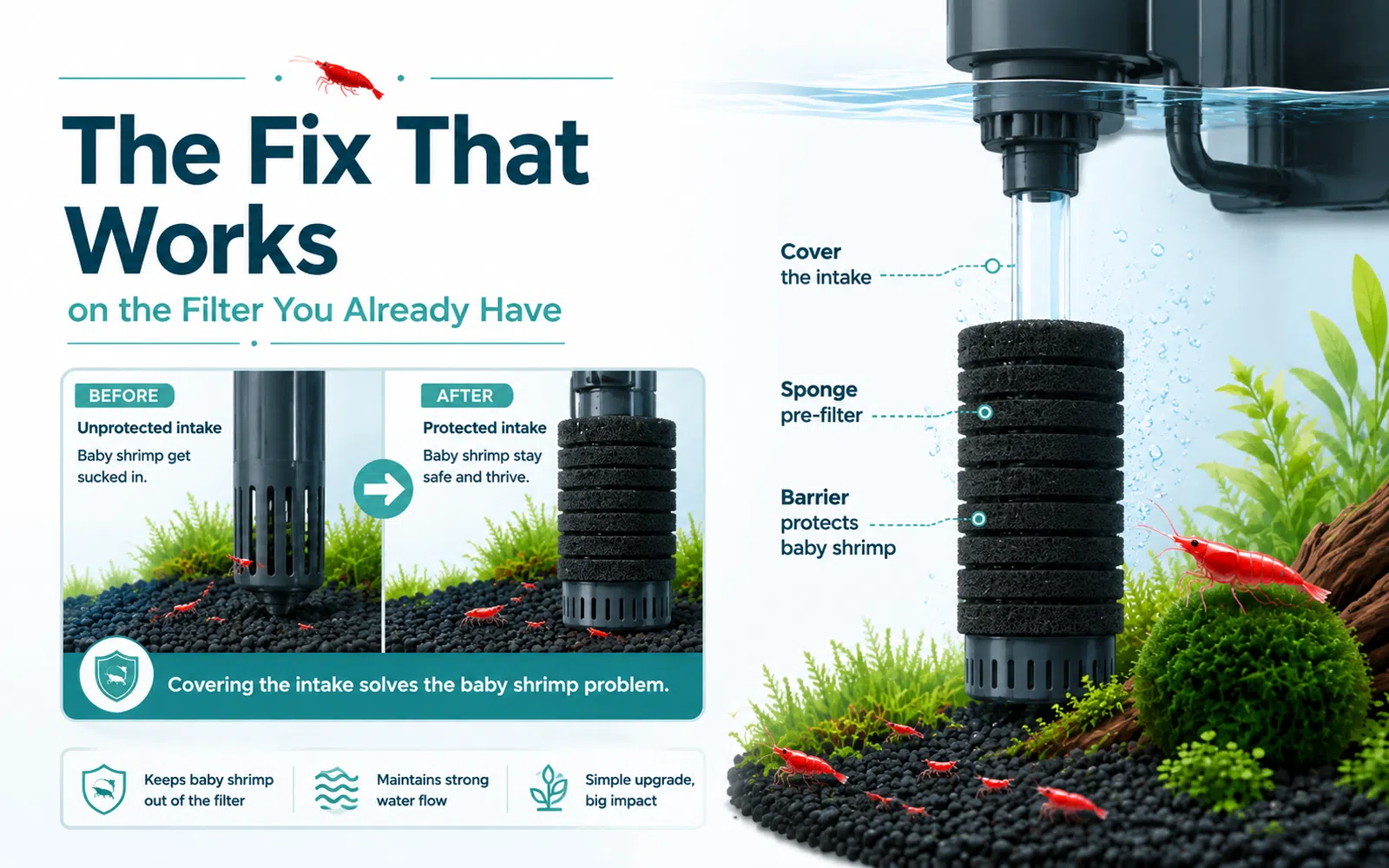
Before considering a purchase: cover the intake.
A sponge pre-filter that slips over the intake tube of a hang-on-back or a canister solves the babies problem completely. It also becomes another surface for biofilm, which is food. It is the cheapest item in this article and it is the one that actually matters.
If you do not have one, a piece of filter foam and an elastic band does the same job, less tidily. So does fine mesh secured over the slots. The mechanism is the barrier, not the product.
This is worth being direct about, because a great deal of writing on this subject exists to sell a new filter: most readers of this page do not need to buy a filter. They need to put something over the intake of the one they own.
Sponge filters, and what they actually are
Sponge filters come up constantly in shrimp keeping and it is worth understanding why rather than taking it on trust.
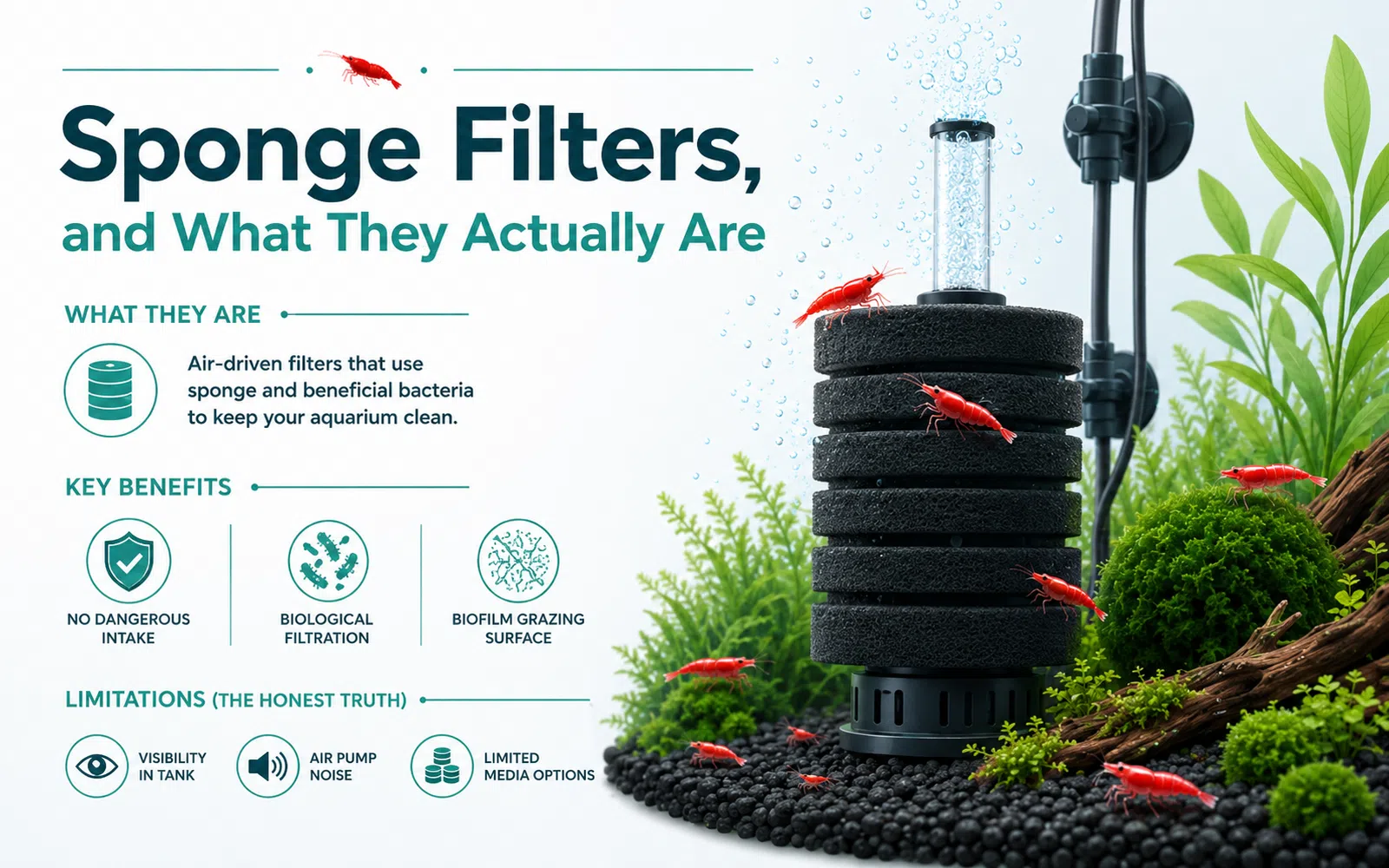
A sponge filter is a block of foam on an uplift tube, driven by air. Water is drawn through the foam, which does two jobs at once: it traps particles, and it houses the bacteria that process ammonia and nitrite. There is no impeller and no narrow intake, so there is nothing for a baby shrimp to be pulled into.
What people undersell is the second benefit. The sponge is a grazing surface, and in a shrimp tank it is usually the best one in the system. Shrimp sit on it constantly. That is not incidental to why they suit this animal.
The honest limitations: they are visible in the tank, they need an air pump, and an air pump makes noise. Mechanical filtration is limited to what the foam catches, and there is nowhere to put chemical media if you ever want to run carbon.
They are not magic. A sponge filter that has not been cycled is a decoration, and the bacteria it needs take the same time to establish as in any other filter. The nitrogen cycle explained covers what has to happen, and seeding a new filter from an established tank is how you shorten it legitimately.
The other options, honestly
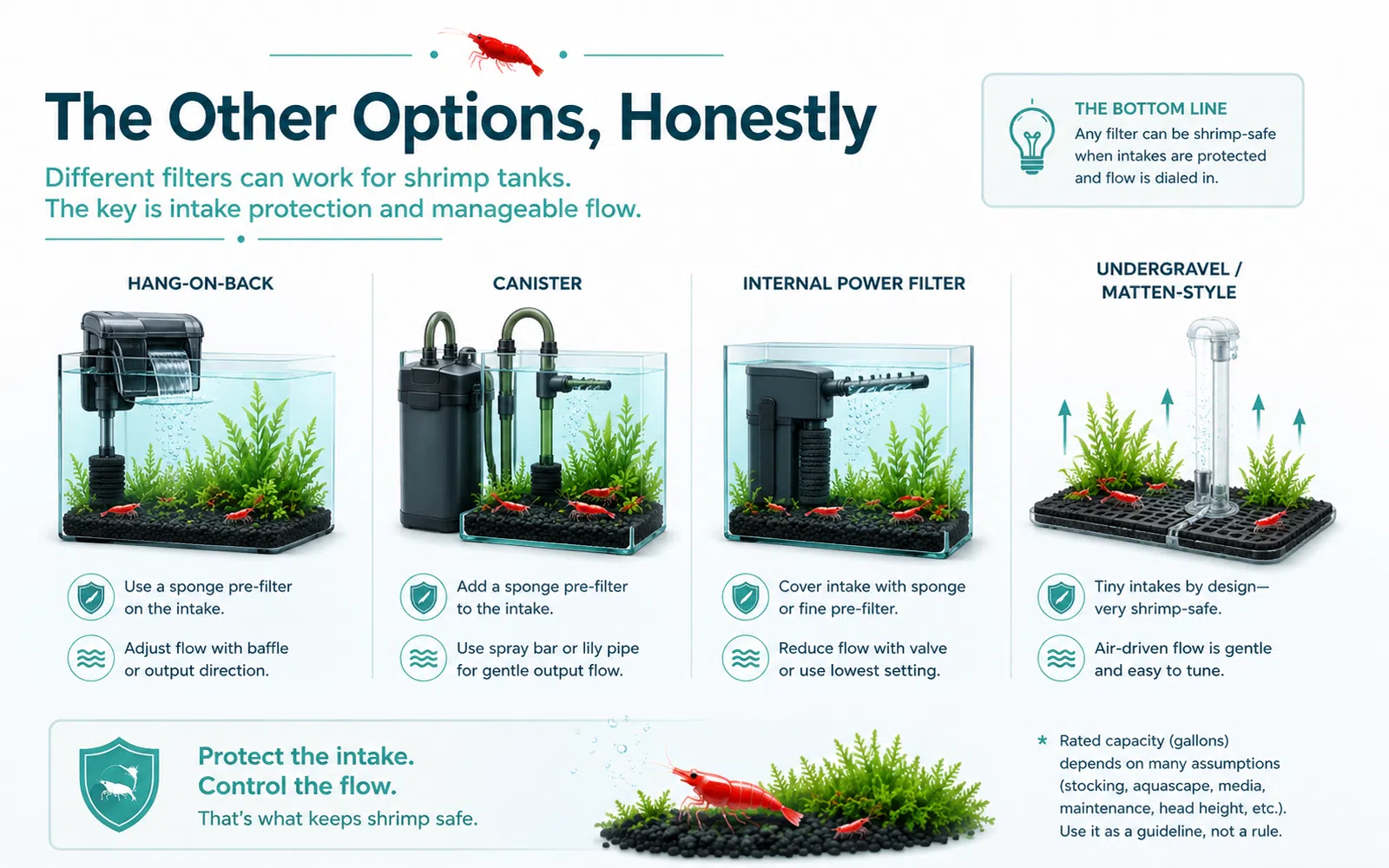
Hang-on-back filters work in a shrimp tank with a pre-filter sponge on the intake. The flow is usually adjustable and the return can be baffled if it is disturbing the surface too hard.
Canister filters work the same way: pre-filter the intake, and consider directing the return along a wall rather than across the tank. Shrimp will get inside a canister eventually and that is generally survivable for them.
Internal power filters vary. Some have wide, well-guarded intakes; some have slots a baby fits through. Look at yours rather than at the category.
Undergravel and matten-style setups are air driven and have no intake to speak of, which is why they persist in shrimp keeping despite being out of fashion generally.
What the box says about capacity is not the whole story on any of them. A "rated for" figure carries assumptions about stocking and feeding that manufacturers rarely publish, and this site does not print flow figures or gallonage claims of its own. The specification you want is the manufacturer's own, read on their own page, and the question to ask of it is what assumption sits behind the number.
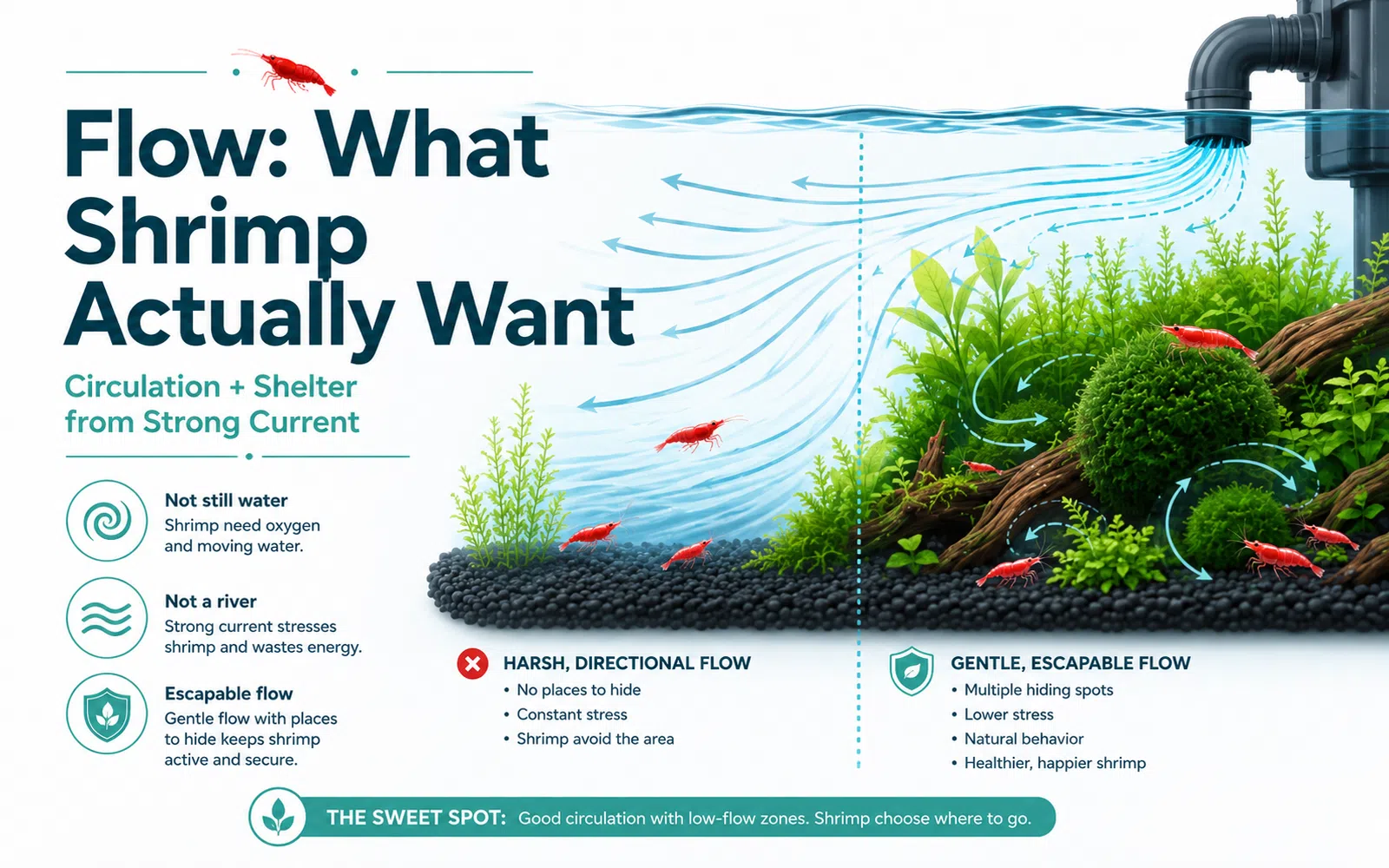
Flow: what shrimp actually want
Not still water, and not a river.
Shrimp come from moving water in the wild, and a tank with some circulation is healthier than a stagnant one. What they cannot cope with is a strong directional current with no shelter from it.
Practical version: if the plants are being pushed flat and the shrimp are all clustered in one corner, the flow is too high for that layout. Baffle the return, aim it at the glass, or reduce it. Dense planting and moss create low-flow pockets without reducing the total circulation, which is usually the better answer than turning the filter down.
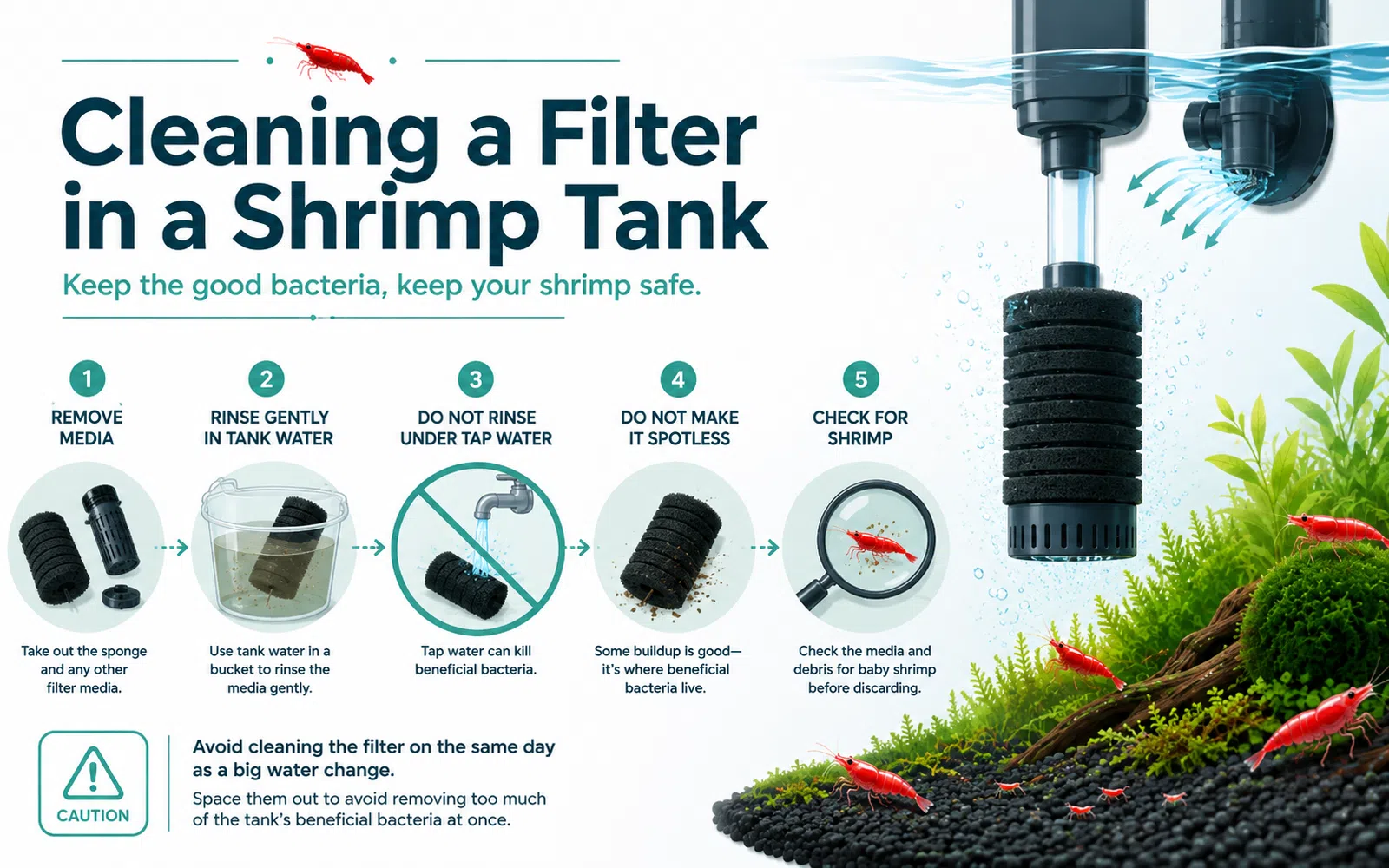
Cleaning a filter in a shrimp tank
This is where colonies get hurt, so it is worth doing deliberately.
- Never rinse media under a tap. Chlorine and chloramine kill the bacteria, and chloramine is not removed by letting water stand. Dechlorinator and chloramine covers what your conditioner is actually doing.
- Rinse in a bucket of tank water, taken out during a water change.
- Squeeze gently and do not aim for clean. A sponge you have made spotless is a sponge you have stripped of both bacteria and food.
- Do not clean the filter and change a lot of water on the same day. Two disturbances at once is how a stable tank stops being stable, and an aquarium cycle crash covers what that looks like from the inside.
- Check what comes out. Shrimp live in filters. Look before you discard anything.
The general water change method is unchanged for a shrimp tank except that smaller and more frequent beats larger and less often. How to do a water change is the method.
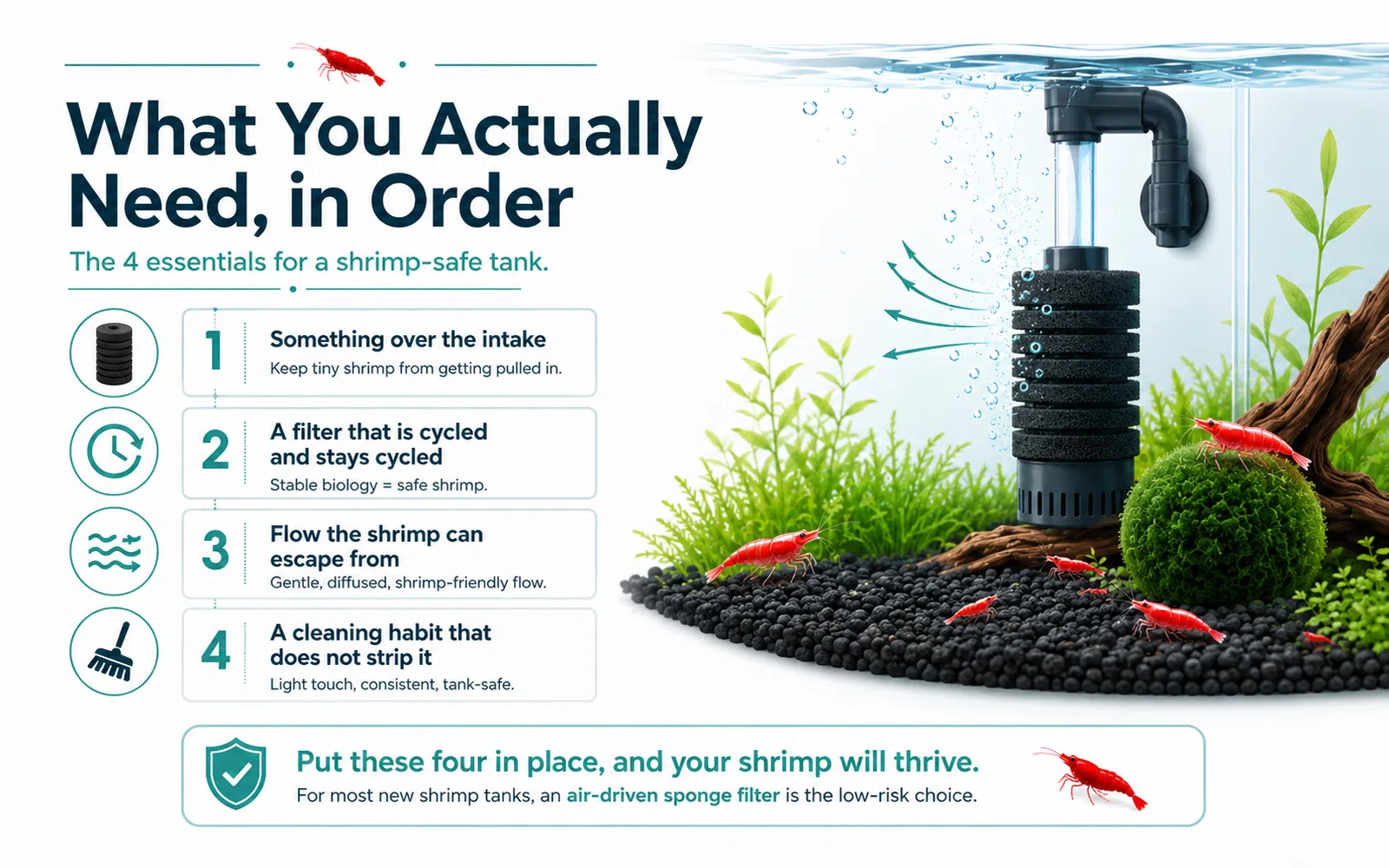
What you actually need, in order
- Something over the intake. A pre-filter sponge, foam and a band, or mesh. This is the whole problem, solved.
- A filter that is cycled and stays cycled. Which filter matters far less than whether its bacteria are established.
- Flow the shrimp can escape from. Planting and baffling, before turning anything down.
- A cleaning habit that does not strip it. Tank water, gentle, not on water change day.
If you are buying a filter for a new shrimp tank and want one recommendation without a product name: an air-driven sponge filter is the low-risk choice, because it removes the intake problem by design and adds grazing surface. If you already own a filter, cover its intake and keep it.
The short version
- Adults are fine. Babies are the reason this question exists.
- A pre-filter sponge on the intake solves it on any filter you already own.
- Sponge filters suit shrimp because they have no intake and because they are food.
- Some flow is good. Escapable flow is the requirement, not low flow.
- Clean in tank water, gently, and never on the same day as a big water change.
FAQ
Do I need to buy a special filter for a shrimp tank? Most readers do not. The problem lives at the intake, and a sponge pre-filter over the intake of the filter you already own solves it completely. A piece of filter foam and an elastic band, or fine mesh over the slots, does the same job.
Why are sponge filters recommended for shrimp tanks? There is no impeller and no narrow intake, so there is nothing for a baby shrimp to be pulled into, and the sponge itself is a grazing surface, usually the best one in the system. They still need cycling like any other filter.
Are hang-on-back and canister filters safe for shrimp? Yes, with a pre-filter sponge on the intake. Adults are fine in almost any setup; it is the babies that fit through intake slots. Shrimp that get inside a canister generally survive there.
How much flow do shrimp want? Some circulation, not a strong directional current with no shelter from it. If the plants are pushed flat and the shrimp cluster in one corner, baffle the return or aim it at the glass, and use dense planting and moss to create low-flow pockets.
How do I clean a filter without hurting the colony? Rinse media in a bucket of tank water, never under a tap, squeeze gently without aiming for spotless, do not clean the filter and do a large water change on the same day, and check what comes out, because shrimp live in filters.