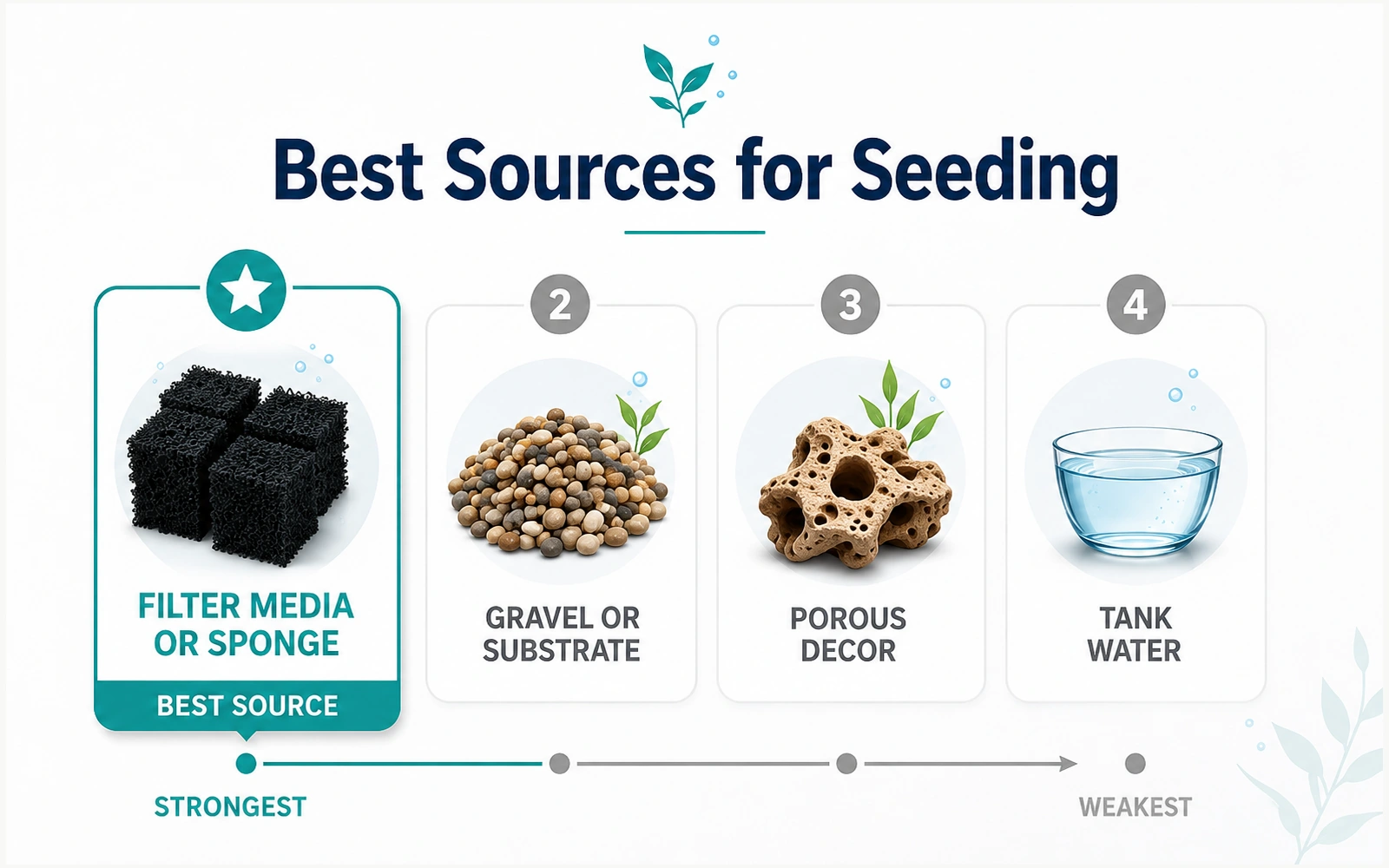
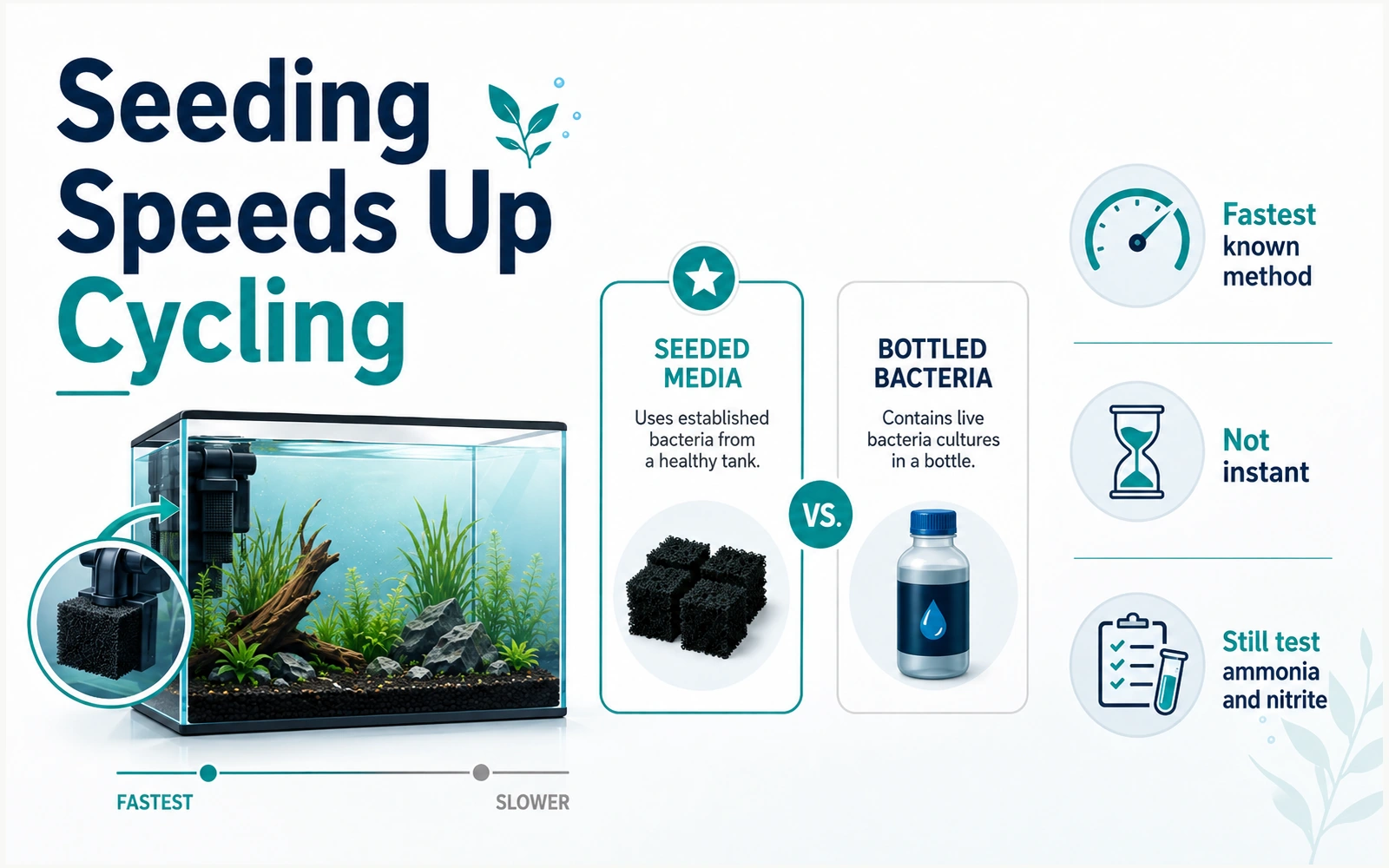
Yes, you can seed a new tank with bacteria borrowed from an established one, and it is the single most effective way known to shorten a cycle. The best source, in order of effectiveness, is filter media or a filter sponge, followed by gravel or substrate, followed by porous decor, with plain tank water a distant last resort. The one rule that matters more than any other: keep whatever you take wet and moving into your tank as quickly as possible, because the bacteria you are transplanting live on surfaces and can begin dying off once they dry out.
Before You Take Anything: Confirm the Donor Tank Is Healthy
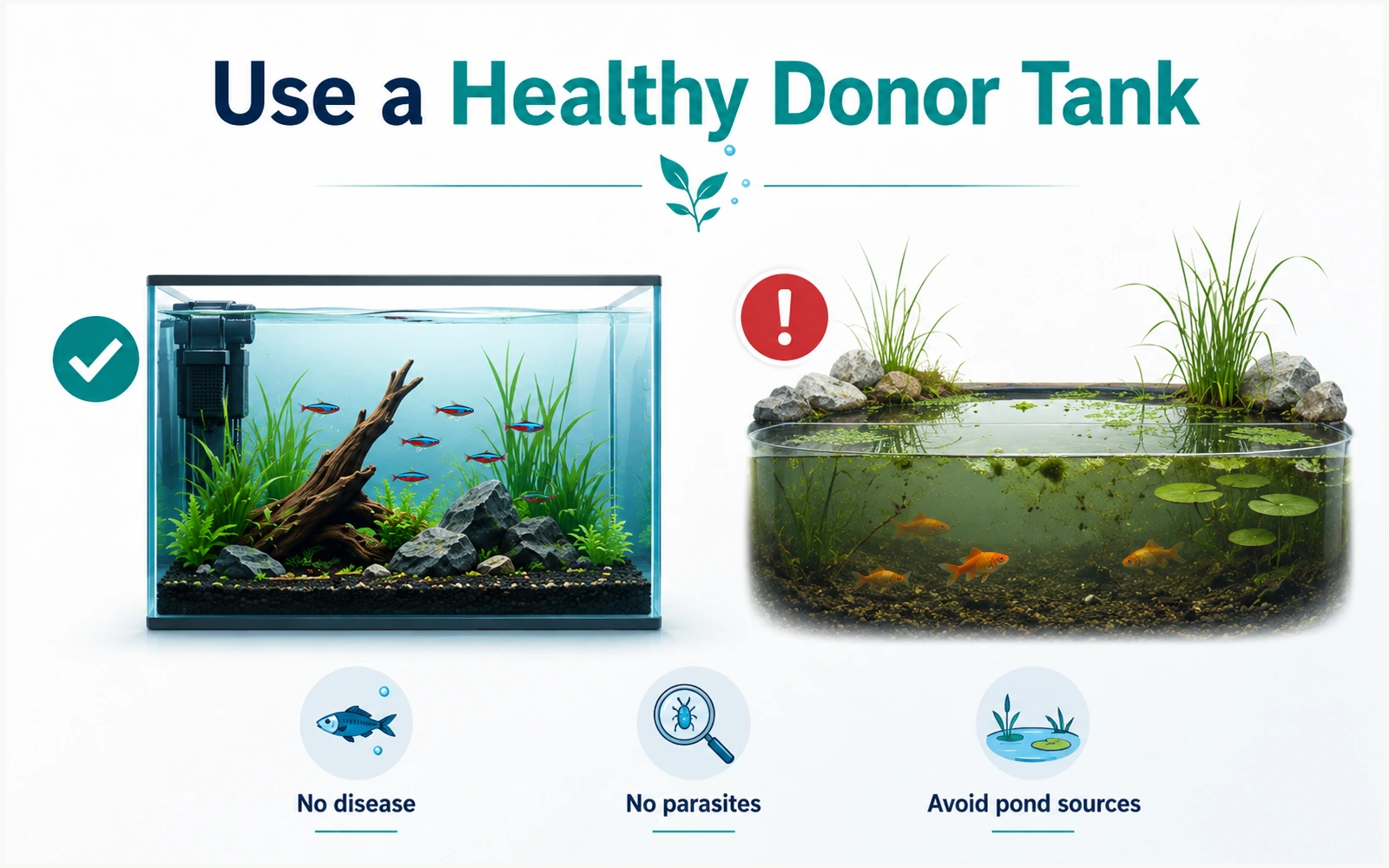
This comes first because it protects two tanks, not one. Only take media from a tank that is currently healthy, with no signs of disease or parasites in its fish. Seeding transfers whatever is living in that tank's ecosystem along with the beneficial bacteria, so a tank with an active illness is not a safe donor regardless of how well established its bacteria colony is. Extra caution applies to any source connected to outdoor water, such as a pond, where the range of organisms present is broader and less controlled than in an established indoor freshwater tank. If there is any doubt about a donor tank's health, do not use it as a source; wait for cycling to happen the ordinary way instead, described in how to cycle a new aquarium.
The Direct Answer: What to Take, in Order of Effectiveness
- Filter media or a filter sponge: the single best source, because this is where the largest concentration of surface-dwelling nitrifying bacteria actually lives in most setups.
- Gravel or substrate: a strong secondary source, particularly a scoop taken from well below the surface where bacteria have had time to establish.
- Porous decor (driftwood, ceramic ornaments, lava rock): a weaker but genuinely usable source, since porous surfaces do host some bacteria, just typically far less than filter media.
- Plain tank water: the weakest option by a wide margin. Nitrifying bacteria are surface dwellers, not free-floating organisms, so water alone carries relatively little of the bacteria population you are actually after, even though it is the easiest thing to grab.
Filter Media and Sponges: The Best Source
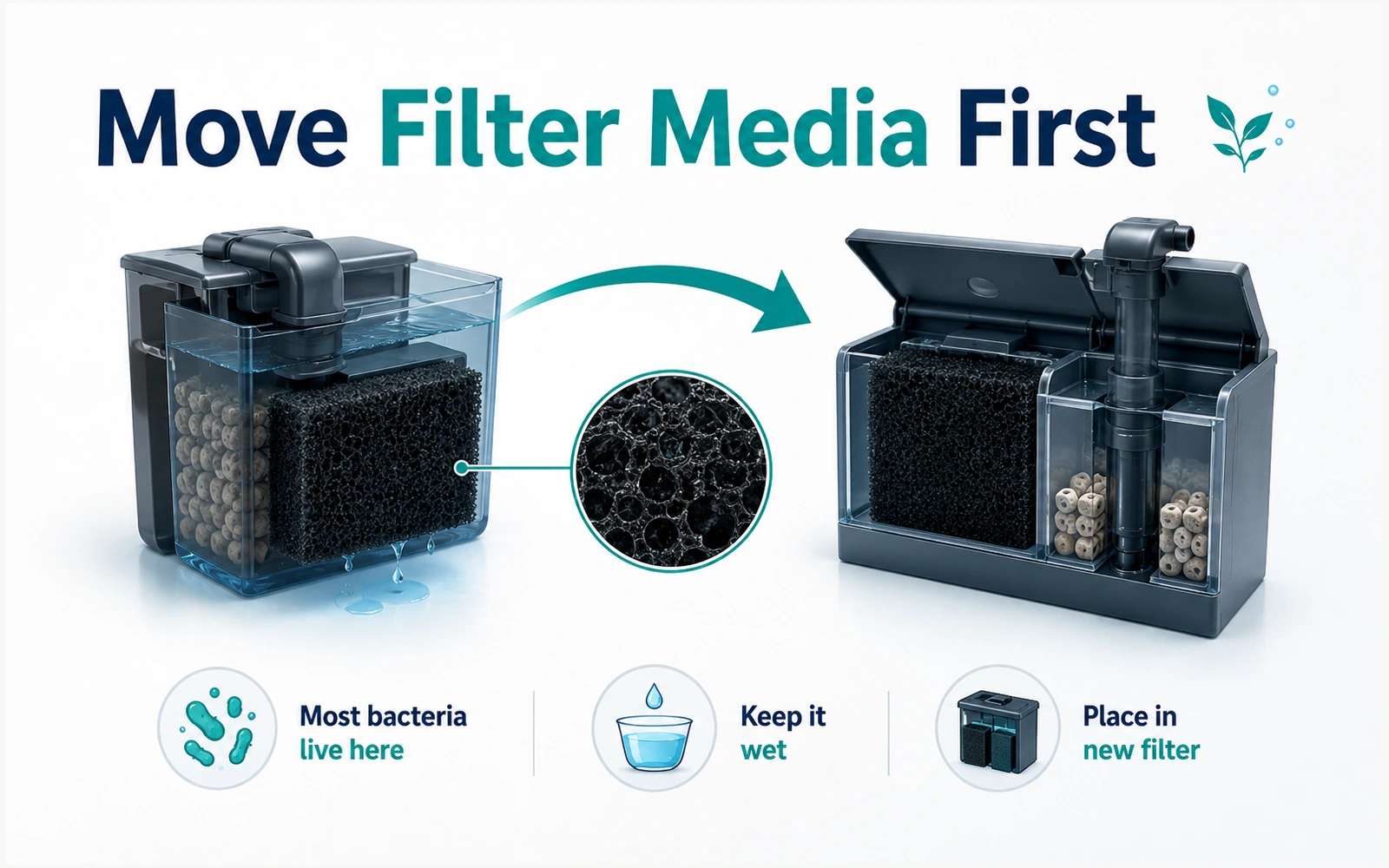
If the donor tank's filter uses replaceable media, cartridges, sponges, or bio-rings, taking a piece of that media is the most concentrated source of established bacteria available. Move it directly into your new tank's filter, or place it in contact with your filter's own media, so the bacteria can begin colonizing your setup immediately rather than sitting exposed. A sponge filter is especially convenient for this because it can simply be moved, or squeezed out over your new tank's media, transferring bacteria directly onto a surface that is ready to receive them.
Gravel and Substrate: A Good Secondary Source
A scoop of gravel or substrate from an established tank, ideally taken from a few inches down rather than just the very top layer, carries a meaningful bacteria population as well, since bacteria colonize substrate surfaces in addition to filter media. This is a practical option when filter media is not available to share, or as a supplement alongside it. Add it to your new tank's substrate rather than leaving it exposed to air for any length of time.
Porous Decor: A Weaker but Usable Source
Driftwood, ceramic caves, lava rock, and similar porous decor items host some bacteria on their surfaces, though typically at a lower concentration than filter media or substrate. These are worth using if they are what is available, particularly as a supplement to a media or gravel transfer, but they should not be relied on as the sole seeding source if a stronger option exists.
The One Rule That Matters Most: Keep It Wet
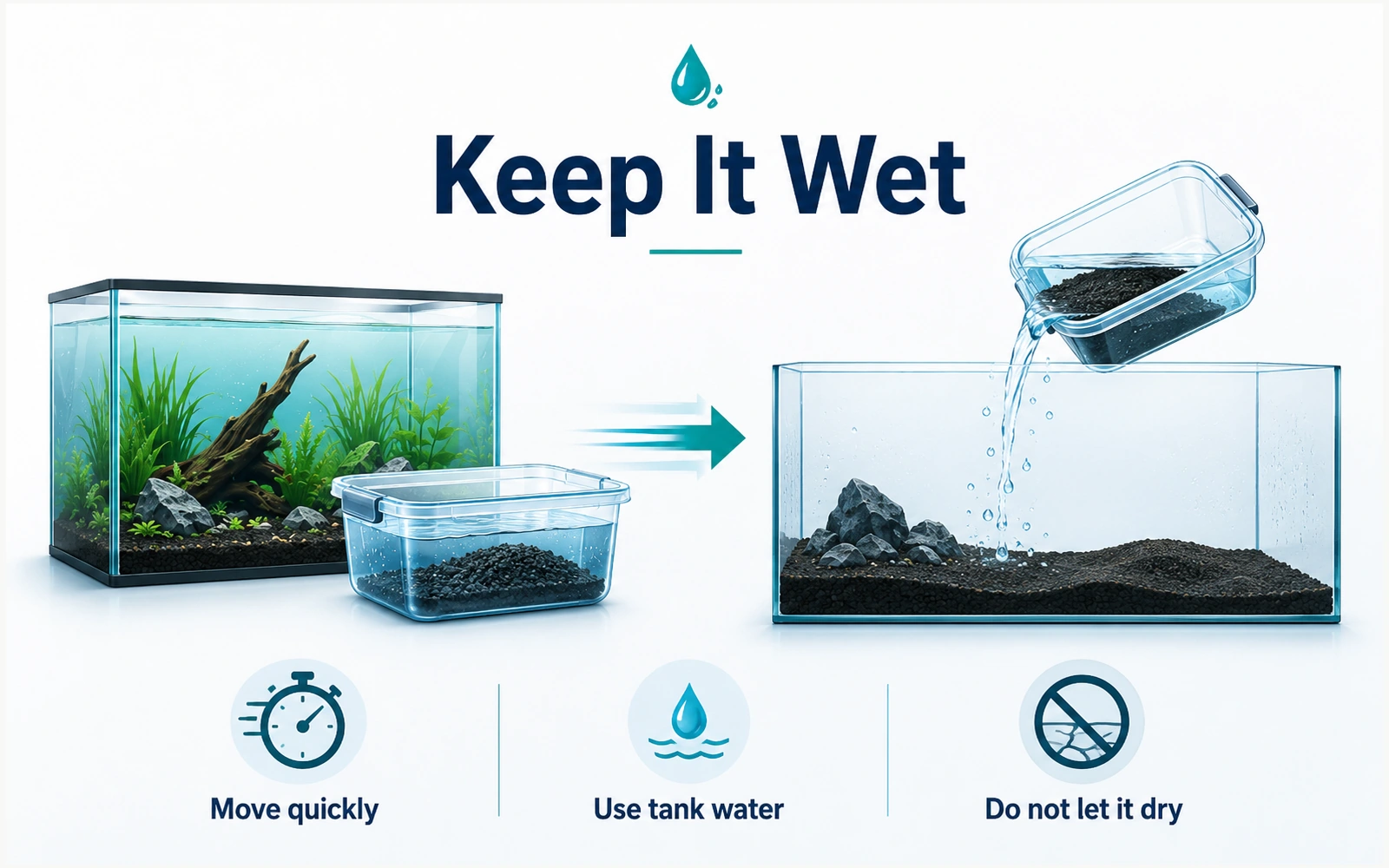
Whatever you take, the handling rule is the same and it is non-negotiable: keep it submerged in tank water and move quickly. Nitrifying bacteria are surface dwellers that rely on a wet, oxygenated environment, and even a relatively short period of drying can significantly damage or kill off the colony you are trying to transplant. Transport the media, gravel, or decor in a container of the donor tank's own water, and get it into your new tank's filter or substrate as promptly as you reasonably can. A transfer that sits dry in a bag for an hour is a meaningfully weaker transfer than one moved wet in minutes.
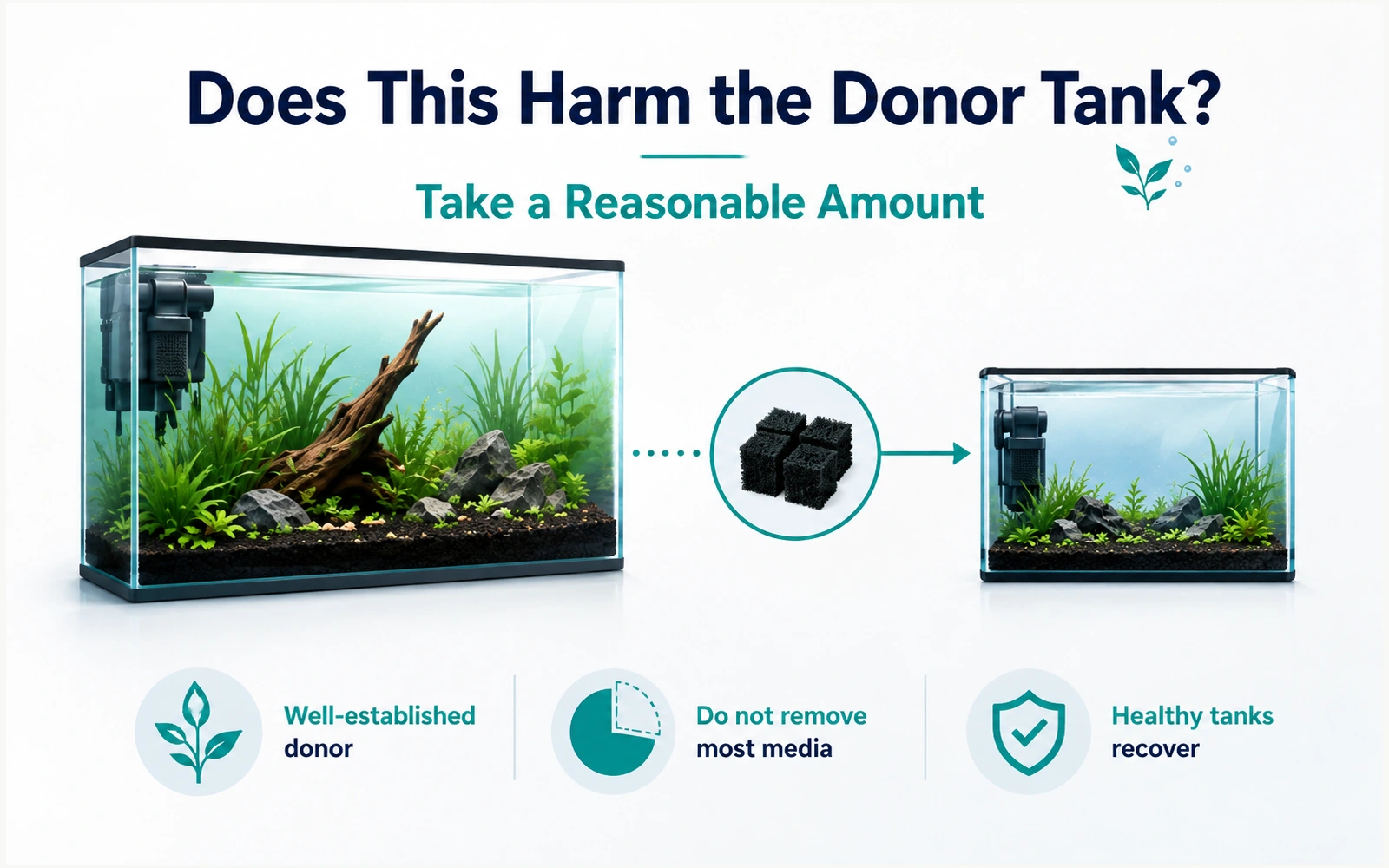
Does This Harm the Donor Tank?
Taken in reasonable amounts, a single seeding transfer generally does not meaningfully harm a healthy, well-established donor tank, because an established colony continues to regenerate on its remaining surfaces. That said, taking the majority of a donor tank's filter media all at once, or seeding from a tank that is itself relatively newly cycled and has not built up much surplus capacity, is a less reasonable ask. A donor tank that has been running well for a long stretch, with plenty of surface area to spare, is a better source than one that is only just cycled itself.
What Seeding Does and Does Not Guarantee
Seeding is consistently the most effective known way to shorten a cycle, dramatically outperforming bottled bacteria products in the independent comparisons available. It is not, however, a guarantee of an instant cycle. Even genuinely well-established media does not always carry as large or as reliable a colony as assumed, and results can vary depending on how long the donor filter had actually been running (commonly cited guidance suggests at least a couple of weeks of established colonization, with longer generally being better, though this varies by source and by tank) and how the transfer itself was handled. Continue testing after seeding exactly as you would with any cycle, and use the completion test described in how to cycle a new aquarium, rather than assuming the tank is safe simply because it was seeded.
FAQ
Can I seed a new tank with bacteria from an established one?
Yes, and it is the most effective known way to shorten a cycle. Filter media or a filter sponge is the strongest source, followed by gravel or substrate, then porous decor, with plain tank water a distant last option.
Is it safe to take filter media from someone else's tank?
Only if the donor tank is currently healthy, with no signs of disease. Seeding transfers the tank's broader ecosystem along with its bacteria, so a donor tank with an active illness is not a safe source, and extra caution applies to any outdoor or pond-connected water.
Does seeding hurt the tank I'm taking media from?
Generally not, in reasonable amounts, from a well-established donor tank with plenty of surplus surface area. Taking the majority of a donor's media at once, or seeding from a tank that is only just cycled itself, is a less reasonable ask.
Do I still need to test the water after seeding?
Yes. Seeding shortens the cycle; it does not guarantee it is instantly finished. Continue testing and use the same completion test as any other cycle: ammonia and nitrite both at zero, with nitrate present, sustained over consecutive days.
Why does the transferred media need to stay wet?
Nitrifying bacteria are surface-dwelling organisms that depend on a wet, oxygenated environment. Drying out, even for a relatively short period, can significantly damage or kill the colony you are trying to transplant, so moving it quickly in tank water matters more than almost any other step.