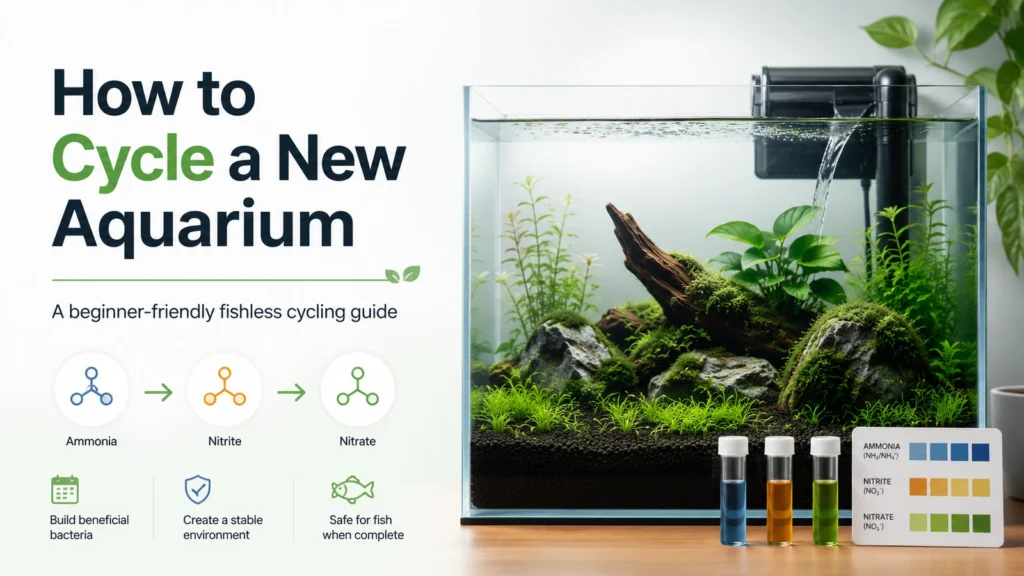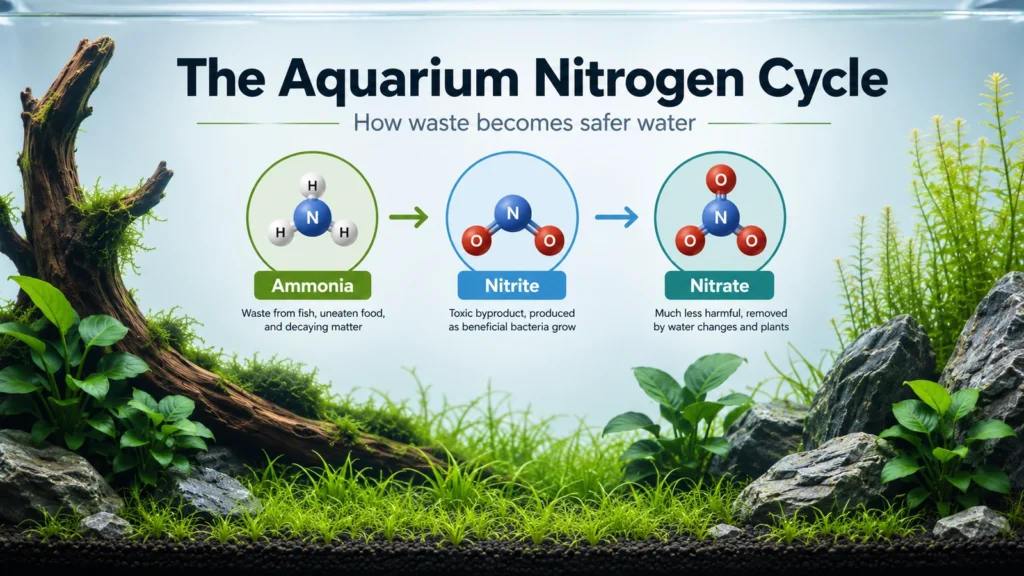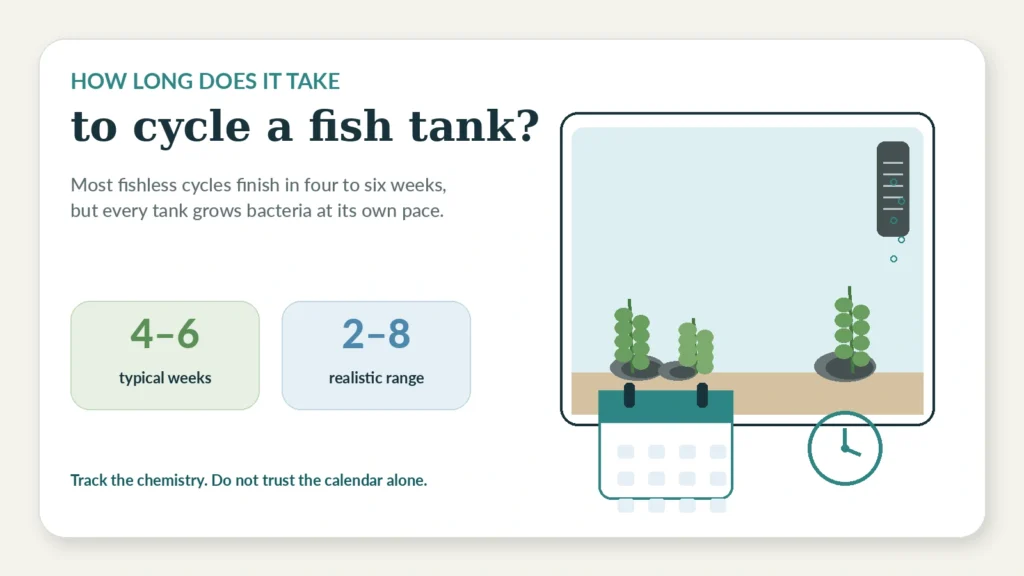
Brown algae in a new aquarium is a diatom film, it is a normal phase of a tank settling in, and you did not cause it by doing something wrong. It shows up as a dusty brown coating on glass, substrate, decor and plant leaves in the first weeks of a new setup, it wipes off easily, and it fades on its own as the tank matures and the easy silicates are used up. Wipe the glass, siphon what you can during water changes, keep cycling the tank, and resist the urge to buy livestock or chemicals to fix it. If something else is also wrong, work through something is wrong with my tank first.
First, Confirm It Is Diatoms
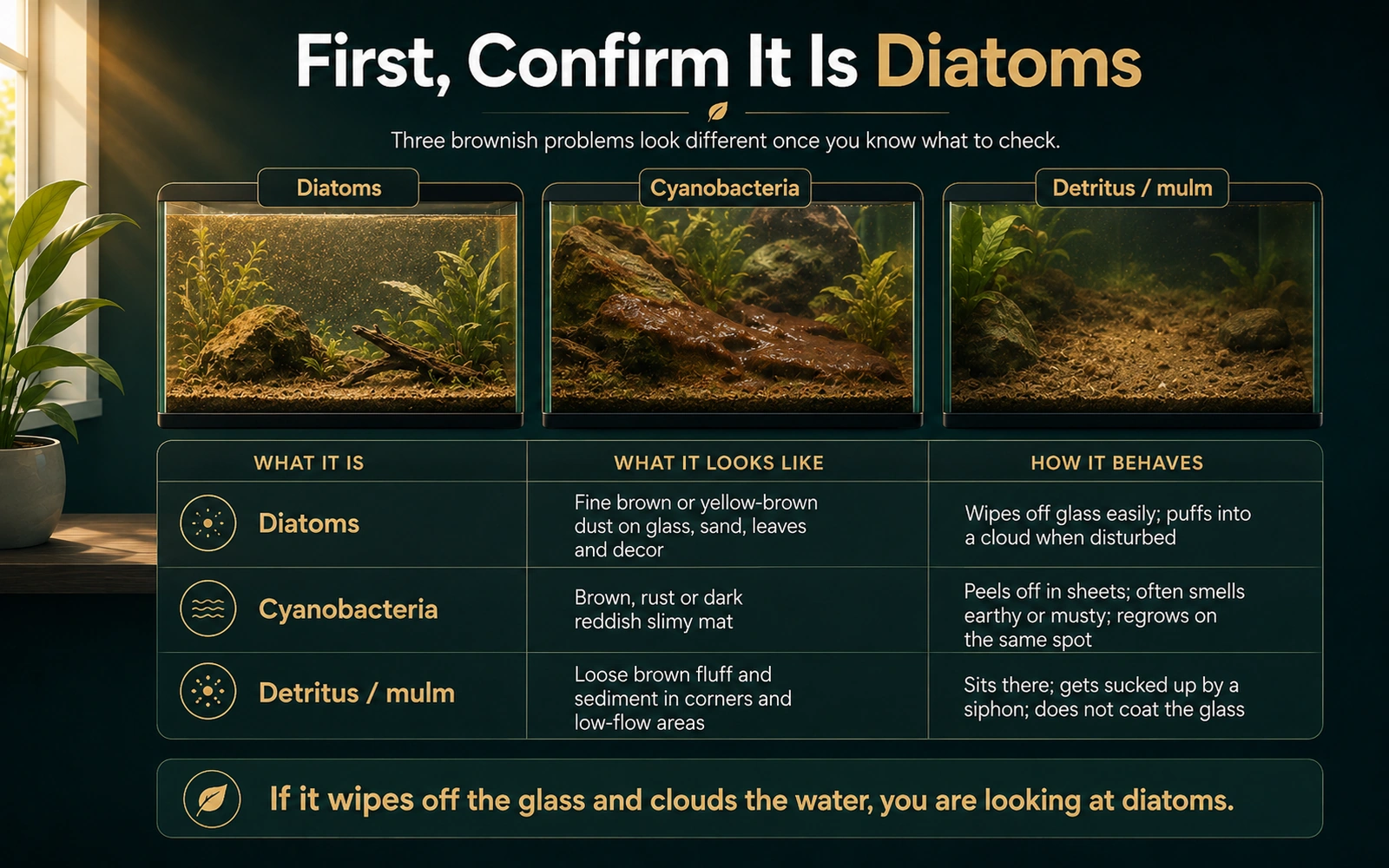
Three brown-ish things turn up in tanks and they are not the same. Get this right before you act.
| What you see | How it behaves | What it is |
|---|---|---|
| Fine brown or yellow-brown dust on glass, sand, leaves and decor | Wipes off the glass with almost no pressure, puffs into a cloud when disturbed | Diatoms, the subject of this page |
| Brown, rust or dark reddish slimy mat | Peels off in sheets, often smells earthy or musty, regrows fast on the same spot | Cyanobacteria, a bacterial film rather than an algae, and a different problem |
| Loose brown fluff and sediment in corners and low-flow areas | Sits there, gets sucked up by a siphon, does not coat the glass | Detritus and mulm, ordinary debris |
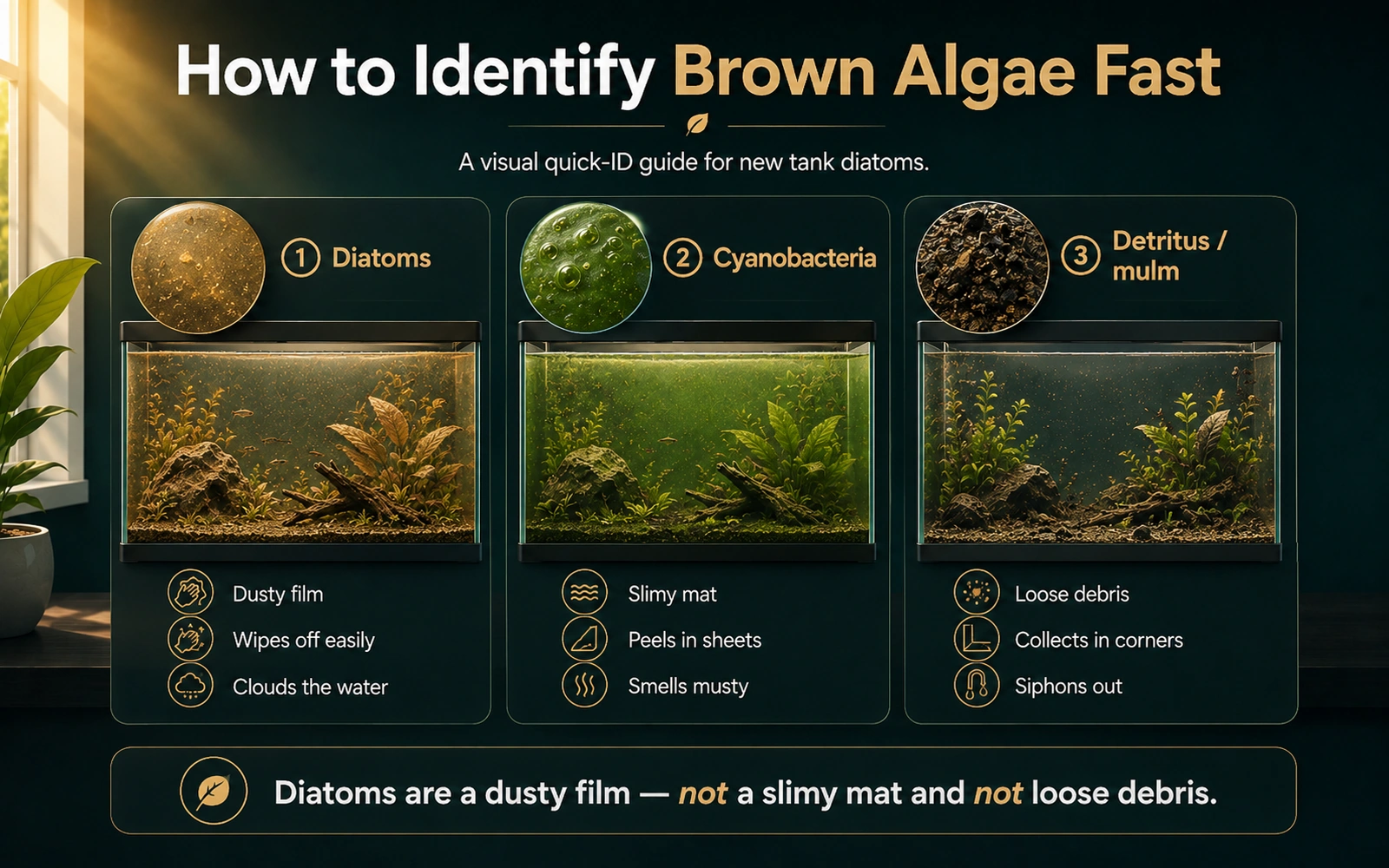
If you can wipe it off the glass with a finger and it clouds the water as it goes, you have diatoms.
Why a New Tank Gets Them
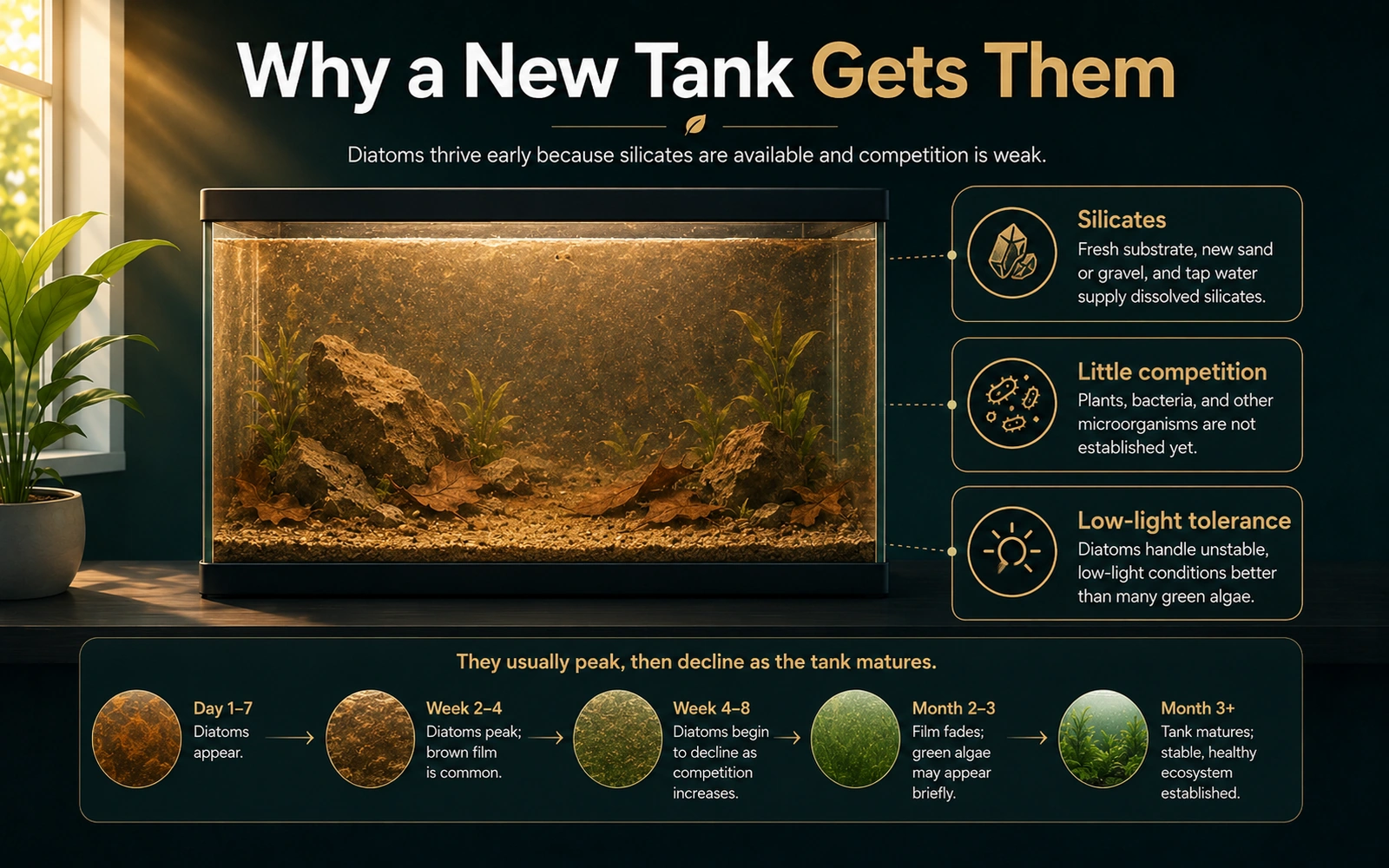
Diatoms are single-celled algae that build glass-like shells out of silica, so they need dissolved silicates in the water. A new aquarium supplies those generously: fresh substrate leaches silicates, tap water brings more in with every top-up and water change, and new sand or gravel is often the biggest single source.
The second half of the explanation is the more useful one. A new tank has almost no competition. The bacteria, the plants and the other microorganisms that will eventually take up the same nutrients are not established yet. Diatoms tolerate low light and unstable conditions better than most green algae, so they get there first.
The 2Hr Aquarist and Aquasabi both describe brown films appearing within the first weeks of a new setup, and Aquarium Science describes them fading as the tank matures. The specific timelines quoted across otherwise credible sources vary widely, from a few weeks to several months, which is itself informative: nobody can promise you a date, because it depends on your substrate, your source water and how quickly the rest of the system establishes.
What I can tell you plainly is the direction. Diatoms peak and then decline as the tank matures. They are usually the algae that a keeper never sees again.
What Actually Shortens It
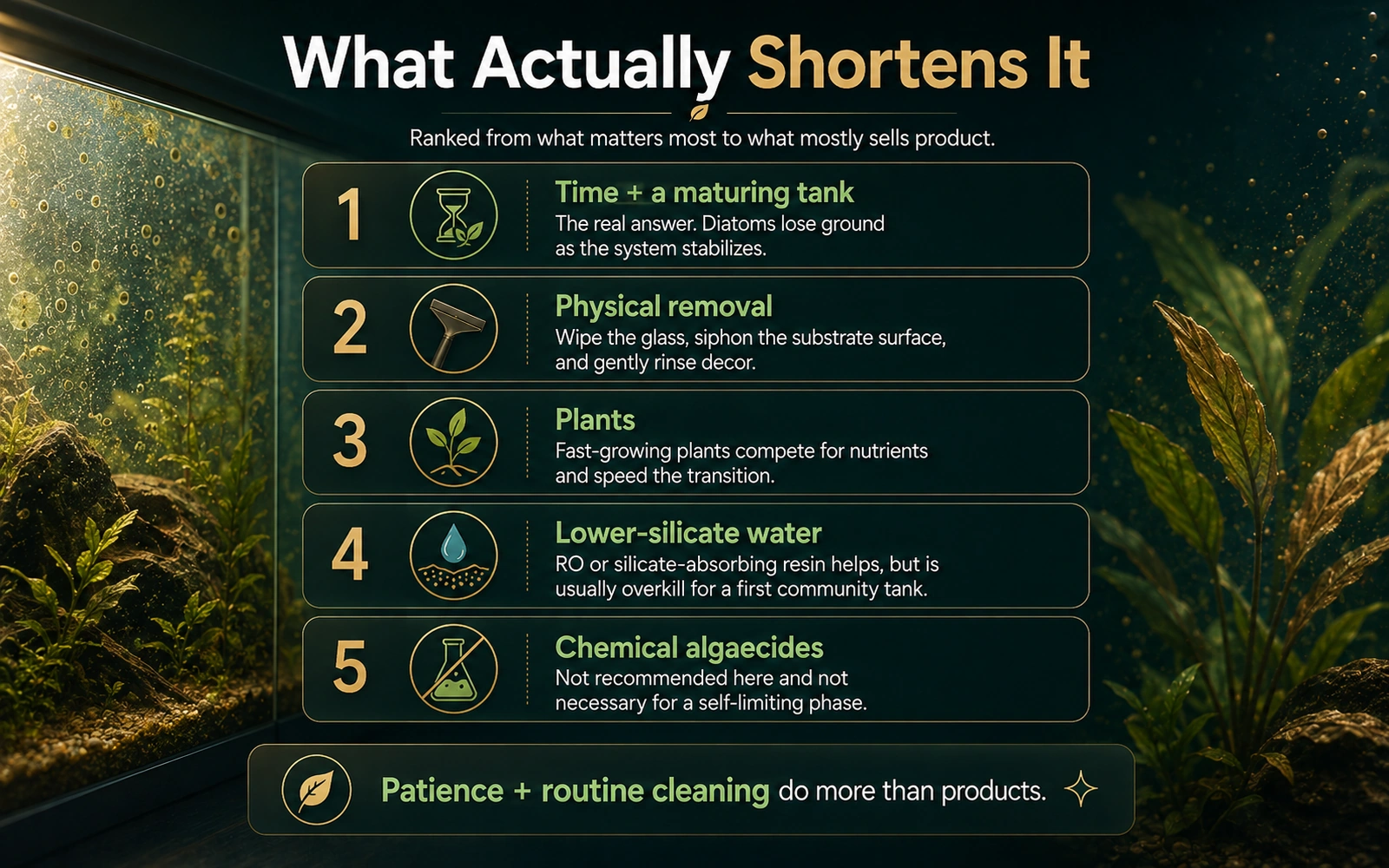
Ranked honestly, from what matters most to what mostly sells product.
1. Time and a maturing tank. This is the real answer and it is unsatisfying. Every week the biological filter, the plants and the competing microorganisms take more of the available nutrients, and the diatoms lose ground.
2. Physical removal, repeatedly. Wipe the glass before each water change, siphon the substrate surface where the film has settled, and gently rinse or wipe affected decor. This does not stop them, but it keeps the tank looking acceptable while the phase passes, and removing biomass removes some of the silicate that would be recycled.
3. Plants. Fast-growing plants compete for nutrients and speed up the transition. In a planted setup, diatoms usually pass faster.
4. Water changes with a lower-silicate source. If your tap water is high in silicate, changing water keeps topping up the supply. RO or a silicate-absorbing resin will reduce it. This is a real intervention, and it is also a significant expense and complication for a phase that ends by itself. Reasonable for a planted display tank, overkill for a first community tank.
5. Chemical algaecides. Not recommended here, and not necessary for a self-limiting phase. This site does not publish dosing for anything added to a tank with livestock in it.
The Cleanup Crew Mistake
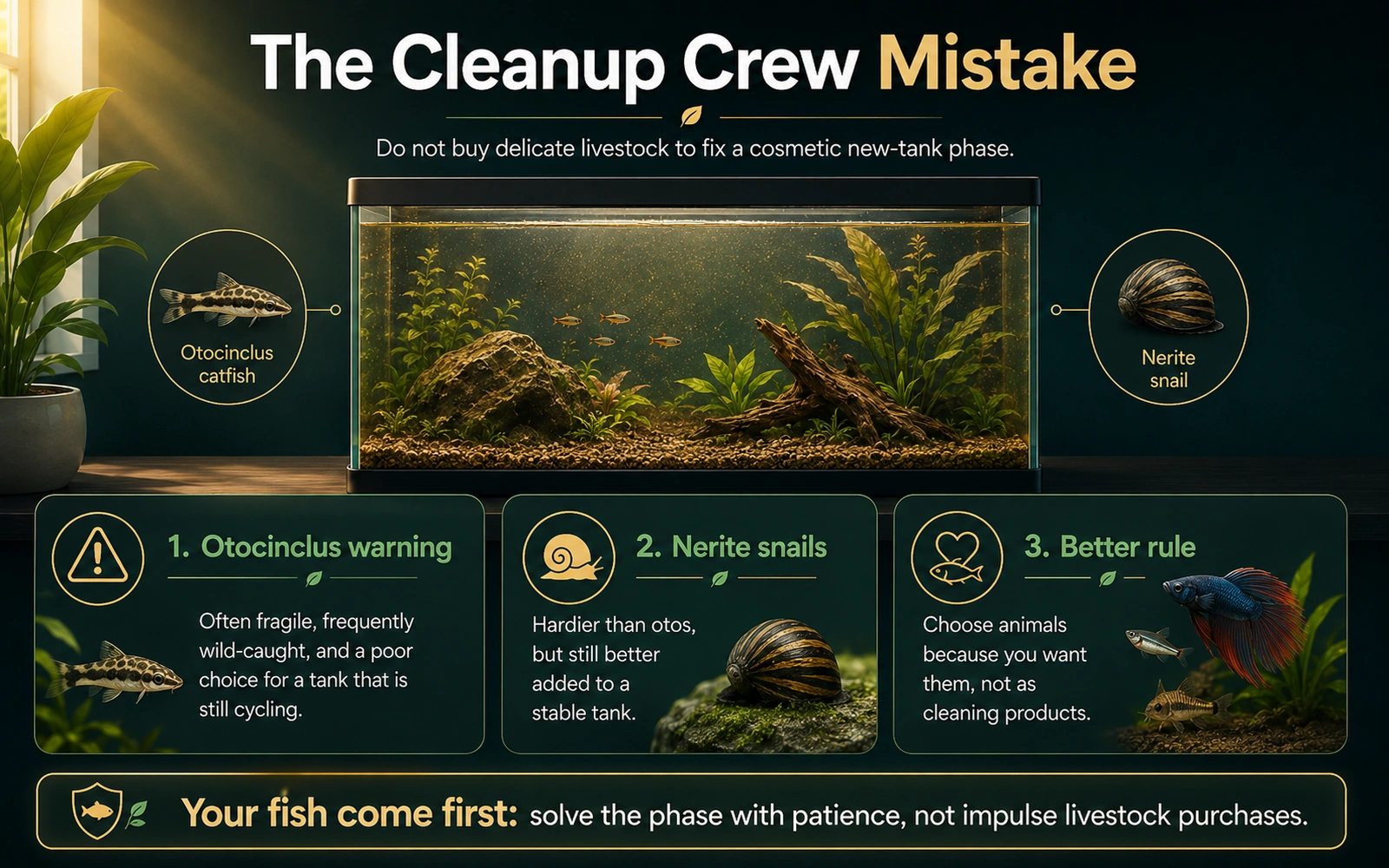
The most common piece of advice on this topic is to buy otocinclus catfish or nerite snails, because both eat diatoms. Both do eat diatoms. That advice still deserves a warning attached.
Otocinclus are widely reported as fragile, especially in tanks that are new or not fully cycled, and they are usually wild-caught and already stressed by the time they reach a shop. Adding them to a tank that is still cycling is asking a delicate fish to survive ammonia and nitrite in order to solve a cosmetic problem that would resolve on its own. They also starve once the diatoms are gone if nothing replaces that food.
"Your fish come first" has to mean something concrete, and this is one of the places it does: do not buy an animal as a cleaning product for a tank that is not ready for it. If you want otocinclus, get them because you want them, and add them to a finished, stable, mature tank with a food plan. Nerite snails are considerably hardier and a more reasonable choice, though the same logic about a stable tank applies. If a fish you have added is unwell rather than simply stressed, when to contact an aquatic veterinarian covers the boundary.
Brown Film in an Established Tank Is a Different Question
Everything above is about the new-tank diatom phase. If a mature tank that has been clean for months develops a brown film, do not assume it is the same thing.
Look at three possibilities in order:
- It is cyanobacteria, not diatoms. Use the peel test: a mat that lifts off in sheets and smells is not a diatom film.
- Something changed in the source water or the hardscape. New sand, new rock, a filter change, or a different water supply can reintroduce silicates.
- Something in the tank is declining. Low flow, dying plants or reduced maintenance all shift the nutrient balance in favor of whatever grows easiest.
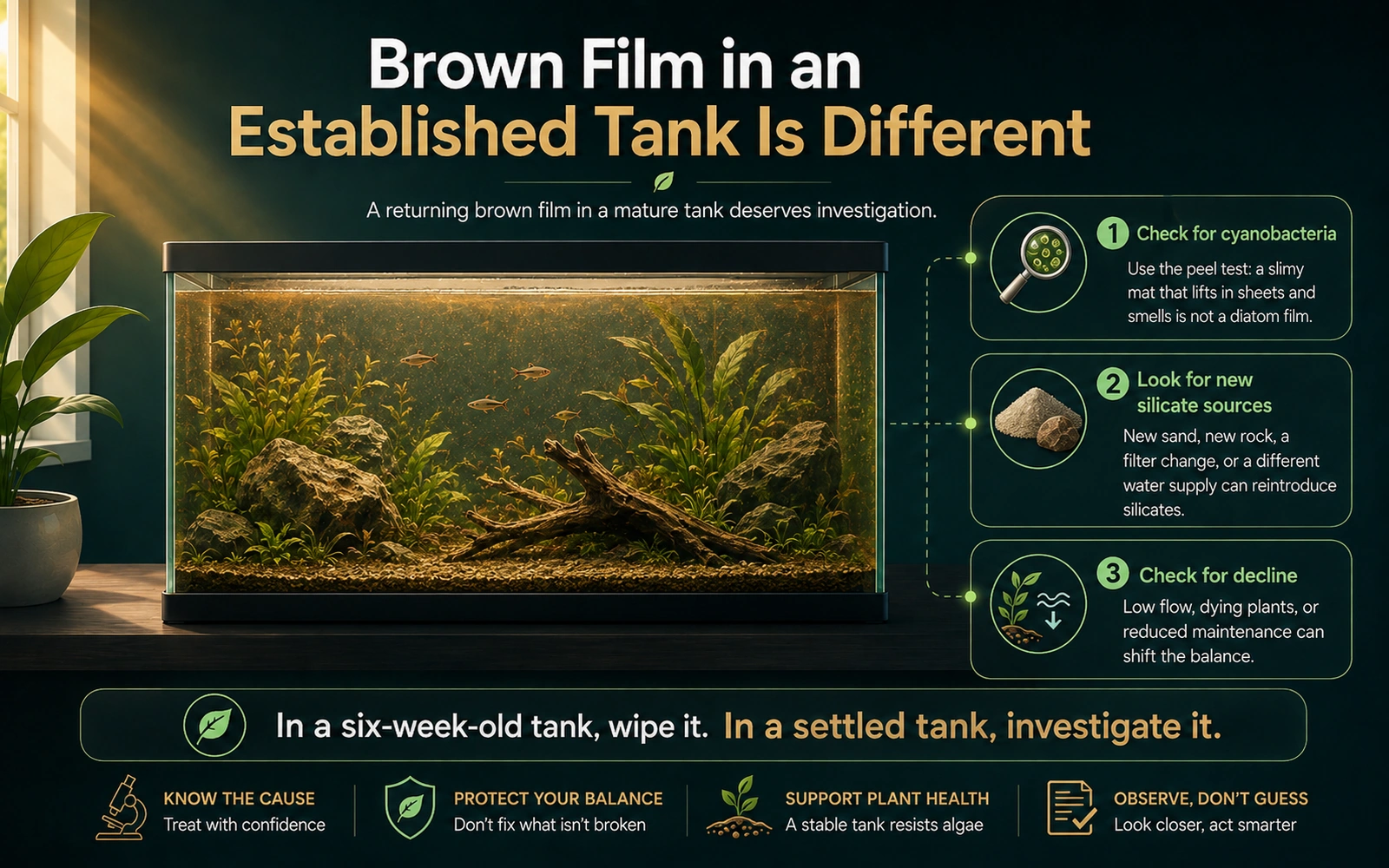
A returning brown film in a settled tank is worth investigating. A brown film in a six-week-old tank is worth wiping.
What Comes After the Diatoms
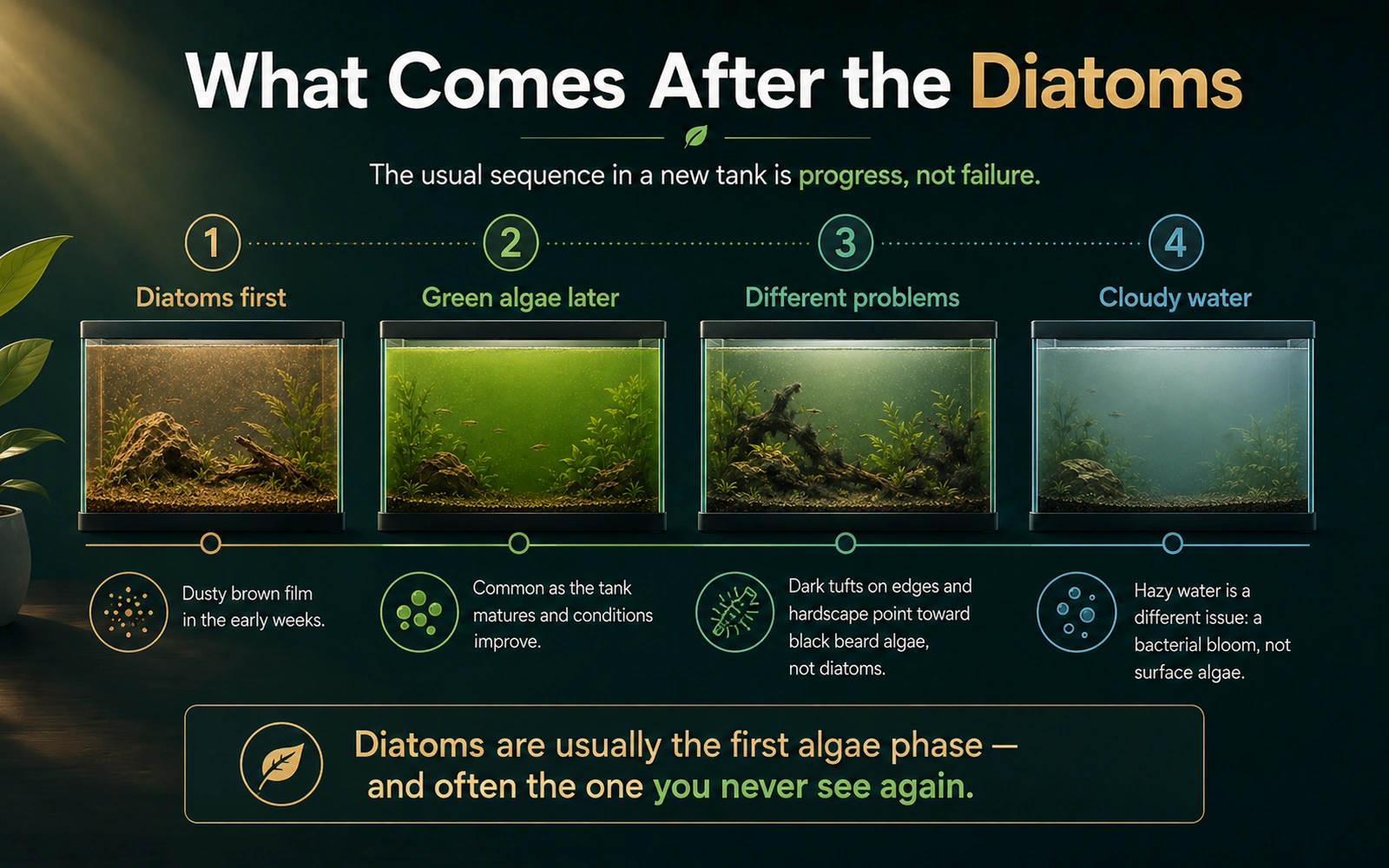
The usual sequence in a new tank is diatoms first, then green algae as the tank matures and conditions improve. That is progress rather than a new failure. Green spots on the glass tend to arrive later, and are covered in green spot algae on the glass. Dark tufts on plant edges and hardscape are a different beast with a different cause: see black beard algae.
And if the water itself is hazy rather than the surfaces being coated, that is not an algae question at all. Cloudy water in a brand new tank covers the bacterial bloom that often runs alongside this phase.
FAQ
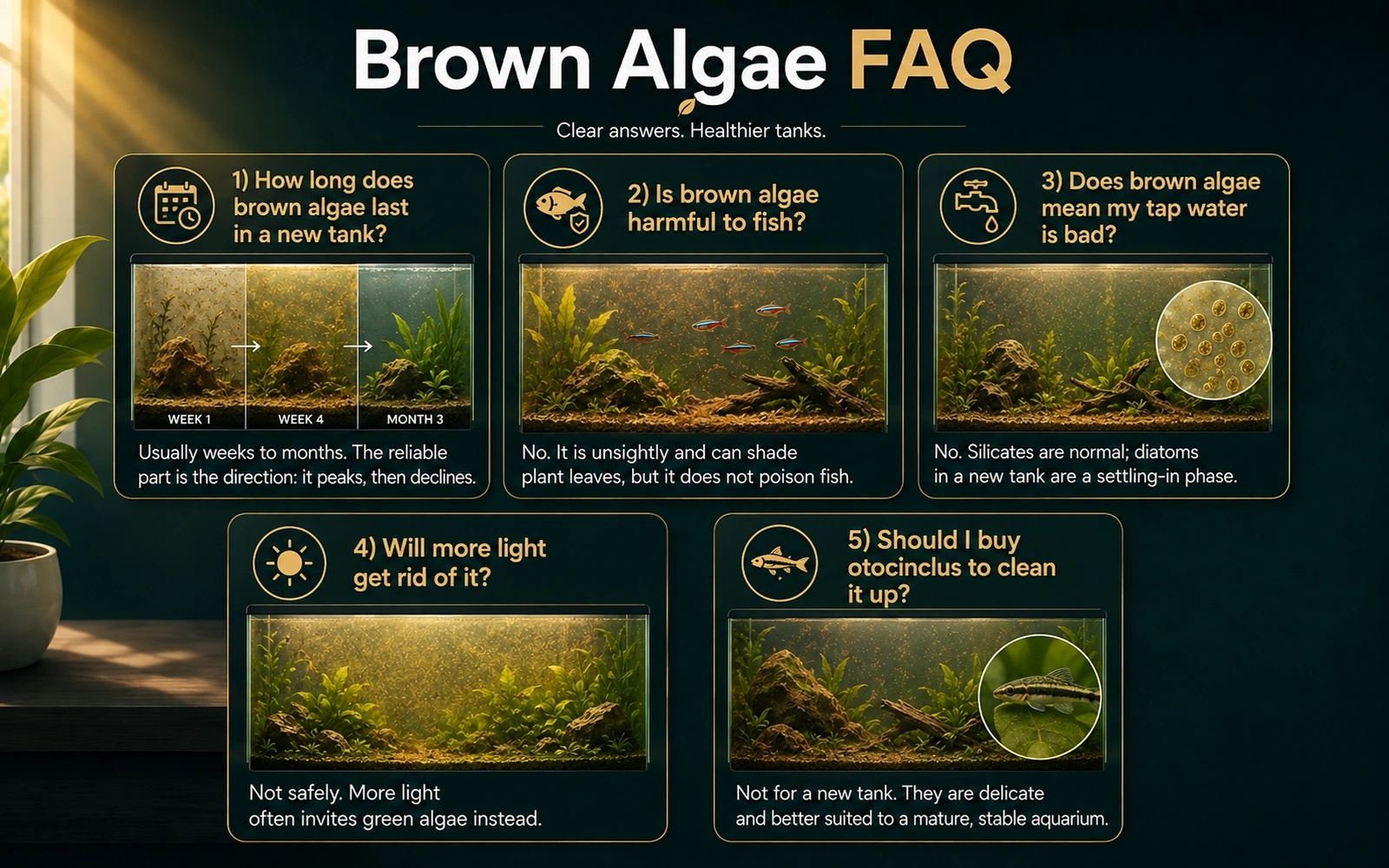
How long does brown algae last in a new tank? Sources vary from a few weeks to several months, and none of them can be specific because it depends on your substrate, your source water and how fast the tank matures. The reliable part is the direction: it peaks and then declines.
Is brown algae harmful to fish? No. It is unsightly and it can smother plant leaves by blocking light, but it does not poison fish or invertebrates.
Does brown algae mean my tap water is bad? No. Silicates in tap water are normal and are not a contamination problem. Diatoms in a new tank are a stage of the tank settling in, not evidence of a water quality failure.
Will more light get rid of brown algae? Increasing light is a common suggestion because diatoms tolerate low light well, but adding light to an immature tank invites green algae instead. Growing plants successfully is the useful version of this idea; simply turning the light up longer is not.
Should I buy otocinclus to clean it up? Not for a new tank. They are delicate, frequently wild-caught, and often die in tanks that are still cycling. If you want them, add them to a mature, stable tank and plan how they will be fed once the diatoms are gone.