Cloudy aquarium water in a new tank is almost always a bacterial bloom, and the correct response is to do nothing except keep testing. A milky, grayish haze that appears in the first few weeks of a new setup is a population of free-floating bacteria feeding on the organic material in the water while the filter's colony is still establishing. It clears on its own once the tank matures. Large water changes, filter cleaning and clarifying products mostly prolong it. The exception that matters is fish: if there are fish in the tank, the cloudiness is not the problem, but the ammonia that often accompanies it can be. Test, then read something is wrong with my tank if the readings are bad.
First, Work Out Which Kind of Cloudy You Have
"Cloudy" covers four different things in a new tank, and they have four different answers. This is the step almost every page skips, and it takes about a minute.
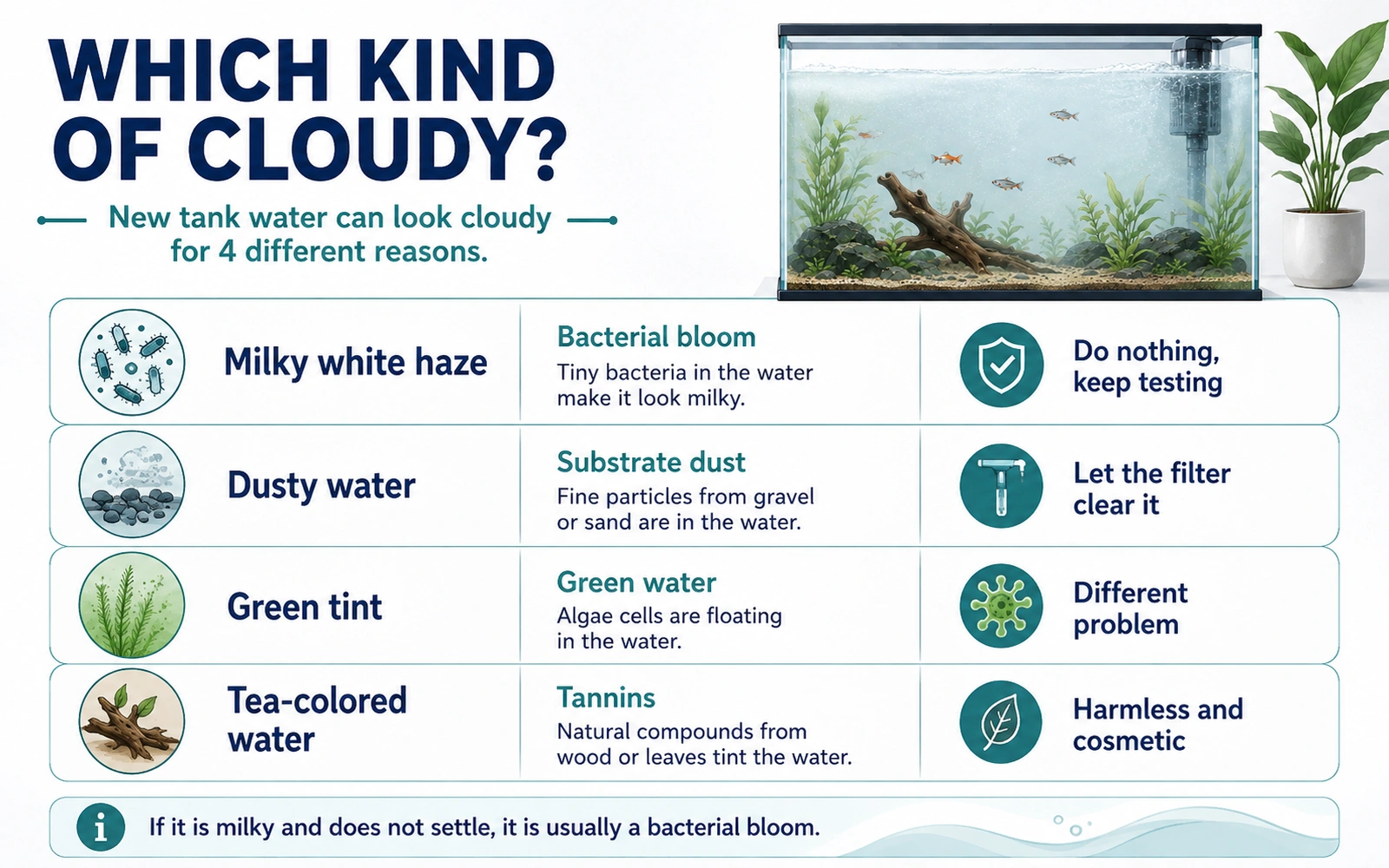
| What you see | When it appeared | Does it settle if the filter is off? | Most likely cause | What to do |
|---|---|---|---|---|
| Milky, gray or white haze, evenly through the water | Usually a few days to a few weeks after setup, often after fish or food went in | No | Bacterial bloom | Nothing. Keep testing, feed lightly, wait |
| Fine grit, water looks dusty | Within hours of filling | Yes, it drops to the bottom | Substrate dust from unrinsed gravel or sand | Let the filter clear it, or rinse next time |
| Green tint, like weak pea soup | Usually weeks in, with light involved | No | Free-floating algae, a different problem entirely: see green water | Do not treat it as a bacterial bloom |
| Yellow or brown tint, water clear but tea-colored | After adding driftwood or leaves | No | Tannins, harmless and cosmetic | Ignore, or use activated carbon |
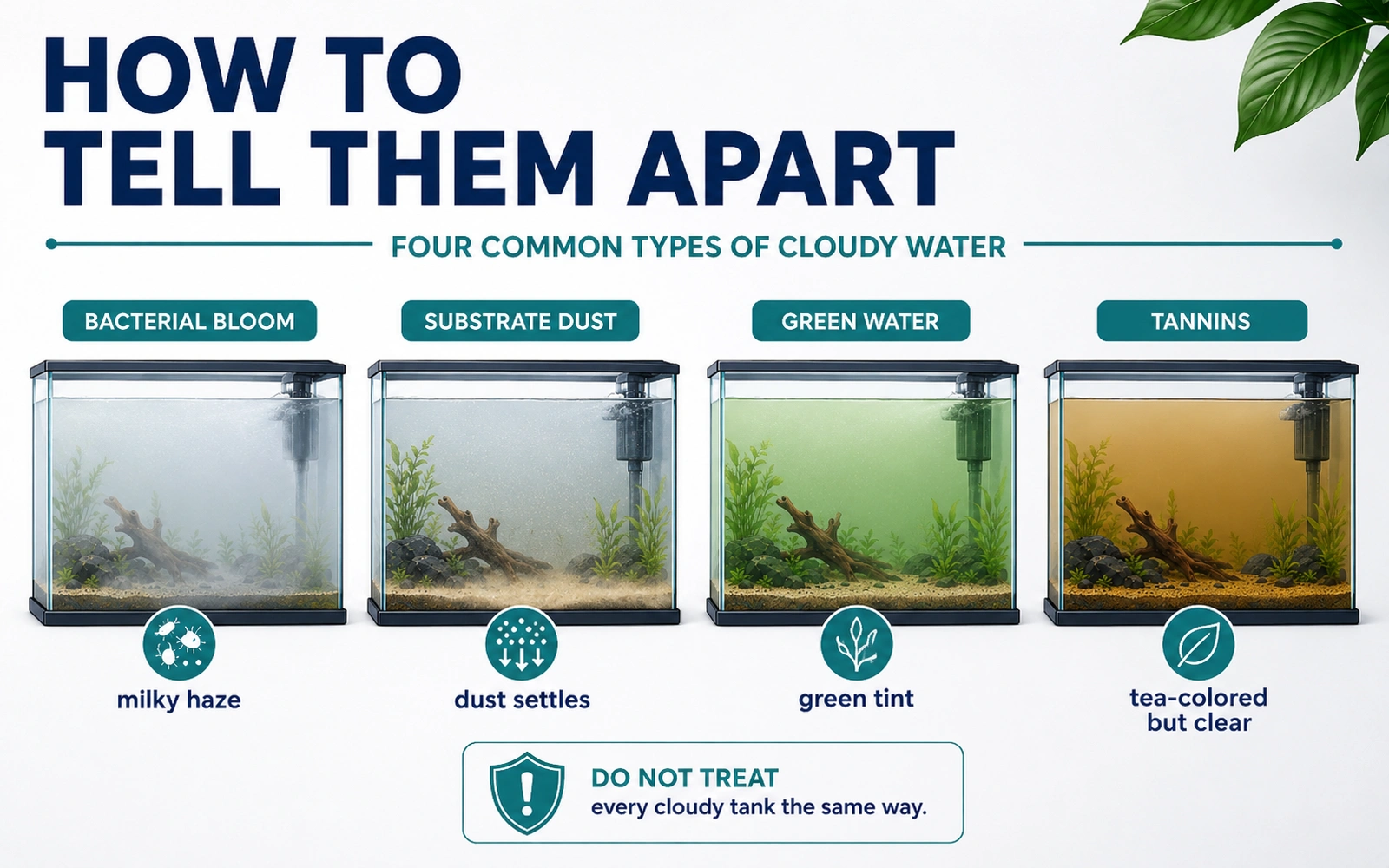
If it is milky and it does not settle, you have a bacterial bloom, and the rest of this page is about that.
Why a New Tank Goes Milky
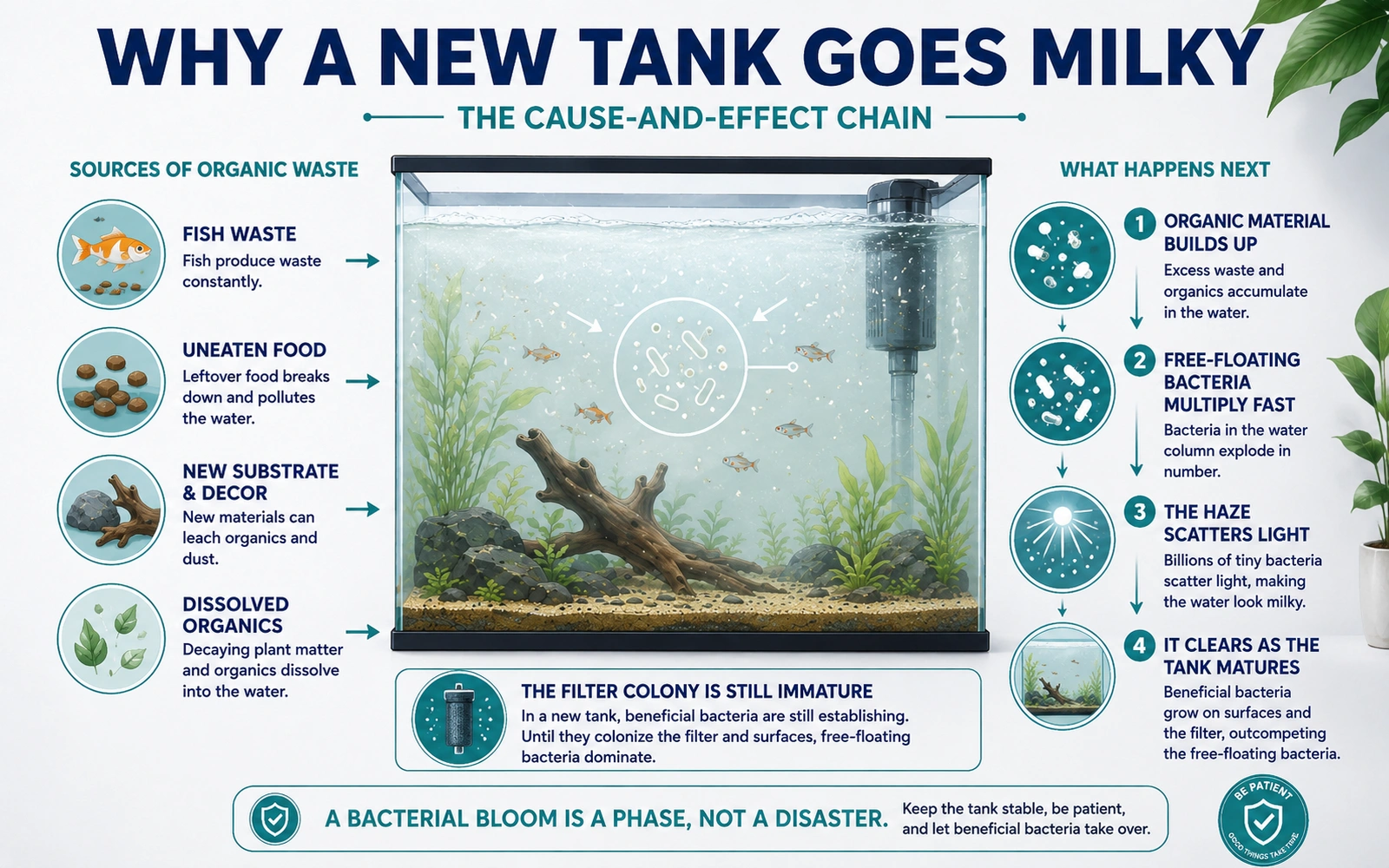
A new aquarium is an empty ecological niche with food in it. Fish waste, uneaten food, dust from substrate and decor, and anything that leached out of new materials all become dissolved organic matter. Heterotrophic bacteria, the ones that break down organic waste rather than the nitrifying bacteria that handle ammonia, multiply extremely fast when that food is abundant and nothing is competing with them.
They reproduce in the water column faster than they colonize surfaces, and there are enough of them to scatter light. That is the haze. Aquarium references describe heterotrophic bacteria doubling in a matter of minutes under good conditions, which is why the change often looks like it happened overnight.
The bloom ends when the food runs out. As the filter's surfaces colonize and the organic load gets processed on the media instead of in the water, the free-floating population starves back down and the water clears. That is the entire mechanism, and it is why patience is the recommended treatment on essentially every reputable source I checked, from Aqueon's cloudy-water guides to Aquarium Science's write-up.
The Unpopular Answer: Leave It Alone
Here is the part that reads as laziness and is actually the correct advice.
Do not do a large water change to clear it. Removing water removes some bacteria and some of the organics they are eating, and the population rebounds. Several sources describe water changes as prolonging a bloom rather than ending it, because you keep resetting a race the bacteria always win. If your test results call for a water change, do the water change for that reason. Do not do it for the cloudiness.
Do not clean or replace the filter media. In a new tank the filter is the thing you are waiting for. Rinsing it out, or worse, throwing away a cartridge, removes the colony that ends the bloom.
Feed sparingly, or not at all if the tank is fishless. Food is the fuel. Less fuel, shorter bloom.
Do not add a clarifier as a first move. Flocculants clump particles so the filter can catch them, which treats the symptom. Activated carbon in the filter is the mildest option if you cannot stand looking at it, and it does help by absorbing dissolved organics, but nothing here is urgent.
Do keep testing. This is the one active thing worth doing, and it is the thing that tells you whether you are in a harmless phase or a dangerous one.

When Cloudy Water Is Not the Real Problem
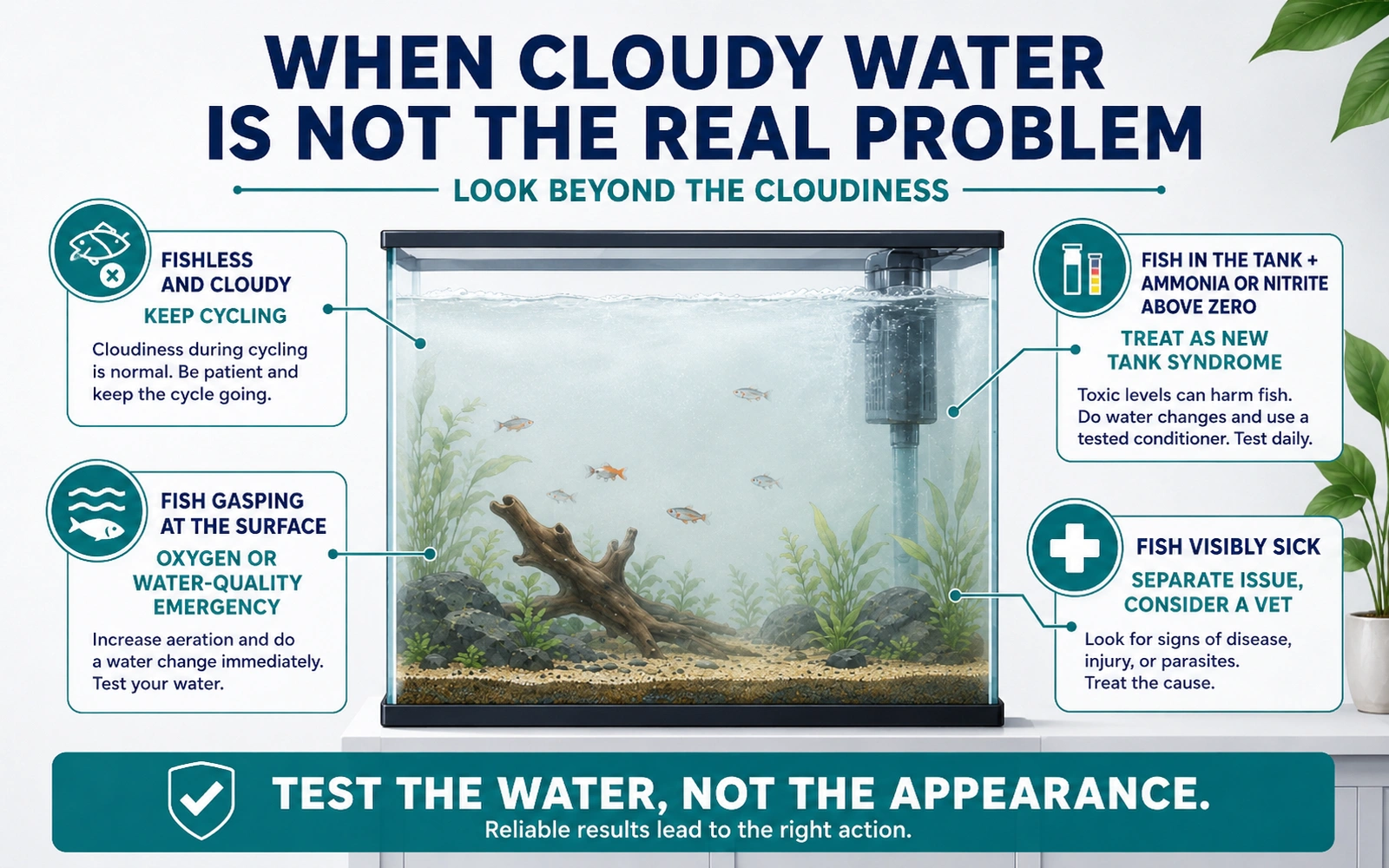
The cloudiness itself does not hurt fish. What often sits underneath it does.
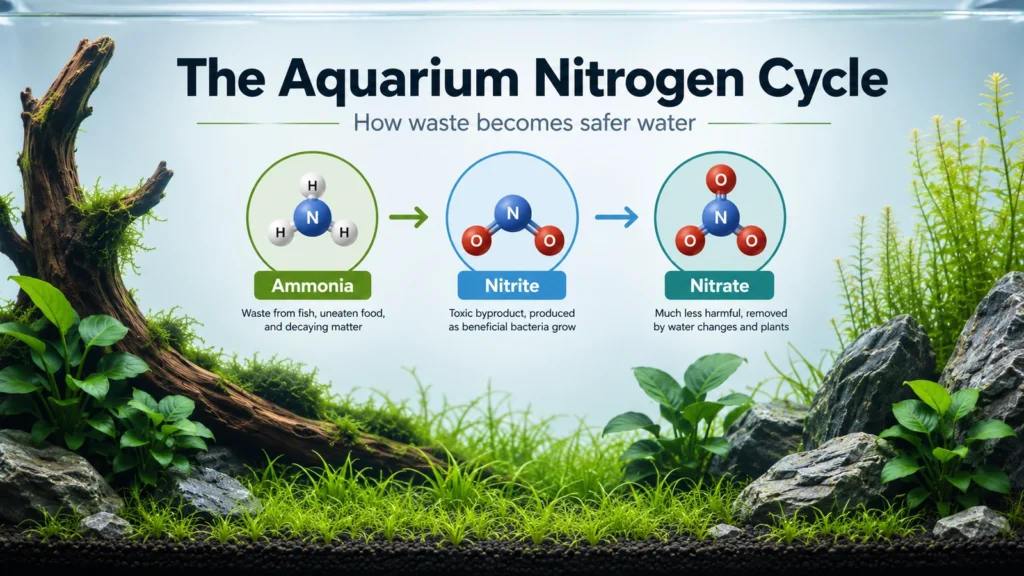
A bloom in a new tank usually coincides with the ammonia and nitrite phase of cycling, and those do hurt fish. So the question is not "how do I clear the water," it is "what are my numbers."
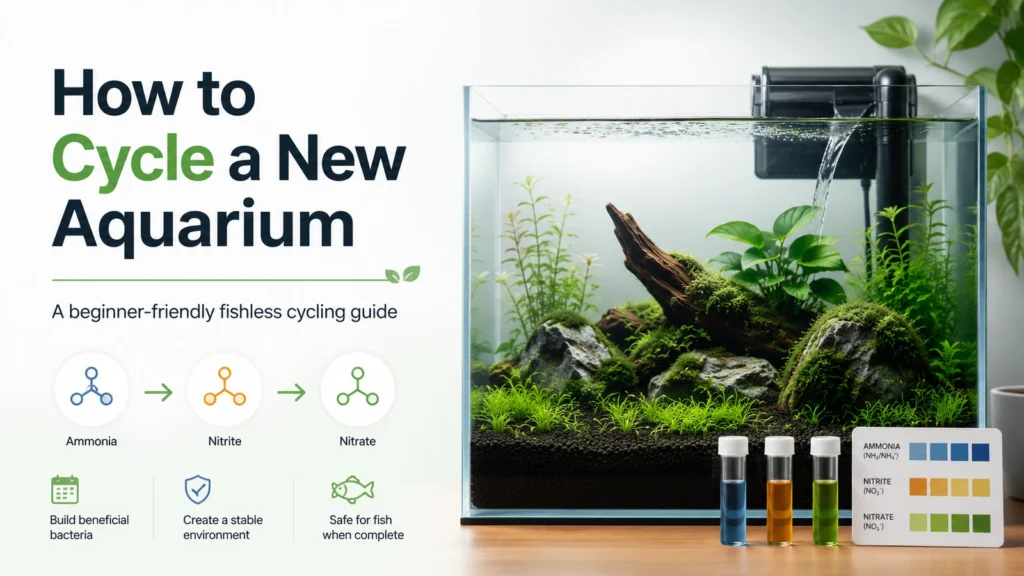
- Fishless tank, cloudy: ignore it entirely, carry on with how to cycle a new aquarium.
- Fish in the tank, cloudy, ammonia or nitrite above zero: this is the situation to take seriously. It is the classic presentation of new tank syndrome, and the water change you do is for the ammonia, not for the haze.
- Fish gasping at the surface, tank cloudy: treat that as the priority and work through it as an oxygen or water-quality problem, not a clarity problem. A dense bloom does consume oxygen.
- Fish visibly sick with something on their bodies: algae and blooms do not cause disease. If fish are ill rather than stressed, that is a separate question, and when to contact an aquatic veterinarian covers where the line is.
How Long It Lasts
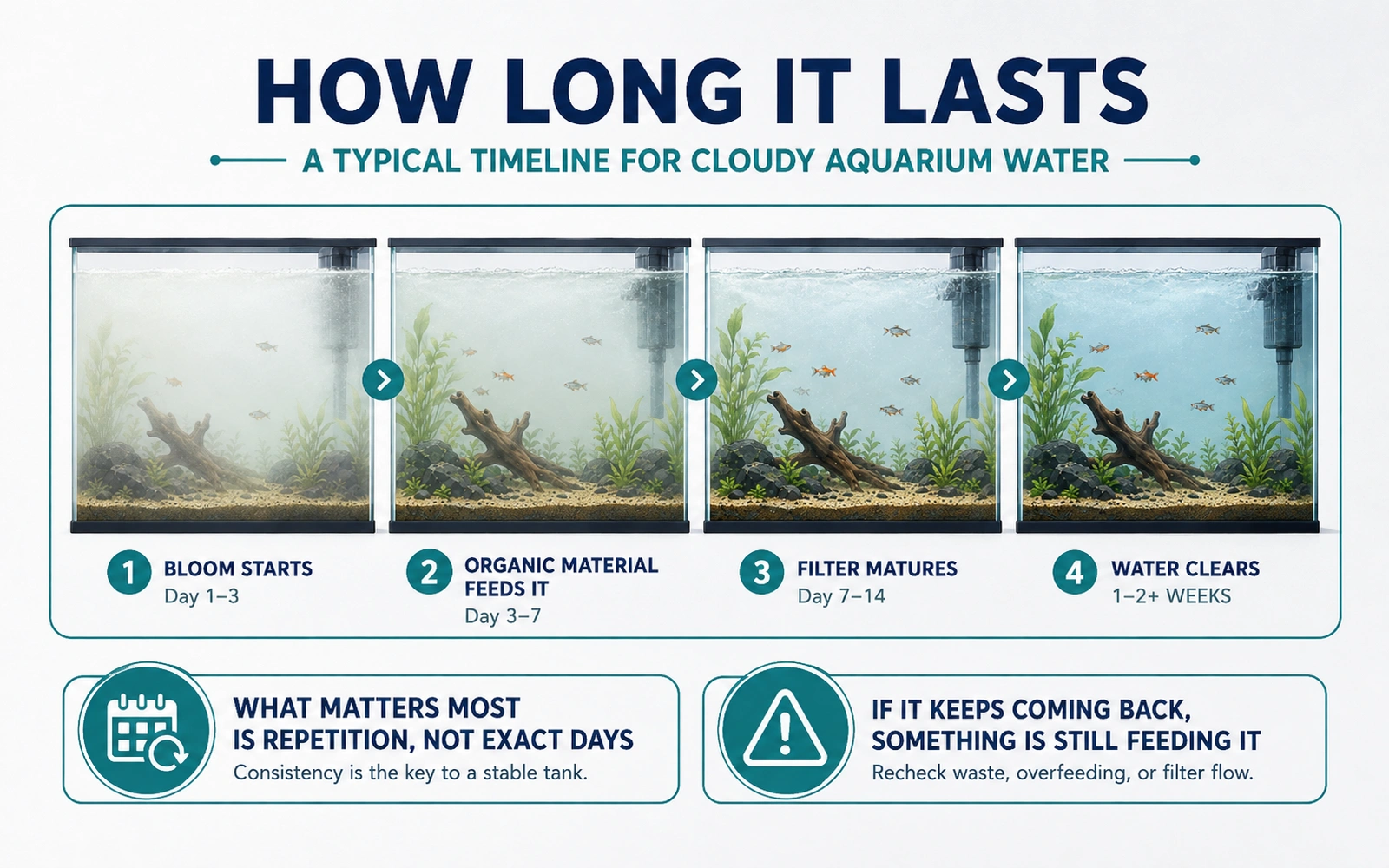
I am not going to give you a number in days, because the honest answer depends on how much organic material is in your tank, how heavily it is fed and how far along the filter is, and I have seen ranges quoted from a few days to a couple of weeks across otherwise reliable sources. The pattern is more useful than a figure: a bloom that is being fed keeps going, and a bloom that is starving fades.
What should worry you is not duration but repetition. A bloom that clears and then returns in the same tank means something is still adding organic material faster than the system processes it. That is a stocking, feeding or maintenance question, and the answer usually lives in the log rather than in the water.
If the Tank Is Not New
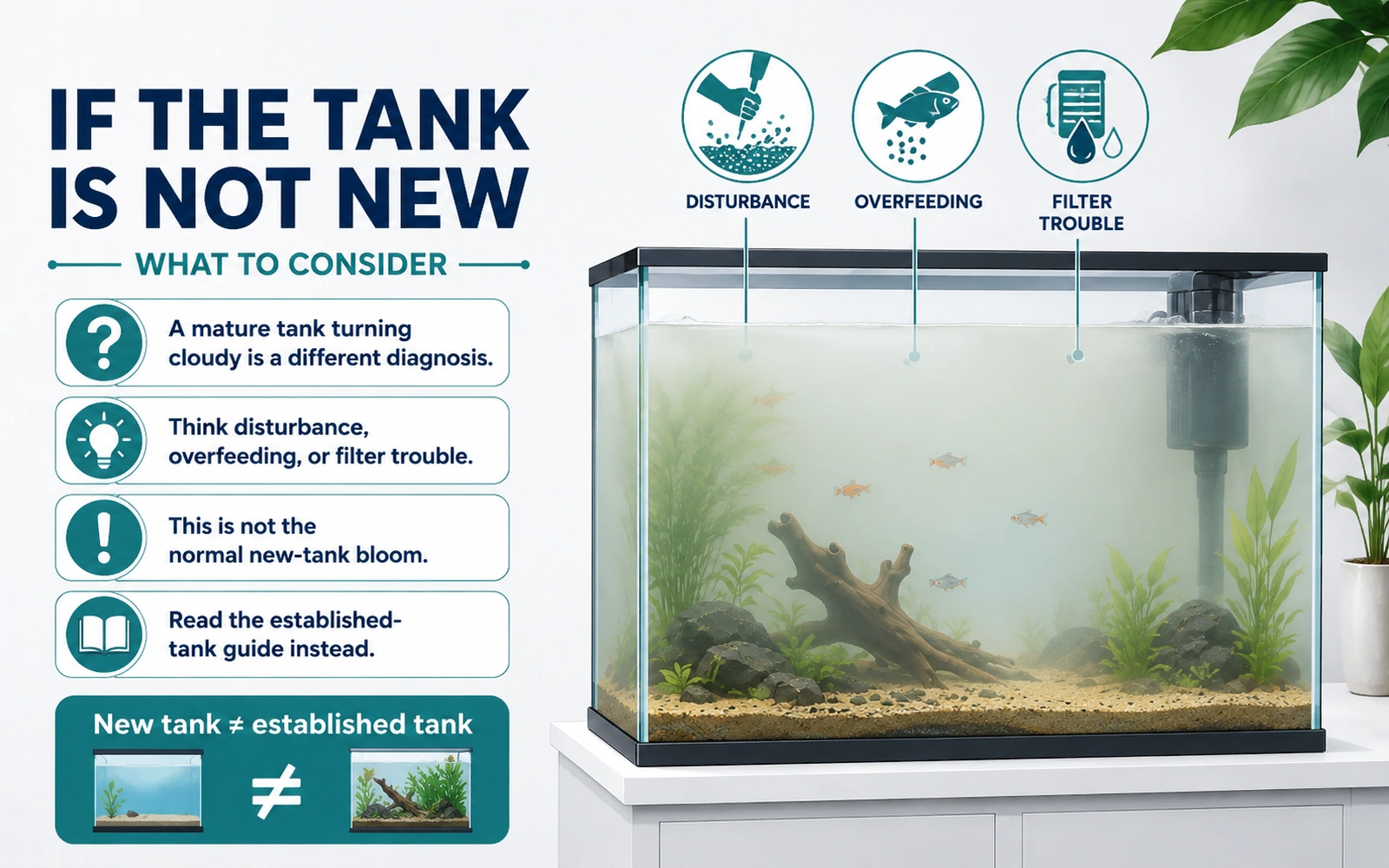
If your tank has been running happily for months and went cloudy this week, none of the above is your answer. The causes are different, the diagnosis is different, and it usually points at a disturbance, an overfeed or a filter problem rather than a maturing system. Read cloudy water in a tank that was fine last week instead.
FAQ
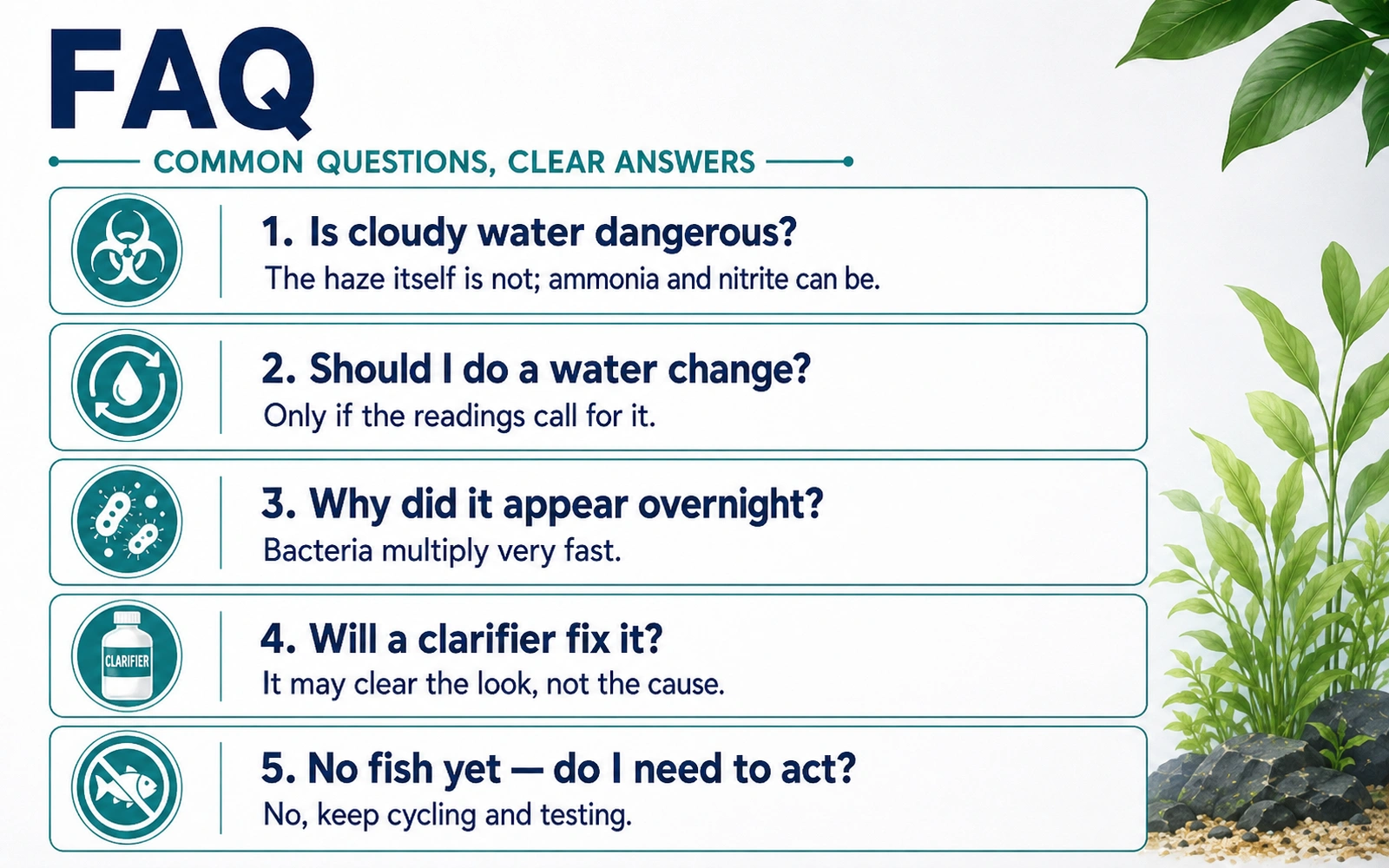
Is cloudy water in a new tank dangerous to fish? The cloudiness itself is not. The conditions that often come with it in a new tank, namely ammonia and nitrite from an incomplete cycle, are. Test rather than judging by appearance.
Should I do a water change to clear cloudy new tank water? Not for the cloudiness. Water changes generally prolong a bacterial bloom by resetting the balance. Do a water change if your ammonia or nitrite readings call for one.
Why did my tank go cloudy overnight? Because the bacteria responsible reproduce very quickly when there is a sudden supply of organic material. An overfeed, a dead fish or snail, or a disturbed substrate can all trigger it within a day.
Will a water clarifier fix it? It can make the water look better sooner by clumping particles for the filter to catch. It does not address what is feeding the bloom, and in a new tank it is treating a phase that would end anyway.
My new tank is cloudy and I have not added fish yet. Do I need to do anything? No. That is the easiest version of this problem. Keep cycling, keep testing, and let it run its course.