When something is clearly wrong and you cannot yet say what, work in this order: stop feeding and stop adding anything, test ammonia and nitrite, check that the heater and filter are actually running, then write down exactly what the fish are doing. Almost every aquarium emergency is either a water-quality failure or an equipment failure, and both of those are found in the first ten minutes by looking rather than by guessing. Panic causes more losses than the original problem, and the most common way a recoverable situation becomes an unrecoverable one is somebody adding a product before they knew what was wrong.
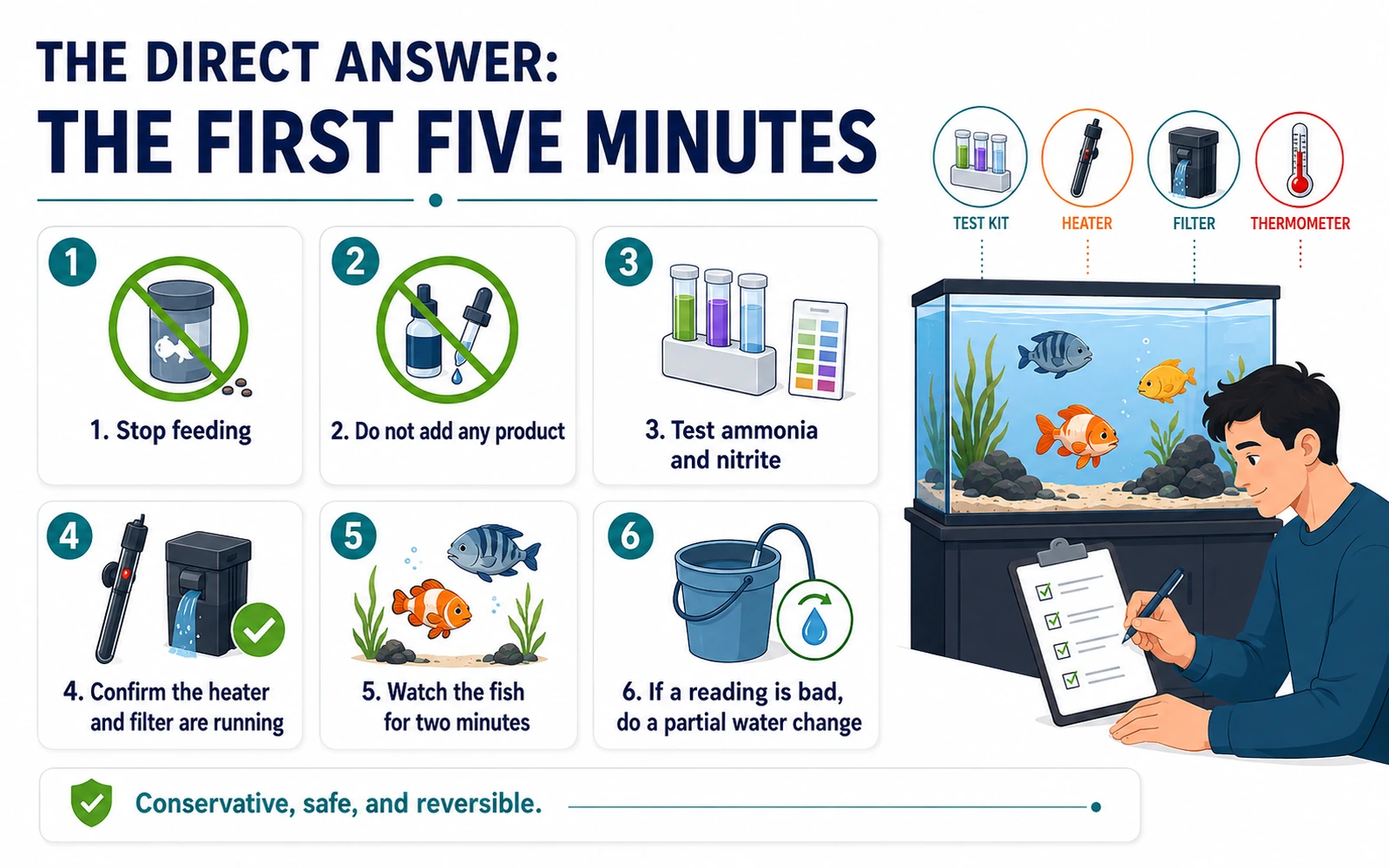
The Direct Answer: The First Five Minutes
- Stop feeding. Nothing goes in the tank until you know what is happening.
- Do not add any product, treatment or conditioner beyond a plain dechlorinator for water you are adding.
- Test ammonia and nitrite, and nitrate if you have it.
- Confirm the heater and filter are running, and read a thermometer rather than a dial.
- Watch the fish for two minutes and write down what you see, in plain words.
- If a reading is bad, do a partial water change with dechlorinated, temperature-matched water.
That sequence is deliberately conservative. It does nothing irreversible, and by the end of it you usually know which of the two big categories you are in.
For the immediate, step-by-step version to follow while a tank is actively in trouble, this site keeps a standing aquarium emergency help page.
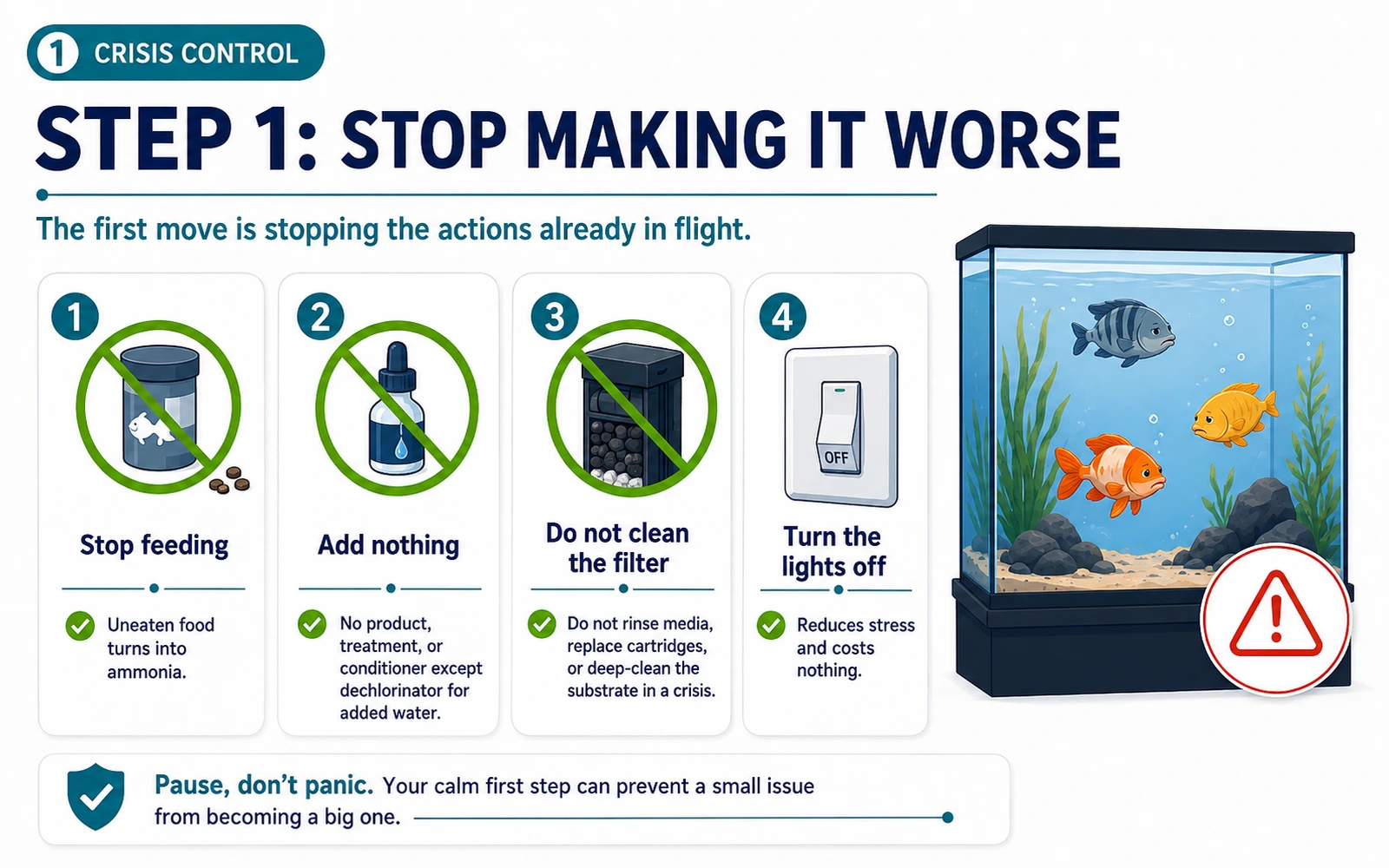
Step 1: Stop Making It Worse
The first move in an emergency is not an action. It is stopping the actions already in flight.
Stop feeding. Uneaten food decomposes into ammonia, and in a tank that is already struggling that is the last thing it needs. Fish in distress often will not eat anyway, and healthy fish tolerate several days without food comfortably.
Add nothing. This is the rule that saves the most tanks. The instinct when fish look ill is to reach for a bottle, and a treatment added before the cause is known does three bad things at once: it can harm the filter bacteria, it makes the water impossible to interpret afterwards, and if a second product goes in later the interaction is nobody's guess. There is one exception, and it is dechlorinator for water you are adding to the tank.
Do not clean the filter. In a crisis the filter's bacterial colony is the thing keeping the tank alive. Rinsing media, replacing cartridges or deep-cleaning the substrate now removes the only biological support the tank has.
Turn the lights off. It reduces stress on the fish and costs nothing.
Step 2: Test the Water
Water quality is the most common cause and the fastest to check, so it comes first among the actual investigations.
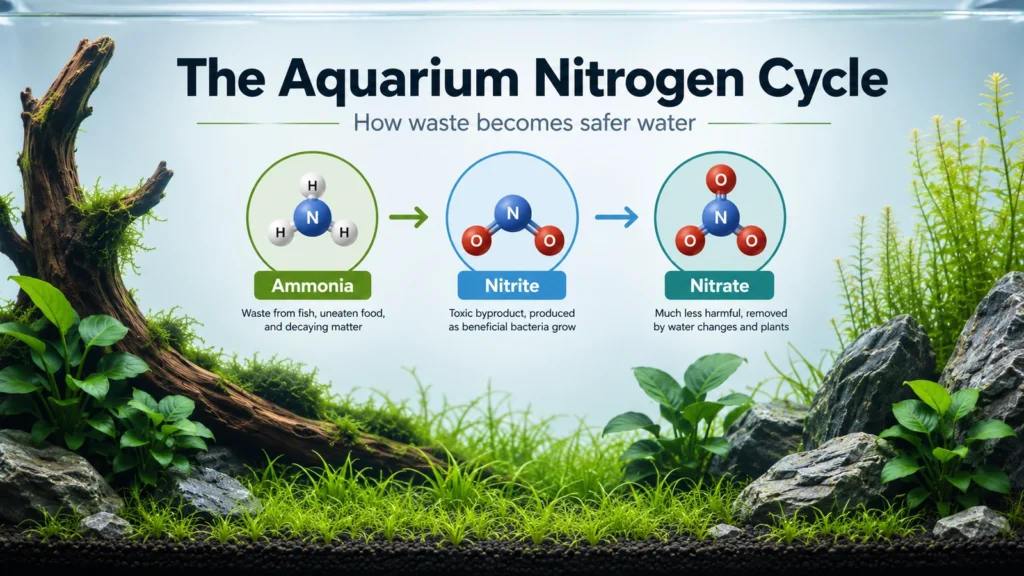
Test ammonia and nitrite as the priority pair. Both are invisible, both are acutely harmful, and either being above zero explains a great many symptoms on its own. Then nitrate, and temperature, which needs no kit.
- If ammonia is above zero, work through ammonia above zero.
- If nitrite is above zero, work through nitrite above zero, which is the more urgent of the two.
- If both are zero and nitrate is very high, the tank is overdue for maintenance rather than in acute chemical trouble, and the answer is a partial water change and a look at aquarium nitrate levels.
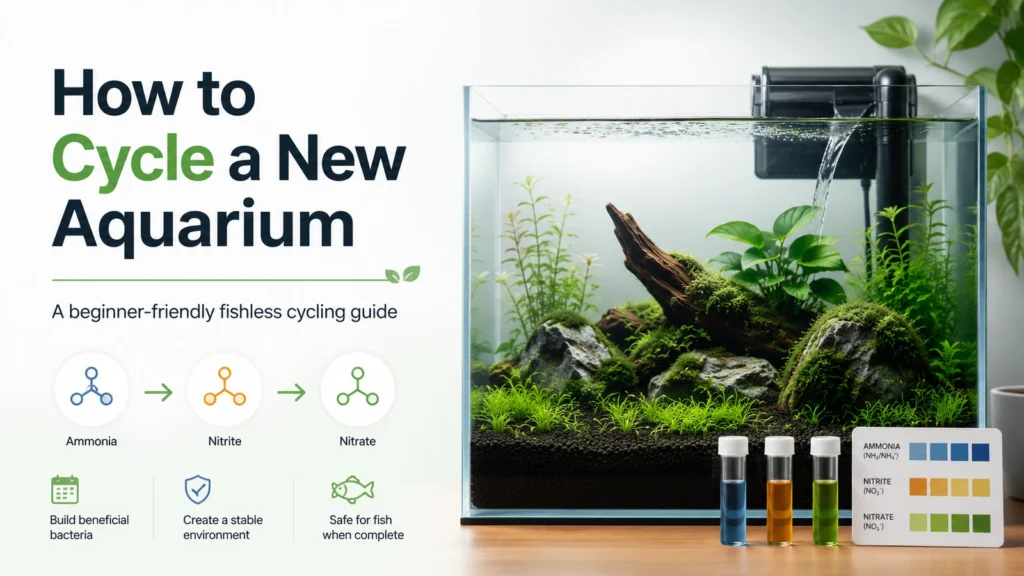
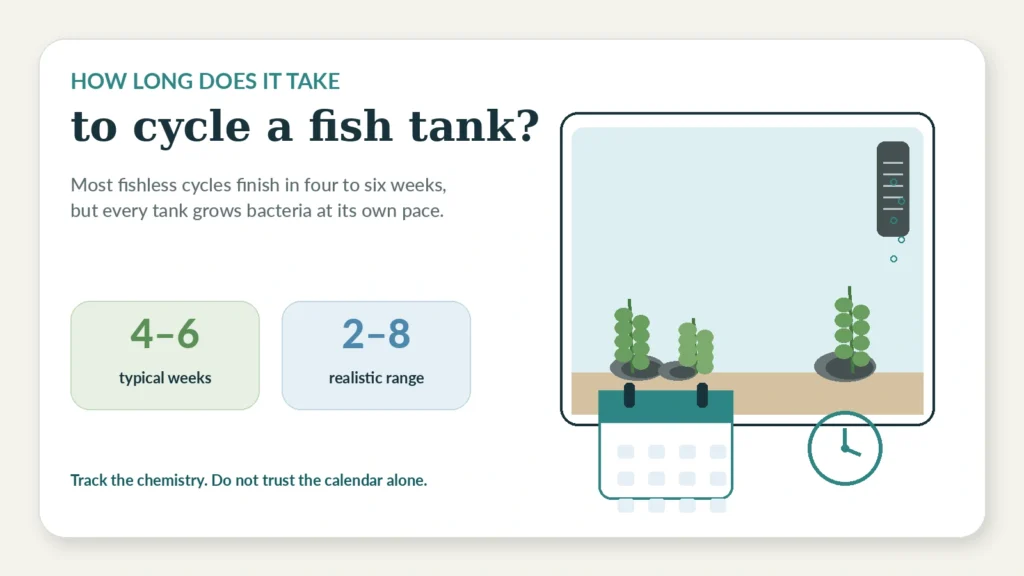
- If the tank is new, expect ammonia or nitrite and read new tank syndrome, which is the single most common way beginners lose fish in water that looks clean.
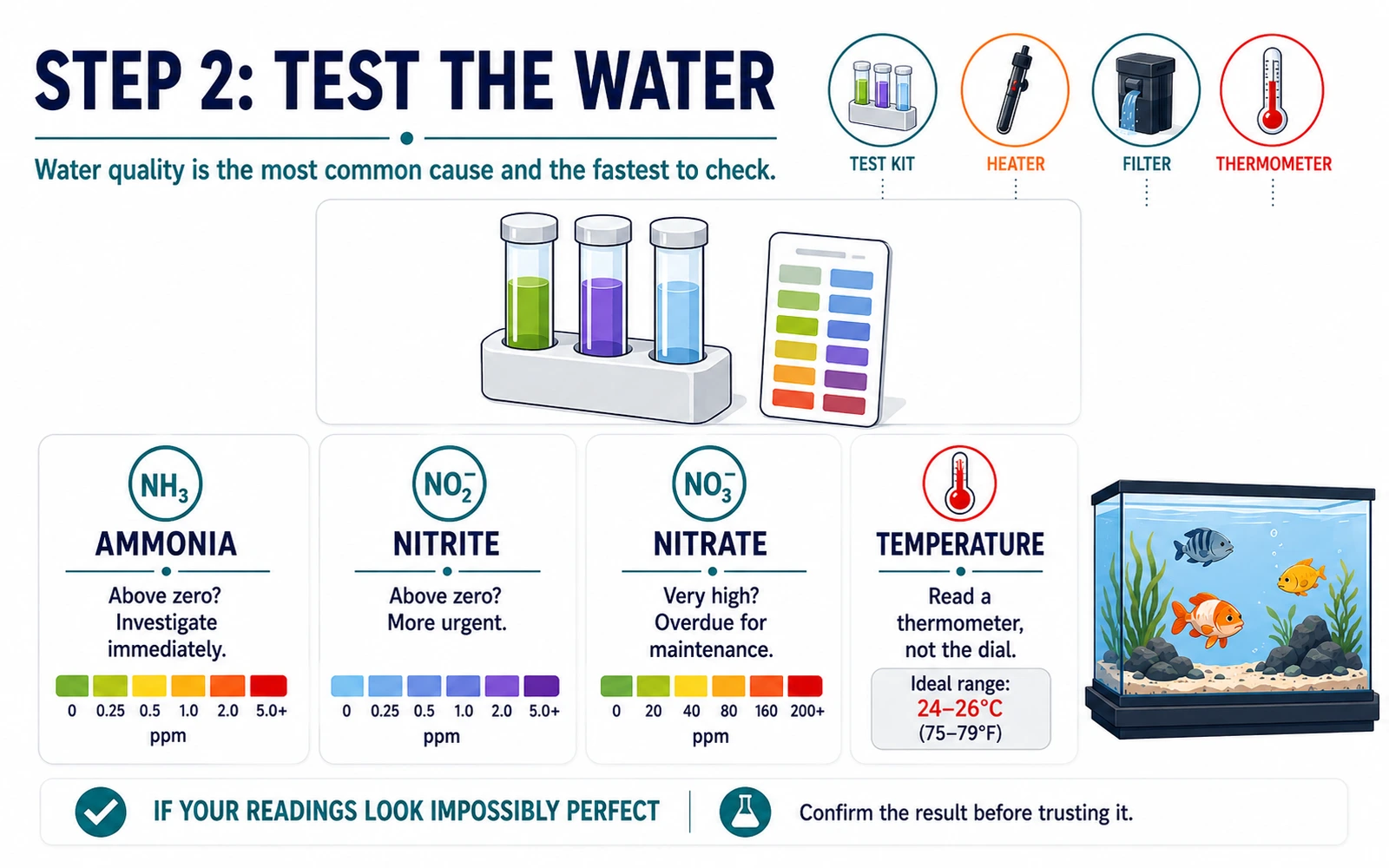
If your readings look impossibly perfect for a tank in visible trouble, do not accept them uncritically. Why two test kits disagree covers confirming a suspect result, and aquarium water parameters covers what each number means.
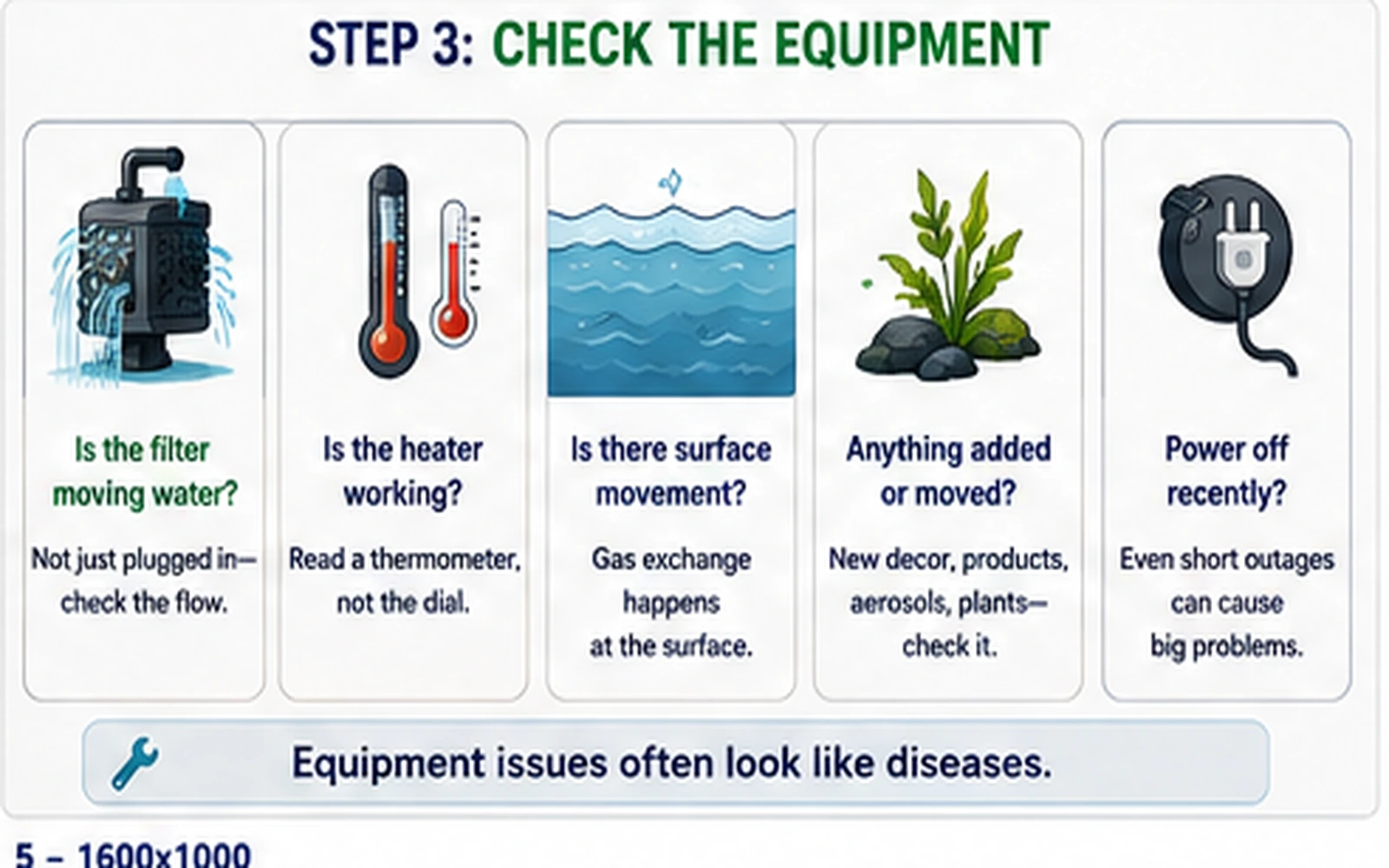
Step 3: Check the Equipment
Equipment failure is the other big category, and it produces symptoms that look like disease.
- Is the filter actually moving water? Not plugged in, but flowing. A blocked intake, an impeller jammed with gravel or a pump that stopped hours ago all leave the tank looking normal at a glance.
- Is the heater working, and what does a thermometer say? Both failure directions are dangerous: a heater stuck on cooks a tank, and one that has failed off lets it drift down overnight. Read the water, not the dial.
- Is there surface movement? Gas exchange happens at the surface. A filter outflow that has been redirected, or a spray bar that got moved during cleaning, can quietly remove the tank's oxygen exchange.
- Has anything been added or moved recently? New decor, a new rock, a different substrate, a cleaned ornament, an air freshener or aerosol used near an open tank, a treated houseplant nearby. Contaminants get in more often than people expect.
- Has the power been off? Even a short outage stops a filter, and a filter that sat still for hours can return with a reduced bacterial colony.
Step 4: Look at the Fish, and Write Down What You See
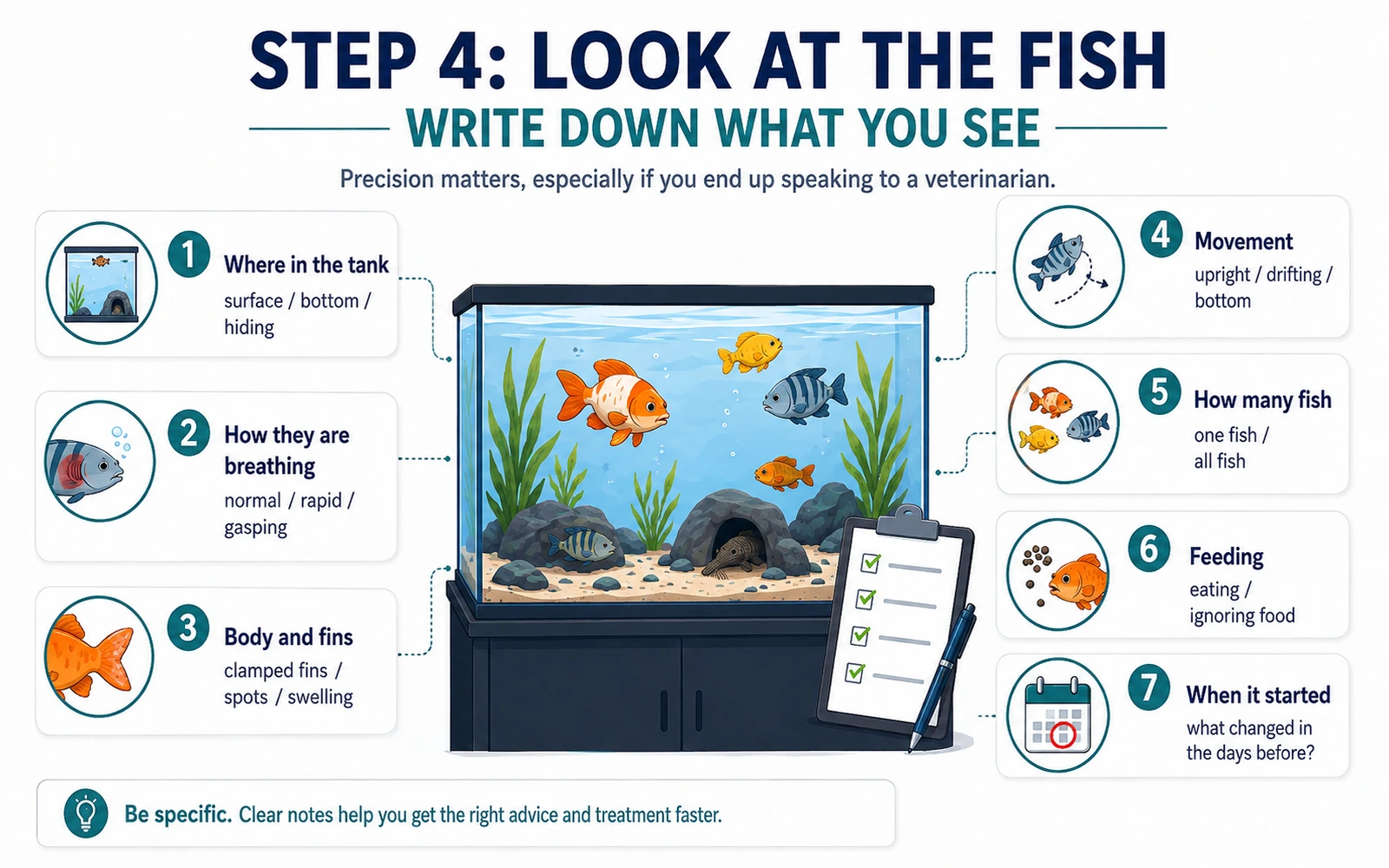
Write it down for two reasons: it forces precision, and if you end up speaking to a veterinarian it is the information they will ask for.
Describe, plainly:
- Where in the tank each affected fish is: at the surface, on the bottom, hiding, wedged behind equipment, in the current.
- How they are breathing: normal, rapid, gasping at the surface, or working one gill.
- Body and fins: clamped fins, ragged edges, unusual color, spots, patches, swelling, or anything visibly attached.
- Movement: normal swimming, drifting, listing, unable to stay upright, or unable to leave the bottom.
- How many fish are affected, and whether it is one species or all of them.
- Feeding: eating normally, ignoring food, or spitting it out.
- When it started, and what changed in the days before.
That last pair matters more than any single symptom. A problem that began the day after a water change, a filter clean, a new fish or a hot weekend usually points straight at its cause.
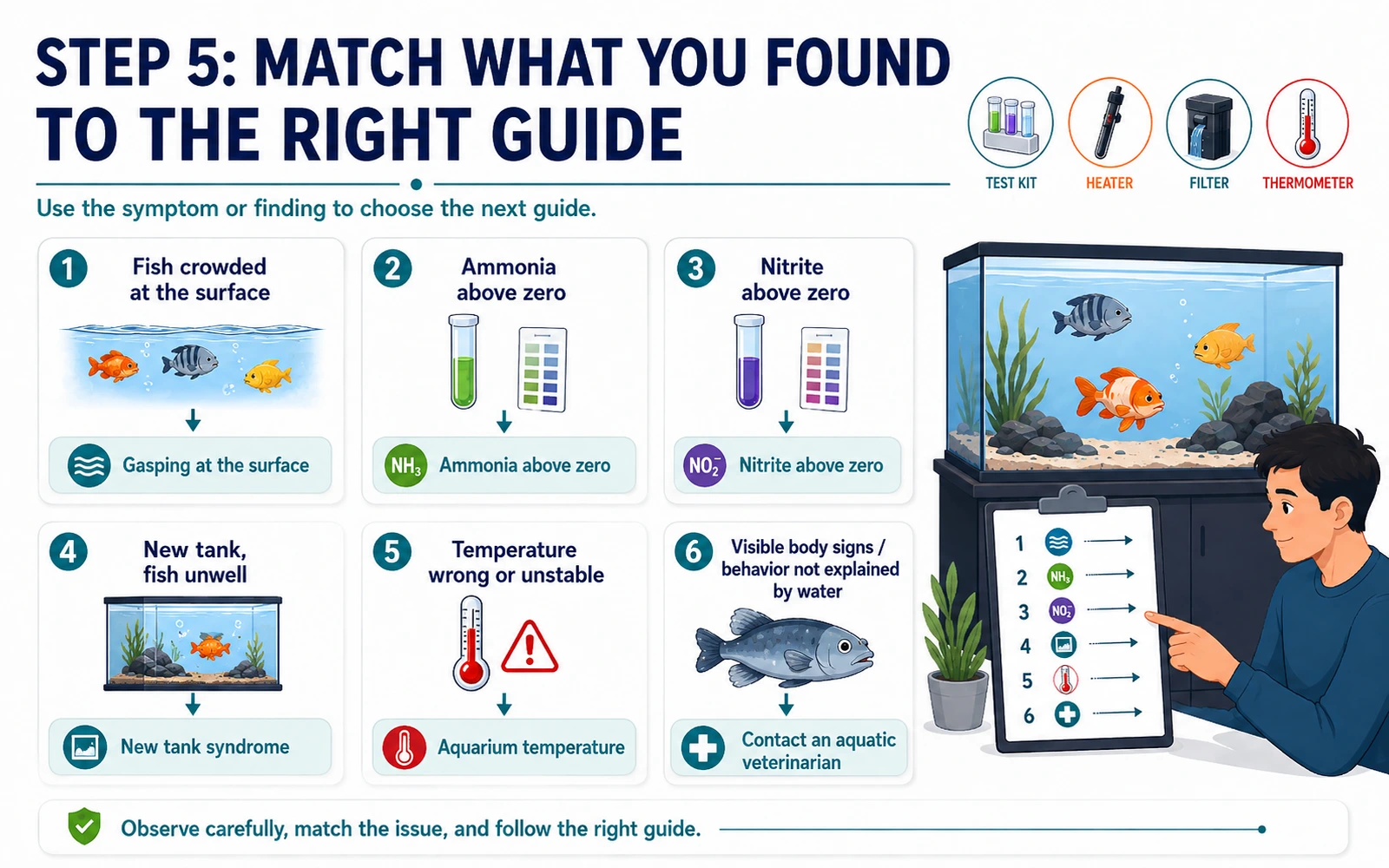
Step 5: Match What You Found to the Right Guide
- Fish crowded at the surface, breathing hard: this is the most common acute presentation and it has several possible causes. Go to my fish are gasping at the surface.
- Ammonia or nitrite above zero: ammonia above zero or nitrite above zero.
- A new tank, fish unwell, water looks clean: new tank syndrome.
- Readings you do not believe: why two test kits disagree.
- Temperature wrong or unstable: aquarium temperature.
- Visible signs on the fish's body, or behavior that is not explained by the water: this is where troubleshooting ends and veterinary help begins. See when to contact an aquatic veterinarian.
The Things Not to Do
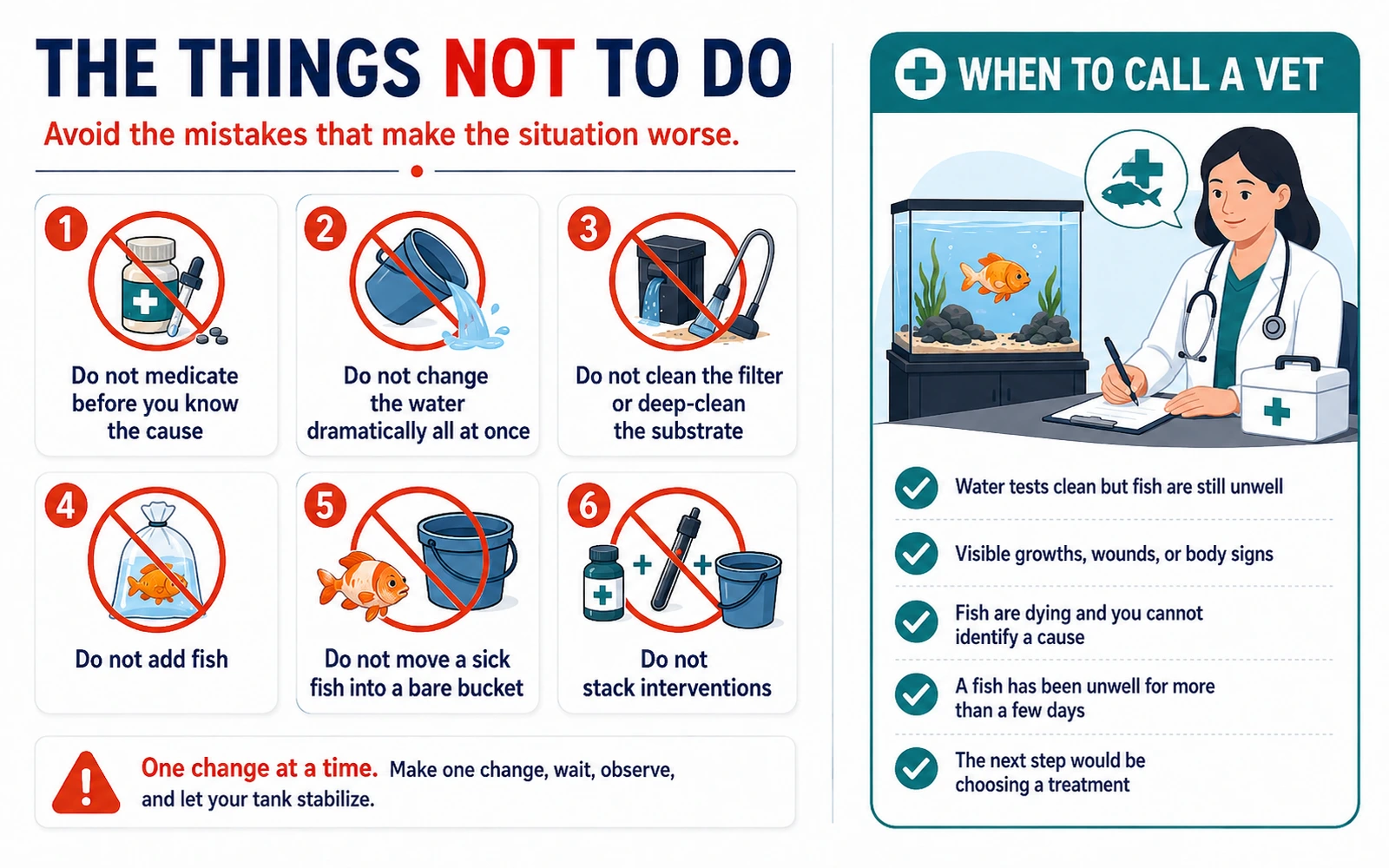
Every item here is something people do in good faith that makes the situation worse.
- Do not medicate before you know the cause. A treatment chosen from a photograph on the internet is a guess, several common treatments affect the filter bacteria, and a medicated tank is much harder to read afterwards.
- Do not change the water dramatically all at once. Dilution is right; a sudden large change with unmatched temperature is a second shock on top of the first.
- Do not clean the filter or deep-clean the substrate. Not this week.
- Do not add fish, including a "replacement" for one that died.
- Do not move a sick fish into a bare bucket with no heater and no filtration. Isolation can be appropriate, but an unheated, unfiltered container is its own emergency.
- Do not adjust pH or hardness in the middle of a crisis. Stability is what the fish need now.
- Do not stack interventions. One change at a time, then observe. Three changes at once means you learn nothing about which one helped.
When to Stop Troubleshooting and Call a Vet
This site does not diagnose fish and does not publish medication doses, because a dose that depends on tank volume and species is exactly what kills animals when it is wrong. There is a point where the useful thing to do is get professional help rather than read another page.
Contact an aquatic veterinarian when: the water tests clean and the fish are still unwell; there are visible growths, wounds, or signs on the body you cannot account for; fish are dying and you cannot identify a cause; a fish has been unwell for more than a few days; or you are being asked to choose a treatment. When to contact an aquatic veterinarian, and how to find one covers who these people are, that they genuinely exist, and how to reach one.
Getting the water right is your job and it fixes most emergencies. Identifying a disease and prescribing for it is not, and no article can do it responsibly.
FAQ
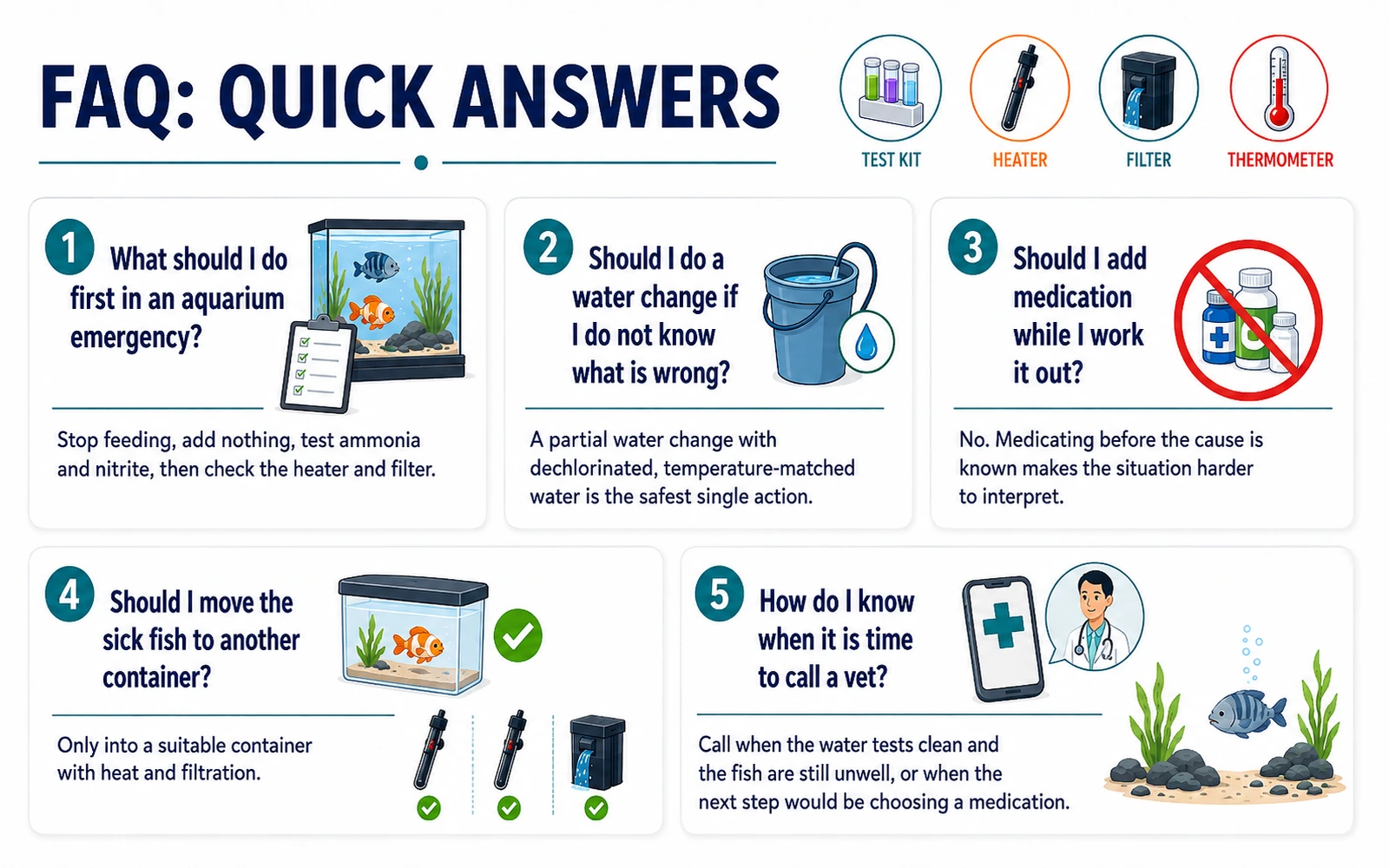
What should I do first in an aquarium emergency? Stop feeding, add nothing to the water, and test ammonia and nitrite. Then confirm the heater and filter are actually running. Most emergencies are a water-quality or an equipment failure, and both are found by checking rather than guessing.
Should I do a water change if I do not know what is wrong? A partial water change with dechlorinated, temperature-matched water is the safest single action available and it helps in most scenarios. Avoid a sudden very large change, which adds a temperature and chemistry shock.
Should I add medication while I work out what is happening? No. Medicating before the cause is known can harm filter bacteria, makes the water impossible to interpret afterwards, and risks interactions if something else is added later. Treatment choices belong with an aquatic veterinarian.
Should I move the sick fish to another container? Only into a container with heat and filtration that is suitable for a fish. A bare unheated bucket adds stress and a temperature swing to an animal that is already struggling.
How do I know when it is time to call a vet? When the water tests clean and the fish are still unwell, when there are visible signs on the body you cannot explain, when fish are dying without an identifiable cause, or when the next step would be choosing a medication.