If you are asking "do I need a heater for my fish tank", the short answer is this: if you keep tropical fish, yes, plan on one. If you keep goldfish or other cold-water fish, usually no. The Merck Veterinary Manual's guide to providing a home for fish (read 23 September 2026) states that "a heater is necessary for both freshwater and saltwater tropical fish," and that goldfish and other cold-water fish "do fine in water that is room temperature." A warm-feeling room does not change that. What decides it is your tank's coldest water reading, not how the air feels to you.
My name is Hossain, and I built this site on one rule: if we cannot tell you why, we do not tell you to do it. So the rest of this page is the why, and a simple way to check your own tank before you buy anything or skip anything.
Why Fish Need the Right Water Temperature at All
Fish cannot warm themselves. Unlike us, they have no internal furnace, so their bodies run at whatever temperature the water around them happens to be. When the water cools, everything inside the fish slows with it. When it warms, everything speeds up.
That is why the same Merck guide says that keeping "the water temperature in an appropriate range for the fish species you are keeping is critical to their health." Notice the wording. It does not say "warm water." It says the range for your species. A goldfish and a tropical fish have different ranges, and a fish kept outside its own range, in either direction, is a fish under strain.
So a heater is not really about warmth. It is about holding the water inside the range your particular species evolved for, all day and all night, in every season. For some fish that takes a heater. For others the room does the job on its own. The rest of this page is how you tell which one you have.
Do I Need a Heater for My Fish Tank? Start With Your Fish
The first question is never about your room. It is about who lives in the tank. Here is how the decision breaks down.
| Your fish | Do you need a heater? | Why |
|---|---|---|
| Tropical freshwater fish | Yes, plan on one | Merck states a heater is necessary for tropical fish |
| Goldfish and other cold-water fish | Usually no | Merck says they do fine at room temperature |
| A mixed tank | Stop and check | Tropical and cold-water species want different water; one of them will be kept outside its range |
| Not sure what your fish is | Find out first | The species name is where every other decision starts |
If you do not know whether your fish is tropical, that is the job to do before buying anything. Look up the species by name, and check the temperature range on a care sheet from a source you trust. Write that range down; you will need it for the test below.
A mixed tank of goldfish and tropical fish is worth a closer look regardless of heating. Whatever temperature you choose, one group will be outside what it prefers, and no heater setting fixes that.
"My Room Is Warm. Can I Skip It?"
This is the question behind most searches, and it deserves a straight answer: a room that feels warm to you is not evidence that your tank is warm enough. Three reasons.
You feel the air, and at the wrong time. You judge your room during the day, while you are awake, often with the heating on. Tank water follows the room, but it follows the whole 24 hours, including the hours before dawn when the heating is off and the house is at its coldest. The number that matters for your fish is that low point.
Seasons move the answer. A tank that holds steady in summer can drift well down in winter. A heater that looked unnecessary in July may be the thing standing between your fish and a cold snap in January.
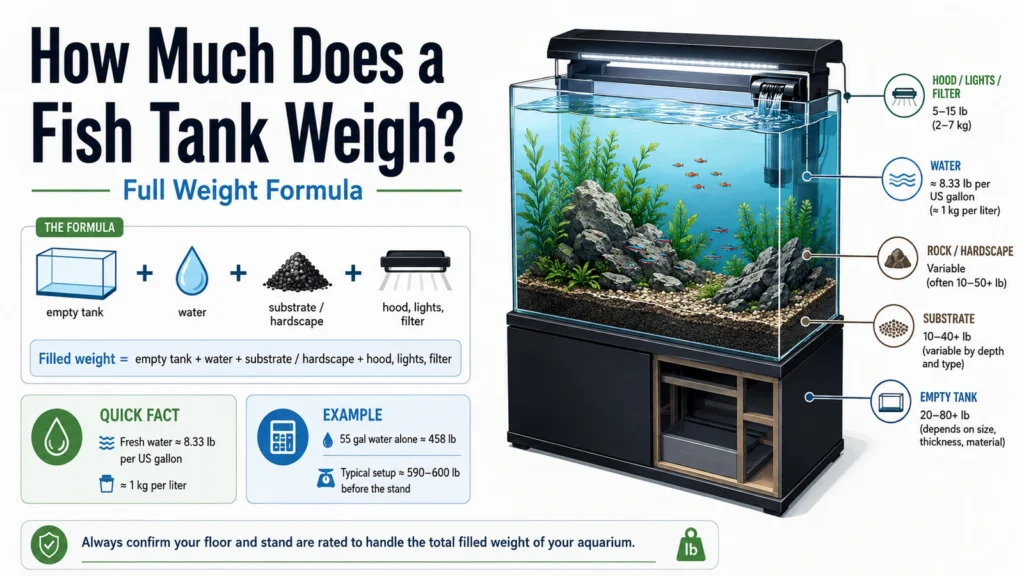
Tank size changes how fast it swings. A small volume of water gains and loses heat faster than a large one. A big tank holds a lot of water, and our guide to how much a fish tank weighs shows how quickly that volume adds up. That extra water is a buffer against swings. A small tank has no such buffer, so it tracks every change in the room more closely.
None of this means a warm home can never hold a tropical tank in range. It means you find out with a thermometer, not with your skin.
The One-Week Thermometer Test
This is the part most guides skip, and it is the most useful thing you can do. Before you decide either way, measure.
- Put a thermometer in the tank. Merck recommends a separate thermometer in the tank "to monitor water temperature independently from the heater." You want one anyway, heater or not.
- Read it twice a day for a week. Once first thing in the morning, before the heating comes on or the sun hits the room. Once in the warmest part of the afternoon or evening.
- Write both numbers down. The morning reading is your low. The afternoon reading is your high. The gap between them is your daily swing.
- Compare the low to your species' range. Not the average. The low. If the morning reading sits below the bottom of the published range for your fish, you need a heater.
- Look at the swing, too. A tank that stays in range but moves a lot between morning and evening is still asking your fish to adjust every day. A heater set near the bottom of the range can stop the overnight drop, which narrows that swing.
- Repeat when the season turns. One week in early autumn tells you nothing about February.
If you already have fish in the tank while you run this test, watch them as well as the numbers. If they look unwell at any point, the thermometer log can wait. Our step-by-step page on what to check when something is wrong with your tank walks through it in order, calmly, one check at a time.
The Honest Counterpoint: Heaters Carry Their Own Risk
A heater is not a free safety upgrade, and I will not pretend it is. The hobby-run site Aquarium Science, in its page on aquarium heaters (read 23 September 2026), argues that many freshwater tropical fish cope with ordinary home temperatures, and warns that heaters "usually fail in the 'on' position and literally cook the fish in the aquarium." That view is openly at odds with the Merck position quoted above, and I am showing you both because the disagreement is real.
Here is how I weigh it. Merck is a veterinary reference, and it says tropical fish need a heater. I follow Merck. The Aquarium Science argument is useful not as a reason to skip heating, but as a reminder of how a heater actually hurts fish: by failing. That shapes how you use one:
- Keep the thermometer anyway. A heater's own dial or indicator light tells you what it is trying to do, not what the water is actually at. The separate thermometer is how you catch a heater that has stuck on or quietly stopped working.
- Never plug a heater in until the tank is full. Merck warns that most heaters sit in a glass tube "that may shatter if not surrounded by water."
- Check the reading daily. A stuck heater is caught early by someone who looks at the thermometer every morning, and late by someone who does not.
How to size a heater for your tank and your room, and what to do when one fails, are separate questions. This page is only about whether you need one at all.
What a Heater Cannot Do
A standard aquarium heater only adds heat. It does nothing when the room is too hot. If your summer readings run above your species' range, a heater is not the tool, and turning it down or unplugging it will not bring the water below room temperature.
Warm water also holds less dissolved oxygen than cool water. That is basic water chemistry, and it is one reason heat is among the first things worth checking when fish hang at the surface. If you see that, treat it as a sign to look at the tank now, not a sign to wait and see.
If You Decide You Do Not Need One
Skipping a heater is a reasonable choice for cold-water fish in a stable room. It still comes with conditions:
- Keep the thermometer. Your "no heater" decision is only as good as your last reading.
- Keep the tank away from windows, doors, and heating or cooling vents, where the air temperature changes quickly.
- Rerun the test each season, and after anything that changes the room, such as moving the tank or changing how you heat the house.
- Match new fish to the tank you have. If you later want a tropical species, the heater question comes back with it.
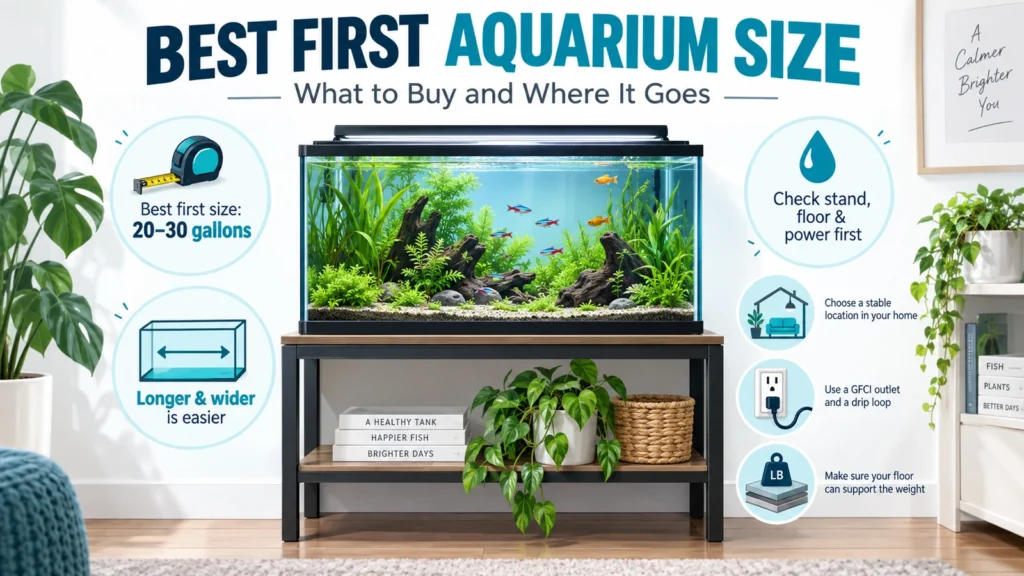
If you are still planning the tank, the heater decision fits naturally into our beginner fish tank setup checklist, where it sits alongside the filter, the thermometer and cycling.
If You Decide You Do Need One
Buy it for the fish you have, not the fish you might keep. Install it in a full tank, never a dry one. Then let the separate thermometer, not the heater's dial, tell you whether the water actually reached the temperature you set, and keep reading it every day after that.
And if your fish ever look unwell after a temperature change, whether the heater failed or the room did, the right person to ask is a veterinarian who treats fish. A description on a web page, including this one, cannot diagnose your animal.
Frequently Asked Questions
Do I need a heater for my fish tank if my house is warm?
Not necessarily, but a warm-feeling house is not proof. Measure the water with a thermometer twice a day for a week, including first thing in the morning. If the coldest reading falls below the published range for your species, you need a heater. For tropical fish, the Merck Veterinary Manual states a heater is necessary.
Do goldfish need a heater?
Usually not. The Merck Veterinary Manual says goldfish and other cold-water fish do fine in water at room temperature. Keep a thermometer in the tank anyway, and keep the tank away from windows and vents so the water does not swing sharply.
Can a heater hurt my fish?
Yes, if it fails. A heater that sticks on can overheat the water, and Merck warns that a glass heater can shatter if it is not surrounded by water. A separate thermometer, checked daily, is how you catch a failure early.
Is it the average temperature or the lowest temperature that matters?
The lowest, plus how much it swings. Fish live through every hour of the day, including the coldest hour before dawn. Compare your morning low to your species' range, and watch the gap between morning and evening readings.
Will a heater keep my tank cool in summer?
No. A standard aquarium heater only adds heat. If summer readings climb above your species' range, turning the heater off will not bring the water below room temperature. Check the tank, and if fish look distressed, work through an emergency checklist and contact an aquatic veterinarian.