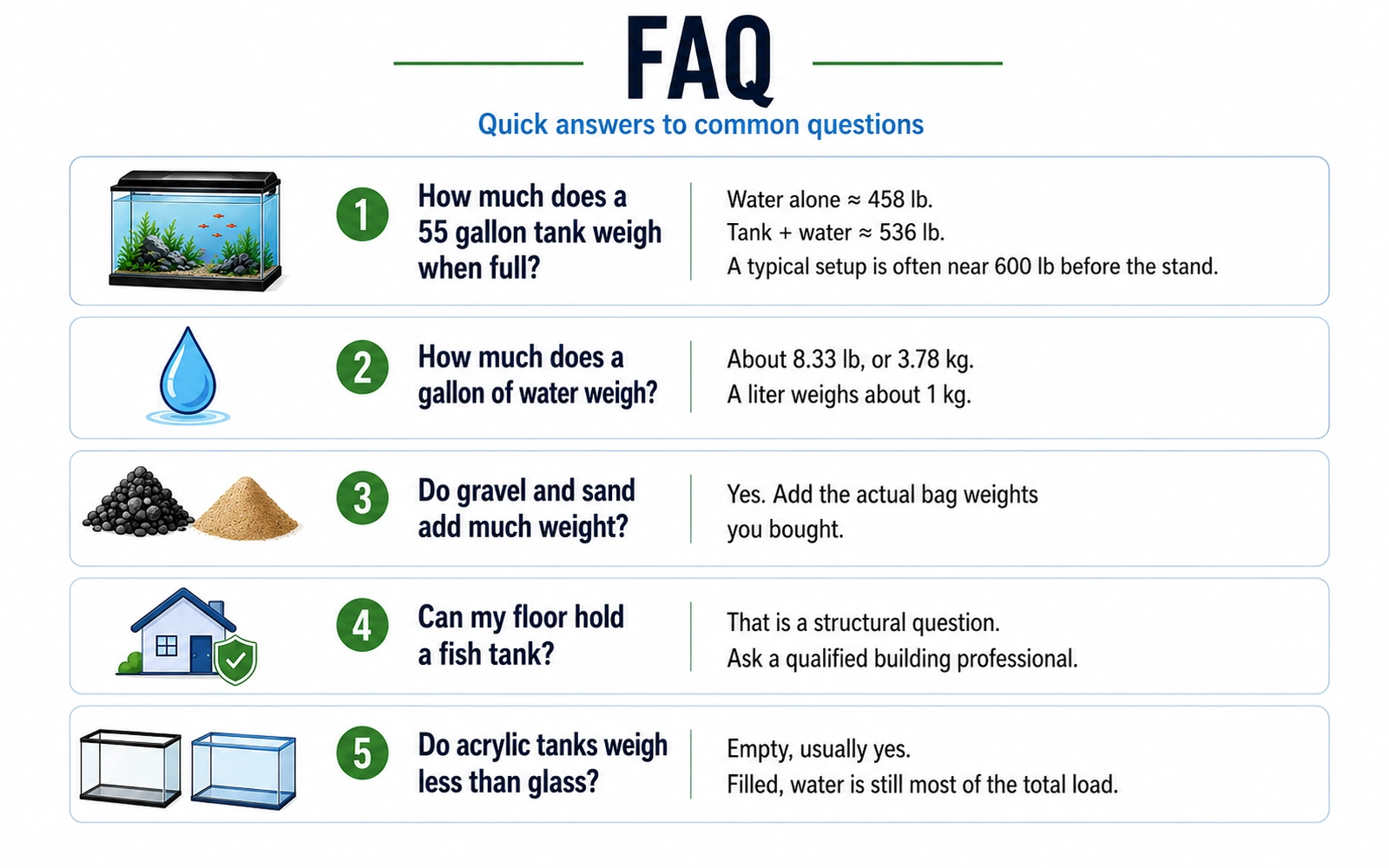
The dresser is right there. It is solid wood, the right height, and it already holds a TV. Why buy a stand?
Put an aquarium on a stand built and rated for aquariums, sized to the tank's footprint, rather than on household furniture. A dresser or cabinet is designed for a light load that comes and goes; a filled tank is a heavy load that never comes off, sometimes gets wet, and must be supported evenly and level. Wikipedia's aquarium article puts it simply: "a stand must be strong as well as level. A tank that is not level may distort, leak, or crack."
The rest of this page explains what a stand actually has to do, why ordinary furniture tends to fail at it, and how to judge any stand, bought or already owned.
What an Aquarium Stand Has to Do
A stand is not just a table that happens to have a tank on it. It has five jobs, and furniture is rarely designed for any of them.
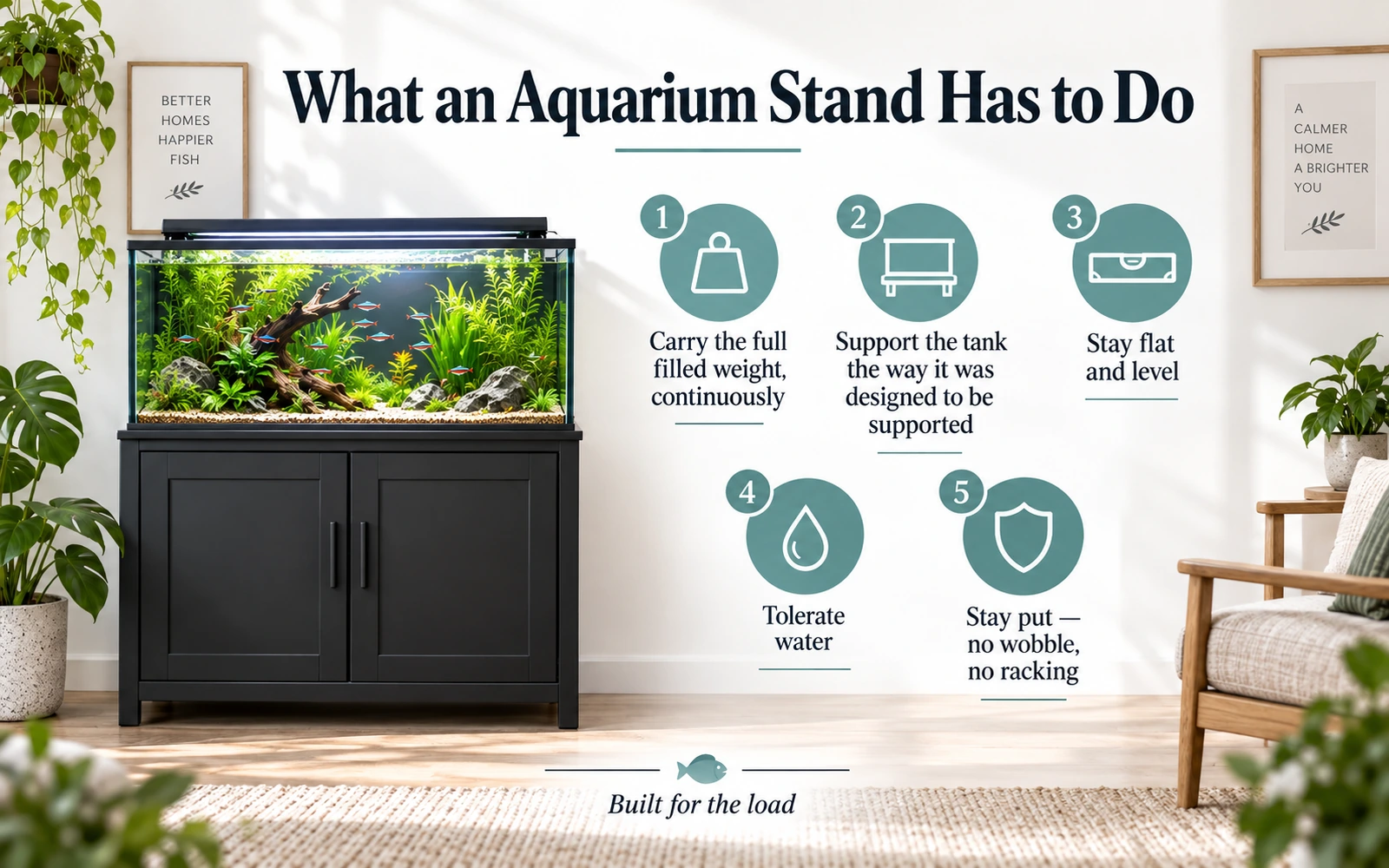
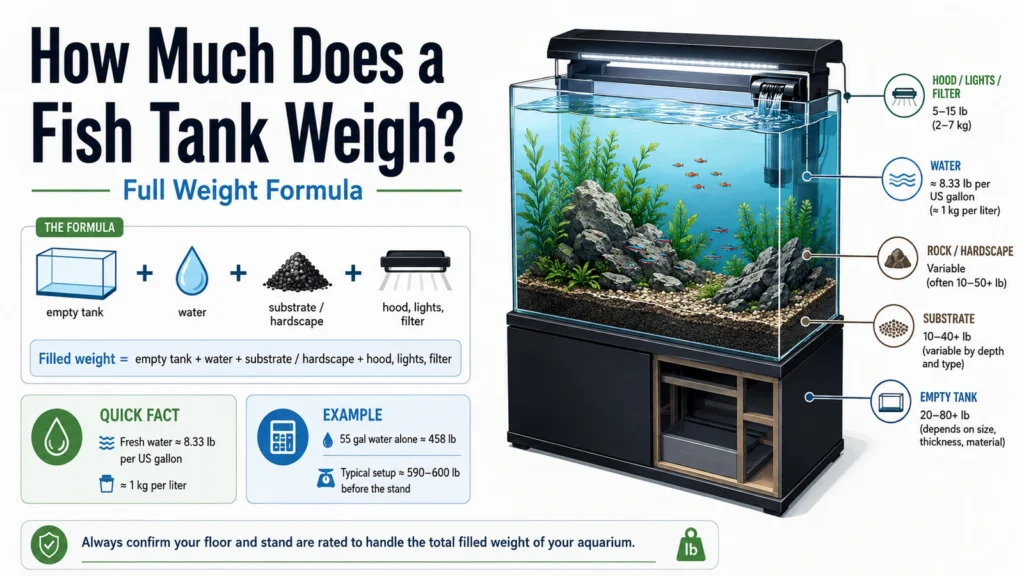
- Carry the full filled weight, continuously. A glass 55 gallon setup with gravel lands near 600 pounds before the stand, as our article on how much a fish tank weighs works out from published figures. That load never comes off.
- Support the tank the way the tank was designed to be supported. Framed tanks carry their load through the frame around the bottom edge. Rimless tanks usually need even support across the whole base. The tank maker's instructions say which.
- Stay flat and level under that load, today and a year from now.
- Tolerate water. Drips during maintenance, condensation and the occasional spill are normal.
- Stay put. A tall, heavy object with its weight at the top must not rack, wobble or tip.
Why Ordinary Furniture Tends to Fail
Furniture fails under tanks in predictable ways, and almost none of them is dramatic on day one.
It was built for a different kind of load. A dresser top holds lamps and books. A TV cabinet holds a screen. Those loads are light compared with a filled tank, and furniture makers rarely state a load rating at all. If the maker does not state a rating above your tank's filled weight, you have no evidence it is rated.
The load never comes off. Wood and especially joints can slowly deform under a heavy, constant load. A piece that holds up on the first day is not the same as one that holds up for years. A tank stand is designed for that continuous load; most furniture is not.
Hollow tops and drawers. Many dressers have a thin top panel over a box of drawers. The weight lands on the panel and the frame joints, not on solid supports running to the floor.
Water and engineered wood. A lot of affordable furniture is particleboard or fiberboard under a veneer. Engineered wood like this can swell and weaken when it gets wet, and aquarium maintenance guarantees it will get wet eventually.

The top is the wrong size or not flat. A tank overhanging a smaller top is unsupported exactly where the glass is under stress. A top that is slightly bowed, or has a raised edge, puts the load on a few points instead of the whole base.
It racks. Furniture built for light loads can sway side to side under a heavy load, especially on carpet. A tank on a racking base is a tank under uneven stress.
A Side-by-Side Check
| Question | Stand built for aquariums | Typical household furniture |
|---|---|---|
| Stated load rating for a filled tank? | Usually, from the maker | Rarely stated |
| Top matches the tank footprint? | Designed to | Often close, sometimes smaller |
| Built for a continuous load? | Yes | Built for light or occasional loads |
| Tolerates drips and spills? | Designed with water in mind | Engineered wood may swell |
| Room for equipment and cords? | Often has a cabinet and cord openings | Drawers and closed backs |
| Level adjustment? | Some models | Rarely |
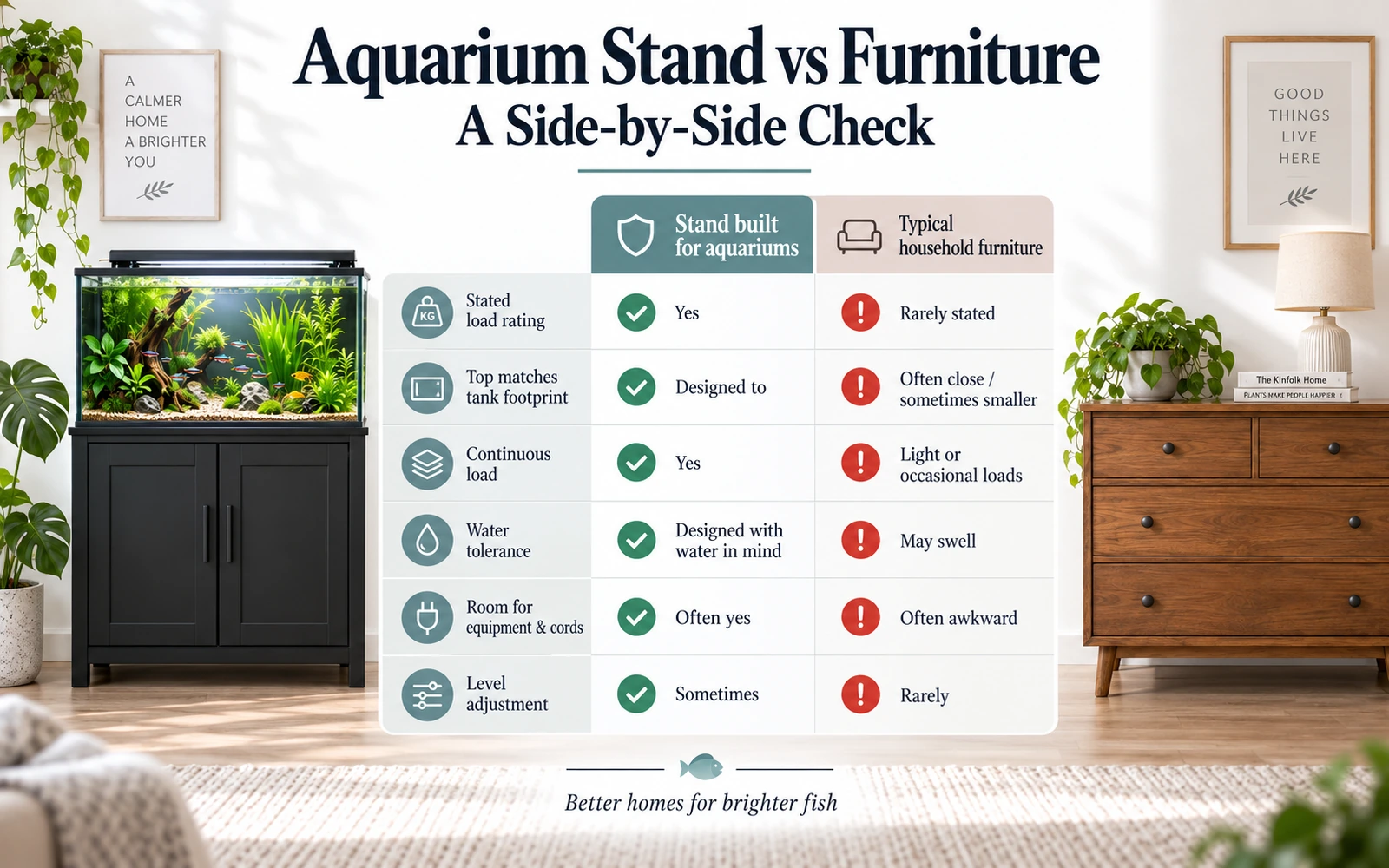
That table is not a guarantee in either direction. A cheaply made stand can be poor, and a genuinely heavy-duty piece of furniture might suit a small tank. The test is the same for both.
How to Judge Any Stand, Including One You Already Own
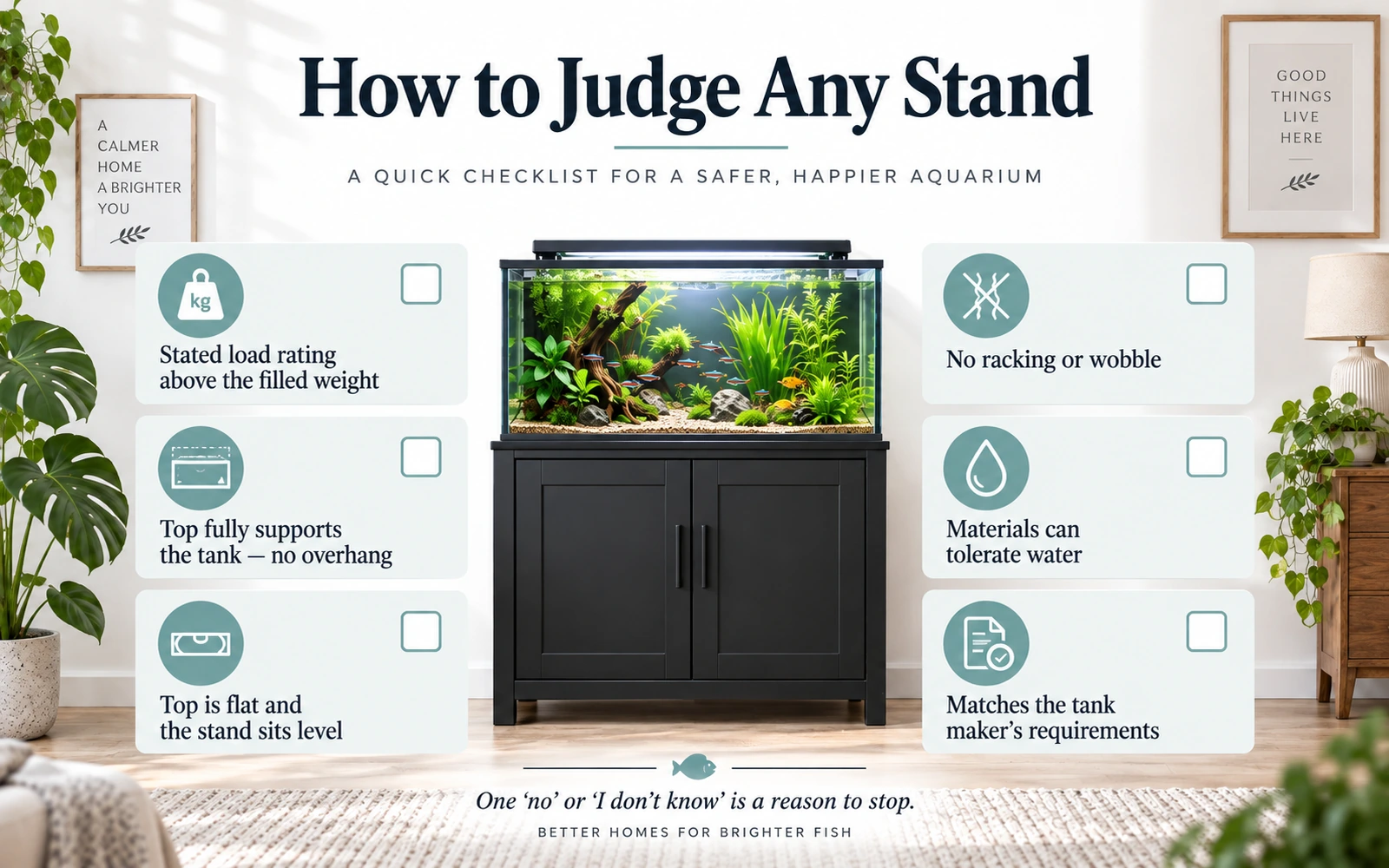
Ask each of these, in order. A single "no" or "I don't know" is a reason to stop.
- Is there a stated load rating that exceeds the filled weight of the whole setup? Tank, water, substrate, rock, lid, lights and filter. Work the total out with the weight article, and use the maker's own numbers.
- Does the top fully support the tank's base or frame, with nothing overhanging?
- Is the top flat, and will the stand sit level on your floor? Check with a level front to back and side to side, before the tank goes on.
- Does it rack or wobble when you push firmly on the top corners, empty?
- Will it tolerate water? Look at what it is made of and how the top is finished.
- Is the tank maker happy with it? Some tank makers specify stand requirements. Read the tank's instructions and warranty. Warranties are specific about what they cover: Aqueon's warranty page, for example, lists aquarium furniture separately and excludes damage from misuse or "abnormal working conditions" (read September 11, 2026).
If you are thinking about building a stand, that is a structural project. It needs someone who can design for a heavy, continuous load, and it is beyond what a general article should walk you through.
The Stand Does Not Answer the Floor Question
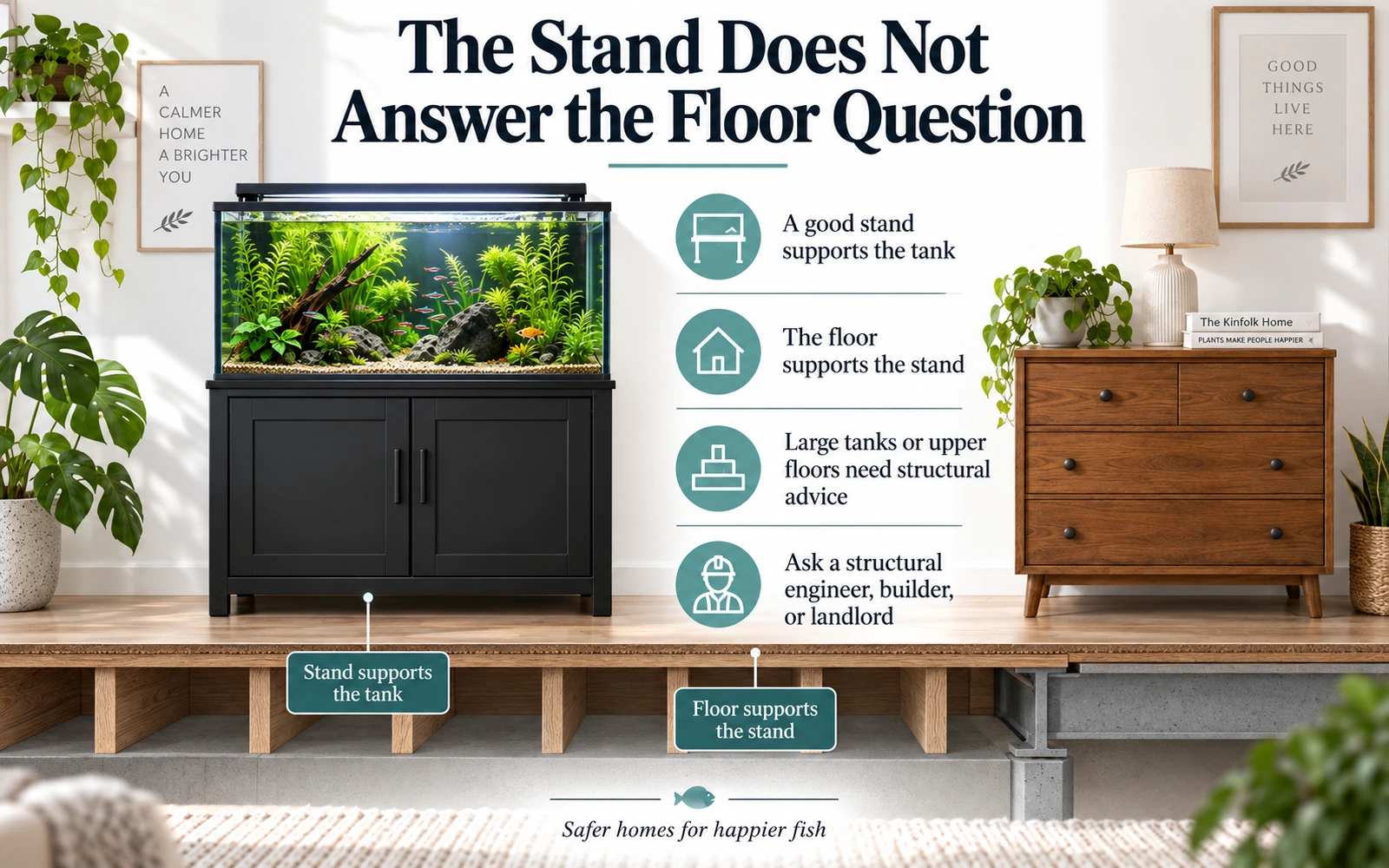
A perfect stand spreads the tank's weight over its own footprint and nothing more. It does not tell you whether the floor under it can carry the total. For a large tank, or any upper floor, that question belongs to a structural engineer or qualified builder, and to your landlord if you rent. Nothing about the stand changes that.
Equipment in the Cabinet: Keep Power Away From Water
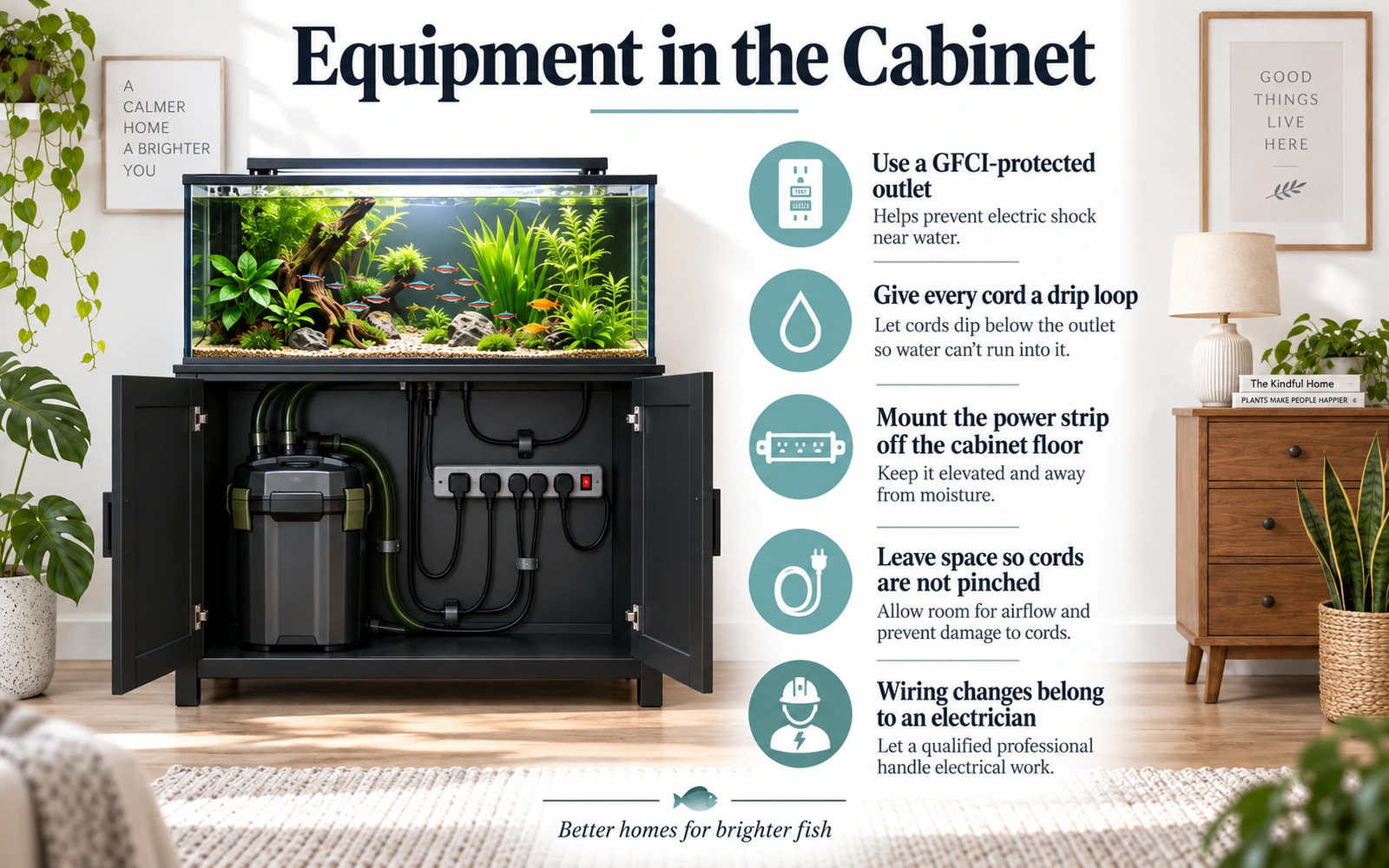
Stand cabinets usually end up holding the filter, the power strip and a lot of cords, right under a container of water. Set it up so a drip cannot become a shock.
- Plug equipment into a GFCI-protected outlet. The Electrical Safety Foundation International says a GFCI "should be used in any indoor or outdoor area where water may come into contact with electrical products" (read September 11, 2026).
- Give every cord a drip loop, a downward curve below the outlet so water running along the cord drips off before it reaches the plug.
- Mount the power strip up and off the cabinet floor, where spilled water collects.
- Leave a gap behind the stand so cords are not pinched against the wall.
- Any change to wiring or outlets is a job for a licensed electrician.
When you do maintenance, the water change routine built around a hose and siphon keeps spills down, which protects both the stand and the outlets.
If Something Already Looks Wrong
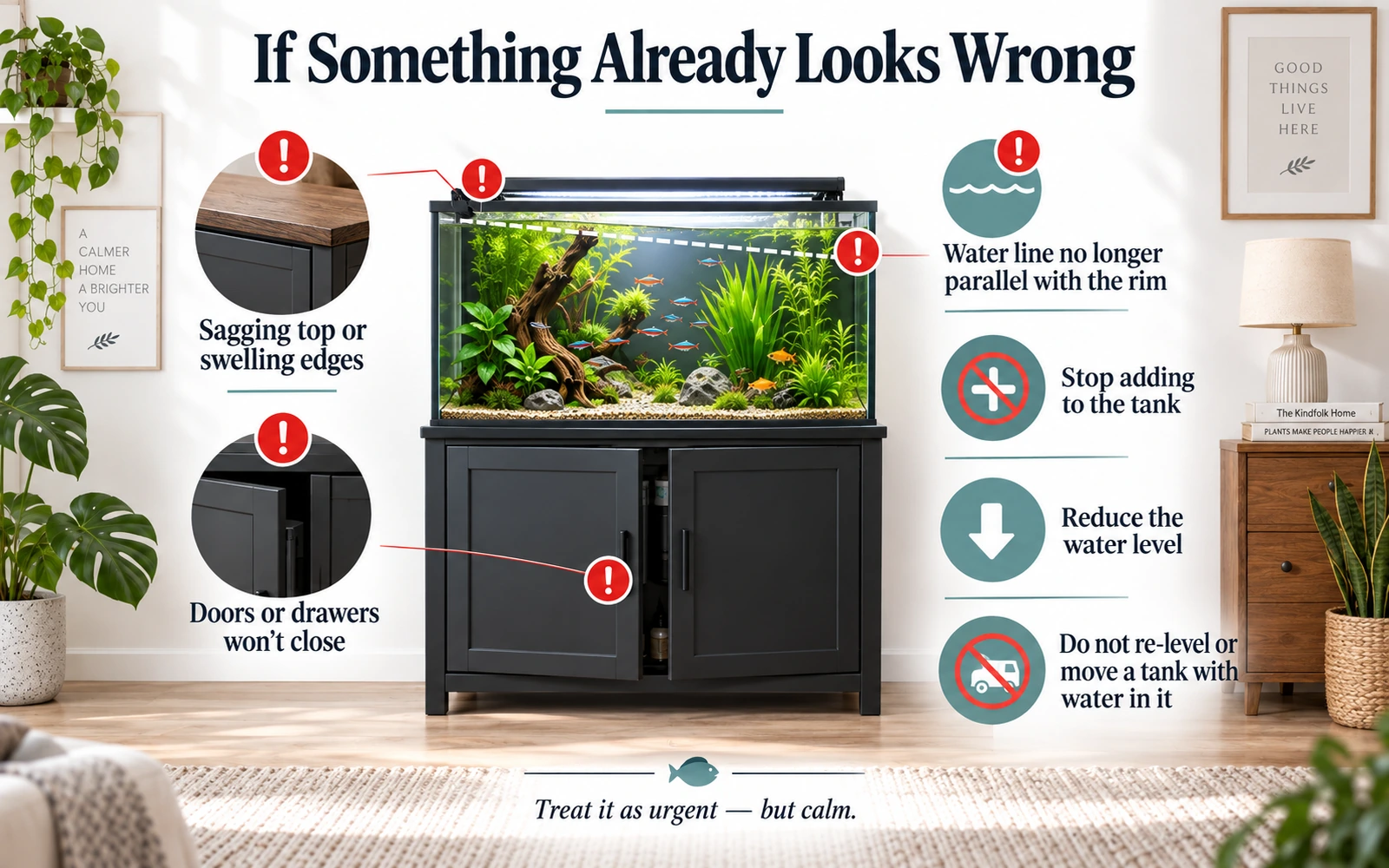
If you already have a tank on furniture and notice a sag, a door that will not close, swelling at the top edge, or a water line that is no longer parallel with the rim, treat it as urgent but calm. Stop adding to the tank, reduce the water level, and keep people and pets back from it. Our aquarium emergency guide covers the order of steps, including moving fish safely. A tank is never moved or re-leveled with water in it.
When you are setting up fresh, the first aquarium setup checklist puts the stand and its placement before the tank, the water and everything else, because it is the one decision you cannot undo once the tank is full.
FAQ
Can I put a fish tank on a dresser? Only if the dresser has a stated load rating above the full filled weight, fully supports the tank's base with no overhang, sits level, does not rack, and will tolerate water. Most dressers are not rated for that kind of continuous load, which is why a stand built for aquariums is the usual answer.
Is a TV stand strong enough for an aquarium? Usually it is not designed for it. A screen is a light load compared with a filled tank. If the maker states a rating above your tank's filled weight and the top matches the footprint, it may be considered; without a stated rating, treat it as unrated.
What about small tanks on furniture? Small tanks are lighter, but the same checks apply: rated capacity, full support, level, stable and water tolerant. A 10 gallon tank of water alone is still over 80 pounds.
Does a strong stand mean my floor is fine? No. A stand carries the tank; the floor carries the stand. For large tanks or upper floors, ask a structural engineer or builder, and your landlord if you rent.
A stand made for the job is not an upsell. It is the part that makes everything above it safe.