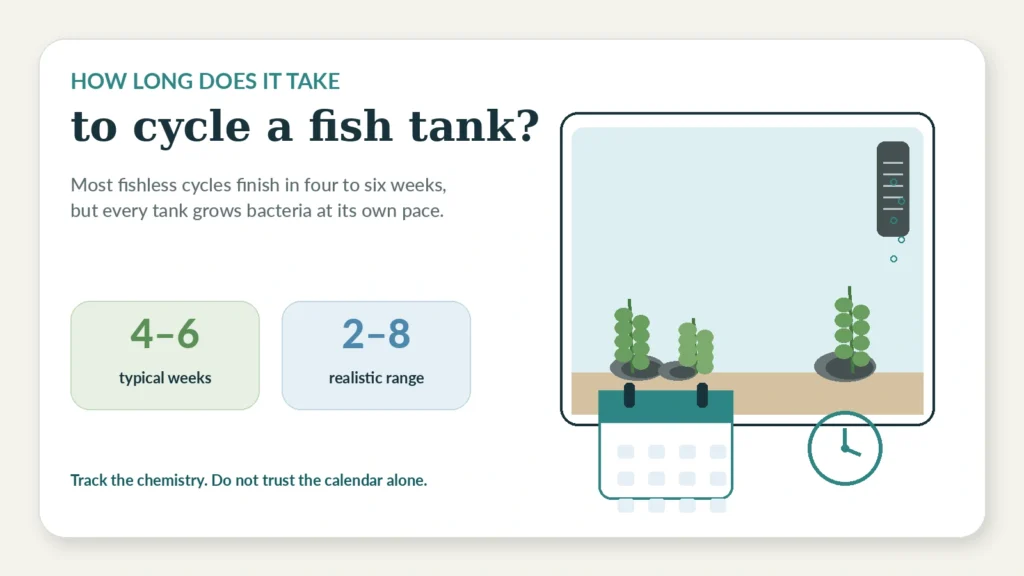
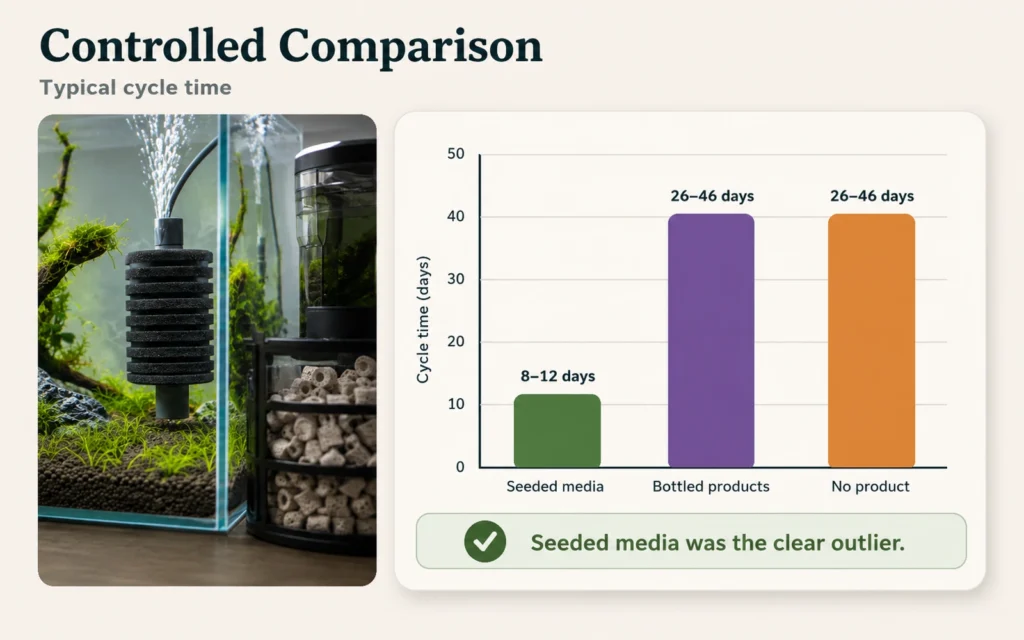
The honest answer, based on the independent controlled comparisons available, is: not reliably, and not the way "instant cycle" marketing implies. In one detailed independent trial, seeded media (established filter gunk, and even composted materials containing surface-dwelling bacteria) cycled a test tank in roughly 8 to 12 days, while commercial bottled-bacteria products and untreated controls with no product at all both landed in a similar, much slower range of roughly 26 to 46 days. A separately reported comparison of two commercial products against a no-product control found the products taking around a month, with the untreated control finishing at a similar pace or slightly faster. The pattern across the available evidence is consistent: bottled bacteria products have not been shown to reliably outperform simply doing nothing, and none of the evidence reviewed supports a genuinely "instant" cycle.
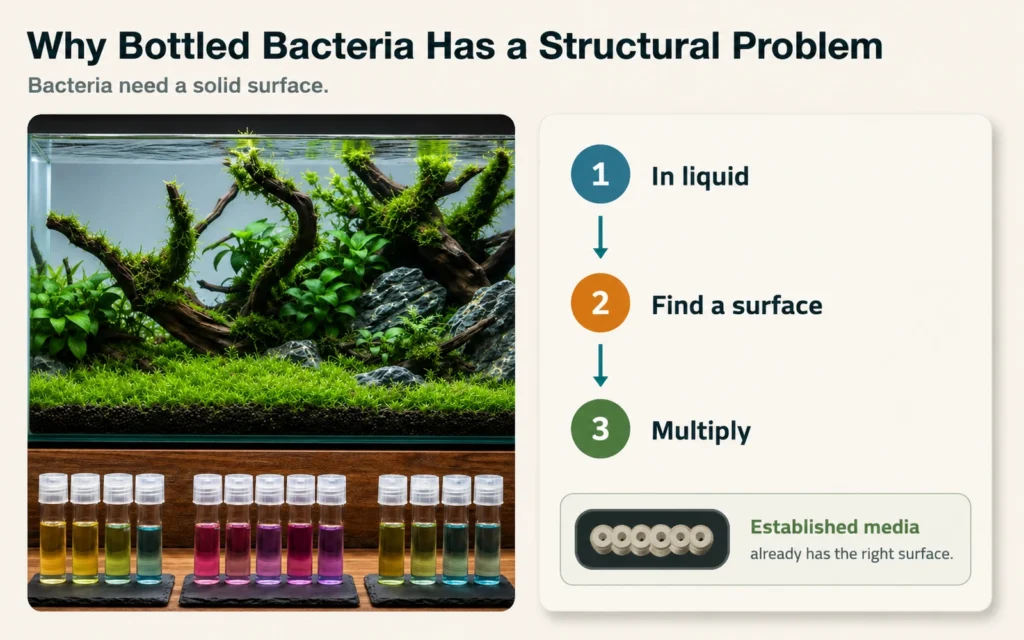
Why Bottled Bacteria Faces a Structural Problem
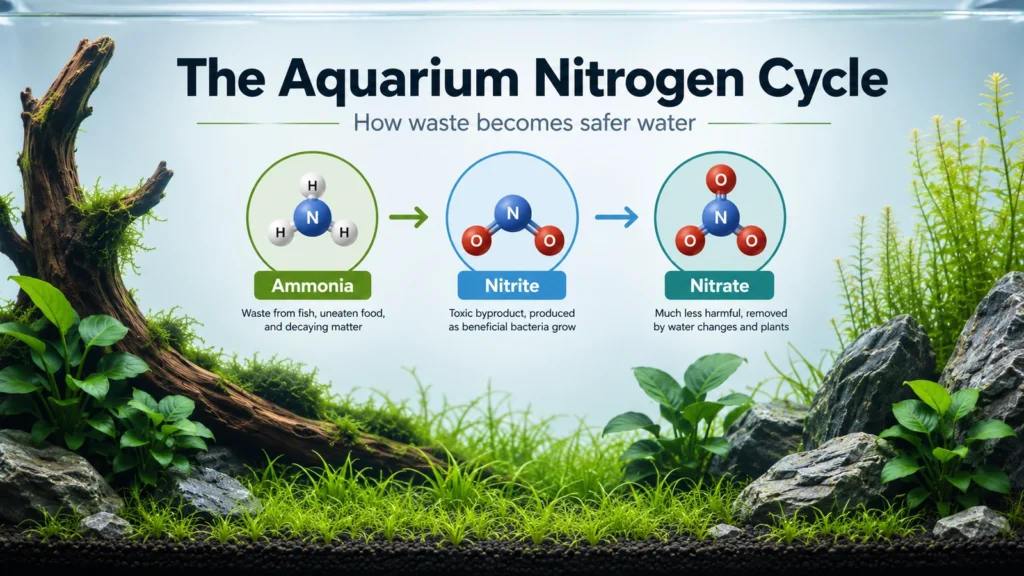
This result is not surprising once you understand where nitrifying bacteria actually live. They are surface-dwelling organisms that colonize solid surfaces such as filter media, gravel, and decorations. They do not thrive suspended in open water for long. A bottled liquid product is, by definition, bacteria suspended in a liquid, which means it starts at a structural disadvantage before it even reaches your tank: the organisms need to find and attach to a surface to establish a lasting colony, and a portion of what is in the bottle may not survive that transition, particularly if the product was not stored and shipped under the specific conditions (often refrigeration) that keep live bacterial cultures viable. This mechanism is covered in more depth in the nitrogen cycle explainer, which walks through what the two bacteria groups actually do and why surface area matters so much to the whole process.
What the Controlled Comparisons Actually Found
Two points from the available independent testing are worth holding onto specifically, because they cut against common marketing claims:
- Seeded media dramatically outperformed bottled products in head-to-head testing. A colony transplanted directly from an established source, on the actual surfaces bacteria live on, established far faster than any bottled liquid product tested.
- Bottled products did not reliably beat doing nothing at all. In more than one independent comparison, tanks dosed with a commercial bottled bacteria product cycled in a similar timeframe to tanks that received no product whatsoever, and in at least one comparison, the untreated control finished slightly faster.
Neither of these findings means every bottled product is worthless in every circumstance; formulations differ, storage conditions in transit and on a shelf are hard for a home aquarist to verify, and a product that survived cold-chain shipping intact may behave differently from one that sat in a hot warehouse. But the evidence available does not support treating any bottled product as a guaranteed shortcut.
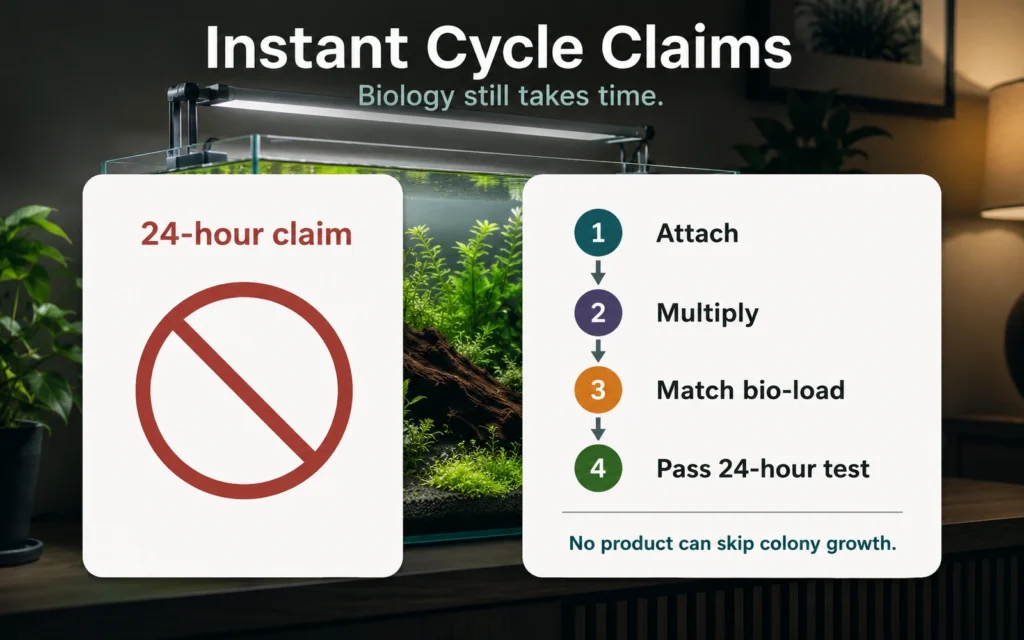
What "Instant Cycle" Claims Get Wrong
Marketing language that promises a cycled tank "overnight" or "in 24 hours" is making a claim the underlying biology does not support. Growing a bacteria colony large enough to process a stocked tank's waste load takes time, because the bacteria have to physically multiply, not just be present in some quantity. Even in a best-case scenario where a product delivers a genuinely large, viable population of the right bacteria strains, that population still needs to establish on your filter's surfaces and grow to match your specific tank's bio-load. No product changes the fact that this is biology, not a chemical reaction that completes instantly.
If You Already Bought One: What to Actually Expect
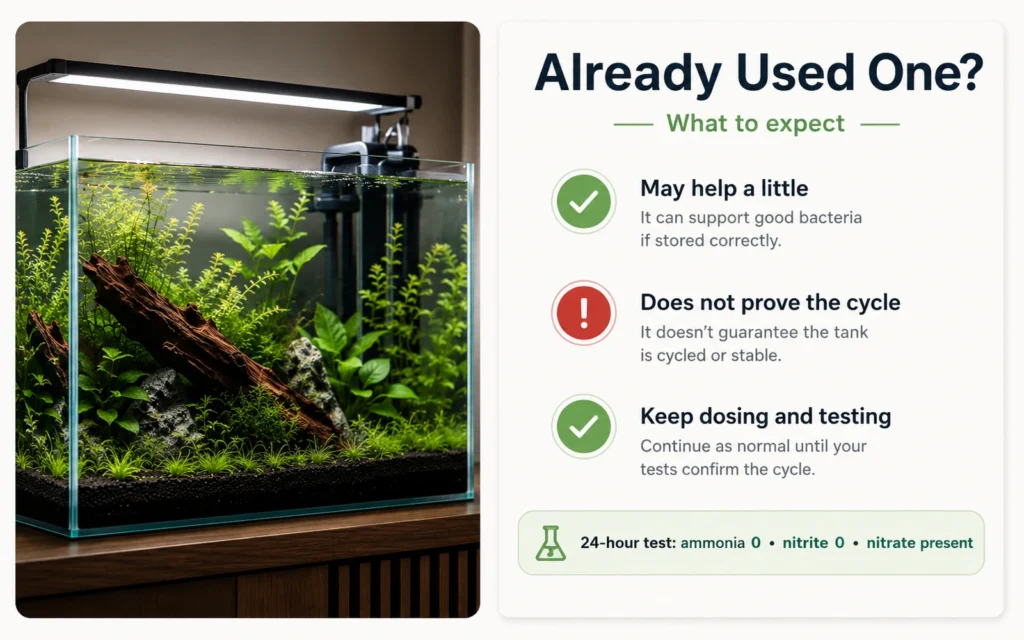
If you have already added a bottled bacteria product, there is no reason to consider it wasted or to remove anything. At best, a properly stored, viable product may give your colony a modest head start compared to starting from literally nothing. What it will not do is let you skip the completion test described in how to cycle a new aquarium: ammonia and nitrite both reading zero, with nitrate present, 24 hours after dosing ammonia back up. Treat the product as a possible assist, not as a substitute for testing, and continue dosing and testing exactly as you would without it.
If your tank still is not moving weeks later despite using one of these products, that is not unusual, and it points to the same set of causes covered in why a cycle stalls on ammonia rather than to the product itself having failed you in some unique way.
A Note on Storage, and Why This Verdict Can Shift
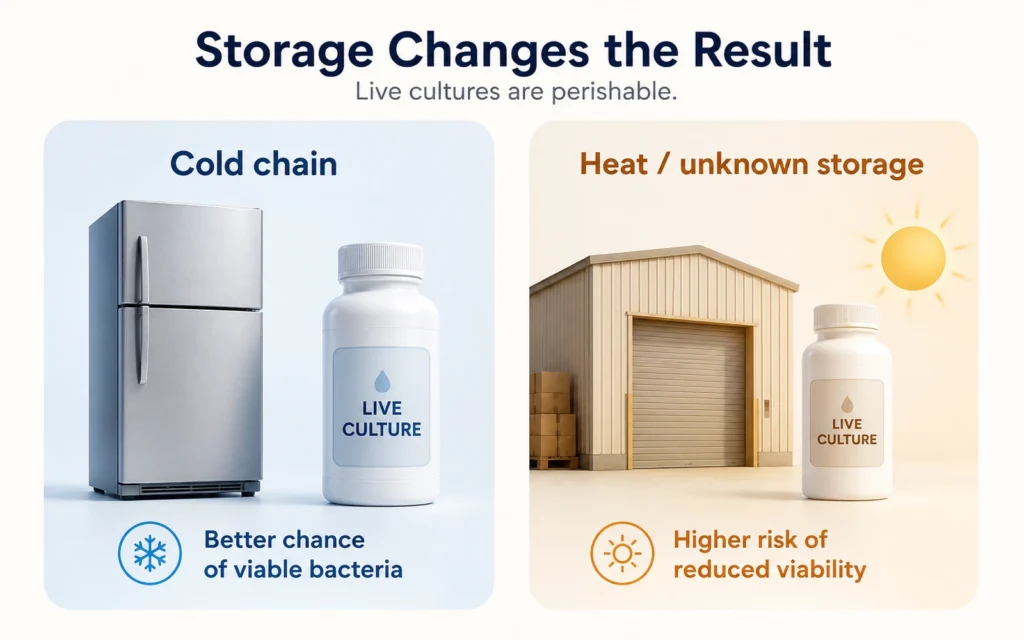
Live bacterial cultures are perishable. A product that was refrigerated correctly from manufacture through to the shelf it was sold from is a meaningfully different item from one that spent a summer in a hot delivery truck or a warehouse with no climate control, even if the label is identical. This is one reason results reported by different testers, on different products bought at different times, are not perfectly consistent with each other. It also means this verdict is directional rather than permanent: formulations and storage practices can change, and a product tested poorly in one comparison is not automatically proof that every product in the category will always underperform. Treat any single test result, including the ones cited here, as evidence to weigh rather than a permanent verdict on an entire product category.
The Method That Reliably Works: Seeding From an Established Tank
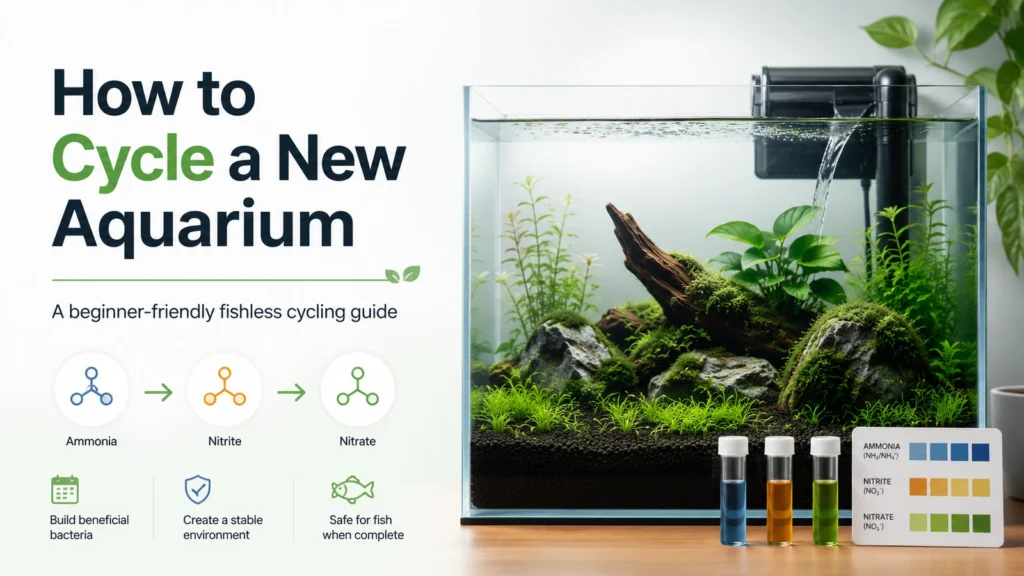
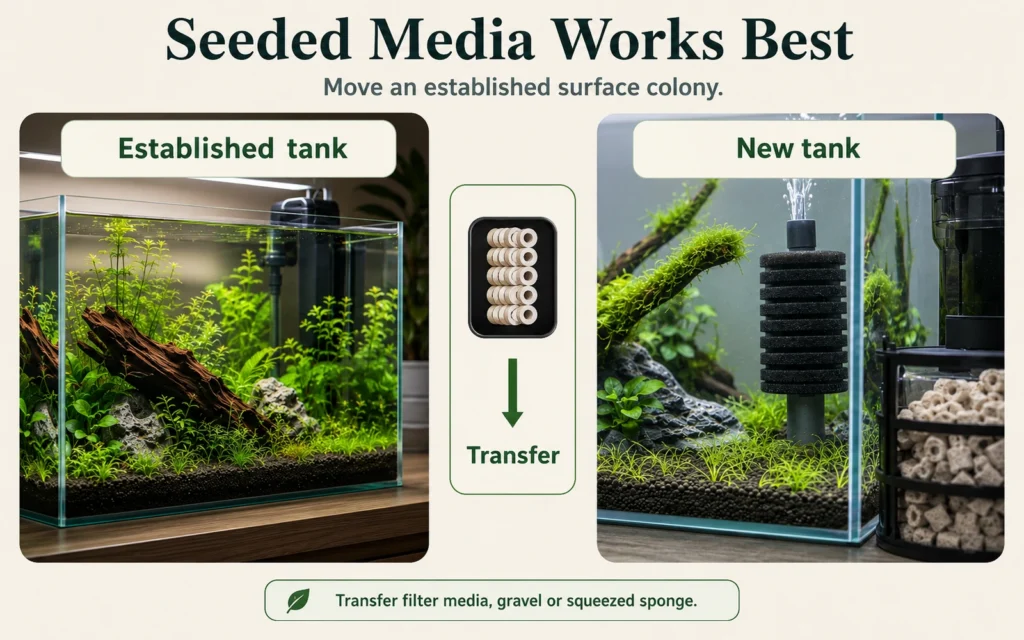
If the goal is genuinely speeding up a cycle, the method with the strongest evidence behind it is not a bottle at all. Taking filter media, gravel, or a squeezed-out sponge directly from a healthy, disease-free, already-established tank transplants a real, surface-established bacteria colony instead of hoping a liquid contains one that survives the trip. This is the accelerant referenced repeatedly across both the independent test data and the broader hobby literature, and it is the method described step by step in how to cycle a new aquarium.
FAQ
Does bottled bacteria actually work to cycle an aquarium faster?
The available independent testing does not show a reliable speed advantage. In more than one controlled comparison, tanks treated with a commercial bottled bacteria product cycled in a similar timeframe to tanks that received no product, while seeded media from an established tank cycled dramatically faster than either.
Why don't bottled bacteria products work as well as marketing suggests?
Nitrifying bacteria are surface-dwelling organisms, not free-floating ones. A bottled liquid product has to get its bacteria to find and colonize a surface before a lasting colony can establish, and storage and shipping conditions can affect how much of the product survives that transition.
Is it a waste of money if I already used one?
Not necessarily. A properly stored, viable product may give a modest head start. It simply should not be treated as a substitute for the completion test (ammonia and nitrite both zero, nitrate present, 24 hours after dosing) or as a guarantee of any particular timeline.
What actually speeds up a cycle reliably?
Seeding a new tank's filter with media, gravel, or a sponge from an established, healthy, disease-free tank is the method with the strongest evidence behind it, consistently outperforming bottled products in head-to-head testing.
Can a bottled bacteria product make my tank "instantly" safe for fish?
No. Growing a bacteria colony large enough for your specific tank's waste load takes real time regardless of what any product claims, because the bacteria have to multiply and establish on surfaces, not simply be present in some quantity.