
You have found the tank, you have the spot picked out, and now you are standing in the room wondering what is underneath the carpet. That is the right instinct, and it deserves a straight answer.
Nobody can tell you from a web page whether your floor will hold a filled 55 gallon aquarium, and that includes us. The load is real: about 600 pounds for a typical glass 55 with water and gravel, on a footprint roughly 48 by 13 inches, before the stand. Whether a floor carries that depends on the structure under it, and the people who can answer are a structural engineer or qualified builder, or your landlord if you rent.
What this page can do is explain what decides the answer, what to write down before you ask, and the warning signs to watch for afterward.
How Heavy Is a Filled 55 Gallon, Really?
Our full article on how much a fish tank weighs works through the numbers with sources. The short version for a 55 gallon:

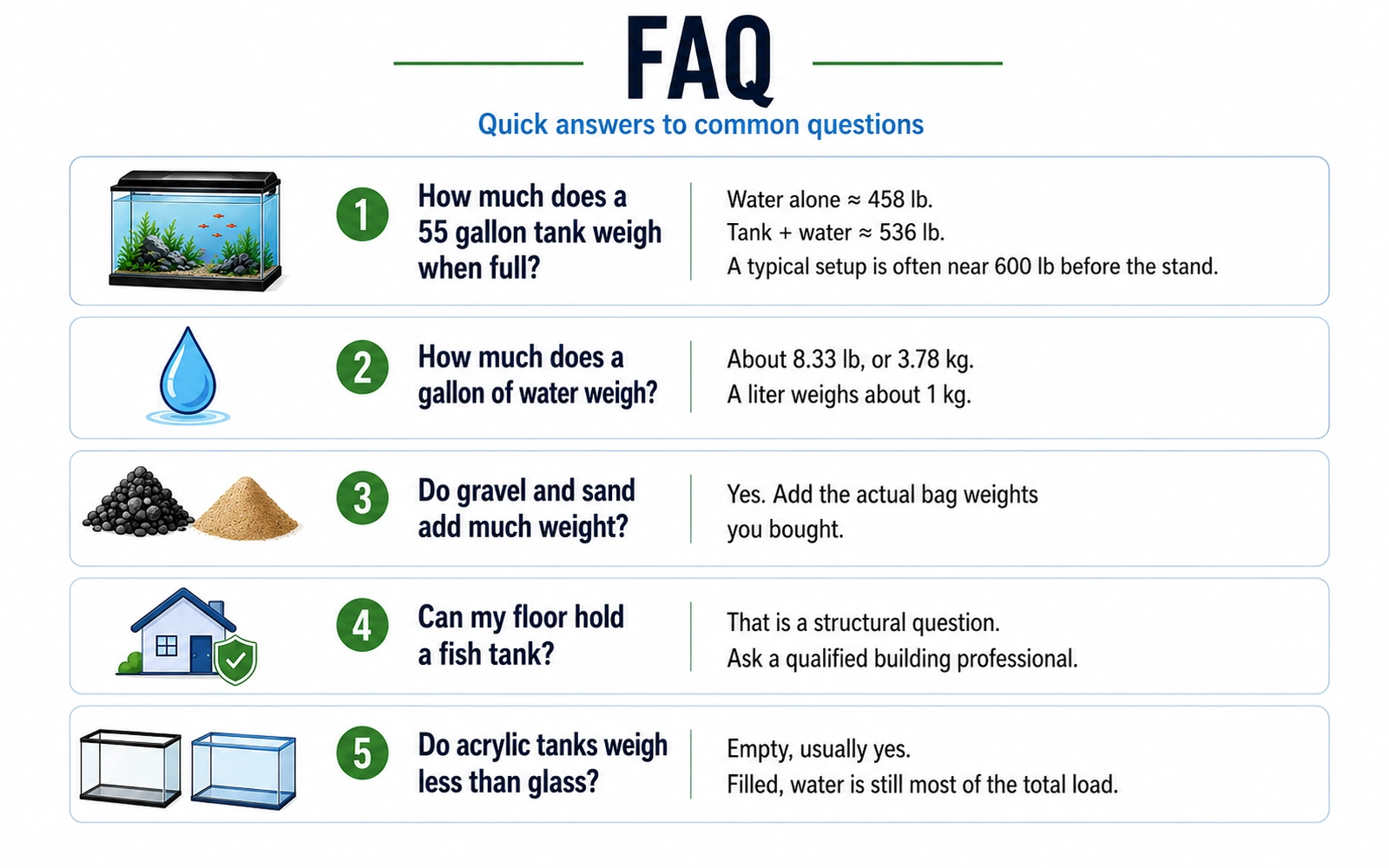
- Water: about 458 pounds, at 8.33 pounds per US gallon, a figure derived from USGS density data and the NIST gallon definition.
- Glass tank: Aqueon publishes 78 pounds empty for its standard 55 gallon. Other makers' 55s weigh differently, so use your model's own figure.
- Substrate and rock: whatever the bags and your bathroom scale say, often 50 pounds or more.
- The stand, hood, lights and a primed canister filter: extra again.
Call it roughly 600 pounds standing on a footprint smaller than a coffee table, and it stays there for years. The concentration of the load is the point, not just the total.
Why the Forum Answers Do Not Transfer to Your House
Search this question and you will find confident rules: "anything up to 55 gallons can go anywhere," "floors are built for 40 pounds per square foot," "just run it across the joists." Several top results are forum threads, and many of the people in them are right about their own homes.

The problem is that none of them has seen yours. Here is why a general rule cannot settle it:
- Design figures assume evenly spread loads. Building codes set design loads for floors, but those are engineering assumptions about weight spread across a room, applied by professionals. Turning them into a pass or fail for one heavy, concentrated object is professional judgment, not arithmetic. This site does not print a pounds per square foot figure for you to apply for that reason.
- The structure varies. Joist size, spacing, span, direction, wood species and grade, and what supports them all change the answer.
- Condition is invisible. Old notches cut for plumbing, rot, termite damage, previous renovation work and sagging all sit under finished floors.
- Placement changes things. A tank along a load-bearing wall and a tank in the middle of a long span are different situations, even in the same room.
That is why "most floors are fine" is not an answer. A general statement about most floors tells you nothing about the one under your tank.
What to Write Down Before You Ask
A professional's visit is quicker and more useful if you arrive with facts. Gather these first.
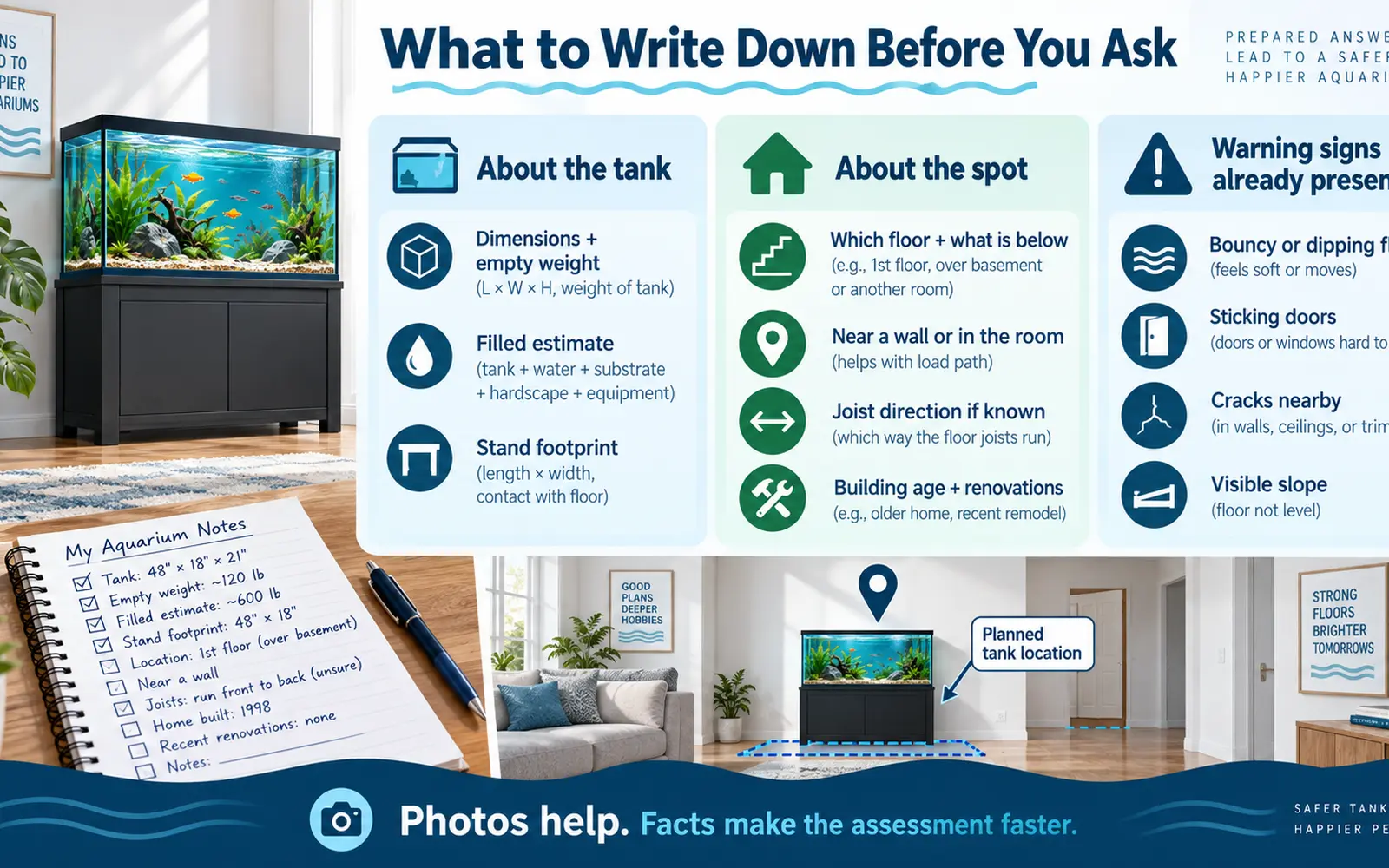
About the tank:
- Outside dimensions and the model's published empty weight
- Your estimate of the filled total, including substrate, rock and the stand
- The stand's footprint and how it meets the floor (legs or a solid base)
About the spot:
- Which floor of the building, and what is directly below it
- Whether the tank would sit against an exterior or interior wall, or out in the room
- Which way the joists run, if you can tell from a basement, crawl space or an unfinished ceiling below
- The age of the building and any renovation you know about
Warning signs already present:
- A floor that bounces or dips when you walk across it
- Doors nearby that stick or have started to swing on their own
- Cracks in walls or ceilings near the spot, or on the ceiling below
- A visible slope, which you can check with a long level
Photos of the floor, the spot and the space below help a lot. None of this replaces an assessment. It just makes the assessment faster.
Who to Ask, and What to Ask Them
A structural engineer can assess the floor and tell you whether the spot is suitable, whether another spot is better, and whether anything needs changing. A qualified builder or contractor familiar with your type of construction can often help too, particularly with access to the structure below.

Useful questions to put to them:
- Can this spot carry a concentrated load of about this weight, continuously, for years?
- Is there a better spot in the room or the house?
- Would placement against a particular wall, or across the joists, change your answer?
- Would anything under the stand, such as a spreader board, help here, or is that not relevant to this floor?
Those last two ideas appear often in forum advice. They are questions for the person looking at your structure, not fixes to apply on your own.
If you rent, your landlord or building manager needs to know before the tank arrives. Many leases say something about large tanks or water-filled furniture, and a leak affects the unit below you. Read your renter's or homeowner's insurance for what it says about water damage while you are at it.
Signs of Trouble After the Tank Is In
Even with a good spot, keep watching, especially in the first weeks.
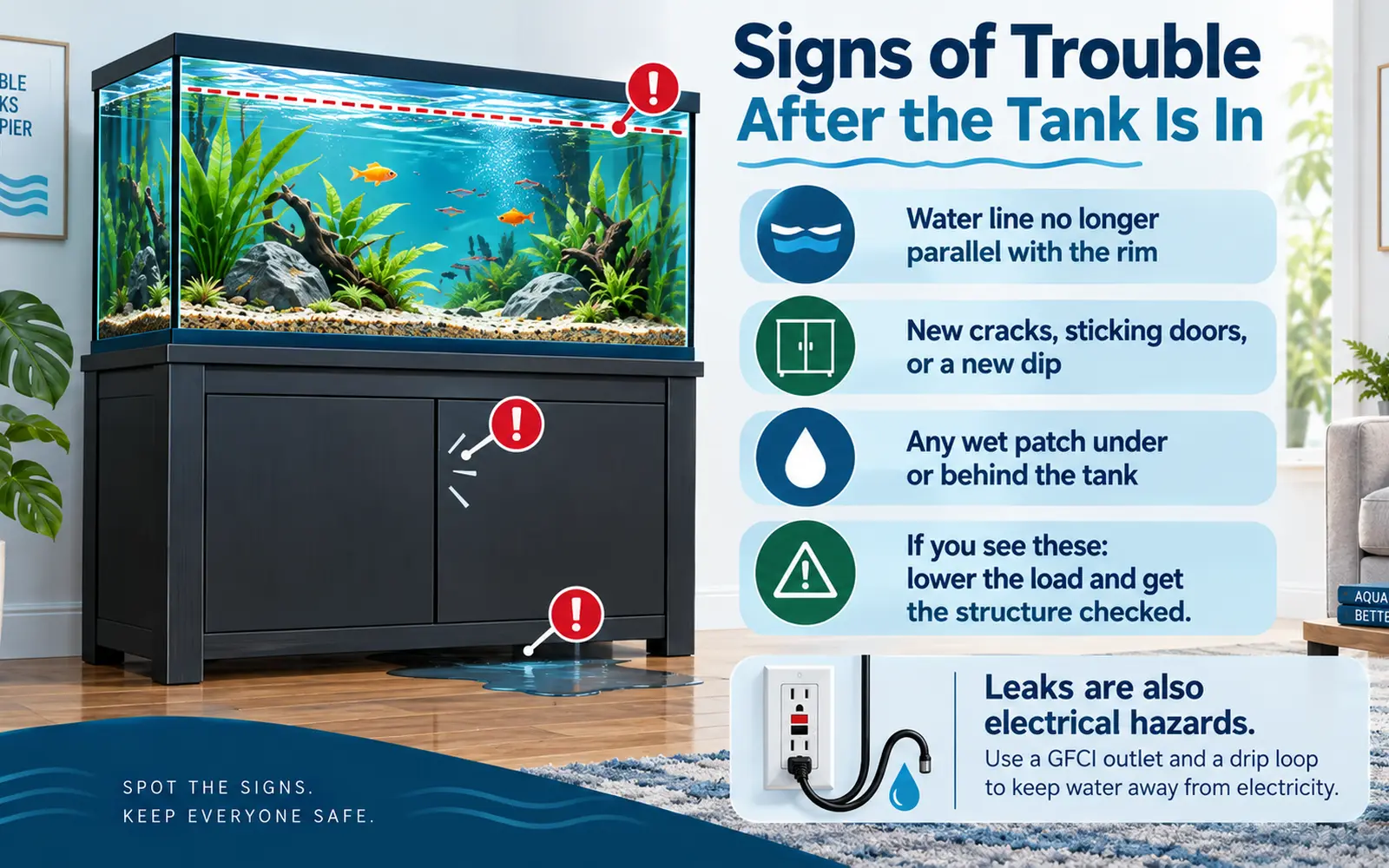
- The water line is no longer parallel with the rim. Something under the tank has moved, whether the floor, the stand or the carpet compressing. A tank that is not level may distort, leak or crack, as Wikipedia's aquarium article puts it (read September 11, 2026).
- New cracks, sticking doors or a new dip near the tank.
- Any wet patch under or behind the tank.
If you see any of these, stop adding anything to the tank and lower the load. Our aquarium emergency guide covers the calm first steps, including reducing water volume safely. Then get the structure looked at before refilling.
A leak is also an electrical hazard. Aquarium equipment should run from a GFCI-protected outlet, which the Electrical Safety Foundation International says belongs "in any indoor or outdoor area where water may come into contact with electrical products" (read September 11, 2026), with a drip loop in every cord so water runs off before reaching the plug. If water reaches an outlet or a power strip, do not reach into it; cut power at the breaker if you can do so safely.
Ways to Reduce the Question
If a 55 gallon feels uncertain for your space, you have options that do not involve guessing.
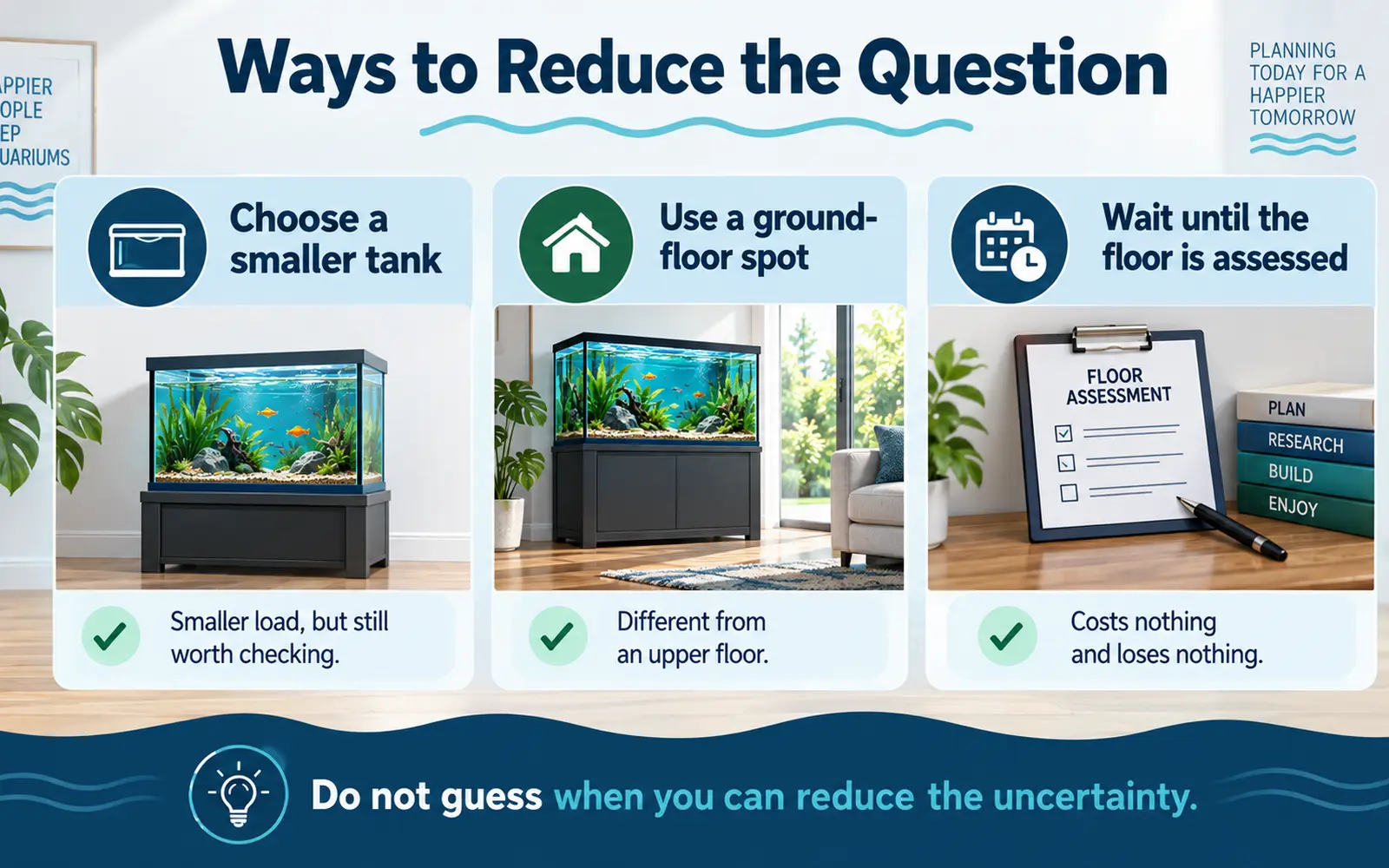
- A smaller tank is a smaller load, though a smaller tank is not automatically cleared either.
- A ground-floor spot on a slab is a different situation from an upper floor, though still worth checking if you have doubts.
- Waiting until you have had the floor assessed costs nothing and loses nothing.
Once you are cleared and ready, the first aquarium setup checklist puts stand and placement at the start of the process, before any water goes in. Plan your water change routine around a hose and siphon rather than carrying full buckets across a floor you have just been worrying about.
FAQ
Will my floor hold a 55 gallon fish tank? We cannot tell you, and nobody who has not seen your building can. A typical filled glass 55 gallon weighs about 600 pounds with substrate, on a small footprint. Whether a floor carries that depends on joist size, span, spacing, direction, condition and placement. A structural engineer or qualified builder can assess it.
Is a second floor safe for a 55 gallon aquarium? It depends entirely on the structure. Some upper floors carry one without issue and some do not. Ask a structural engineer or builder, and if you rent, tell your landlord before the tank arrives.
Does putting the tank against a wall help? Placement can change how the load reaches the structure, and forum advice often recommends a wall or running the tank across the joists. Treat that as a question for the professional assessing your floor, not a fix on its own.
What signs mean the floor is struggling? A water line that is no longer parallel with the rim, new cracks near the tank, sticking doors, a new dip in the floor, or any wet patch. Lower the water and have the structure checked before refilling.
A tank you have cleared with the right person is one you can stop worrying about. That is worth a short visit.