"How big should I go without regretting it?" is the right question, and the answer has two halves. One is about the fish. The other is about your floor, and most buying guides skip it.
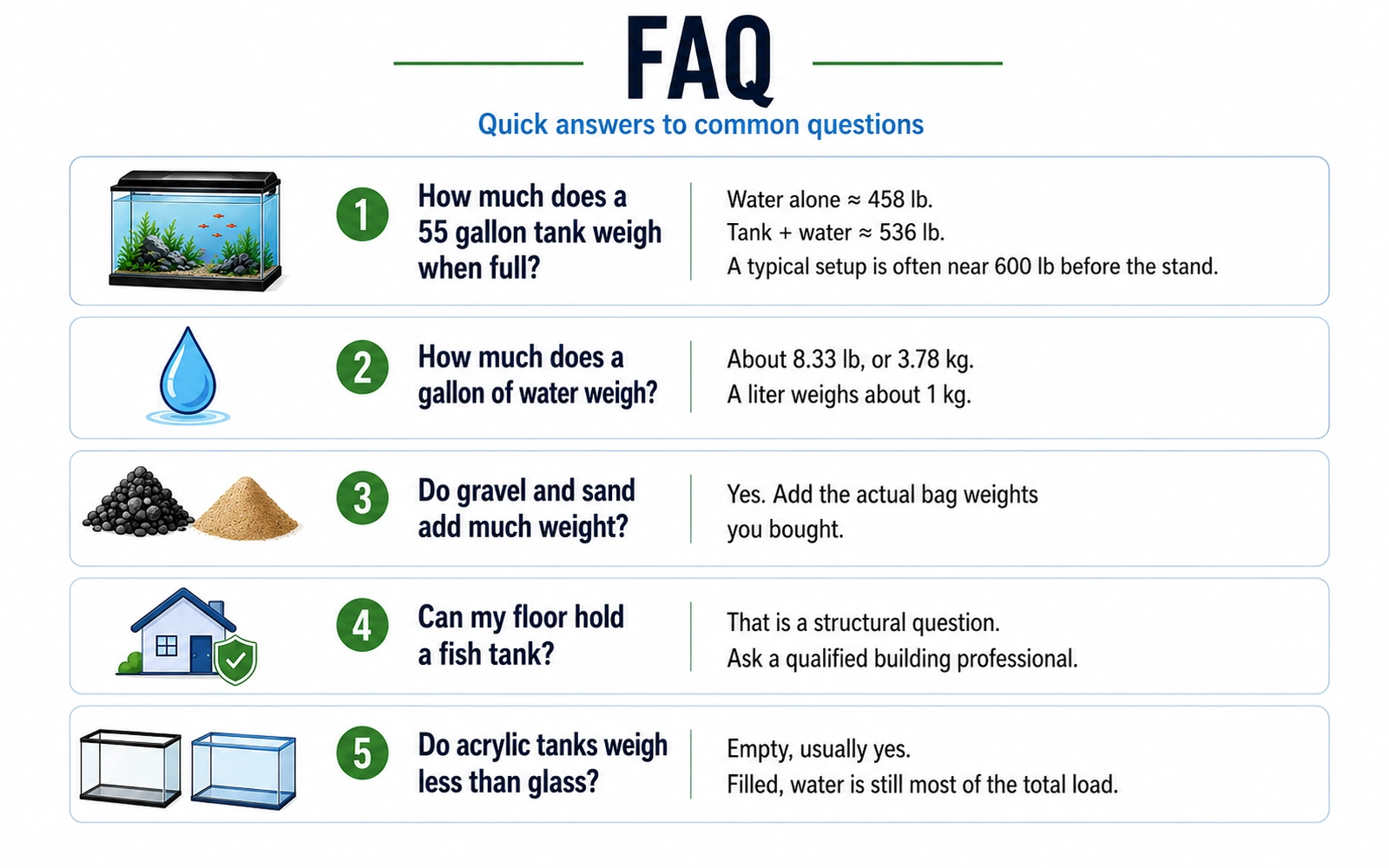
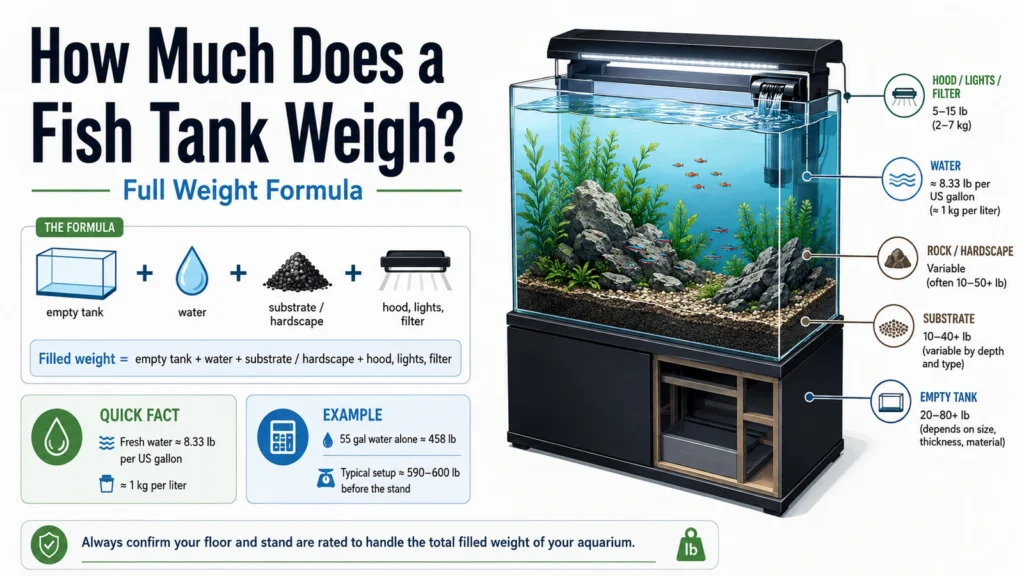
For a first freshwater tank, the common, sourced advice lands around 20 to 30 gallons. API Fishcare recommends a first tank "no smaller than 20 gallons," and calls 29 or 30 gallons "a great size for the first-time hobbyist," because more water changes more slowly. The real upper limit is not the fish. It is the weight: water alone is about 8.33 pounds per gallon, and the stand and floor have to carry all of it.
This is the overview for everything in choosing and placing a tank: size, shape, where it goes and what holds it up. Each part has its own deeper page on this site.
Why a Bigger First Tank Is Easier, Not Harder
It feels backwards. A small tank is cheaper and less intimidating, so it seems like the safe first step. The water chemistry says otherwise.
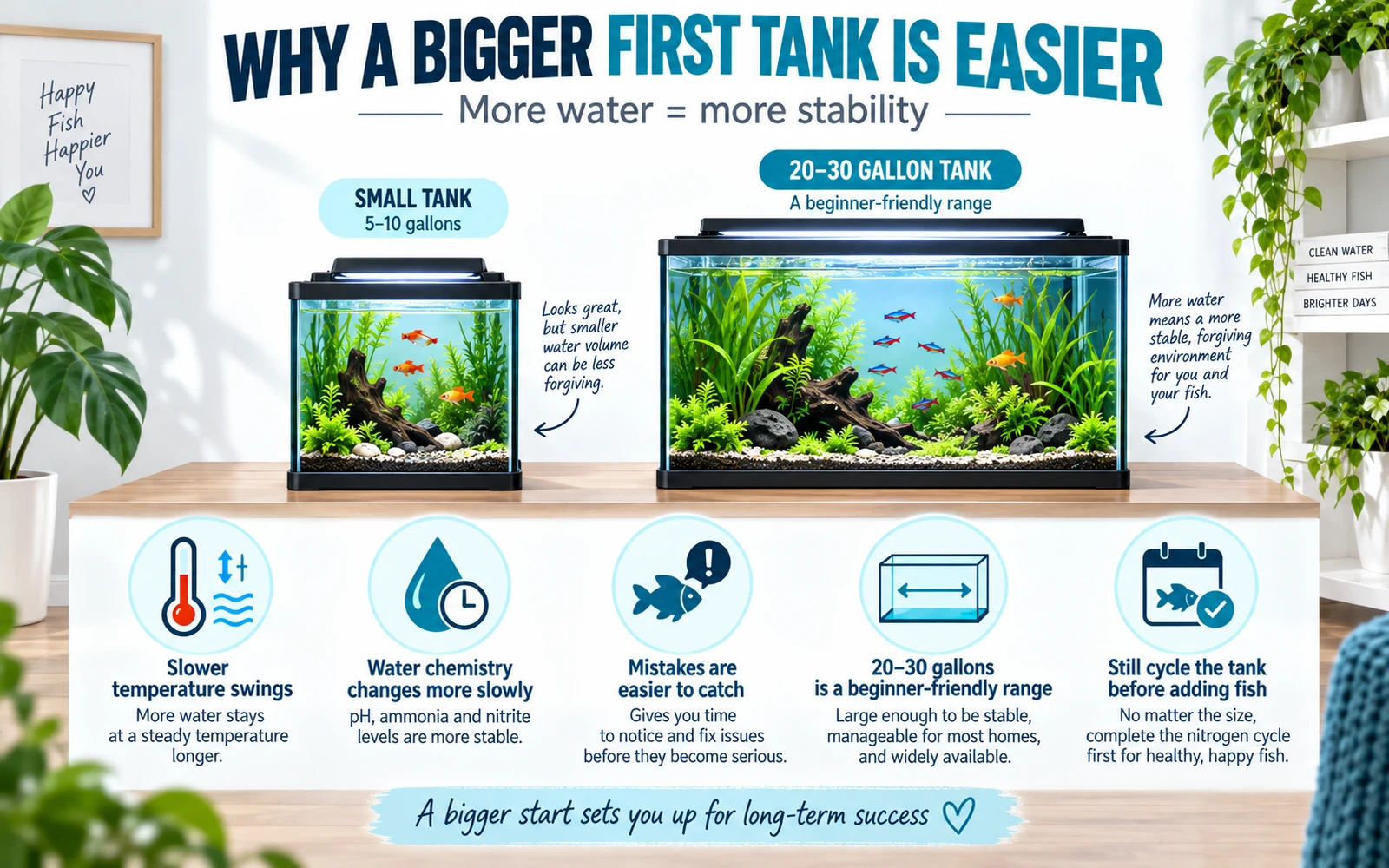
API Fishcare's guide (read September 11, 2026) puts it plainly: "The bigger the volume of water you keep the more stable your water conditions will be," summed up as "the solution to pollution is dilution." It adds that pollutants build up more slowly in a larger tank, which reduces how often maintenance is needed. The Wikipedia article on aquariums (read September 11, 2026) makes the same point for beginners: controlling water parameters in smaller tanks "can prove difficult," while larger volumes "resist rapid fluctuations of temperature and pH."
In practice that means a mistake has room to be caught. Too much food, a missed water change or a dead snail behind a rock changes a small tank quickly and a larger one slowly. Temperature follows the same logic, which matters because aquarium water temperature is one of the things beginners find hardest to hold steady.
A bigger tank does not remove the need to cycle it first. Every size needs the fishless process in how to cycle a new aquarium before anything alive goes in.
Where Bigger Stops Being Easier
The case for a larger tank has limits, and they are physical.
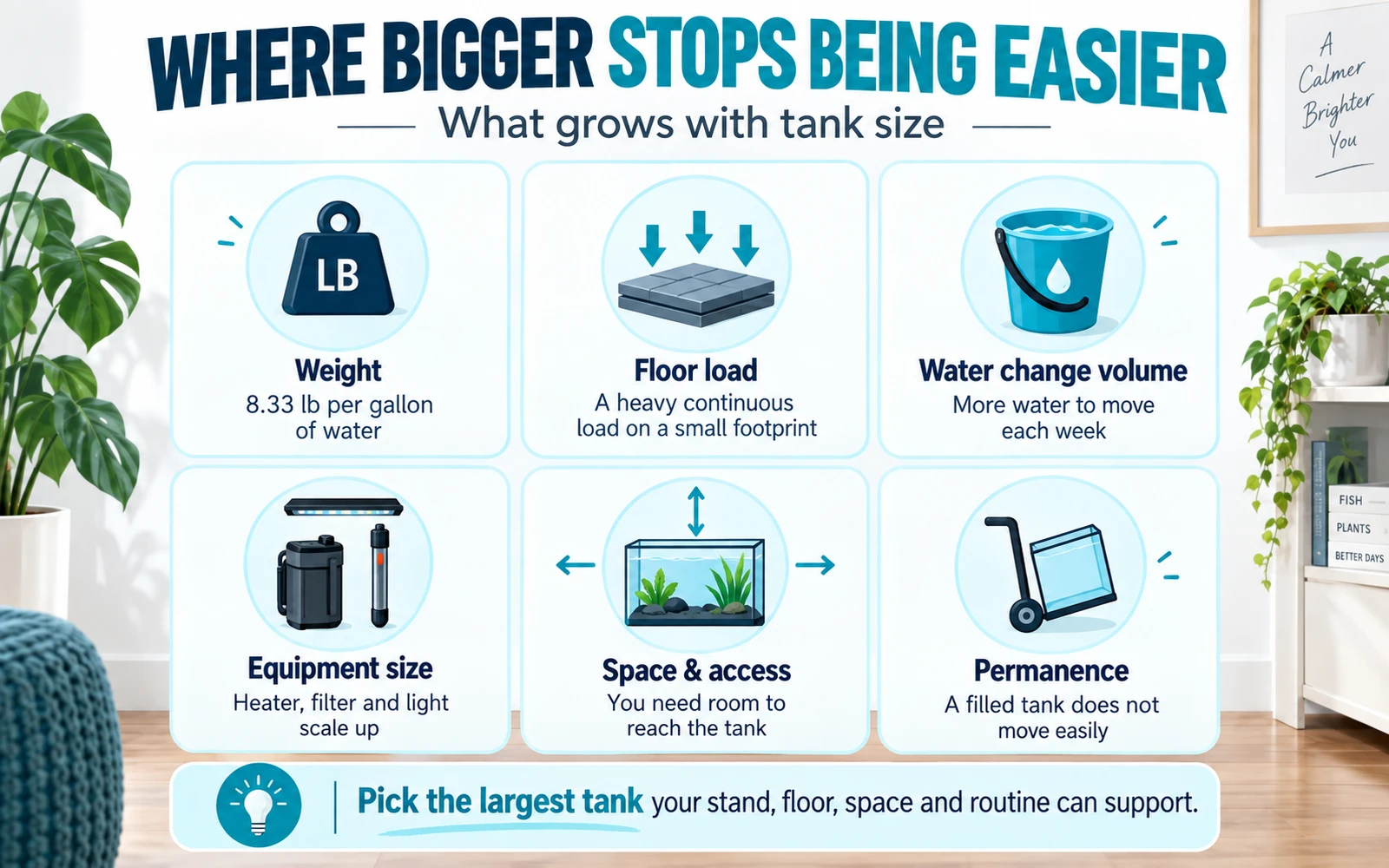
| What grows with size | Why it matters for a first tank |
|---|---|
| Weight | About 8.33 lb per US gallon for the water alone, before glass, gravel, rock and the stand |
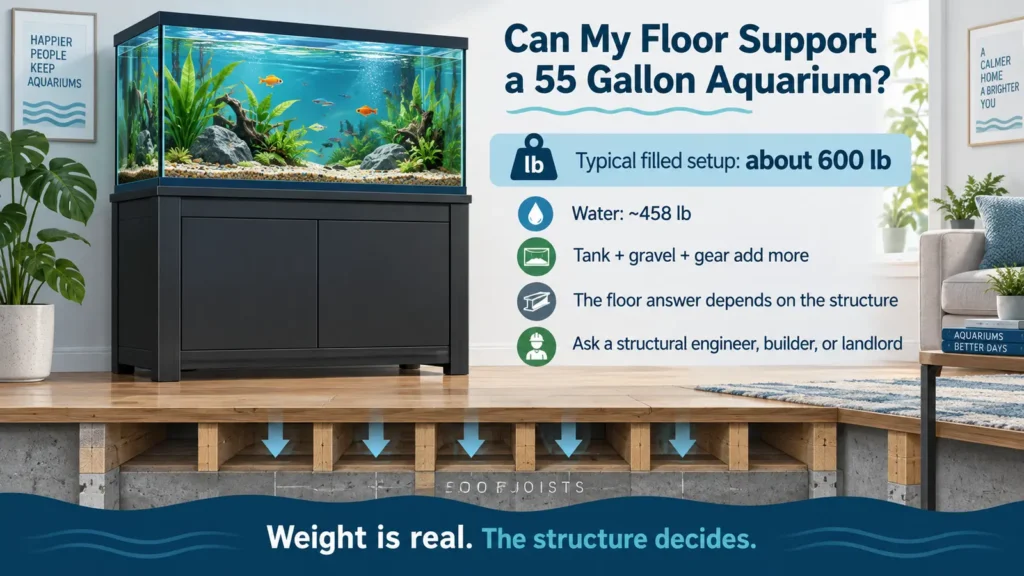
| Floor load | A heavy, continuous load on a small footprint; whether your floor carries it is a structural question |
| Water change volume | More water to move each week, usually by hose and siphon rather than buckets |
| Equipment size | Heater, filter and lighting scale with the tank |
| Space and access | You need to reach the bottom, the back and the filter comfortably |
| Permanence | Once filled, it does not move without being emptied |
The weight figure comes from our article on how much a fish tank weighs, which derives it from USGS and NIST figures and shows a filled 55 gallon setup landing near 600 pounds before the stand. That page is worth reading before you choose a size, because it changes the question from "what will look good" to "what can this room take."
A useful way to decide: pick the largest tank that you can place on a proper stand, in a spot you are confident about, with water access you will actually use every week. For many first-time keepers that lands in the 20 to 30 gallon range. For some rooms and some buildings it lands lower, and that is a legitimate answer.
Shape Matters Nearly as Much as Gallons
Two tanks with the same volume can behave differently.
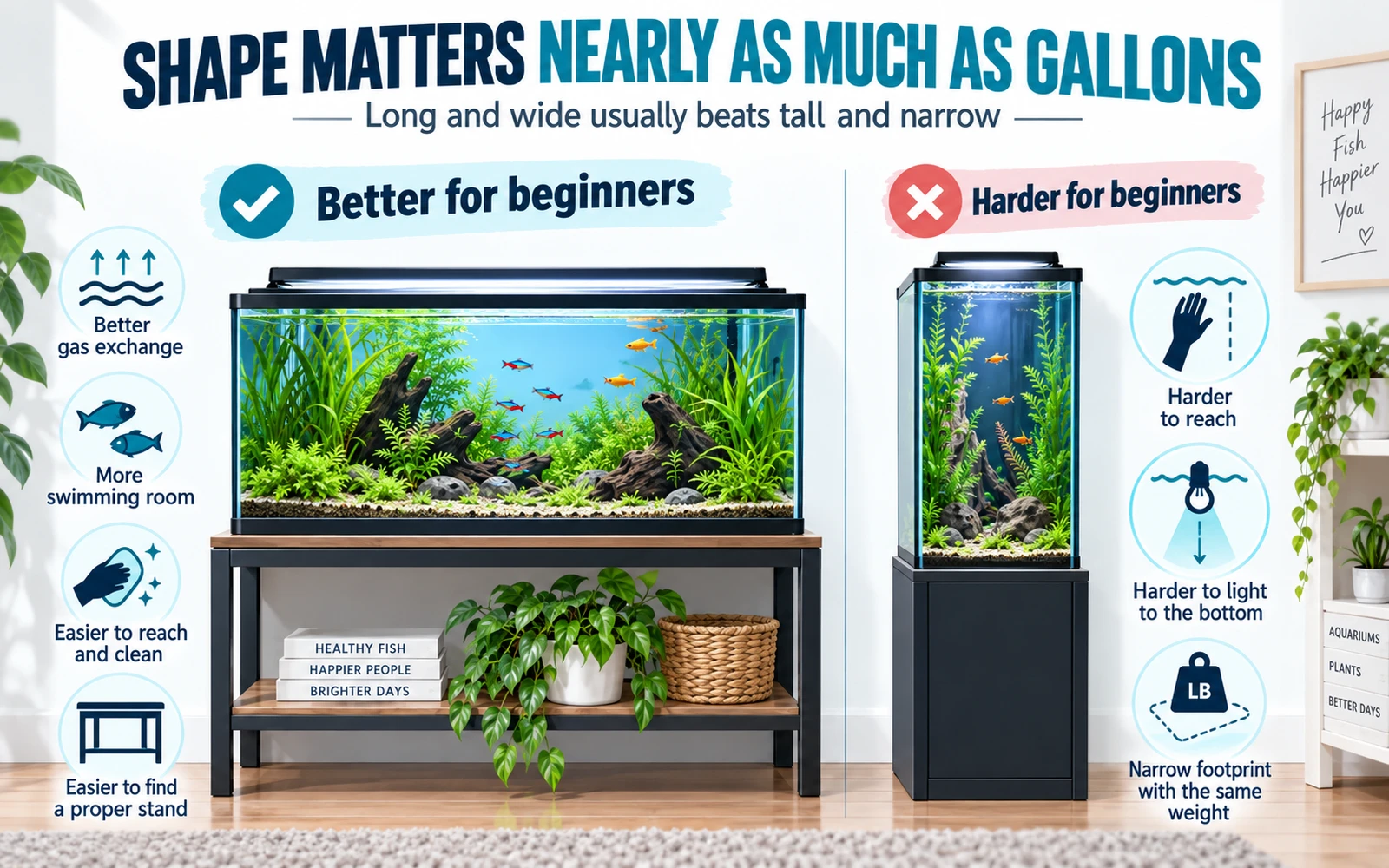
API Fishcare advises choosing aquariums "longer and wider rather than taller and narrower," because a larger water surface gives more room for gases to exchange. A long, low tank also gives fish more horizontal swimming room, is easier to reach into, and spreads its weight over a longer footprint.
Tall tanks look dramatic and have real drawbacks for a first tank: harder to clean, harder to light to the bottom, and a narrow footprint carrying the same weight.
Standard rectangular sizes have one more advantage that rarely gets mentioned: stands made for them are easy to find, so the tank sits on something sized for its exact footprint rather than something close.
Where It Goes: Decide Before You Buy
The spot comes first, because it limits the size, not the other way round. Check each of these before buying anything.
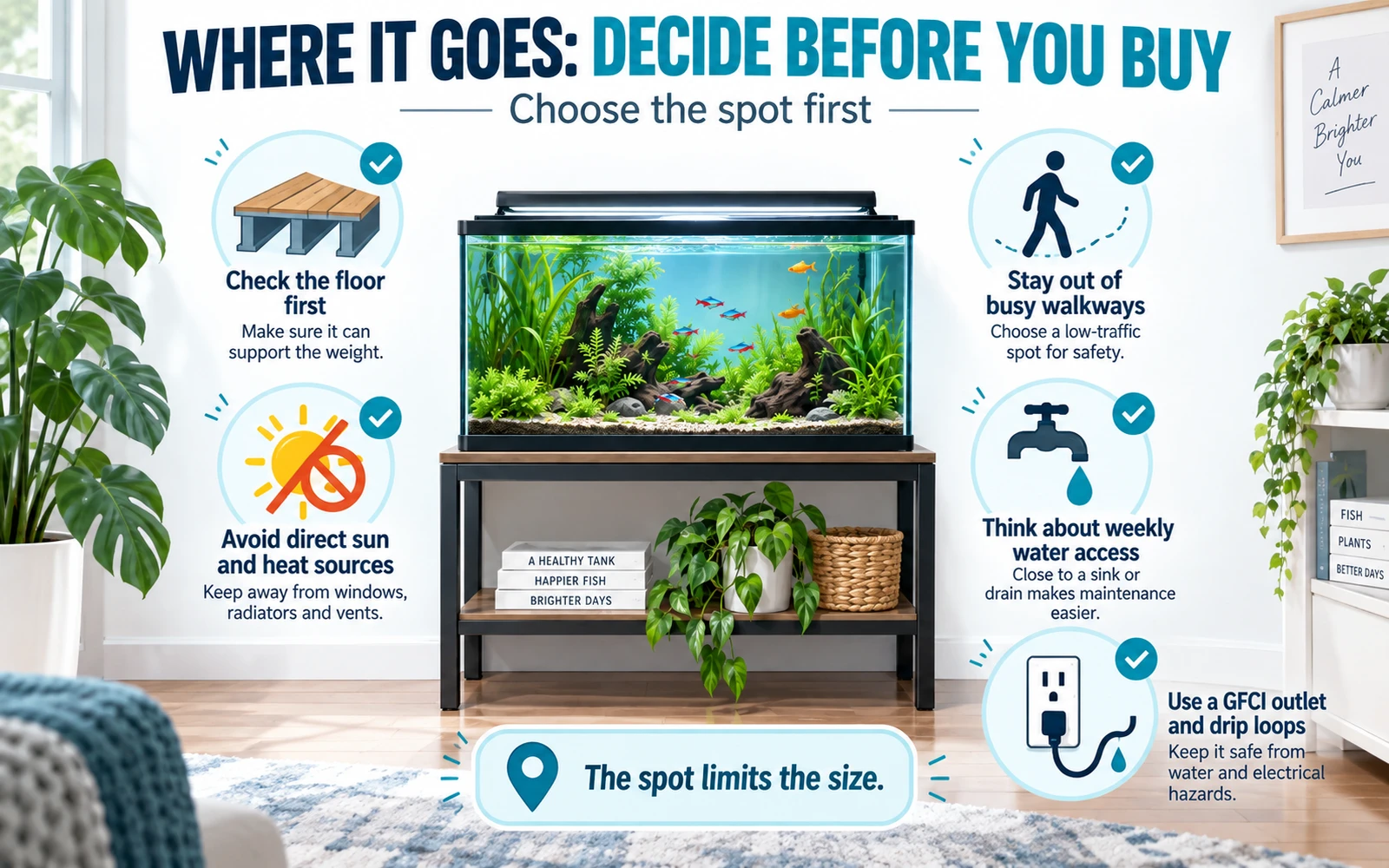
- The floor under it. Ground floor on a slab and an upper floor with joists are different situations. Nothing on this page, or anywhere online, can tell you your floor is fine. For anything beyond a small tank, and for any upper floor that makes you nervous, the person to ask is a structural engineer or qualified builder. If you rent, tell your landlord or building manager before the tank arrives.
- Direct sun and heat sources. Windows, radiators, heating vents and fireplaces swing temperature and feed algae. An interior wall is usually the calmer choice.
- Traffic. Doorways and busy walkways get bumped, and fish react to constant movement past the glass.
- Water access. You will carry or pump water to and from this tank every week. Distance to a faucet and a drain matters more than people expect.
- Power, safely. Heaters, filters and lights all plug in beside a container of water. Plug aquarium equipment into a GFCI-protected outlet. The Electrical Safety Foundation International says a GFCI "should be used in any indoor or outdoor area where water may come into contact with electrical products" (read September 11, 2026). Give every cord a drip loop, a downward curve below the outlet so water running along the cord drips off before it reaches the plug. Mains wiring changes belong to a licensed electrician.
What Has to Hold It Up
The tank is only as safe as whatever it sits on.
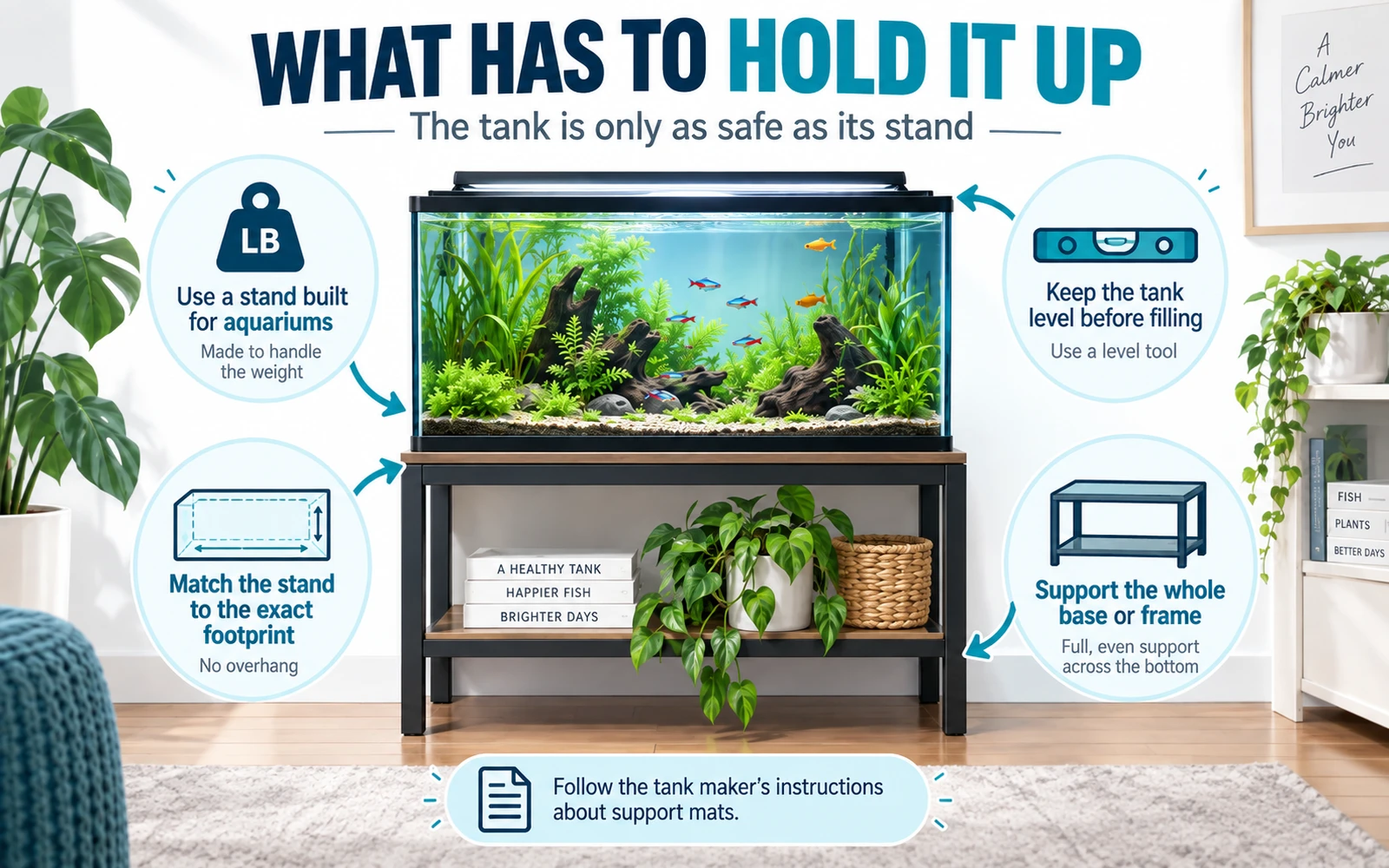
Wikipedia's aquarium article states that "a stand must be strong as well as level. A tank that is not level may distort, leak, or crack." That sentence covers most of what goes wrong.
- Use a stand built for aquariums and matched to the tank's footprint, with a stated load rating above the filled weight. Household furniture is designed for light, occasional loads, not a heavy load that never comes off and occasionally gets wet.
- Nothing hangs over the edge. The whole base, or the whole frame for a rimmed tank, needs support.
- It must be level in both directions before any water goes in, because a filled tank cannot be adjusted safely.
- Follow the tank maker's instructions on whether a mat goes under the tank. Makers differ, especially between framed and rimless designs.
Material is part of this decision too. Glass and acrylic differ in weight, scratching and how they must be supported, and for most first tanks glass is the straightforward choice.
The Part Nobody Selling a Tank Will Say
Three honest points, because a first tank should not cost more than it needs to.
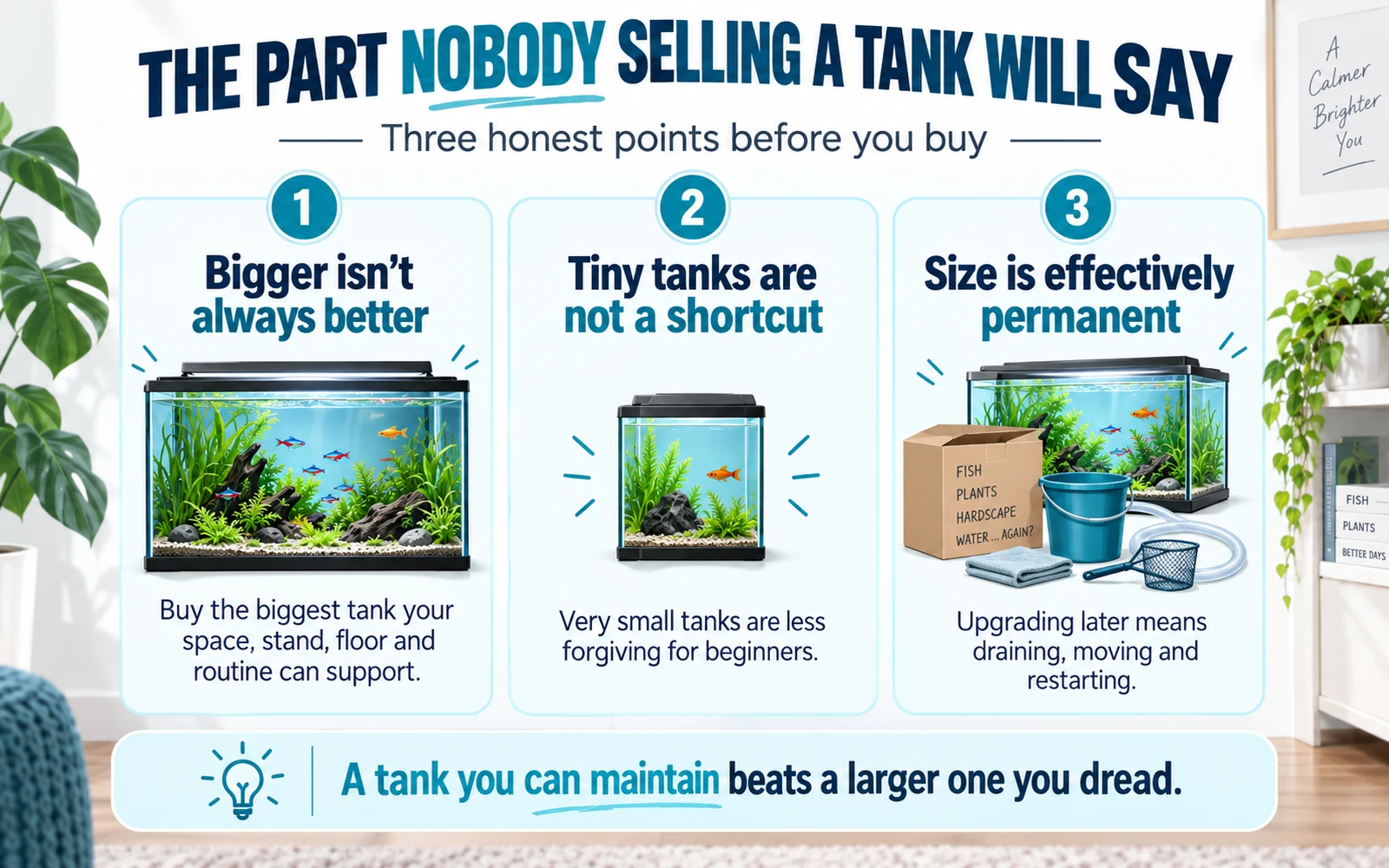
You do not need the biggest tank you can afford. You need the biggest tank your space, stand, floor and weekly routine can support. A tank you can maintain beats a larger one you dread.
Very small tanks are not a beginner shortcut. The same chemistry that makes bigger tanks forgiving makes tiny ones touchy. They suit experienced keepers with specific plans.
Size is effectively permanent. Changing later means draining, moving, re-cycling and rehoming. The first aquarium setup checklist puts the tank, stand and placement at the start of the buying order for exactly this reason.
A Five-Question Check Before You Buy
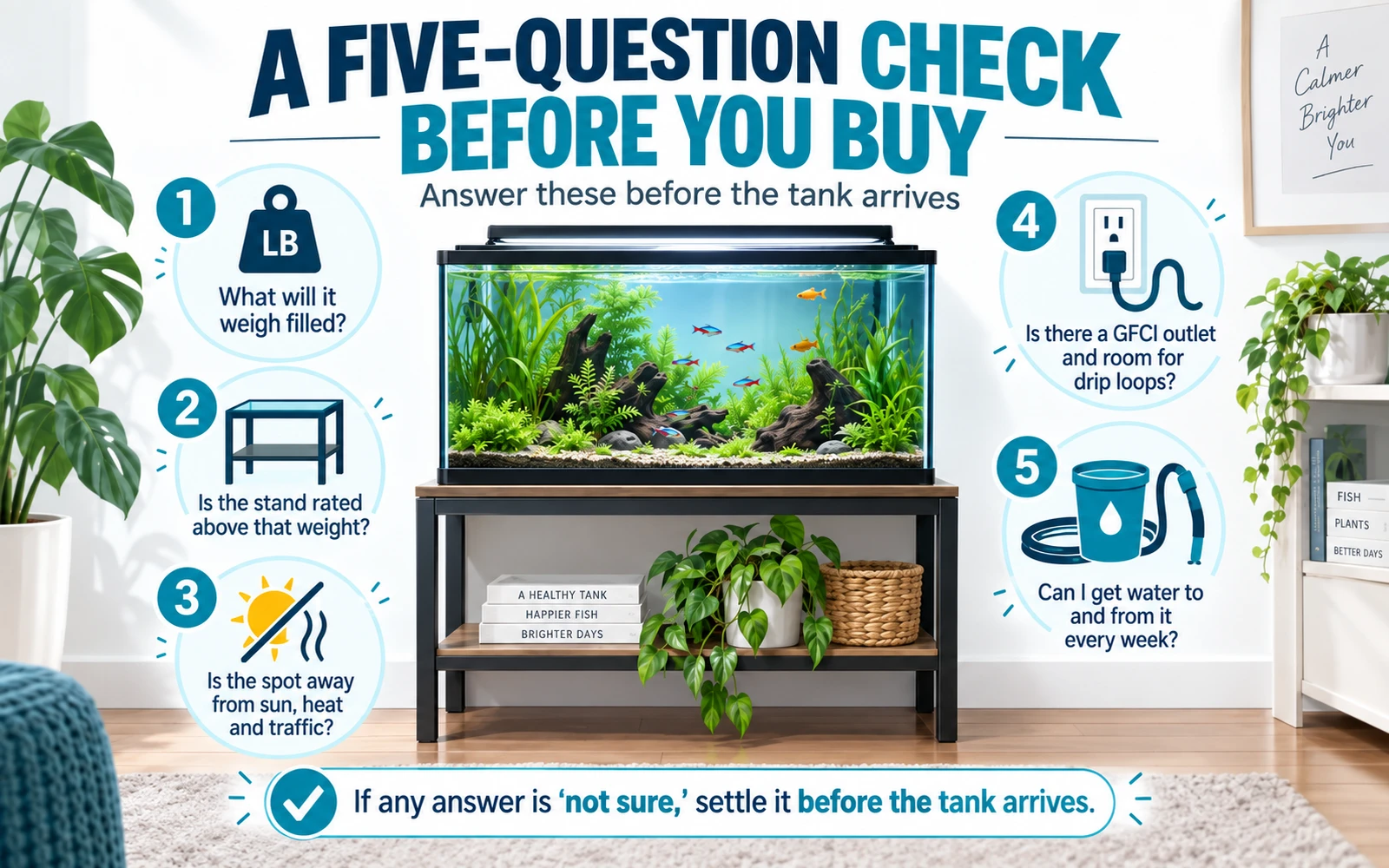
- What will it weigh filled, with substrate and rock, and do I have a stand rated above that?
- Who has confirmed the floor can carry it, if it is large or on an upper floor?
- Is the spot away from windows, heat sources and doorways?
- Is there a GFCI-protected outlet nearby, and room for drip loops?
- Can I get water to and from it every week, following a routine like the one in how often to change aquarium water?
If any answer is "not sure," settle it before the tank arrives. After it is full, every one of these gets harder.
FAQ
What is the best size aquarium for a beginner? Common manufacturer advice puts it around 20 to 30 gallons. API Fishcare recommends no smaller than 20 gallons and calls 29 to 30 gallons a great first size, because larger volumes stay stable longer. The right size for you is the largest your stand, floor, space and weekly routine can support.
Is a 10 gallon tank good for a first aquarium? It can be kept successfully, but it is less forgiving. Smaller volumes change temperature and water chemistry faster, which Wikipedia's aquarium article notes can make parameters difficult to control. If space allows a larger tank on a proper stand, most sources point beginners toward the larger one.
How much does a 20 gallon tank weigh when full? The water alone is about 167 pounds at 8.33 pounds per gallon, before the glass, substrate, rock and equipment. Our tank weight article works through the full calculation with published empty weights.
Can I put my first aquarium on an upper floor? Possibly, but no article can confirm it for your building. It depends on the structure under the floor. Ask a structural engineer or qualified builder, and if you rent, speak to your landlord before the tank arrives.
Choose the spot, then the stand, then the tank. In that order, the size question mostly answers itself.