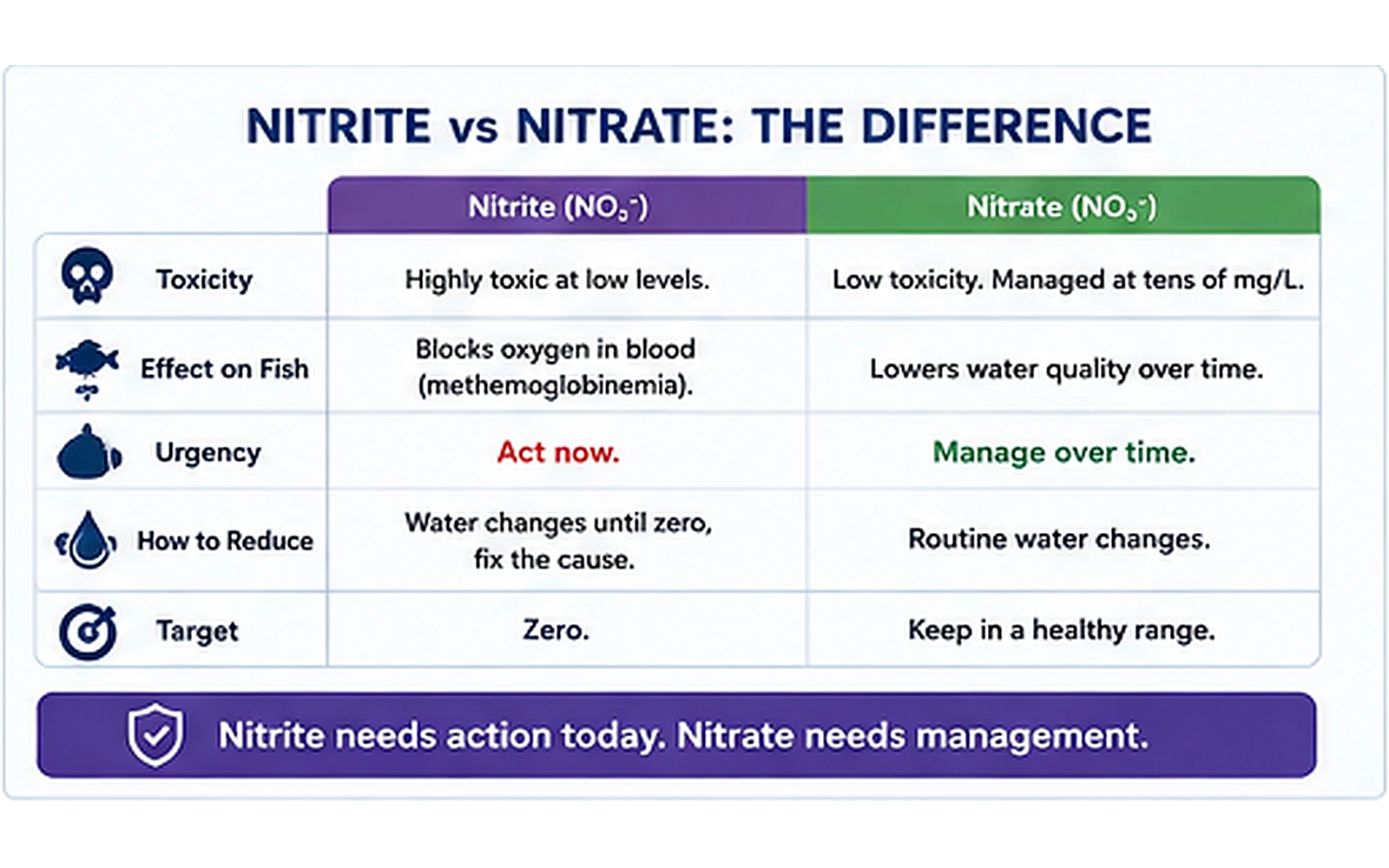
Nitrite is the one to deal with first. The two words look almost identical on a test chart, but they behave completely differently in a fish: nitrite interferes with the blood's ability to carry oxygen, so it causes harm at concentrations far below those at which nitrate becomes a problem. Nitrate is a long-term management number you bring down with routine water changes. Nitrite above zero, with fish in the tank, is something to act on now.
The Direct Answer: Nitrite Is the Urgent One
If you are looking at a test result with both showing, the order of concern is ammonia and nitrite first, nitrate second.
The reason is a genuine difference in toxicity rather than a matter of degree. Nitrite is described across the aquarium and aquaculture literature as acutely toxic to freshwater fish at low concentrations. Nitrate is not: published guidance on freshwater nitrate, including TFH Magazine and Aquarium Science, works in tens of mg/L as a management range and treats short exposure to considerably higher figures as survivable for most freshwater fish, which is a completely different order of concern. That is why the same test kit produces two readings that call for two completely different responses.
Nitrate: the one you manage, not the one you eliminate covers the other half of this comparison. The rest of this page is about nitrite.
What Nitrite Actually Does Inside the Fish
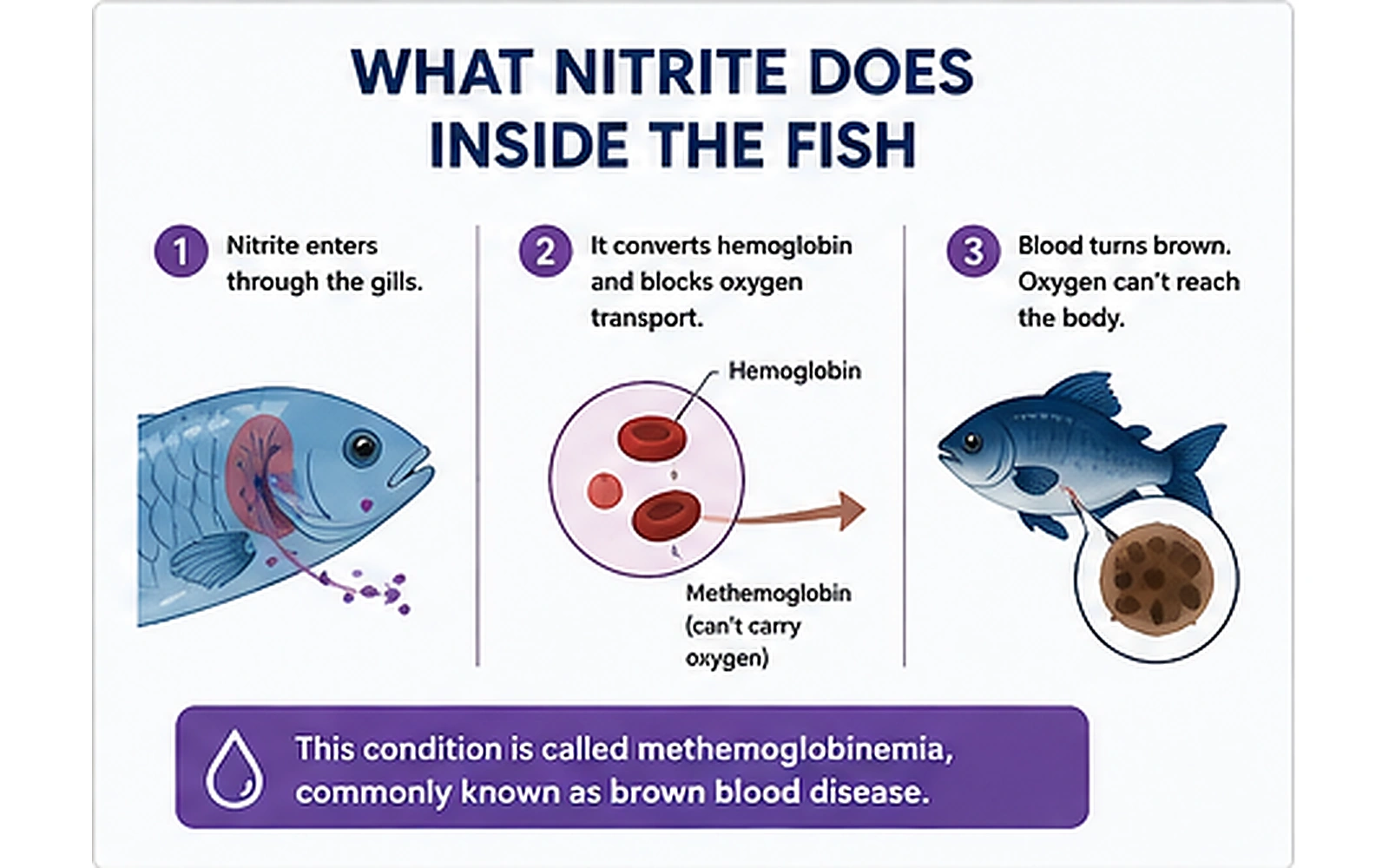
Fish take in nitrite across their gills, where it enters the bloodstream. There it reacts with hemoglobin, the molecule that normally binds oxygen and carries it around the body. The altered form, methemoglobin, cannot carry oxygen.
Because methemoglobin is brown rather than red, the blood of a badly affected fish darkens, which is where the common name brown blood disease comes from. The clinical name is methemoglobinemia. It is a well-documented mechanism, not folklore.
Naming a mechanism is not the same as identifying it in your tank, and this page will not tell you that is what your fish has. Several unrelated problems produce similar-looking distress. What the mechanism is useful for is explaining the symptom that confuses people most.
Why the Fish Suffocate in Water Full of Oxygen
Here is the part worth knowing before you spend an hour on the wrong fix.
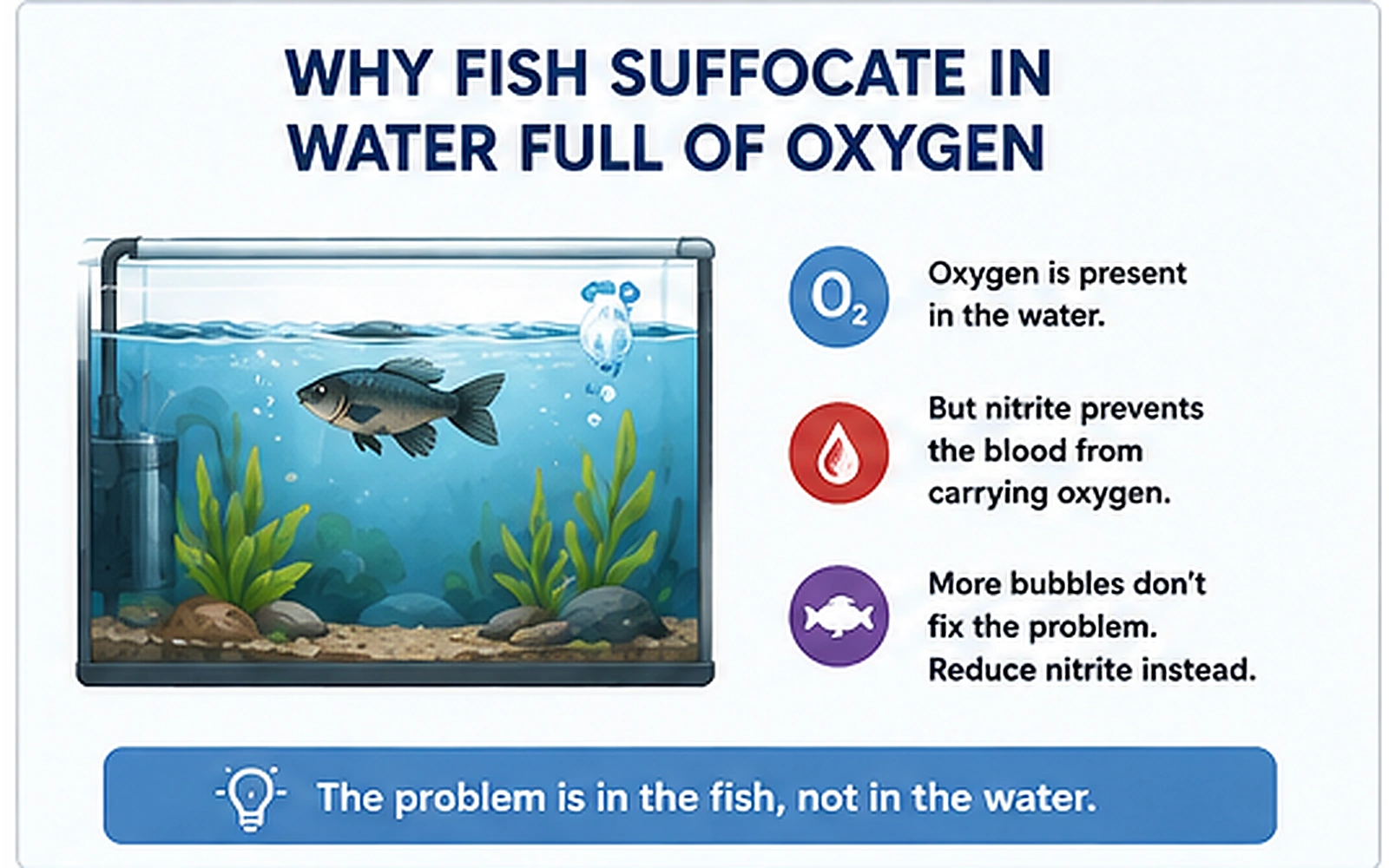
A fish affected by nitrite can show every sign of suffocating, gasping at the surface, breathing rapidly, hanging near the filter outflow, while the water itself holds perfectly normal oxygen. The oxygen is there. The fish cannot use it, because the transport system in its blood has been disabled.
So the instinctive response, adding an air stone or turning up the surface agitation, does not solve this particular problem. Aeration is worth having anyway and does no harm, but if nitrite is the cause, more oxygen in the water does not reach the tissue that needs it. What helps is reducing the nitrite the fish is absorbing.
That is also why "the tank has good aeration, so it cannot be a breathing problem" is a reasoning error that costs time in exactly the situation where time matters. My fish are gasping at the surface covers the full set of causes behind that scene and what to do in the first ten minutes.
What to Do Right Now
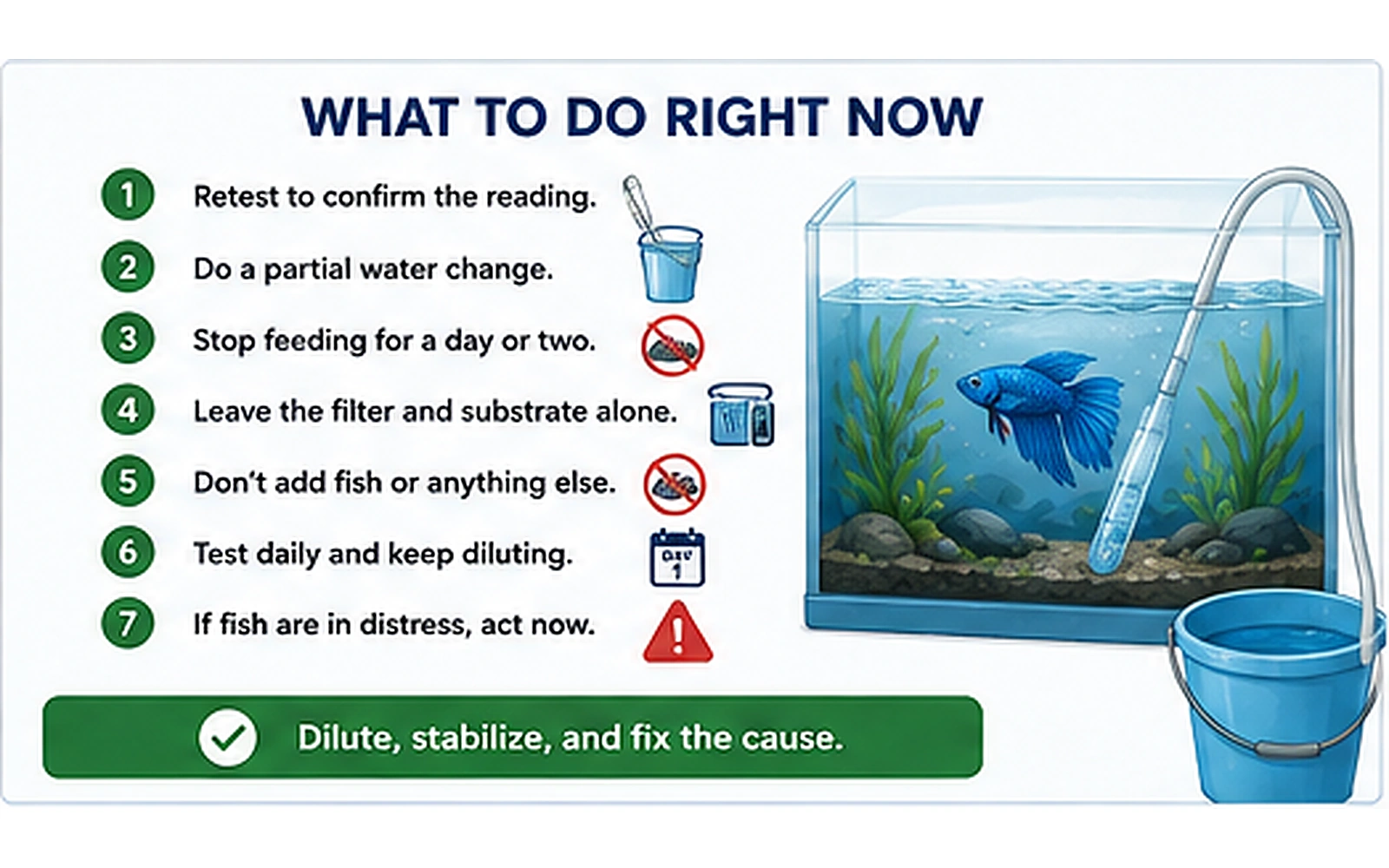
- Confirm the reading. Retest, and if you use strips, treat a near-zero result as unconfirmed. Test strips vs liquid test kits covers where each is reliable.
- Do a partial water change with dechlorinated, temperature-matched water. Dilution is the first-line action and the one with no downside.
- Stop feeding for a day or two. Less input, less waste, less ammonia converting into more nitrite.
- Leave the filter alone. The bacteria that convert nitrite into nitrate live there, and they are the thing that ends this. Do not rinse media in tap water, do not replace it, and do not deep-clean the substrate this week.
- Do not add fish, and do not add anything whose purpose you cannot explain.
- Test daily and keep diluting until nitrite reads zero.
- If fish are in visible distress, work through the aquarium emergency help page now rather than waiting for the next test, and contact an aquatic veterinarian.
The Treatment This Site Does Not Publish, and Why
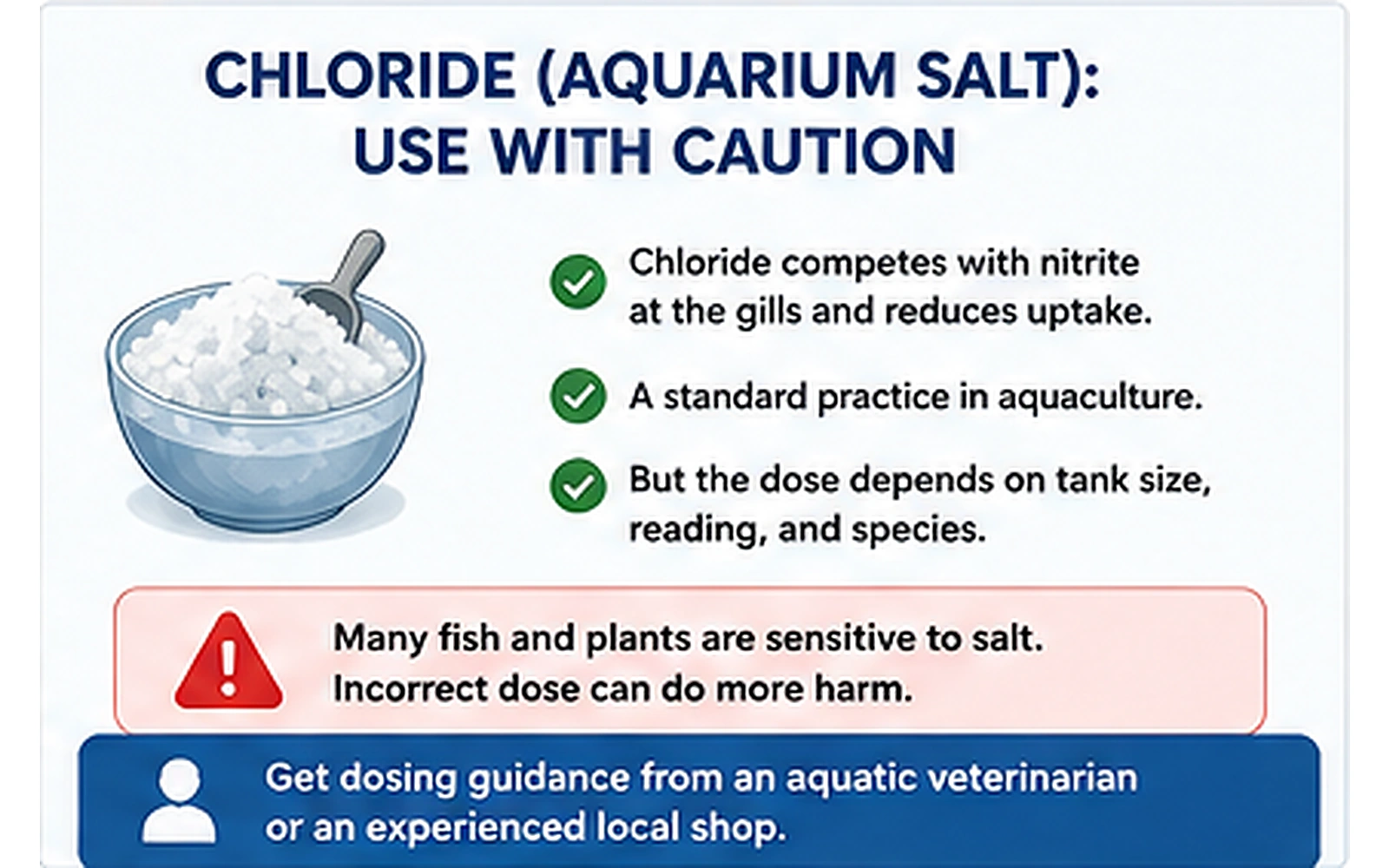
Search this topic and you will find the same technique on nearly every page: adding chloride to the water, usually as aquarium salt, because chloride competes with nitrite for uptake at the gills and reduces how much the fish absorbs. The mechanism is real and it is documented in the aquaculture literature, where it is standard practice.
This site does not publish the protocol, and you deserve a straight reason rather than silence.
It is a dose. The amount depends on tank volume, on the nitrite concentration, and on what you keep, and several common aquarium species tolerate salt poorly, including many catfish and loaches and a number of plants. A figure taken from a page that does not know your tank is exactly the kind of instruction that kills animals when it is slightly wrong. Our editorial policy commits to not publishing medication or treatment doses, and this falls squarely inside that.
What to do instead: dilute, fix the cause, and if you want to use the chloride approach, get the numbers from an aquatic veterinarian or an experienced local aquarium shop who can ask what species you keep and how large the tank is. That is a better answer than a number from a stranger, and it is the same advice we would give about any dose.
Nitrite in a New Tank vs an Established One
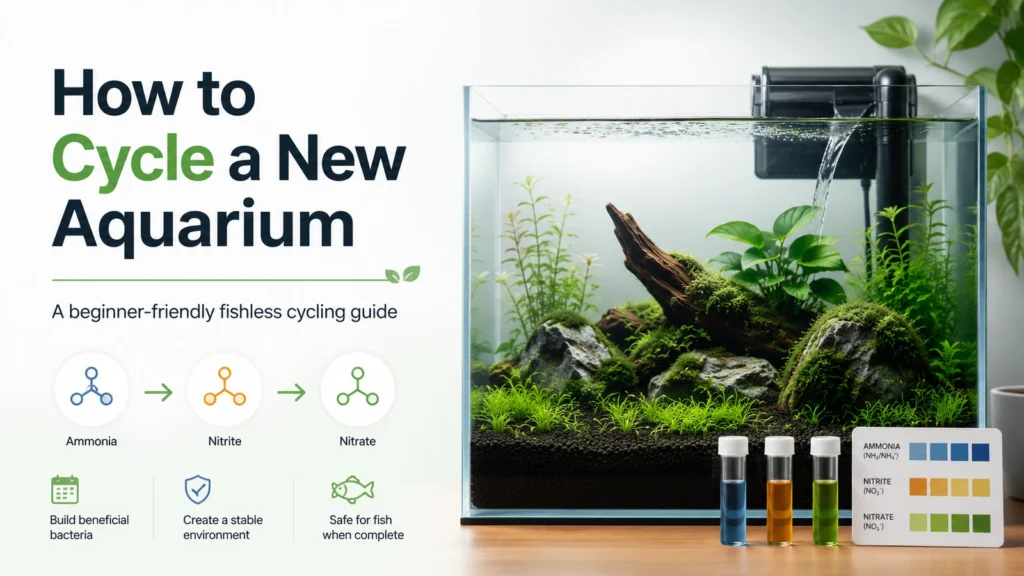
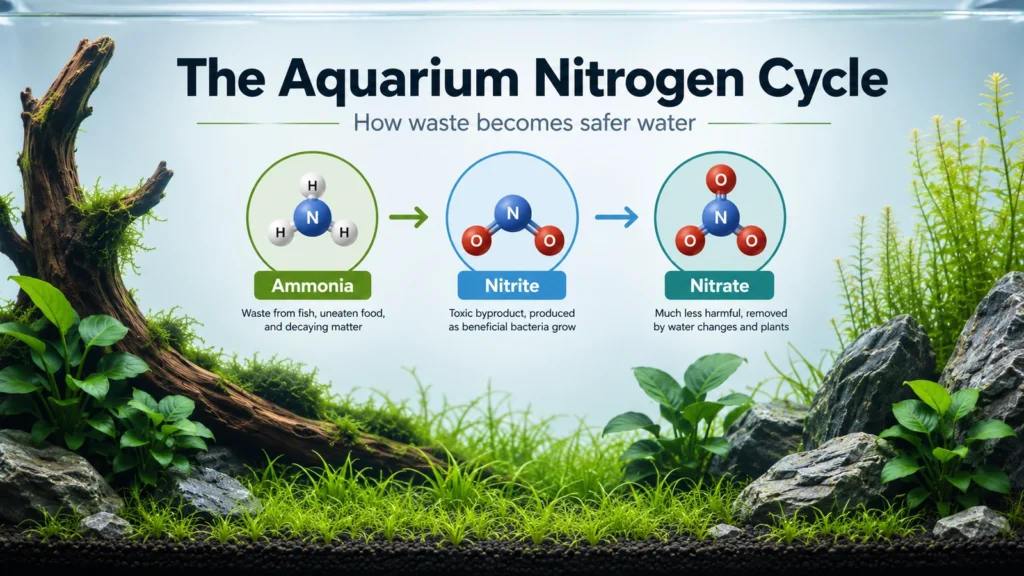
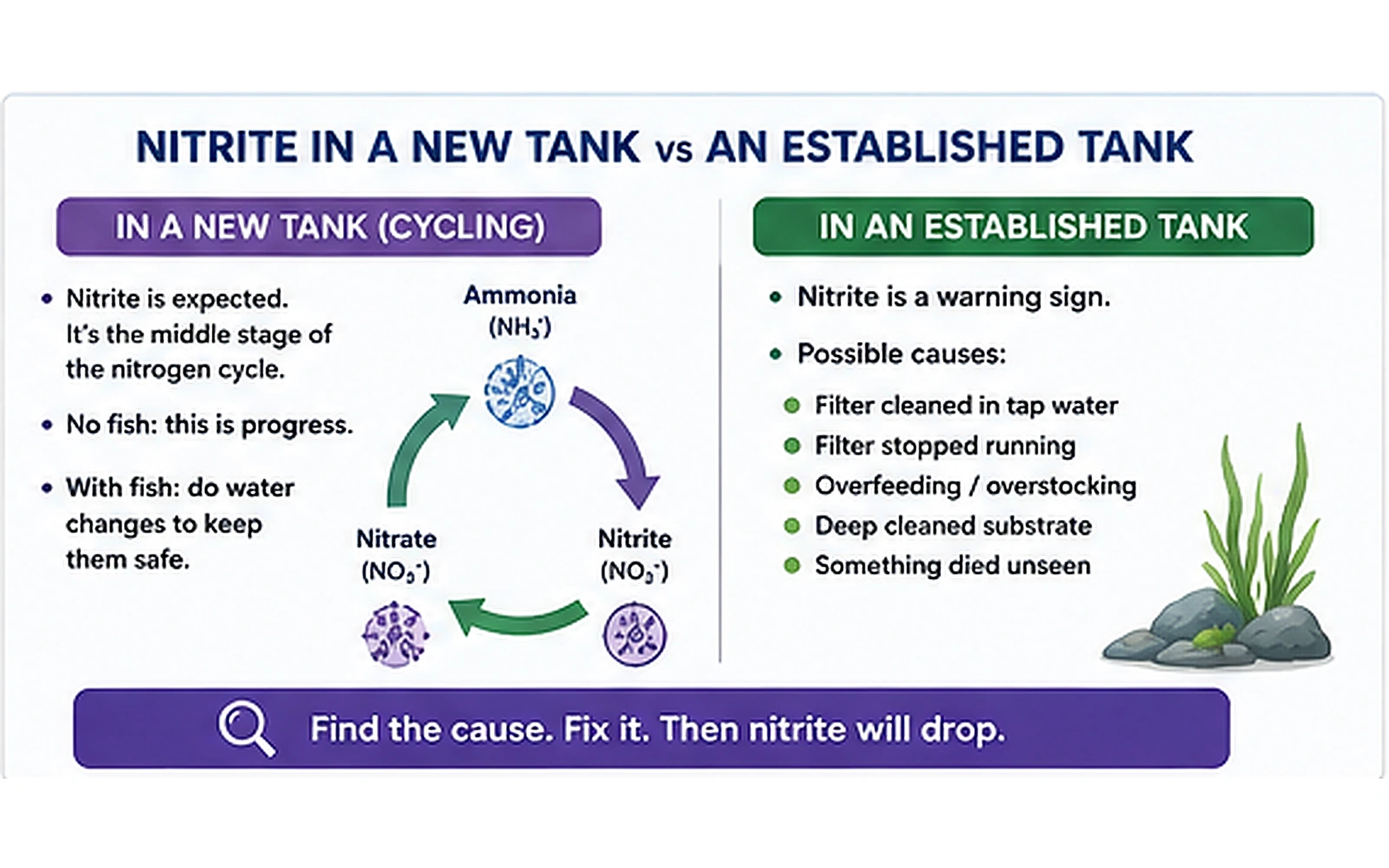
In a tank that is cycling, nitrite above zero is expected. It is the middle stage: ammonia-eating bacteria appear first and produce nitrite, and the bacteria that consume nitrite take longer to establish, which is why nitrite typically sits high for a while before falling. The nitrogen cycle explained covers the sequence, and nitrite is stuck and will not fall covers the specific case where it stops moving. If there are no fish in the tank, this is progress rather than a problem. If there are fish, the water changes above are what keeps them safe until the second colony catches up.
In an established tank that read zero last month, nitrite is a signal that the second half of your filtration has lost ground. The usual causes are the same ones that produce an ammonia reading: filter media cleaned in tap water or replaced, the whole substrate deep-cleaned at once, a filter that stopped running, a sudden increase in stocking or feeding, or something dying unnoticed. Find which of those happened, because dilution handles today and the cause decides tomorrow.
Why There Is No Safe Nitrite Number Here
You will find thresholds published elsewhere. This site does not publish one, for the same reason it publishes no safe ammonia level.
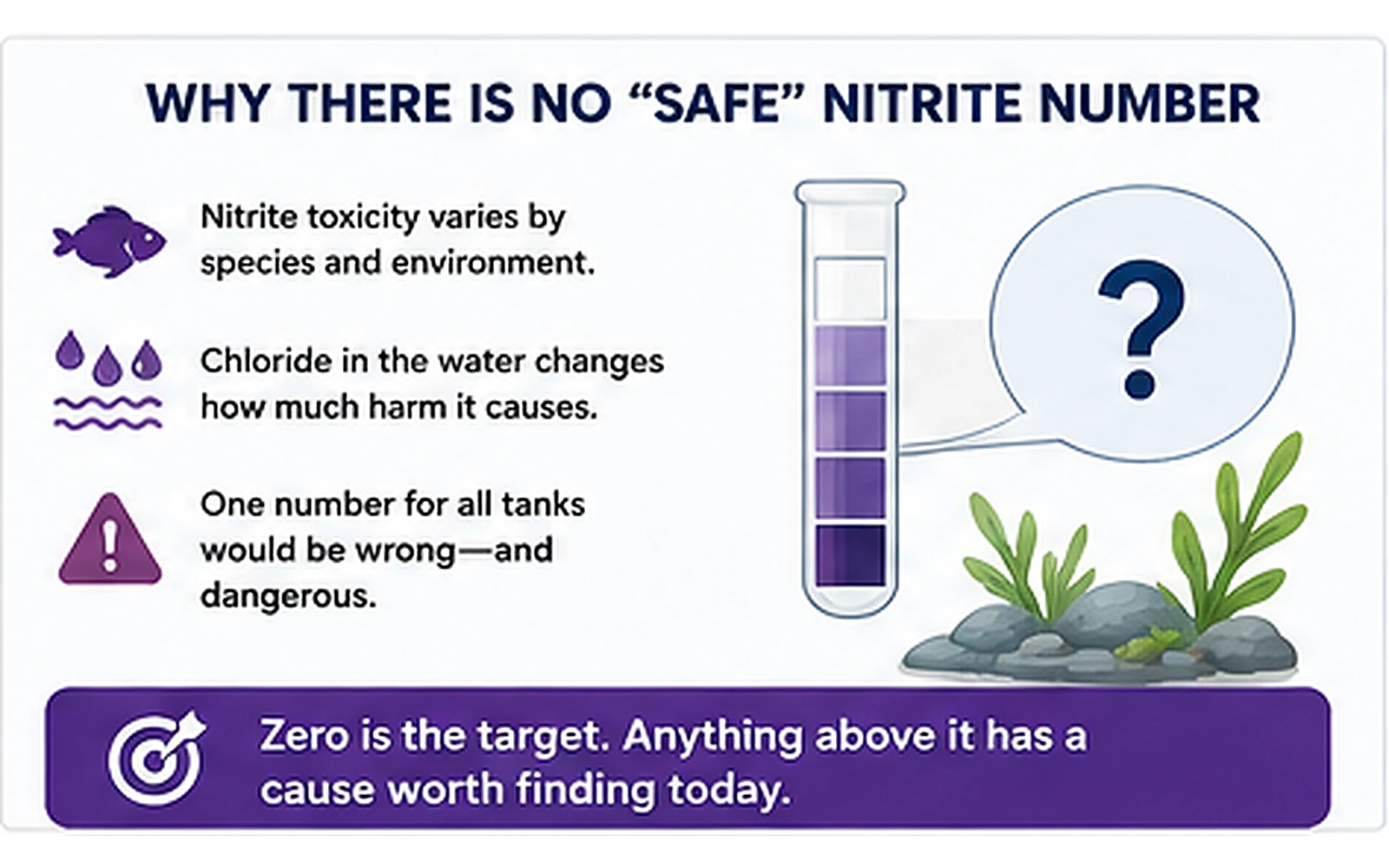
Nitrite toxicity is not a fixed property. Research summarized by the Global Seafood Alliance describes it as varying by species and by environmental conditions, and the chloride already present in the water is one of the factors that changes how much harm a given concentration does. A single number that ignores species and water chemistry would be reassuring and wrong, and the direction it would be wrong in is the dangerous one.
Zero is the target. Anything above it in a tank with fish has a cause worth finding today.
FAQ
Is nitrite or nitrate more dangerous in a fish tank?
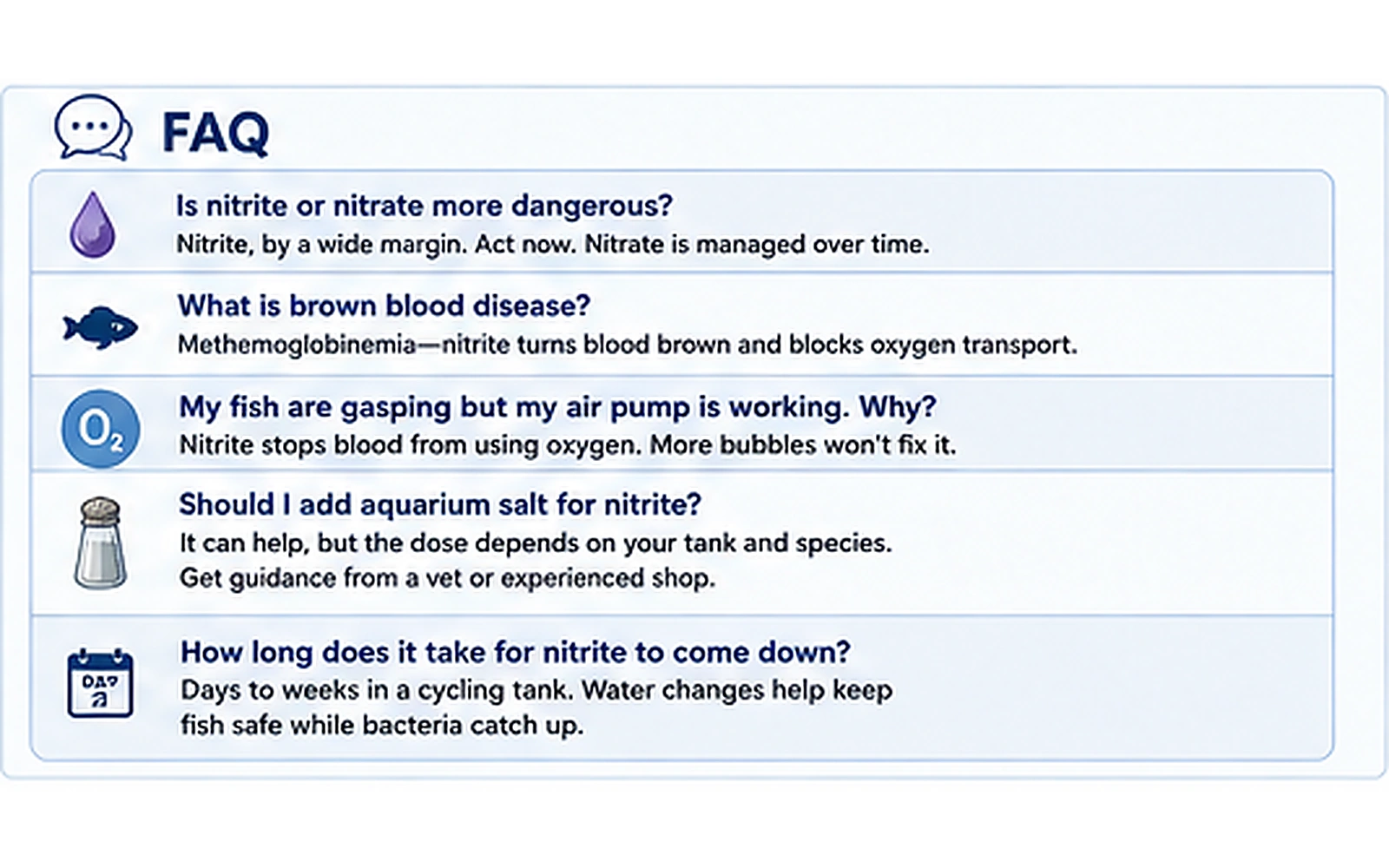
Nitrite, by a wide margin. It disrupts oxygen transport in the blood at low concentrations, while published freshwater nitrate guidance works in tens of mg/L as a management range rather than an emergency threshold. Nitrite needs action today; nitrate is managed with routine water changes, as covered in aquarium nitrate levels.
What is brown blood disease?
The common name for methemoglobinemia, where nitrite converts hemoglobin into a form that cannot carry oxygen, turning the blood brown. It is a documented mechanism of nitrite poisoning. Whether it is what is happening in a specific tank is a question for an aquatic veterinarian, not a web page.
My fish are gasping but my air pump is working. Why?
Nitrite poisoning produces exactly this picture, because the oxygen in the water is normal and the fish's blood cannot carry it. More aeration does not correct it. Test the water, dilute, and treat visible distress as an emergency.
Should I add aquarium salt for nitrite?
Chloride does compete with nitrite uptake and the approach is standard in aquaculture, but the amount depends on tank volume, the reading and the species you keep, and several common aquarium fish and plants tolerate salt poorly. This site does not publish doses. Ask an aquatic veterinarian or an experienced local shop who can ask about your specific tank.
How long does it take for nitrite to come down?
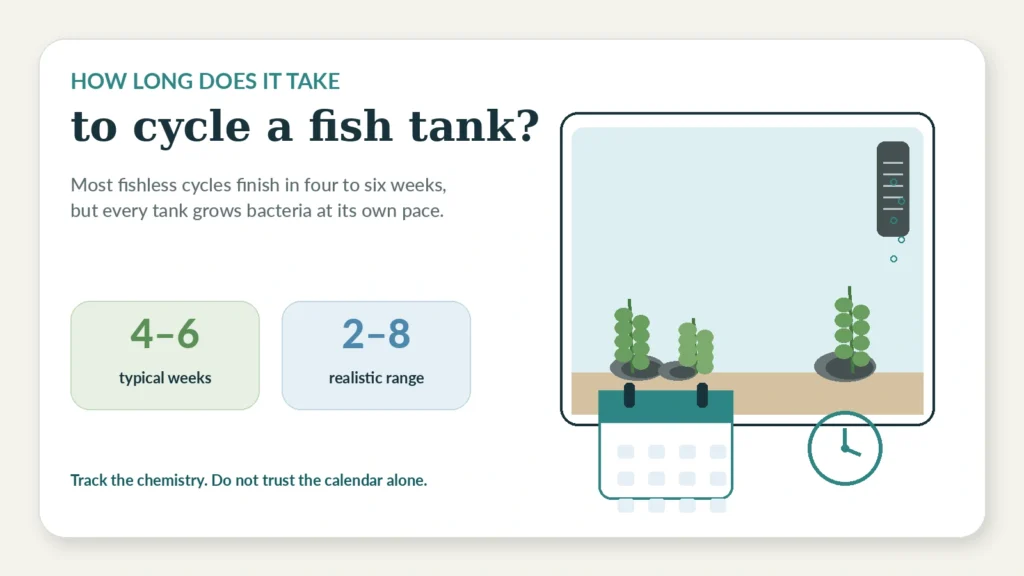
It falls when the bacteria that consume it have grown enough to keep up, which is a matter of days to weeks in a cycling tank rather than hours. Water changes hold the concentration down in the meantime; they do not speed up the colony.