If fish are already living in a tank that has not finished cycling, the priority shifts to daily testing and frequent, threshold-triggered partial water changes to keep ammonia and nitrite diluted while the bacteria colony establishes around them. This is called fish-in cycling, and it works, but it asks more of you, not less, than the fishless method: daily attention, more water changes, and real ongoing risk to the fish that is not present in a fishless cycle at all. If you are reading this before buying fish, fishless cycling is the method we recommend, for the fish's sake, not yours. If the fish are already home, do not panic and do not tear the tank down; the routine below reduces the harm from here.
Why We Recommend Fishless Cycling First
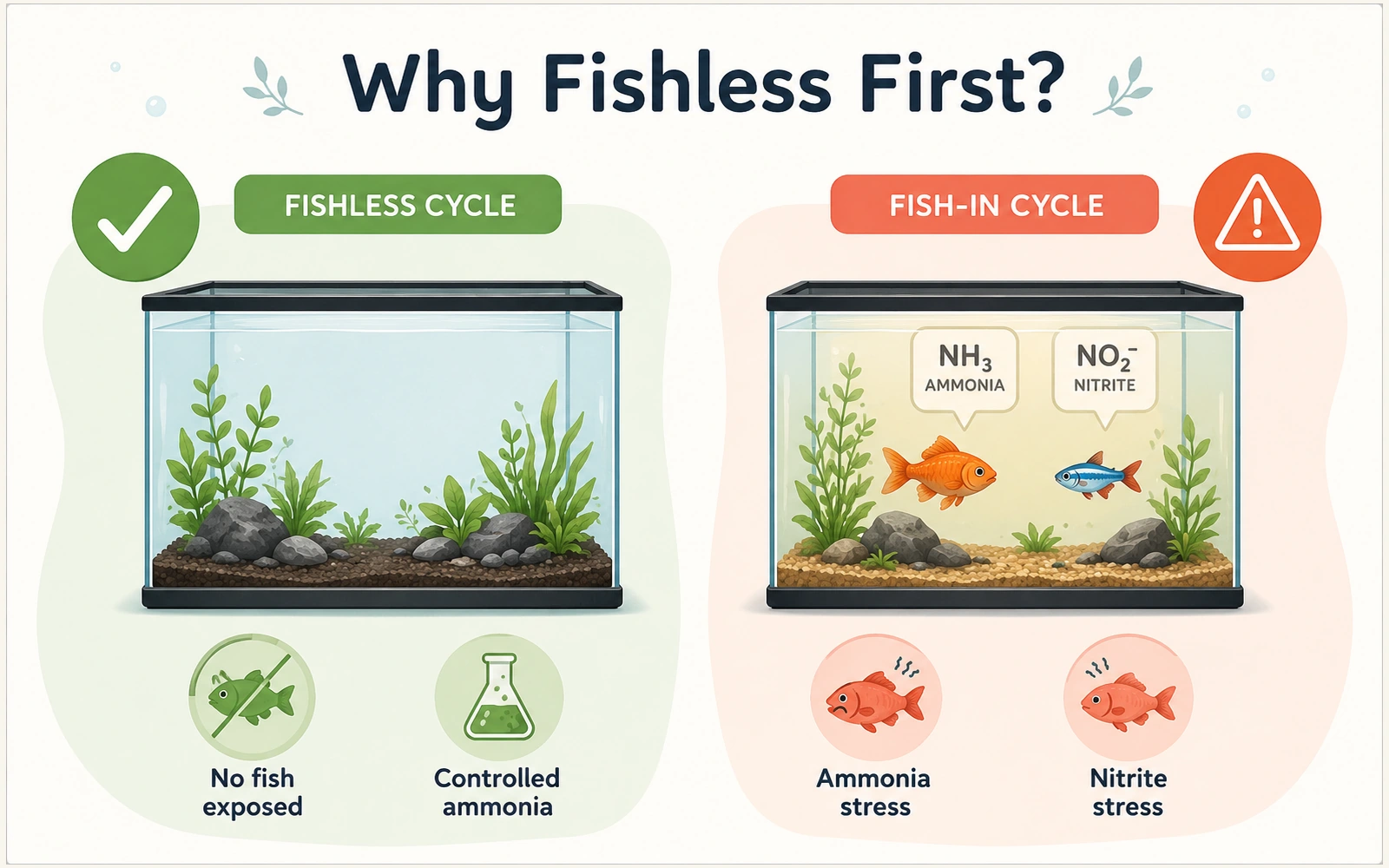
This needs to be said plainly rather than glossed over: during a fish-in cycle, the fish are living inside the exact ammonia and nitrite spike the cycling process produces. That is not a theoretical risk. Ammonia damages gill tissue, and nitrite interferes with a fish's blood carrying oxygen properly, and both are elevated by design during this process, because the fish's own waste is what is feeding the bacteria colony you are trying to grow. A fishless cycle removes fish from that exposure entirely, which is why it is the default recommendation on this site and across most careful hobby guidance. None of what follows changes that recommendation. It exists because plenty of people arrive at this decision after the fish are already home, often without knowing cycling was something they needed to do first, and that reader deserves a real, harm-reducing answer rather than a lecture.
The Daily Testing and Water-Change Routine
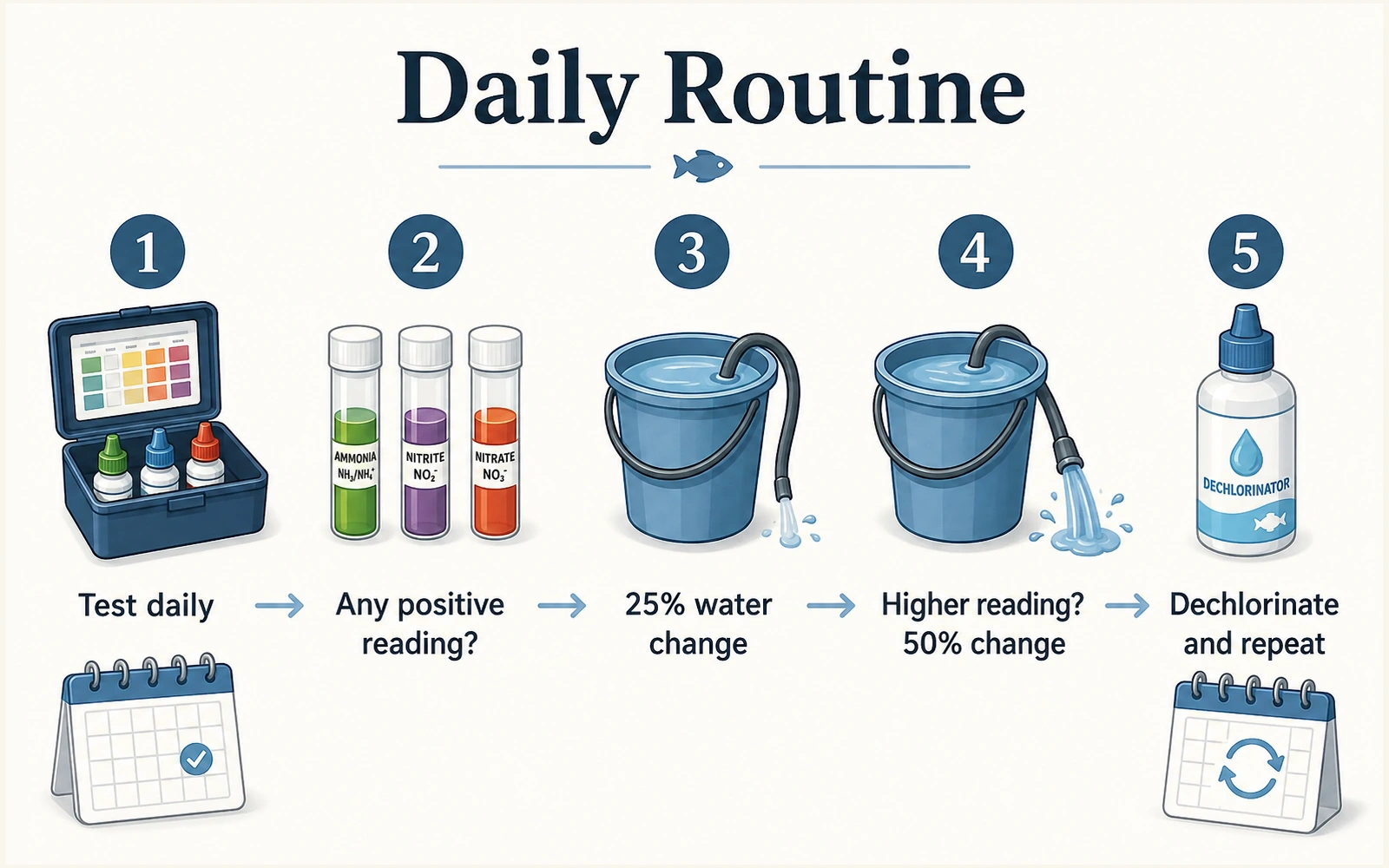
The core of a fish-in cycle is simple to describe, even though it takes real daily commitment to carry out:
- Test ammonia and nitrite every day, at the same time if possible, using a liquid test kit rather than paper strips.
- If either reads positive at all, a moderate partial water change (commonly reported around 25% of tank volume) helps dilute the toxin without shocking the fish with too large a swing at once.
- If ammonia or nitrite climbs to a higher reading (some hobby guidance points to roughly 1 ppm as a common trigger point for a larger response), a bigger partial change, in the region of 50%, brings the concentration down more decisively. These specific percentages are commonly reported starting points across hobby guidance, not a fixed rule for every tank; when in doubt, a larger change that dilutes the toxin further is generally the safer direction, so long as temperature is matched and the water is properly conditioned first.
- Treat every drop of new water with a dechlorinator before it goes anywhere near the tank, and match its temperature closely to the tank you are adding it to, exactly as you would for any routine water change.
- Keep this up daily until the tank passes the same completion test used for a fishless cycle: ammonia and nitrite both at zero, with nitrate present, sustained over consecutive days rather than a single good reading.
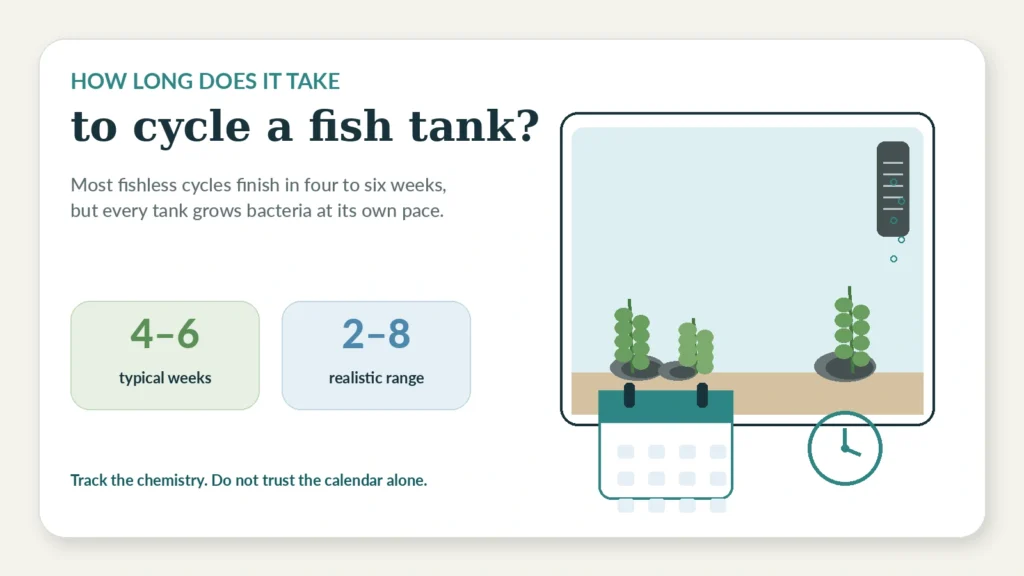
This is genuinely more work than a fishless cycle, not less, and it continues for as long as the bacteria colony takes to establish, which can be several weeks.
Why This Slows the Cycle Down
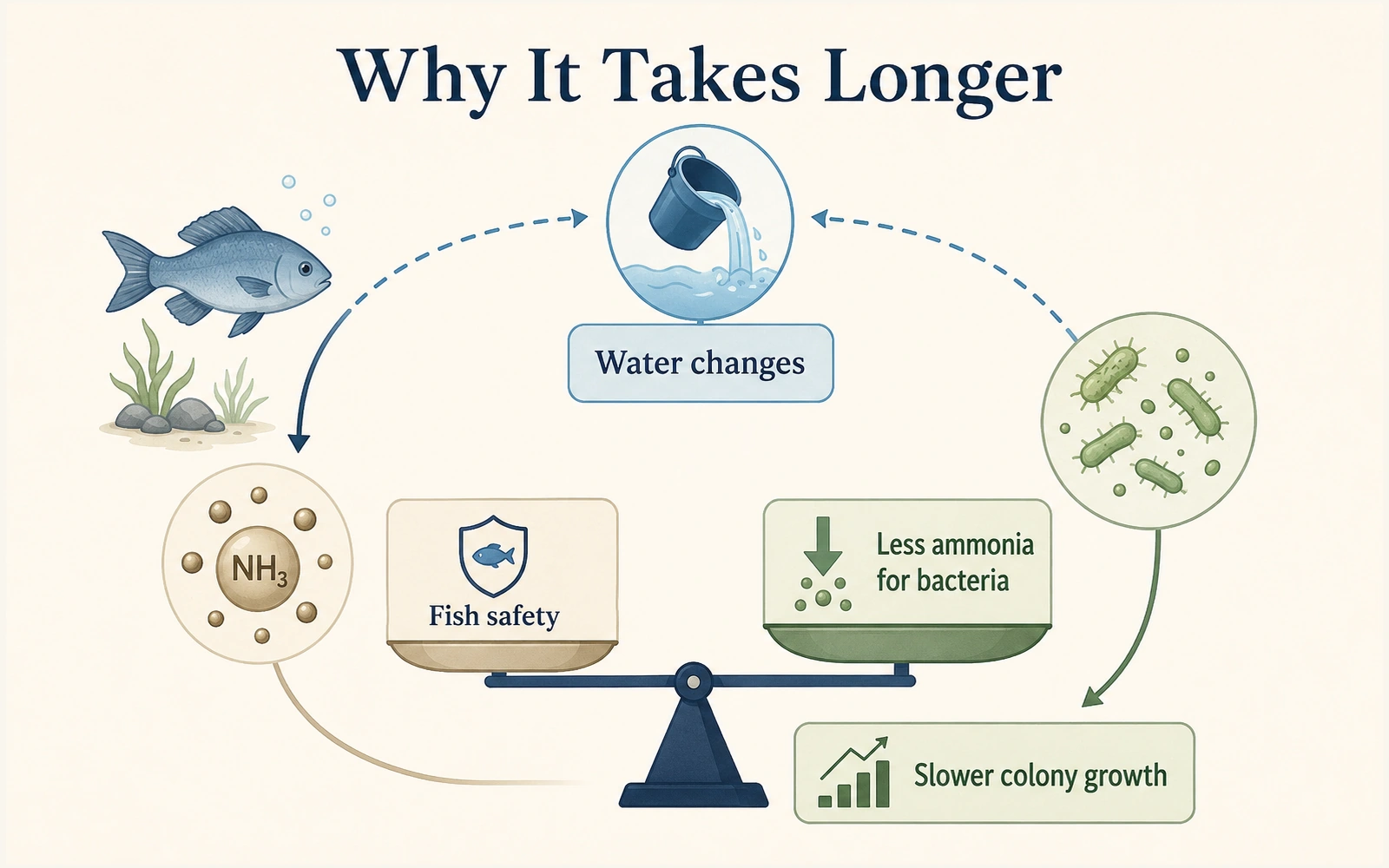
There is a real trade-off here worth understanding, not just following blindly. The bacteria you need are feeding on ammonia. Every water change that dilutes ammonia to protect your fish is also, at the same time, reducing the food supply the bacteria colony needs to grow. This is the opposite of a fishless cycle, where you can push ammonia to a steady, moderate level specifically because no fish is exposed to it. In a fish-in cycle you are deliberately trading cycle speed for fish safety, over and over, every single day, and that is exactly the trade-off that makes fishless cycling worth doing whenever it is genuinely an option. The mechanism behind why the bacteria need a steady ammonia supply is covered in more depth in the nitrogen cycle explainer.
Species That Tend to Tolerate This Better, and the Honest Limits of That
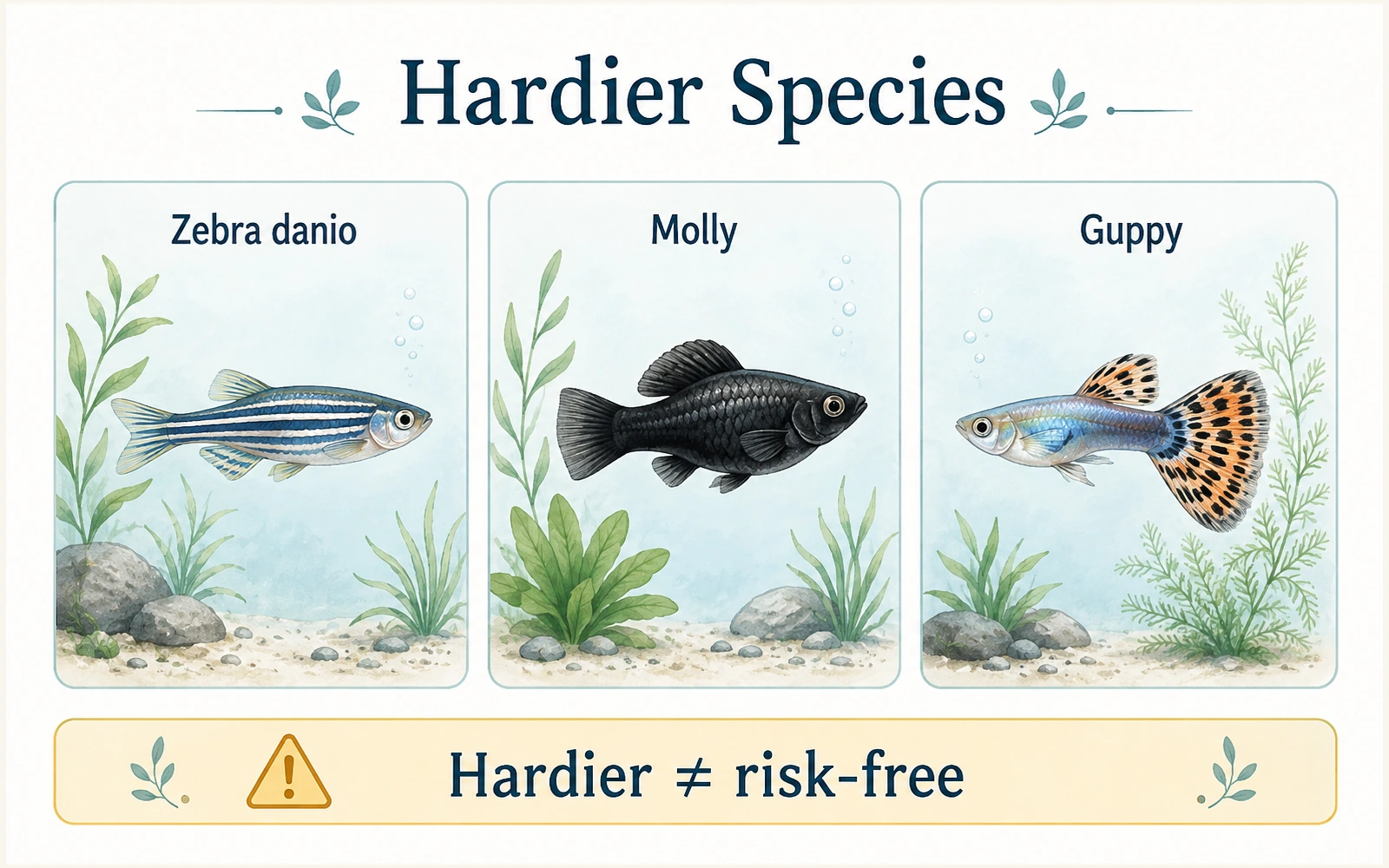
Certain hardy species, commonly cited examples include zebra danios, mollies, and guppies, are frequently reported as more tolerant of the stress a fish-in cycle involves than more sensitive species. This is worth knowing if you are choosing which fish to add to an uncycled tank in the first place. It is not a guarantee. No fish is fully protected from ammonia and nitrite exposure, hardy species included, and "more tolerant" describes a comparative pattern reported across hobby experience, not a promise that a specific fish will be fine. The testing and water-change routine above matters regardless of which species is in the tank.
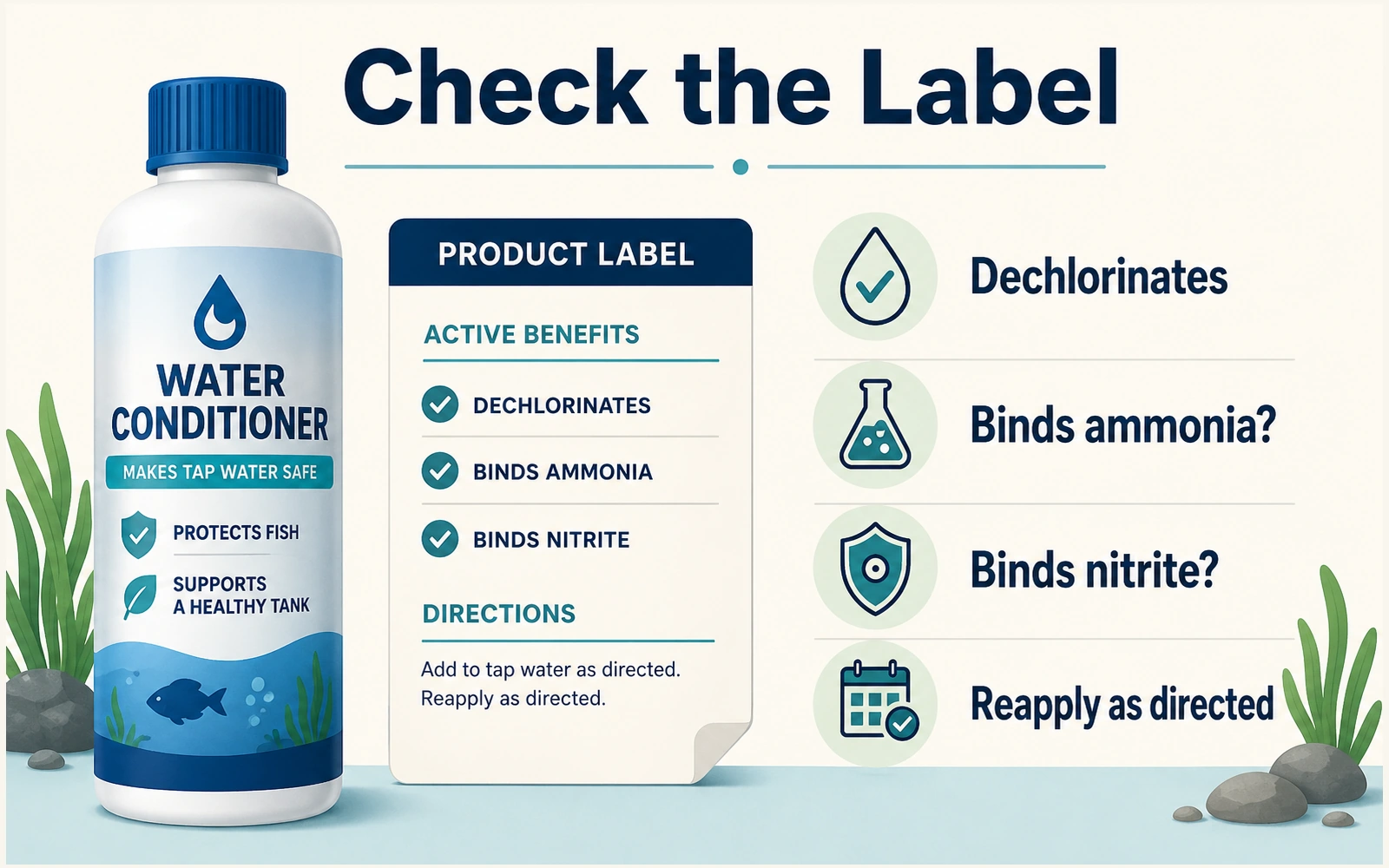
Dechlorinators and Conditioners: What to Check on the Label
Some water conditioners are formulated to temporarily bind or neutralize ammonia and nitrite in addition to their normal job of removing chlorine and chloramine. If you are using one of these products during a fish-in cycle, read its own label carefully for how it is meant to be used in this specific situation, including how often it can be safely reapplied. Do not treat a general estimate from any article, including this one, as a substitute for that label, since formulations and safe reapplication intervals vary by product and this guide will not state a specific dosing schedule for any commercial conditioner.
When This Becomes an Emergency
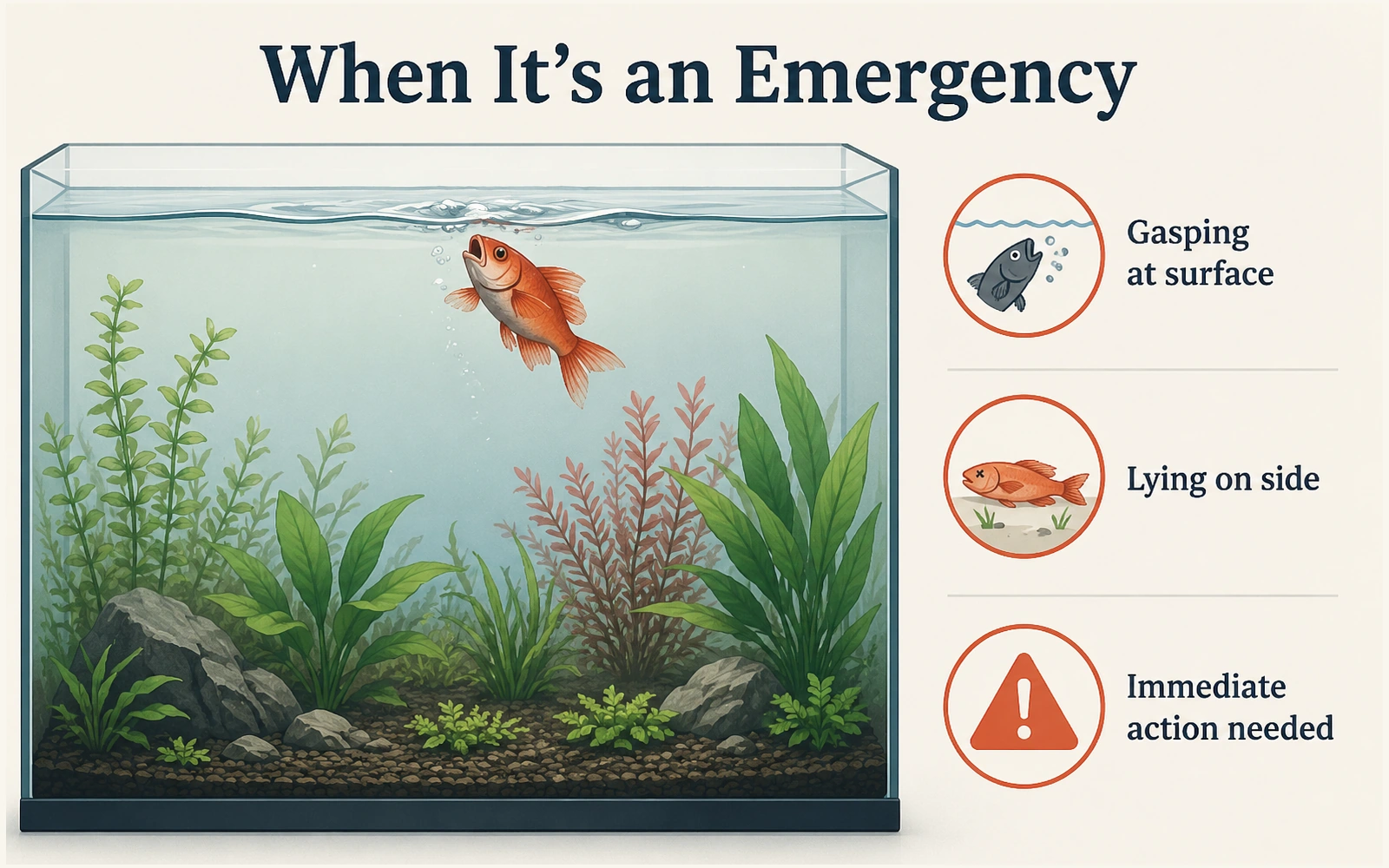
Routine fish-in cycling, done with daily testing and the water-change routine above, is a managed, if genuinely stressful, process. It is a different situation entirely if a fish is visibly gasping at the surface, lying on its side, or otherwise showing acute distress right now. That calls for immediate action, not a daily testing schedule, and aquarium emergency help walks through the calm, immediate steps. Once the immediate situation is stable, come back to the daily routine above and continue it until the tank passes its completion test. Once a fish-in cycle finishes and the tank is stable, ongoing maintenance shifts to a normal water-change schedule, covered in how often to change aquarium water.
FAQ
Is fish-in cycling safe?
It carries real risk that a fishless cycle does not, because fish are exposed to ammonia and nitrite while the bacteria colony establishes. It can be done with reduced harm through daily testing and frequent partial water changes, but it is not risk-free, and fishless cycling is the recommended method whenever it is genuinely an option.
How often should I do water changes during a fish-in cycle?
Test ammonia and nitrite daily. A moderate partial change is a common response to any positive reading, with a larger change commonly used once levels climb further. Exact percentages vary by source and by tank; a larger, properly conditioned and temperature-matched change is generally the safer direction when in doubt.
Why does fish-in cycling take longer than fishless cycling?
Frequent water changes dilute the ammonia the bacteria need to grow, which slows the colony's establishment. You are trading cycle speed for fish safety throughout the process, which is the core reason fishless cycling is recommended whenever possible.
Are some fish better suited to fish-in cycling?
Hardier species such as zebra danios, mollies, and guppies are commonly reported as more tolerant of the stress involved than more sensitive species. This is a comparative pattern, not a guarantee; no fish is fully protected from ammonia and nitrite exposure.
What if I already have fish in an uncycled tank and one looks distressed right now?
Do not wait for a scheduled testing time. Go to the aquarium emergency help guide for the immediate steps, and return to the daily testing and water-change routine once the fish is stable.