Fish crowding at the top and breathing hard are not drowning, but they are struggling to get oxygen, and it needs attention now. Do two things immediately: increase surface movement, and test ammonia and nitrite. Surface agitation is free, instant, and helps in most of the possible causes; the test tells you whether the water is the reason. This is one of the situations the emergency check order exists for, and it usually resolves to one of a small number of causes.
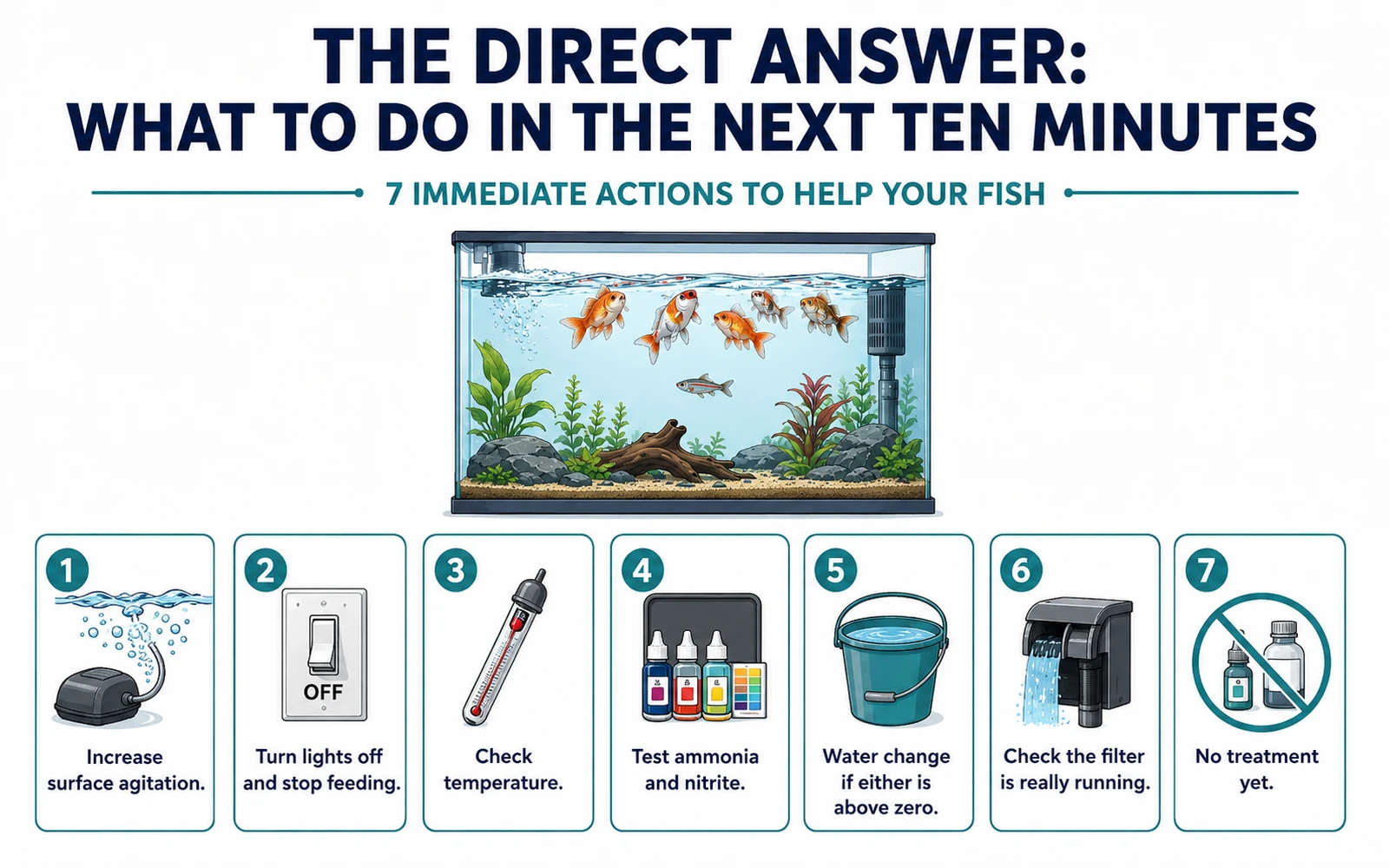
The Direct Answer: What to Do in the Next Ten Minutes
- Increase surface agitation. Point the filter outflow at the surface so it ripples, lower the water level slightly so the return splashes, or switch on an air pump if you have one. Gas exchange happens at the surface, and more movement means more of it.
- Turn the lights off and stop feeding.
- Check the temperature with a thermometer. Warm water holds less oxygen while raising the fish's demand for it.
- Test ammonia and nitrite.
- If either reads above zero, do a partial water change with dechlorinated, temperature-matched water. Practical Fishkeeping's guidance for gasping fish is an immediate substantial change, around half the volume, topped up with dechlorinated tap water, while you work out why the biological filter is not keeping up.
- Check the filter is actually running and moving water, not merely powered.
- Do not add any treatment while you are still finding the cause.
Then read on, because what happens next depends on which of two very different problems you have.
Two Different Problems That Look Identical
This is the distinction that decides whether your response works, and most articles skip it.
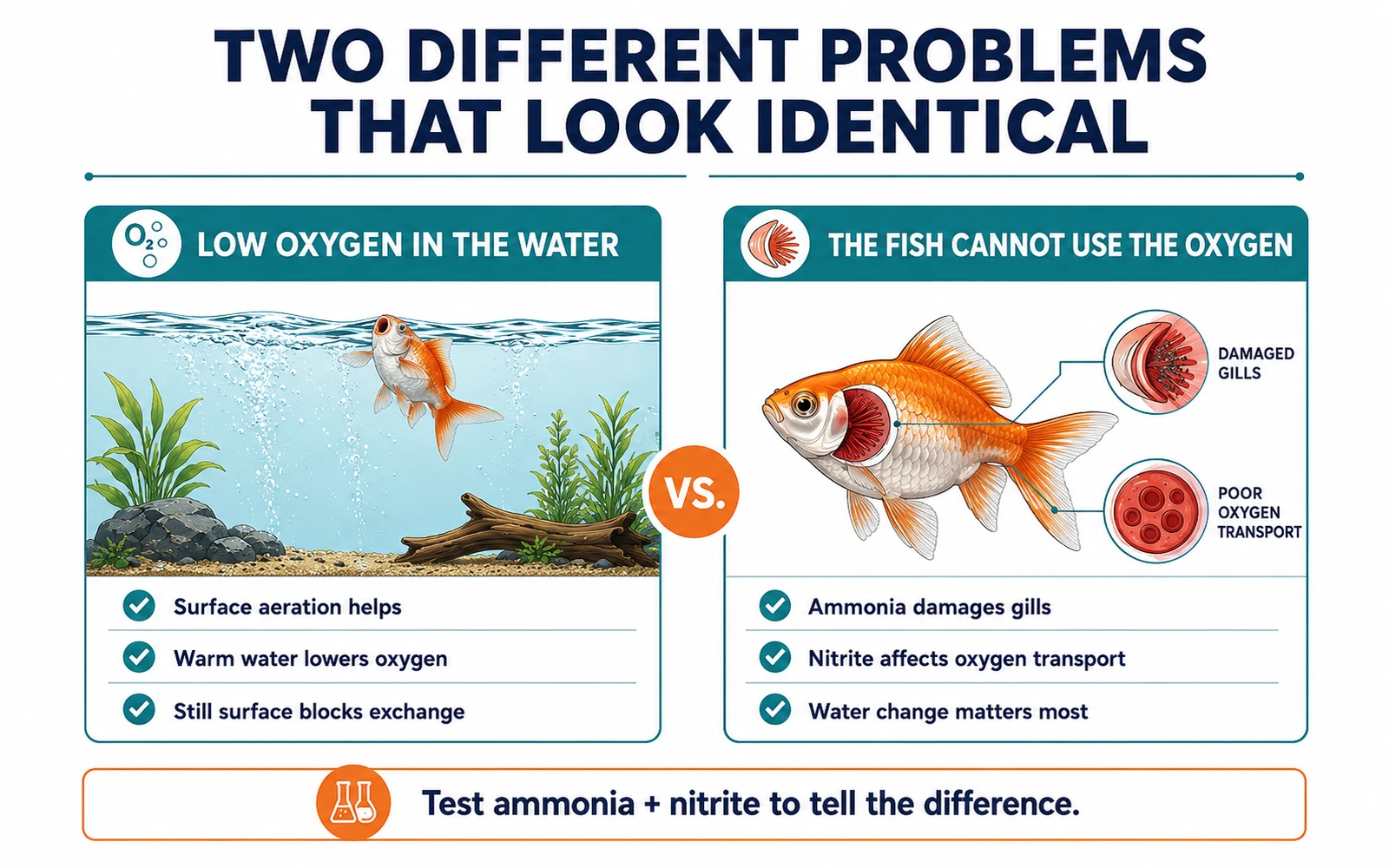
Either the water does not contain enough oxygen, in which case the fish are doing the sensible thing by going to the surface where oxygen concentration is highest, and adding aeration genuinely fixes it.
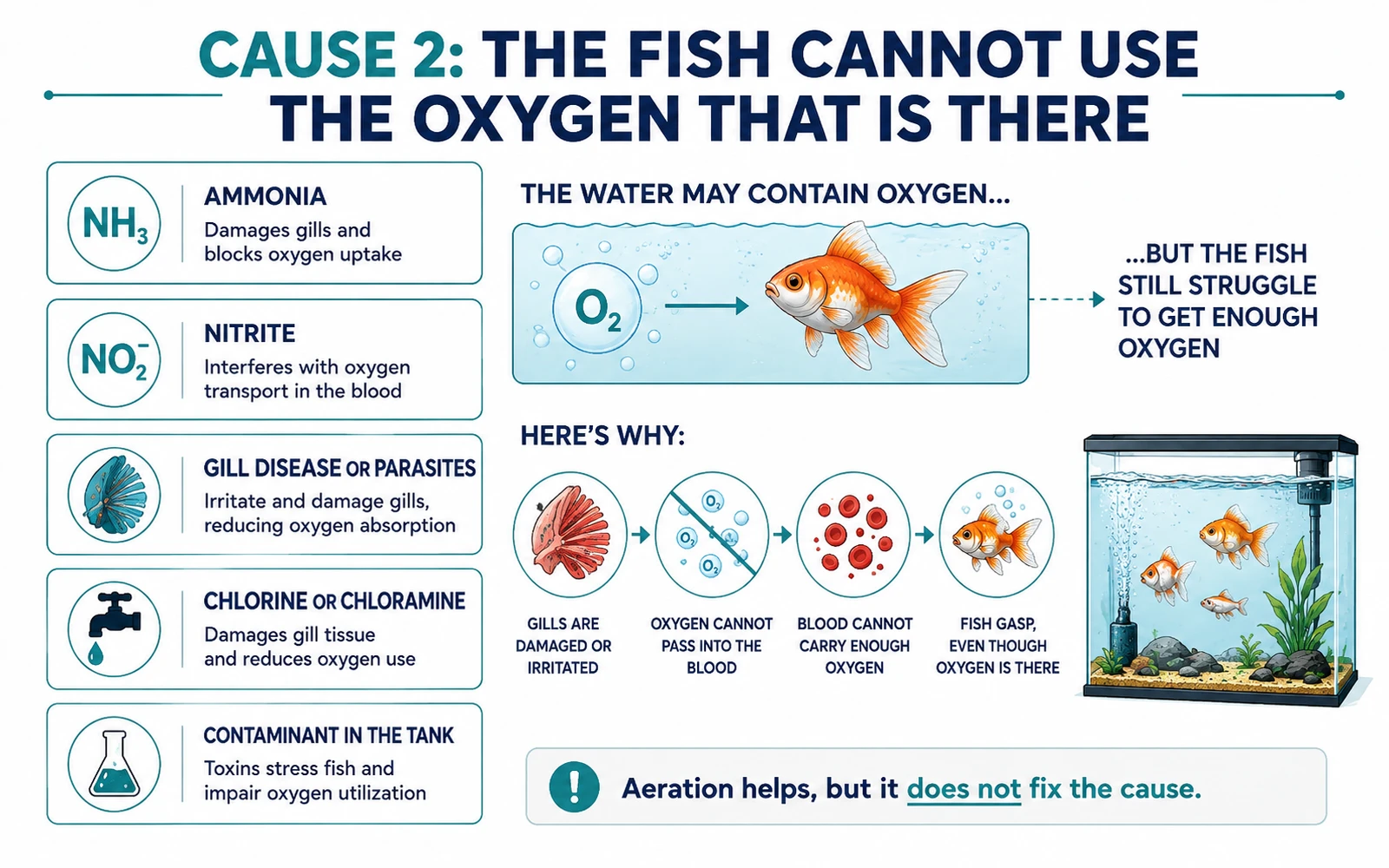
Or the water contains plenty of oxygen and the fish cannot use it, because their gills are damaged or their blood cannot carry it. The behavior looks exactly the same. Aeration in this case does no harm and does not solve the problem, and a keeper who adds an air stone and waits is losing time.
The tests tell you which. If ammonia and nitrite are zero, look at the oxygen side. If either is above zero, you are probably in the second case, and the water change is the intervention that matters.
Cause 1: There Is Not Enough Oxygen in the Water
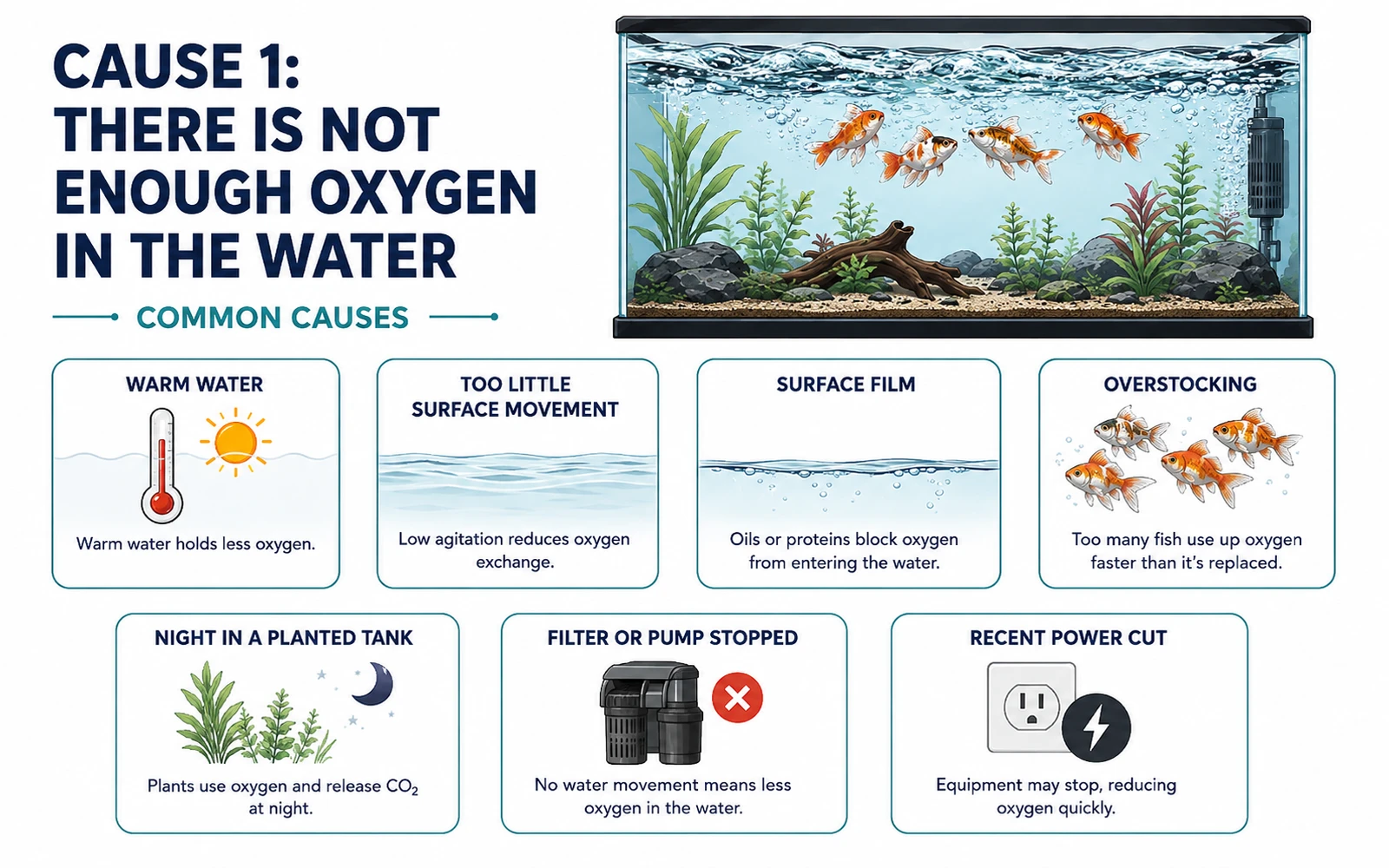
Low dissolved oxygen is the most common single reason fish gasp at the surface. The usual causes:
- Warm water. Warmer water holds less dissolved oxygen and simultaneously raises fish metabolism, so demand goes up as supply goes down. A heatwave, a heater stuck on, or direct sun on the glass will all do it. Aquarium temperature covers managing this.
- Too little surface movement. A filter whose outflow got redirected during cleaning, a spray bar aimed wrongly, or a tank whose surface sits perfectly still. A still surface is a closed door for gas exchange.
- A surface film. An oily or dusty layer across the top physically blocks exchange. Skimming it with a paper towel laid flat on the surface, or increasing agitation, clears it.
- Overstocking. More fish consuming oxygen than the surface can replace, which often shows up first at night.
- Night in a heavily planted tank. Plants consume oxygen in the dark rather than producing it, so a densely planted tank can dip in the early morning hours. Fish gasping only at dawn is a recognizable pattern.
- A filter or pump that has stopped, taking both circulation and surface movement with it.
- A recent power cut, which does the same thing for however long it lasted.
Cause 2: The Fish Cannot Use the Oxygen That Is There
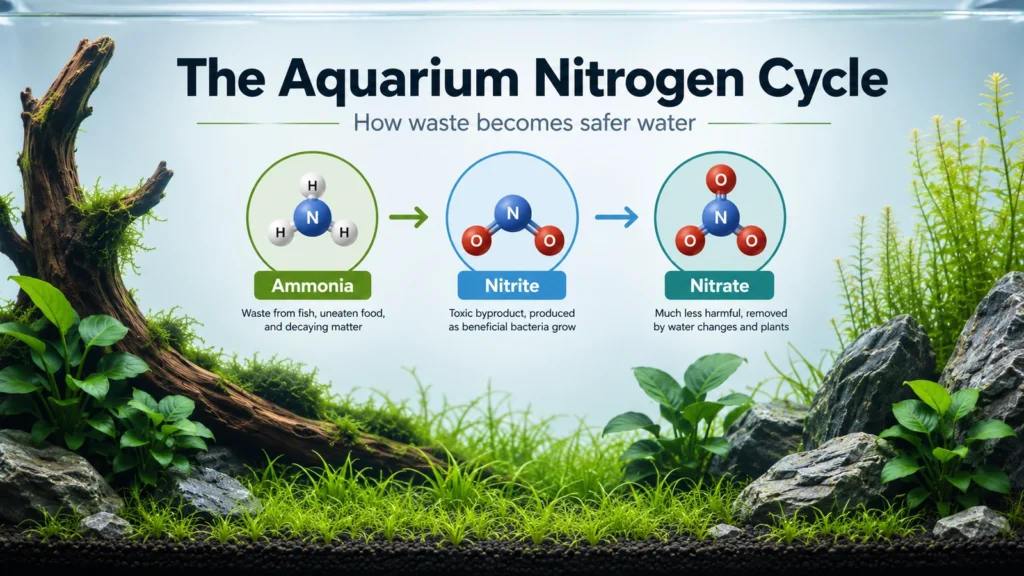
- Ammonia. Exposure irritates and damages gill tissue and prompts excess mucus production, which reduces the effective surface area the gills have for absorbing oxygen. The fish are then short of oxygen in water that has plenty. Ammonia above zero covers the response.
- Nitrite. This one is worth understanding because it explains the most confusing version of this scene. Nitrite interferes with the blood's ability to carry oxygen, so a fish can suffocate in a well-aerated tank with a working air pump. If your aeration is good and your fish are still gasping, nitrite above zero is the page to read.
- Gill disease or parasites. Damage or infestation reduces gill function directly. This is not something to identify from a web page, and it is where veterinary help belongs.
- Chlorine or chloramine in water added without dechlorinator, which damages gill tissue quickly.
- A contaminant that got into the tank: aerosol sprays, cleaning products, paint fumes, or something not aquarium-safe placed in the water.
One Fish or All of Them? What the Pattern Tells You
| What you see | What it points toward |
|---|---|
| All fish, all at once, suddenly | Water quality, temperature, oxygen, or a contaminant. Something changed in the tank as a whole |
| All fish, gradually over days | A slow decline: rising waste, warming weather, a filter losing flow, stocking outgrowing the tank |
| One fish only, others normal | An individual problem rather than a tank problem. Injury, disease, or a fish that is being harassed by the others |
| Only in the early morning | Overnight oxygen dip, common in heavily planted or overstocked tanks |
| Started right after a water change | Chlorine or chloramine, or a large temperature mismatch |
| Started right after a filter clean | Loss of bacteria, with an ammonia or nitrite rise following |
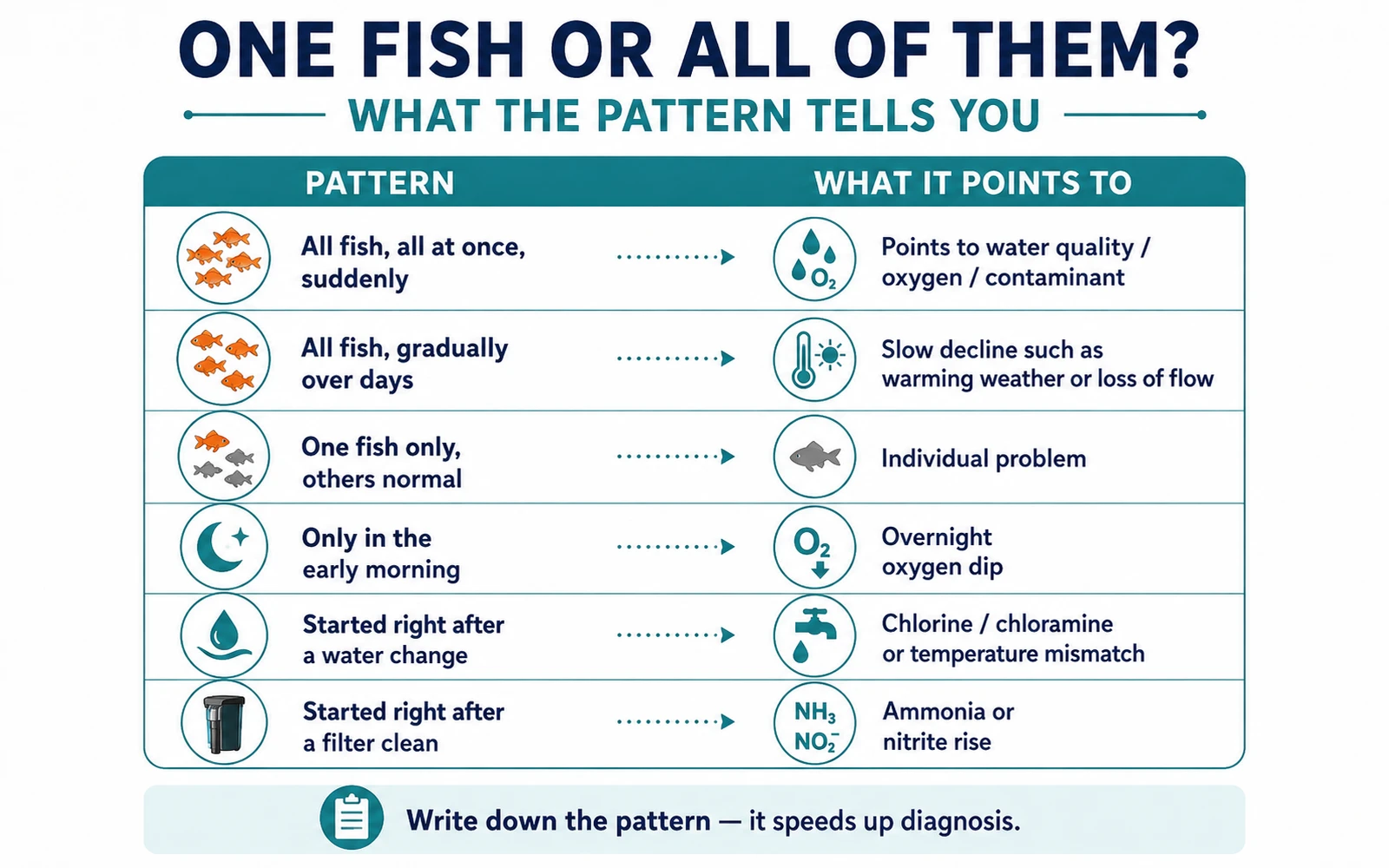
Write down which of these matches. If you end up speaking to a veterinarian, this is the first thing they will ask.
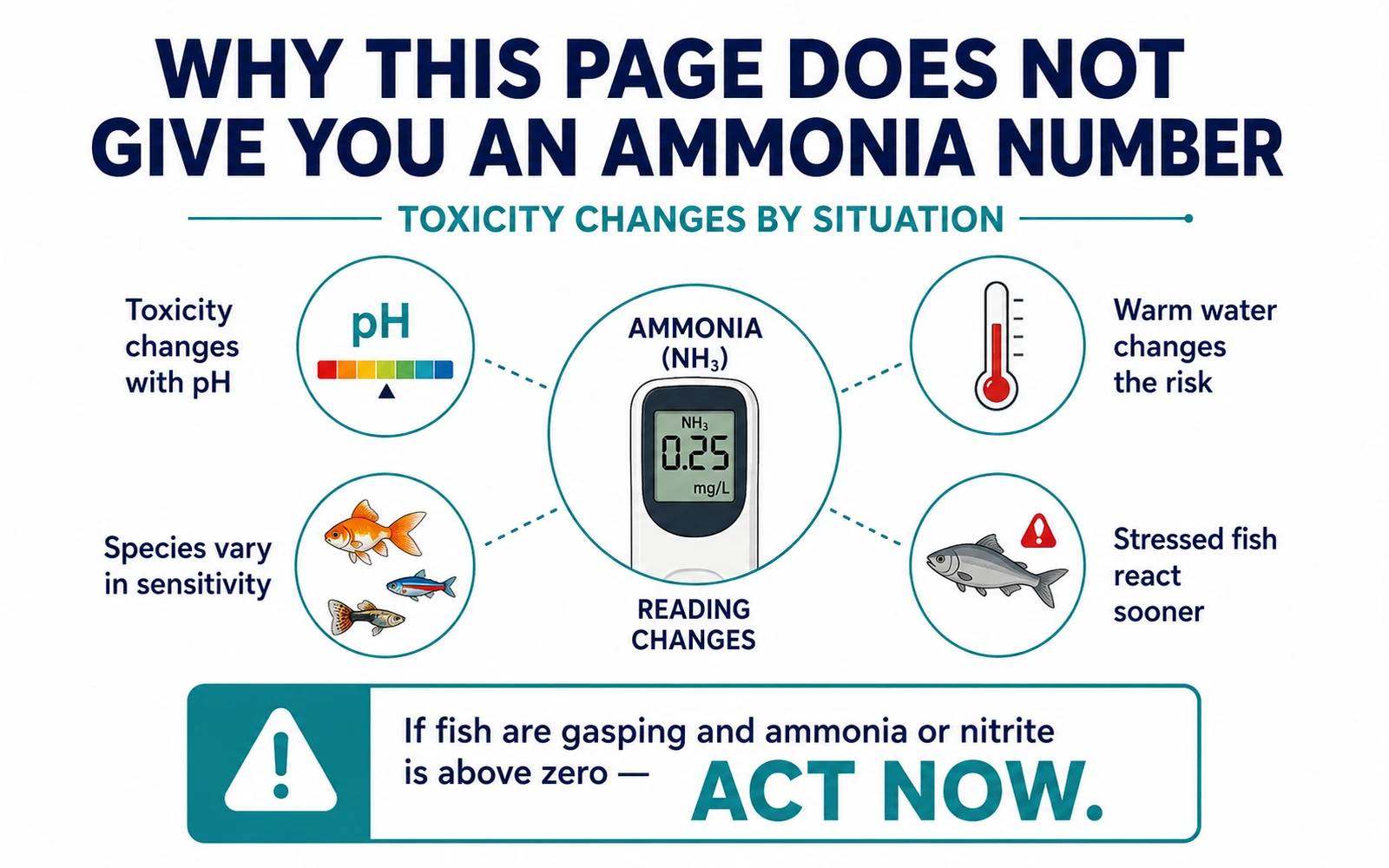
Why This Page Does Not Give You an Ammonia Number
Several pages ranking for this query state a specific ammonia figure at which fish begin to gasp. This site does not publish one, and the reason matters more than the number would.
Ammonia's toxicity is not fixed. It shifts with pH and temperature, so the same test reading means something different in a cool, mildly acidic tank than in a warm, alkaline one. Species differ in sensitivity, and a fish already stressed by something else responds at a lower exposure than a healthy one. Any single "gasping starts at X" figure is therefore reassuring in exactly the situation where reassurance is dangerous, because a reader whose reading sits just below the published line will wait.
The rule that works instead: any ammonia or nitrite above zero, in a tank where fish are gasping, is enough to act on. You do not need a threshold to justify a water change.
What Not to Do
- Do not add medication while the cause is unknown. Several treatments reduce dissolved oxygen further or affect the filter bacteria, which is the opposite of what a gasping tank needs.
- Do not do a huge unmatched-temperature water change. Dilute, but match the temperature; a cold refill is a second shock.
- Do not clean the filter in the middle of this.
- Do not assume a clean test result settles it. Home kits do not measure dissolved oxygen at all, and if your fish are gasping with perfect readings, the oxygen side of this page is where to look.
- Do not net the fish into a bare bucket. An unheated, unfiltered container makes an already struggling animal worse.
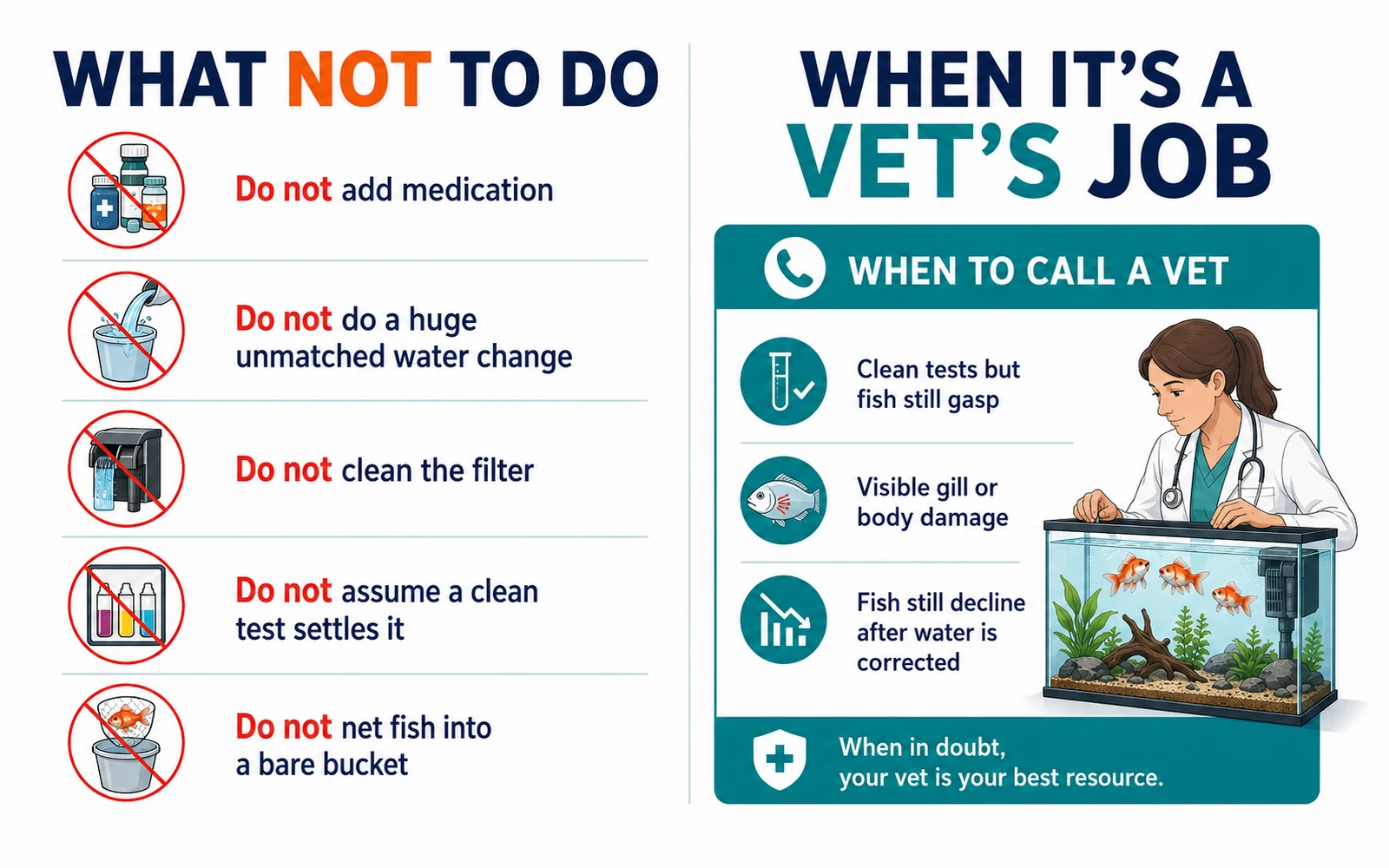
When It Is a Vet's Job
If the water tests clean, aeration is good, temperature is correct, and the fish are still gasping, this has stopped being a water-quality problem. The same is true if you can see damage, growths, discoloration or anything unusual on the gills or body, or if fish continue to decline after the water is right.
That is the point to contact an aquatic veterinarian. They exist, more of them than most keepers realize, and when to contact an aquatic veterinarian, and how to find one covers how to reach one and what to have ready. This site does not diagnose fish and does not publish medication doses, because a dose that depends on tank volume and species is exactly the kind of guess that kills animals.
For the immediate step-by-step while you organize that, this site's standing aquarium emergency help page is written for exactly this moment.
FAQ
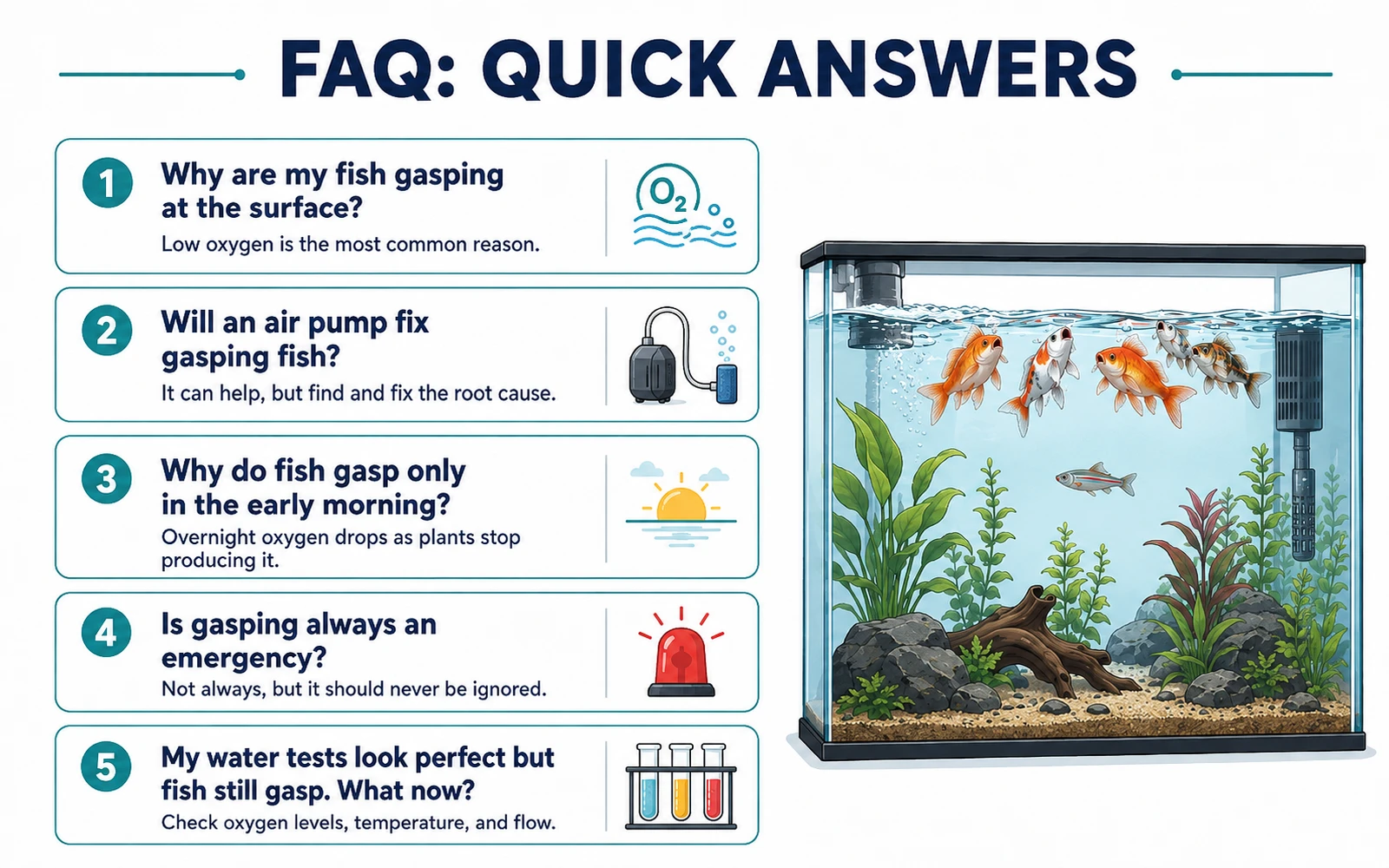
Why are my fish gasping at the surface of the tank? Either the water does not hold enough oxygen, or the fish cannot use the oxygen present because ammonia has damaged their gills, nitrite has affected their blood, or something else is impairing gill function. Increase surface movement immediately and test ammonia and nitrite to tell the two apart.
Will an air pump fix gasping fish? It helps when the problem is low dissolved oxygen, and it does no harm otherwise. It does not fix gasping caused by ammonia, nitrite or gill disease, so do not treat it as the whole answer and wait.
My fish gasp only in the early morning. Why? Plants and other organisms consume oxygen in the dark instead of producing it, so a heavily planted or overstocked tank can reach its lowest oxygen level shortly before the lights come on. More surface agitation overnight is the usual response.
Is gasping always an emergency? Treat it as one. It means the fish are not getting the oxygen they need, whatever the cause, and the interventions that help most are quick and low-risk.
My water tests perfect but my fish are still gasping. What now? Look at the oxygen side, since home kits do not measure dissolved oxygen: check temperature, surface movement, a surface film, stocking and whether the filter is really flowing. If all of that is right and the fish are still struggling, contact an aquatic veterinarian.