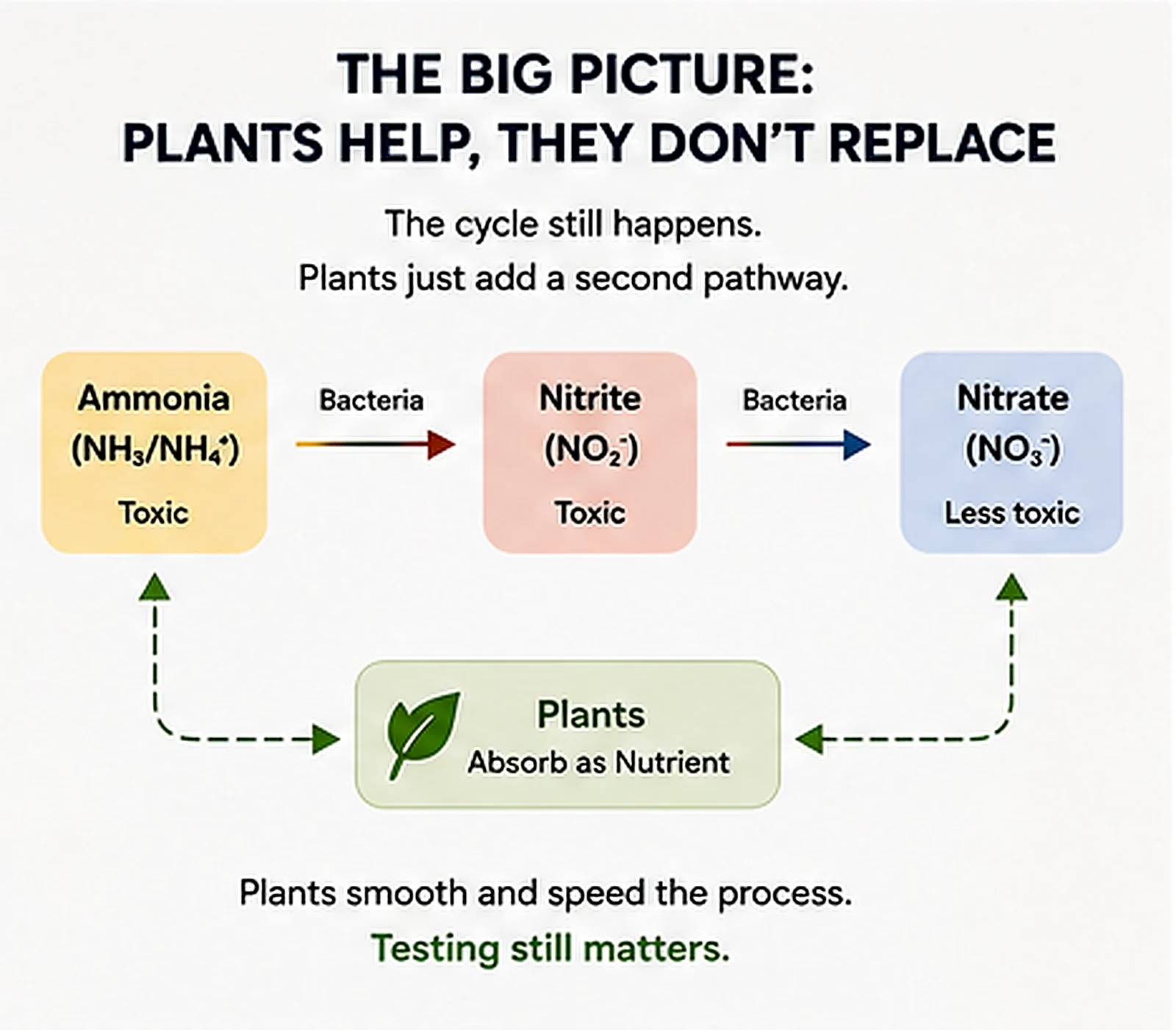
Live plants can genuinely change how a cycle looks, because unlike fish, plants treat ammonia as a nutrient rather than a poison and can absorb it directly through their leaves and roots. A heavily planted, well-lit tank can go through what is often called a "silent cycle," showing little to no visible ammonia or nitrite spike because the plants are consuming it as fast as it appears. Plants speed up and smooth out the process; they do not replace it, and testing still matters just as much as it does in an unplanted tank.
The Direct Answer: Plants Help, They Don't Replace the Process
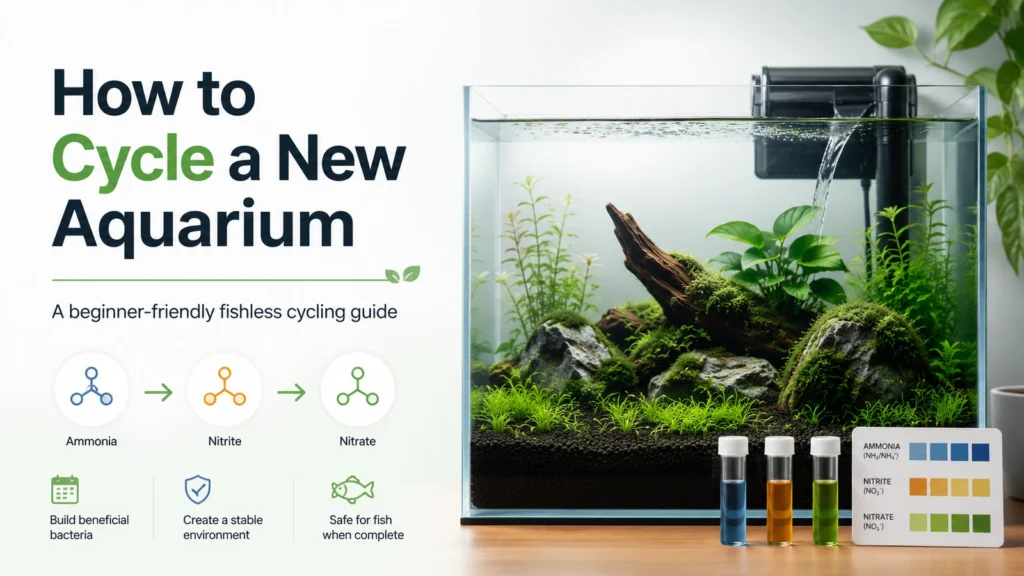
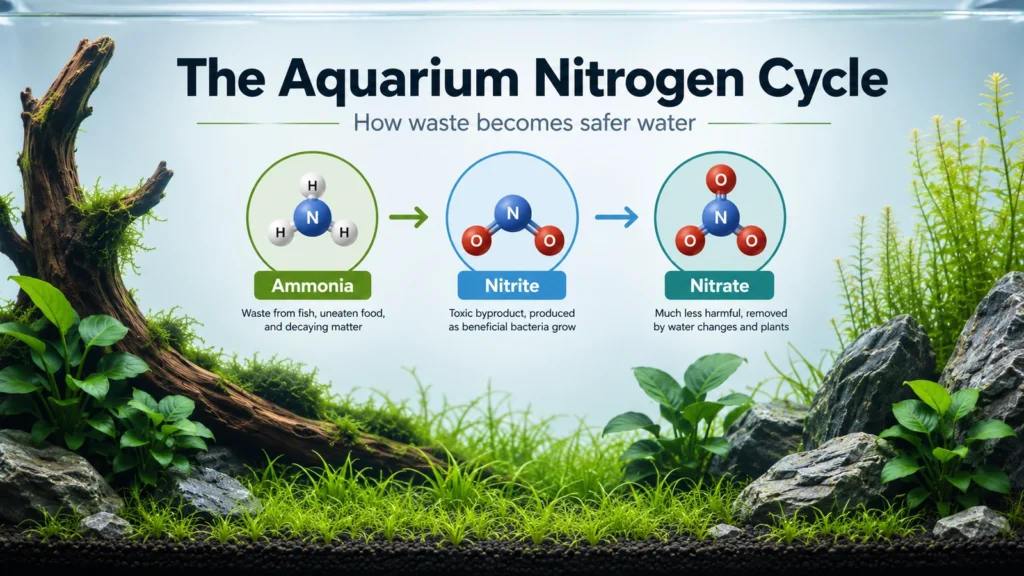
The underlying biology, bacteria converting ammonia to nitrite to nitrate, still needs to happen in a planted tank exactly as it does in any other, described in full in how to cycle a new aquarium. What changes is that plants give the tank a second pathway for consuming ammonia and nitrite alongside the bacteria, which can reduce how high either compound spikes and, in some reported cases, shorten how long the whole process takes. It does not mean fish can safely be added immediately just because plants are present, and it does not mean testing becomes optional.
Why Plants Absorb Ammonia (and Which Plants Actually Do This Well)
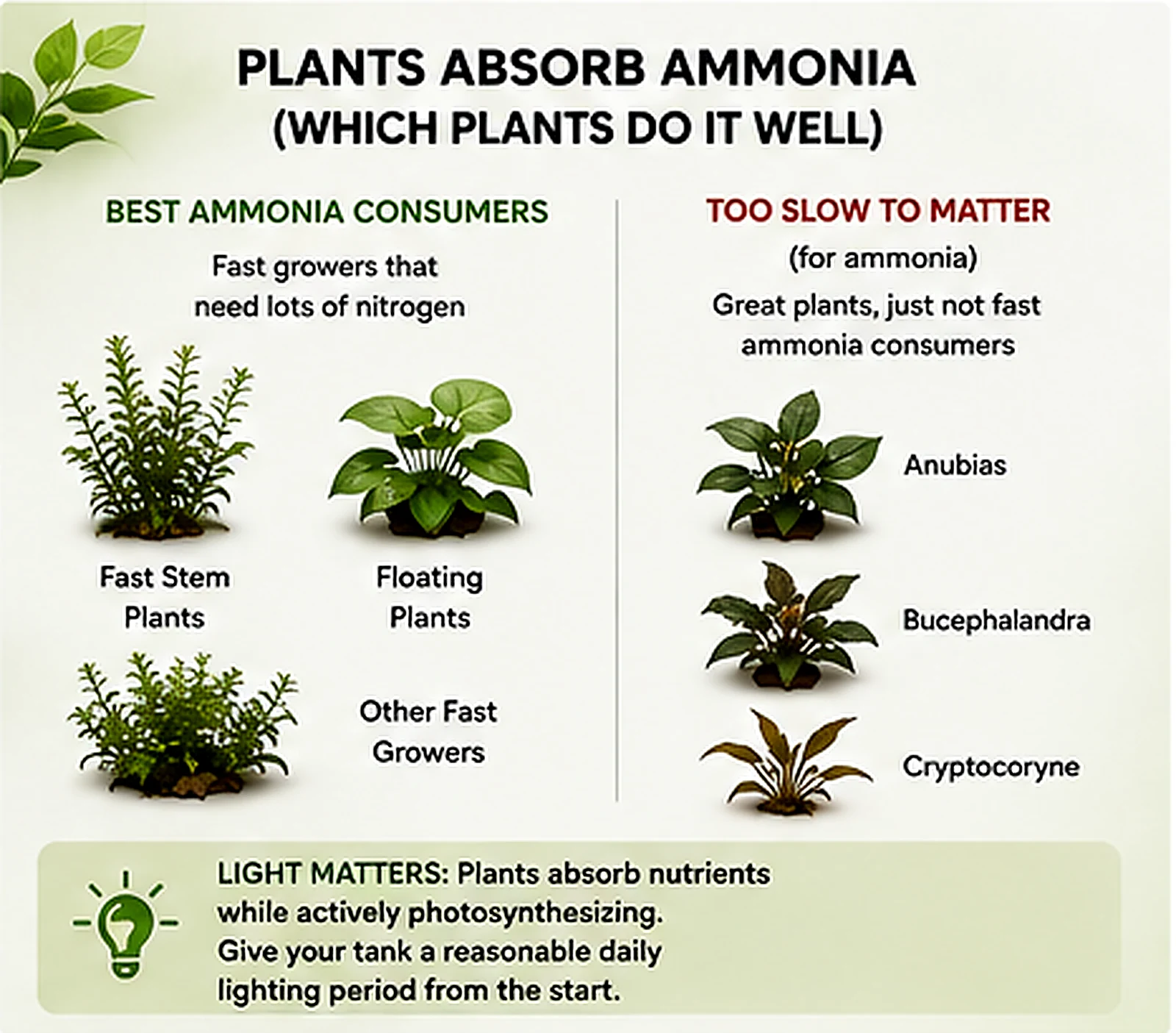
Plants use nitrogen to build their own tissue, and ammonia is a particularly accessible nitrogen source for them, more so than nitrate in many cases. Not all aquarium plants do this at a meaningful rate, though. Fast-growing stem plants and floating plants are commonly cited as effective ammonia consumers because they grow quickly and therefore need a steady, large nitrogen supply. Slower-growing plants such as anubias, bucephalandra, and cryptocoryne are commonly reported as too slow-growing to meaningfully absorb ammonia at a rate that changes a cycle's outcome, even though they remain perfectly good plants for other reasons in a low-tech setup. If ammonia uptake specifically is the goal during the startup period, fast growers and floaters are the ones actually doing that work.
Light matters here too. Plants only absorb nutrients meaningfully while actively photosynthesizing, so a reasonable daily lighting period from the start is part of what makes a silent cycle work; a heavily planted but poorly lit tank will not see the same ammonia-absorbing effect.
The "Silent Cycle": Why Zero Readings Don't Mean Nothing Is Happening
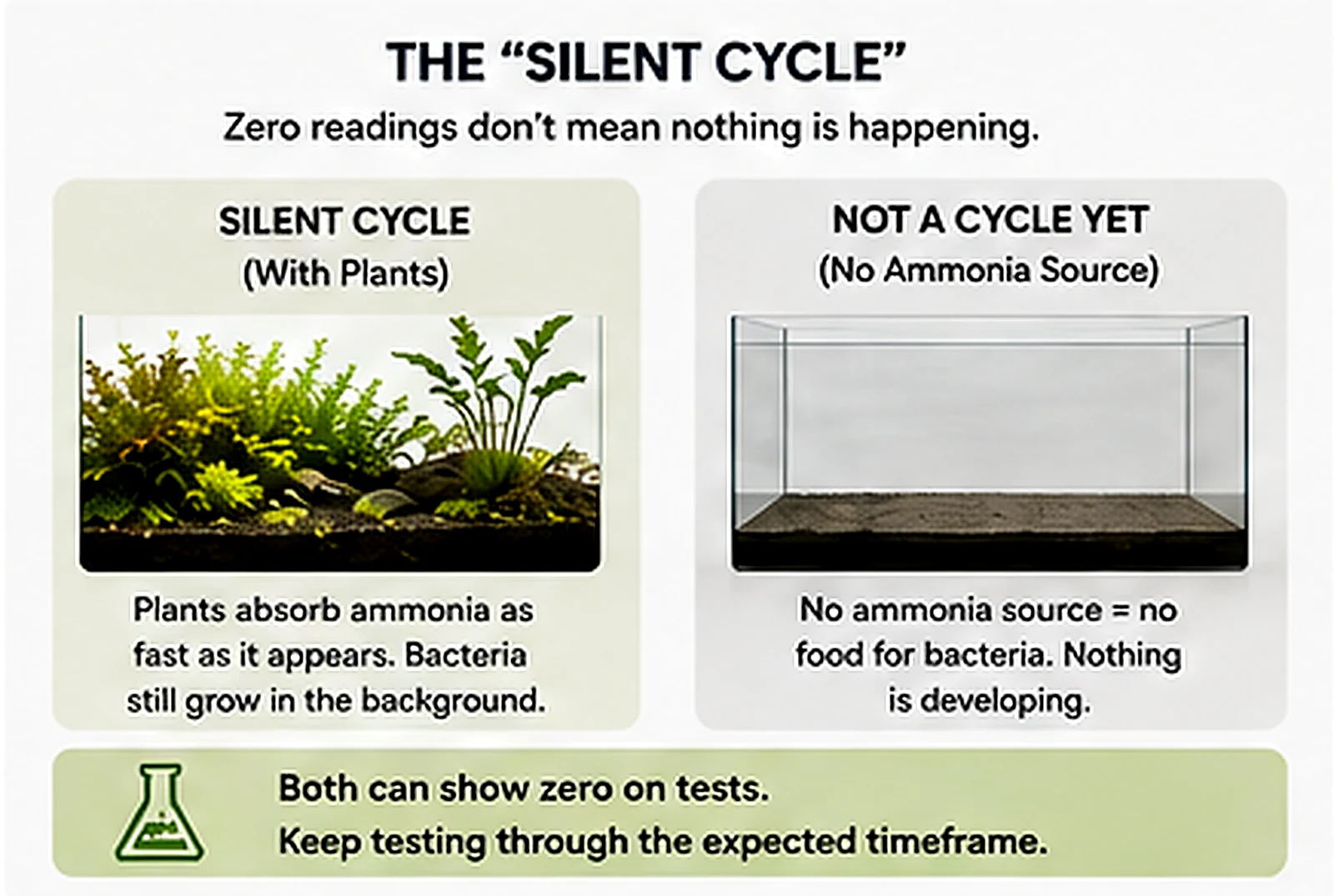
This is the detail that trips up planted-tank beginners specifically. A tank with fast-growing plants absorbing ammonia as quickly as it appears can show a flat zero on ammonia and nitrite testing from day one, which looks identical, on a test kit, to a tank where no ammonia source exists at all and nothing is happening yet. The difference matters: in a genuine silent cycle, bacteria are still growing in the background, fed by whatever ammonia the plants do not capture, while a tank with truly no ammonia source has no reason for a bacteria colony to be developing at all. Because the two situations look the same on a basic ammonia and nitrite test, it is worth continuing to test through the expected timeframe rather than assuming zero readings alone mean the tank is finished and ready for fish.
The One Thing That Still Spikes: Fresh Substrate
Plants absorbing ammonia does not mean every source of ammonia in a planted tank is covered. Fresh nutrient-rich aquatic soil substrates commonly release a burst of ammonia into the water column when first set up, and that initial release can exceed what even a well-planted tank's plants can absorb in the first several days. Because of this, water changes in the first week are commonly recommended even in a heavily planted setup using this kind of substrate, specifically to manage that initial release rather than assuming plants alone will handle it.
What Changes About the Process, Practically
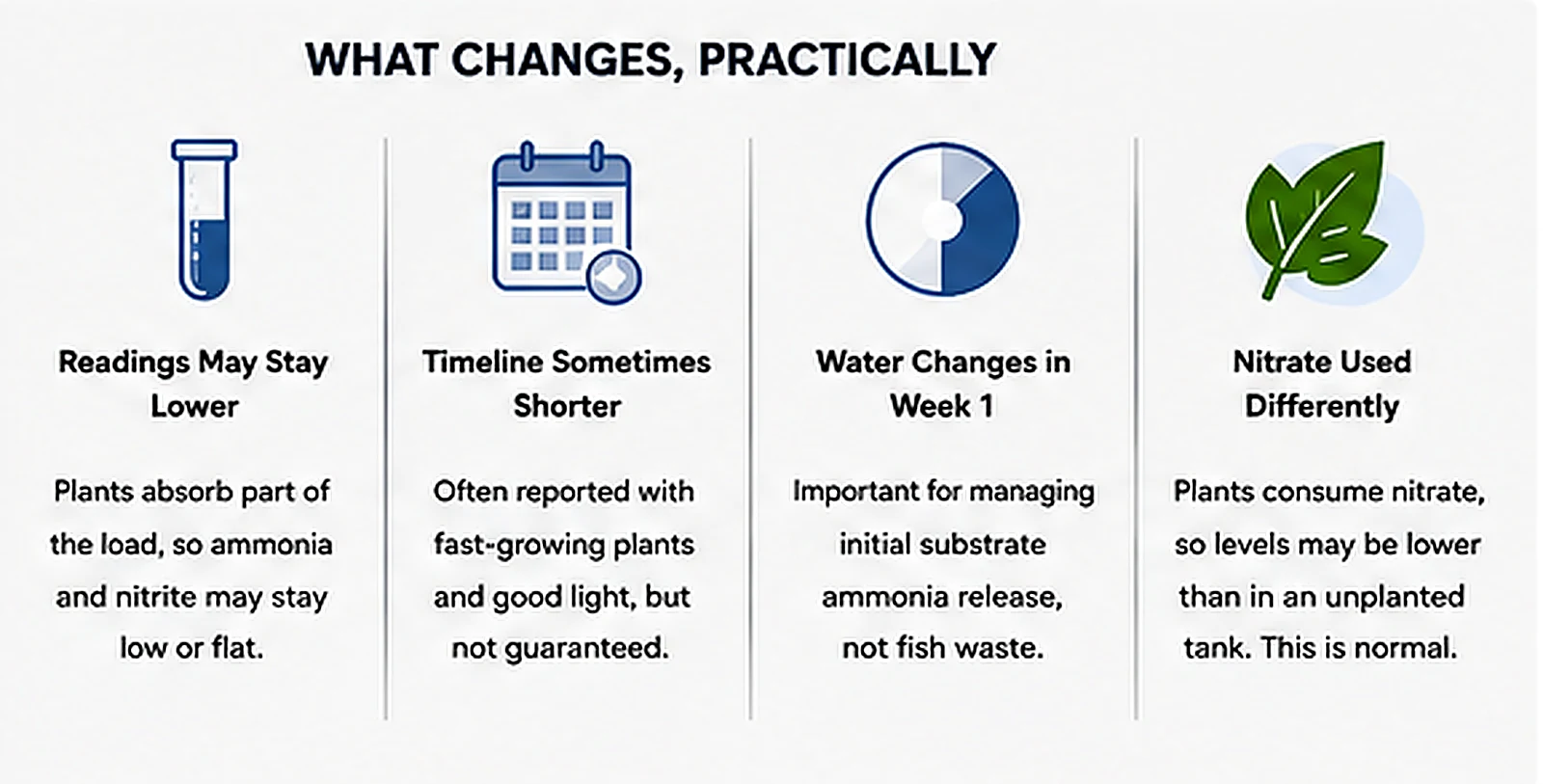
The overall shape of the fishless cycling method still applies: dose or allow ammonia to build, test regularly, and use the same completion check before adding fish. What practically changes in a planted tank:
- Readings may stay lower or flatter than expected, even while the tank is genuinely progressing, because plants are absorbing part of the load.
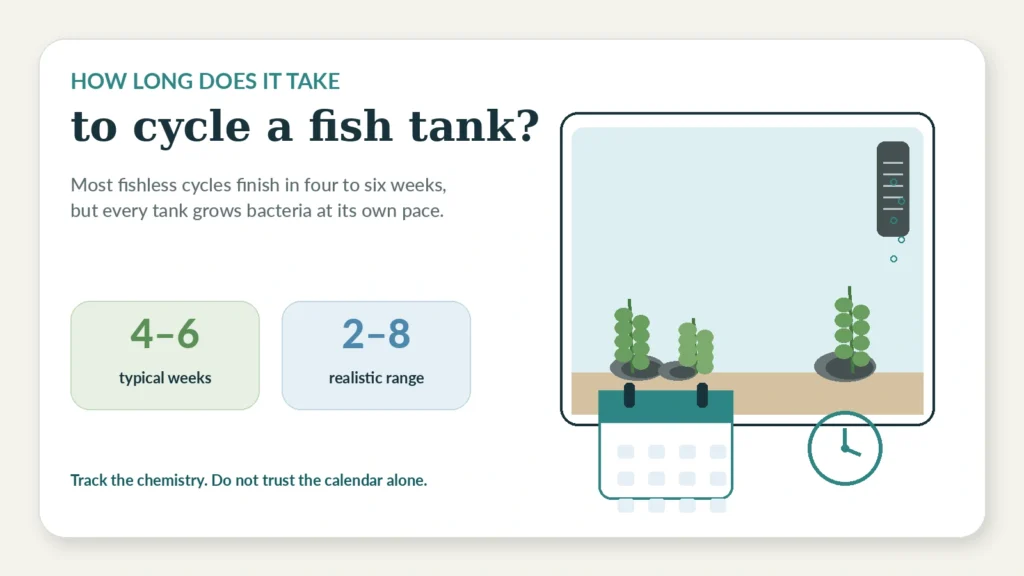
- The overall timeline is sometimes reported as shorter, particularly with fast-growing plants and good light, though this is a commonly reported pattern rather than a guarantee, and it still depends on your specific setup.
- Water changes in the first week matter more, specifically to manage the initial substrate ammonia release rather than to manage fish waste, since no fish are present yet.
- Nitrate is used differently. Plants also consume some nitrate, so a heavily planted tank may show lower nitrate accumulation than an unplanted one going through the same process, which is a normal outcome of the plants doing their job, not a sign of a test error.
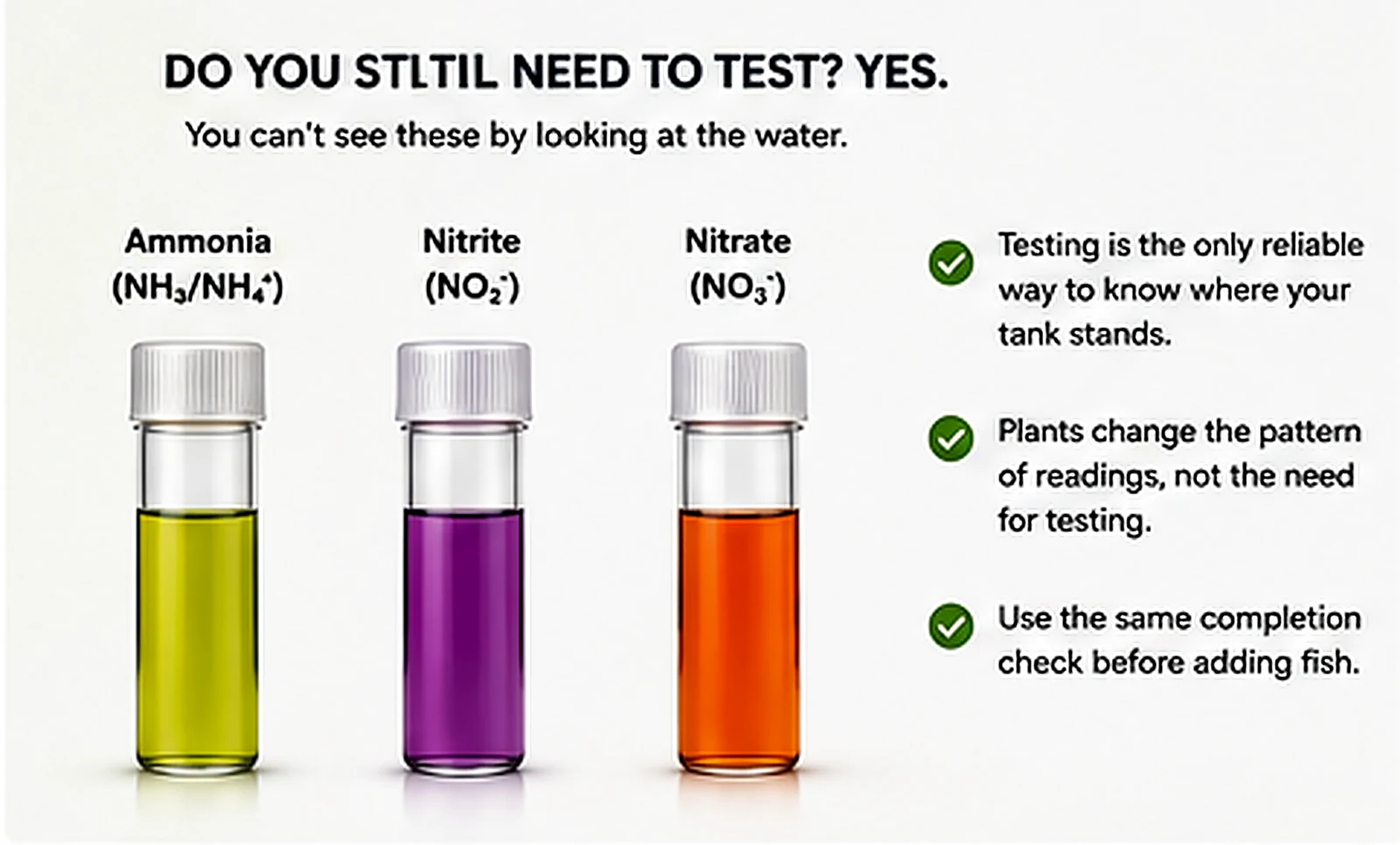
Do You Still Need to Test? Yes
Testing remains the only reliable way to know where a planted tank actually stands, for the same reason it matters in any tank: you cannot see ammonia, nitrite, or nitrate by looking at the water, planted or not. Aquarium water parameters covers what each reading means and what to do with it once you have a number, and that guidance applies exactly the same way here. The presence of plants changes what pattern of readings you might see; it does not change the fact that testing, not visual inspection or the mere presence of healthy-looking plants, is what tells you whether the tank is actually ready.
FAQ
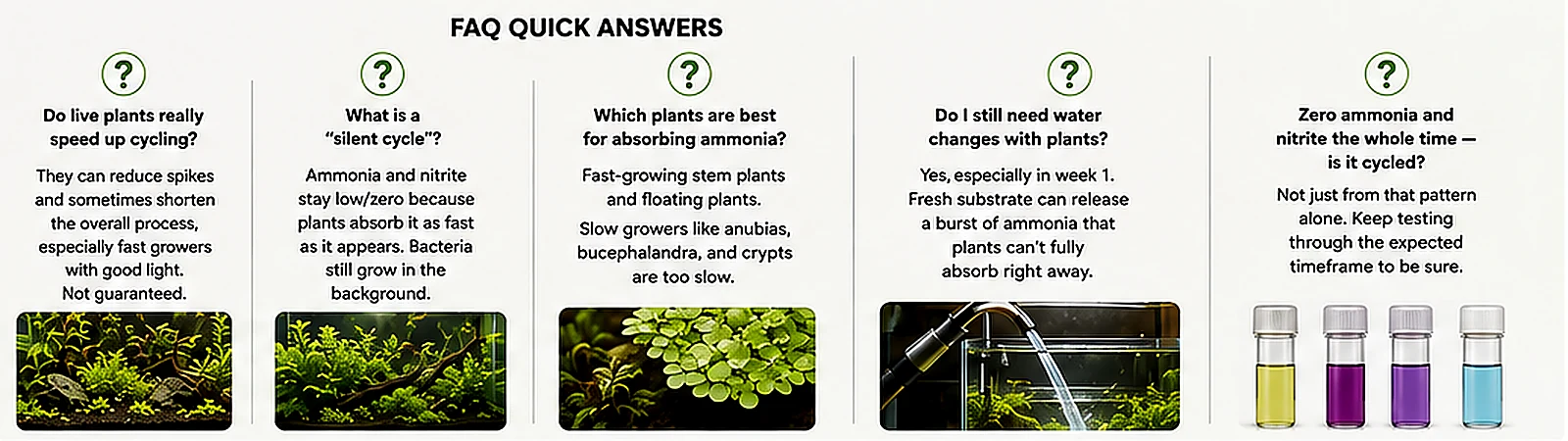
Do live plants really speed up cycling a new tank?
They can. Plants absorb ammonia directly as a nutrient, which can reduce spikes and, in some commonly reported cases, shorten the overall process, particularly with fast-growing stem or floating plants under adequate light. It is not a guarantee, and testing is still necessary.
What is a "silent cycle"?
A cycle where ammonia and nitrite readings stay low or at zero throughout because plants are absorbing the ammonia as fast as it appears, rather than a bacteria colony processing all of it visibly. It can look identical, on a basic test, to a tank with no ammonia source at all.
Which plants are best for absorbing ammonia during cycling?
Fast-growing stem plants and floating plants are commonly cited as effective ammonia consumers because of their rapid growth. Slower growers like anubias, bucephalandra, and cryptocoryne are commonly reported as too slow to meaningfully affect a cycle's ammonia levels, even though they are fine plants otherwise.
Do I still need to do water changes if I have a lot of plants?
Usually yes, at least in the first week. Fresh nutrient-rich substrate commonly releases an initial burst of ammonia that can exceed what plants absorb in that early period, so water changes are still commonly recommended to manage that specific spike.
If my planted tank shows zero ammonia and nitrite the whole time, is it cycled?
Not necessarily just from that pattern alone. A silent cycle can show flat zero readings while a bacteria colony is genuinely still developing in the background. Continue testing through the expected timeframe rather than assuming zero readings from day one mean the tank is already finished.