The beneficial bacteria that process fish waste live attached to surfaces inside a slimy layer called biofilm, overwhelmingly concentrated in filter media, with a meaningful secondary population in substrate and a smaller amount on decor. They do not live free-floating in the water column in any meaningful quantity. This matters because it explains something that confuses a lot of otherwise careful aquarists: doing what feels like thorough, responsible cleaning, rinsing filter media under the tap, replacing it all at once, or scrubbing decor with hot water, can wipe out the colony you depend on and cause a sudden, unexpected ammonia or nitrite reading in a tank that had been running fine for months.
The Direct Answer: Filter Media First, Then Substrate, Almost Never the Water
In order of concentration, beneficial bacteria are found:
- In filter media: by far the largest concentration in most setups, because filter media is specifically designed to maximize the surface area water flows across.
- In substrate: a genuine secondary population, particularly a few inches down where flow and oxygen still reach but the surface is undisturbed.
- On decor and hardscape: porous surfaces like driftwood or ceramic ornaments host some bacteria, generally less than filter media or substrate.
- In the water itself: essentially negligible. Water column populations are not stable colonies; they are largely bacteria in transit, dying off, or recently dislodged from a surface.
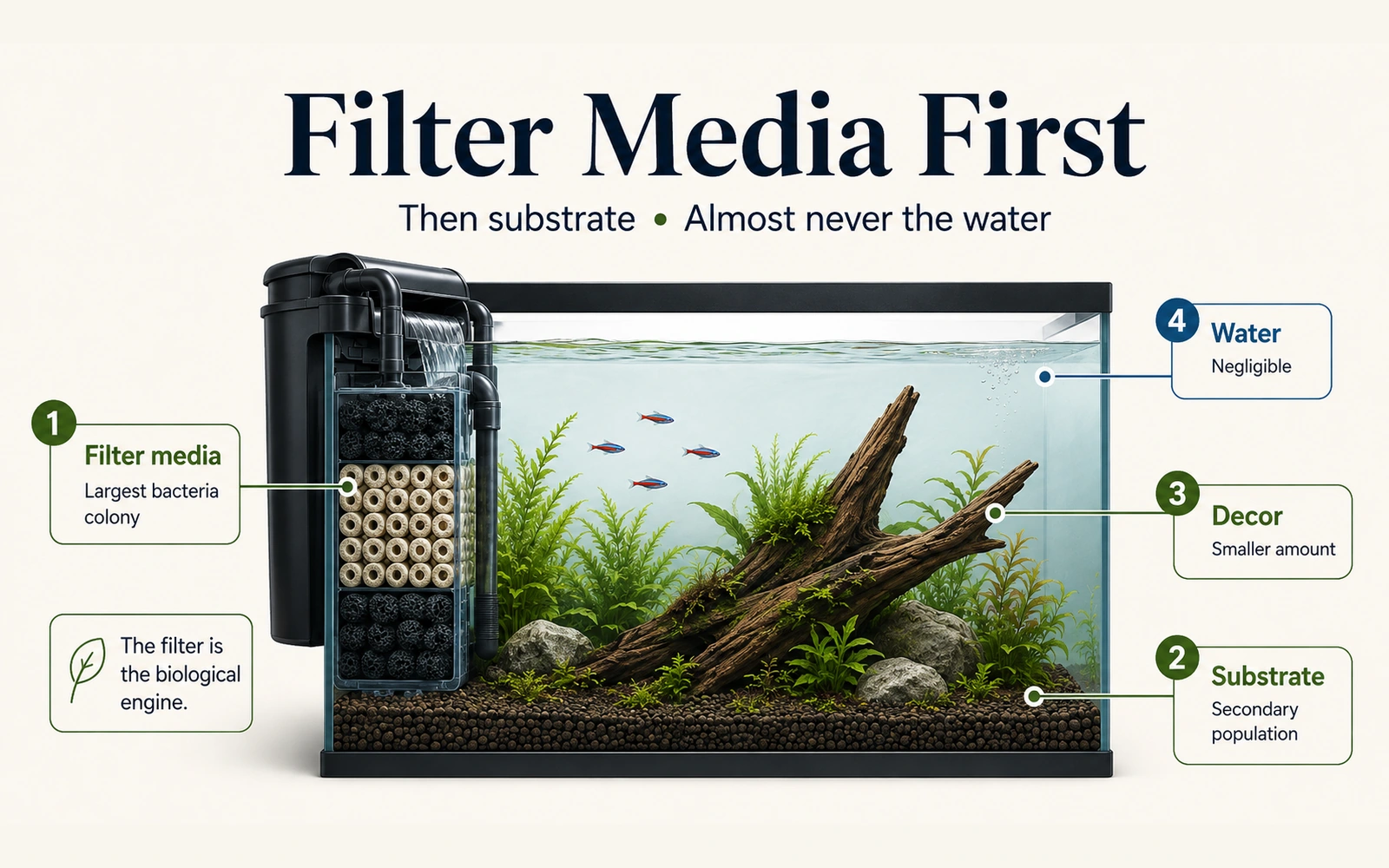
This ordering is why a filter is described as the biological engine of a tank, not just a mechanical strainer. Removing or disturbing filter media has a far larger impact on the colony than almost anything else you could do to the tank.
Why Surface Area Matters So Much
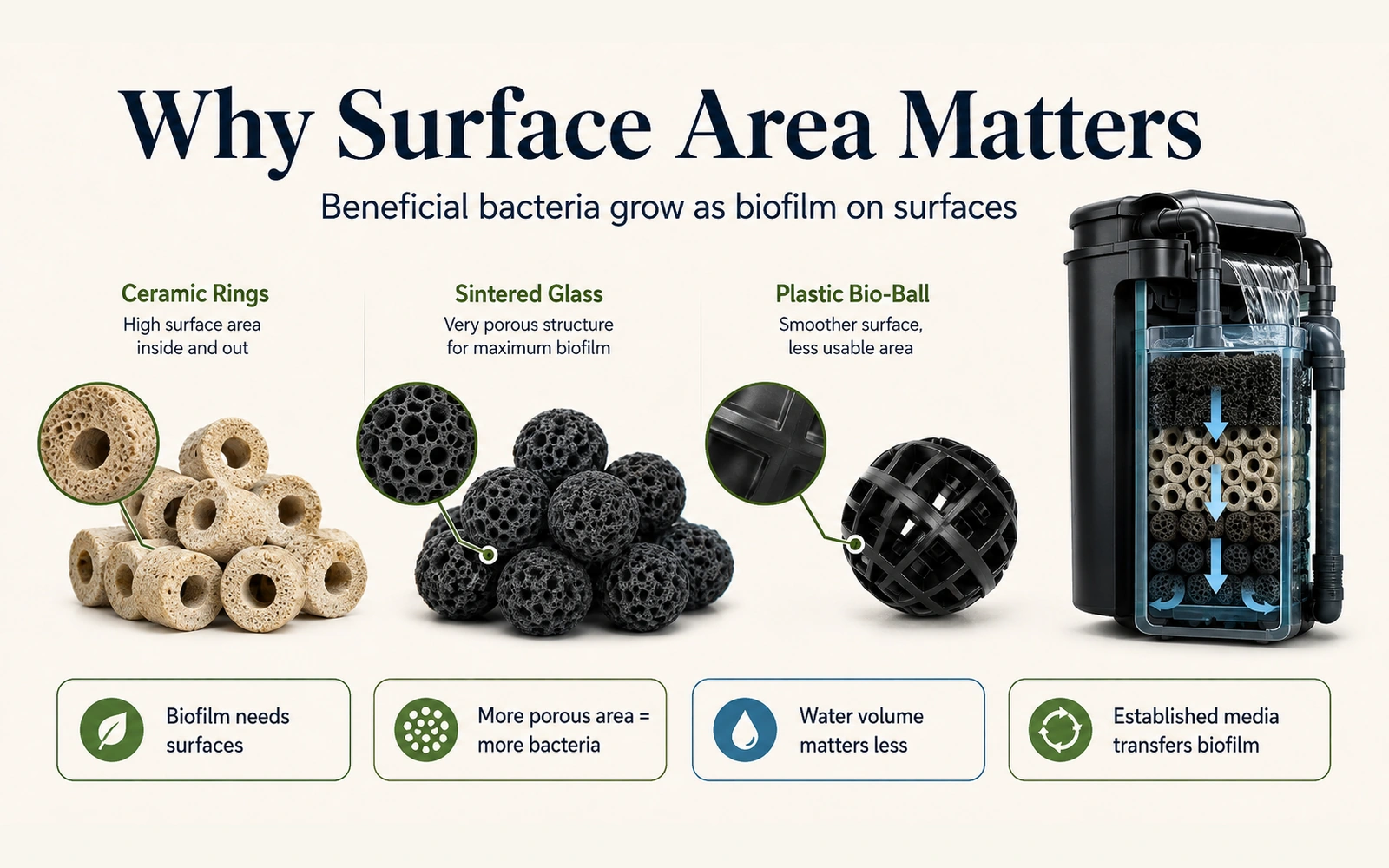
Nitrifying bacteria form a biofilm, a thin, slime-like layer that attaches to a solid surface and provides the bacteria a stable place to live and multiply. Because they need a surface, the total amount of bacteria a tank can support is limited by the total usable surface area available, not by the volume of water. This is why porous filter media, such as ceramic rings or sintered glass, is generally considered to offer meaningfully more surface area than a solid plastic bio-ball of the same size, and why a filter that is undersized or under-media'd for its tank can struggle to support a large enough colony even after weeks of running. It is also the underlying reason seeding a new tank with a piece of established media works so well: you are transplanting an already-built biofilm onto a surface that can keep supporting it, not just adding loose bacteria to open water.
The Accidental Bacteria Killers: A Checklist
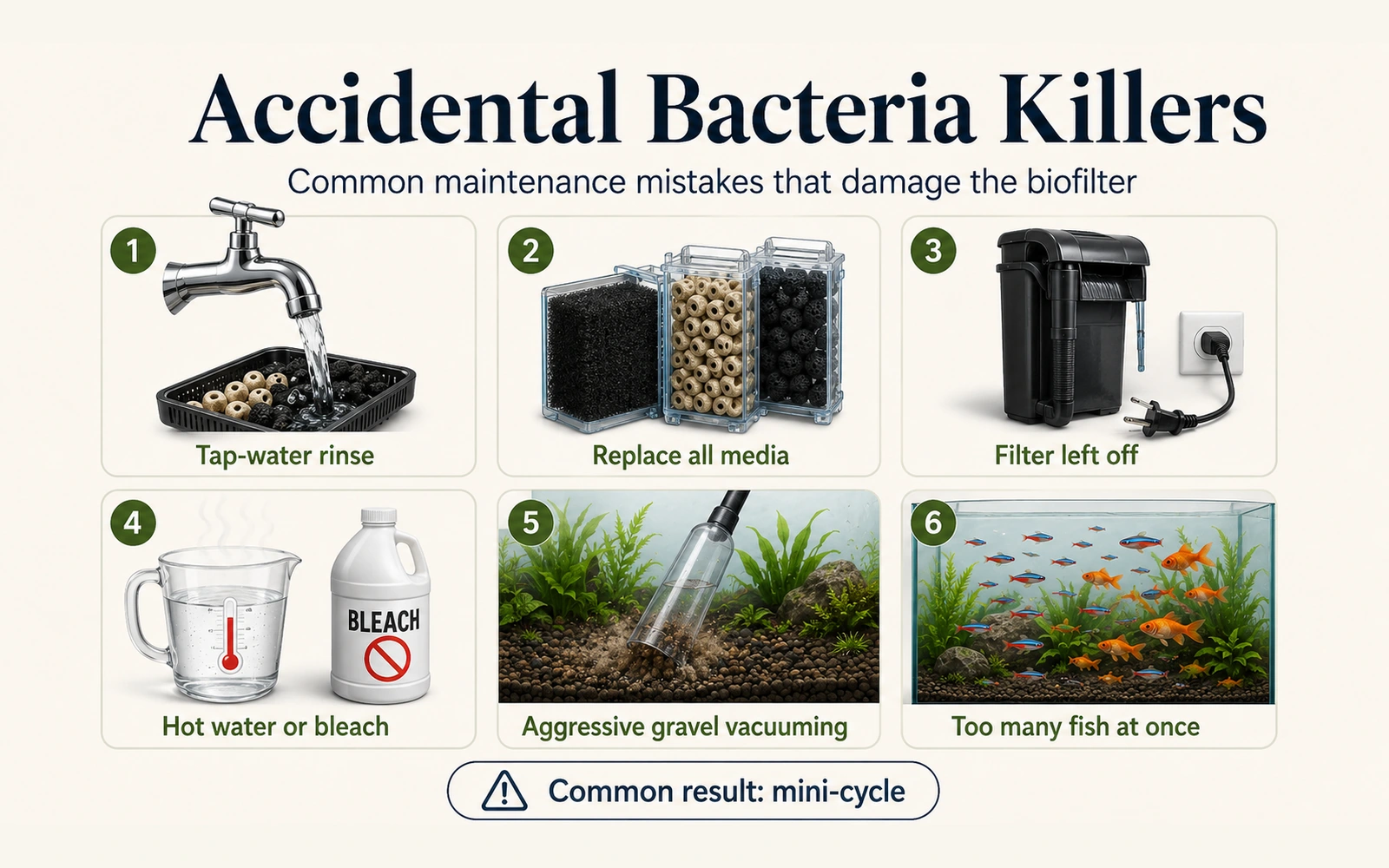
These are the most commonly reported ways an established colony gets damaged without anyone intending it:
- Rinsing filter media under tap water. Tap water usually contains chlorine or chloramine, which is specifically added to kill bacteria, including the ones living in your filter media's biofilm. Rinsing media in a bucket of removed tank water instead avoids this entirely.
- Replacing all filter media at once. Swapping every piece of media for new material in a single session removes most of the established colony in one step. Replacing media in stages, one section at a time, spaced out, lets the colony transfer to the new surfaces gradually instead.
- Letting the filter sit unpowered for an extended period. Bacteria need continuous oxygenated flow. A filter switched off for cleaning, a power outage, or storage for more than a short stretch can allow a meaningful portion of the colony to die off.
- Hot water or bleach-based cleaning. Heat and bleach are effective at killing bacteria generally, which is exactly why they are poor choices for cleaning anything that carries your biological filtration.
- Overly aggressive gravel vacuuming. Disturbing the entire substrate bed in one pass removes more of the secondary bacteria population than a partial, rotating clean does.
- A sudden large increase in stocking. Not a cleaning mistake, but worth including here: adding many fish at once can outpace even a healthy, undisturbed colony's capacity, producing a similar-looking spike from the opposite direction (too much waste, rather than too little bacteria).
How to Clean a Filter Without Wrecking the Colony
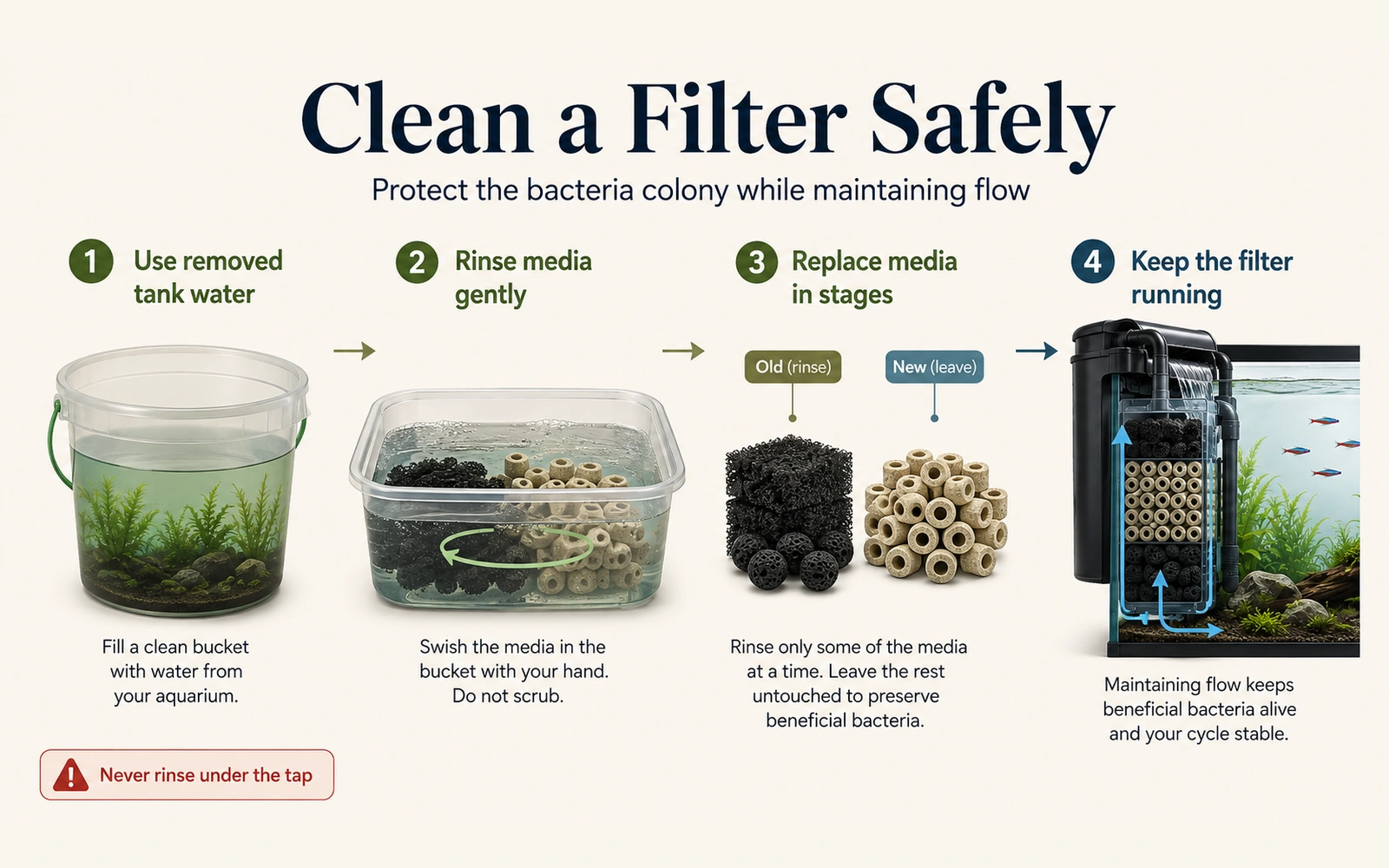
The safest routine, reported consistently across hobby maintenance guidance, is to rinse filter media in a bucket of water taken from the tank itself during a water change, never under the tap, and to avoid replacing all of a filter's media in the same session. If a piece of media is genuinely worn out and needs replacing, place the new piece alongside the old one for a few weeks first, so bacteria have time to colonize the new surface before the old one is removed. Keep the filter running continuously otherwise, and treat any planned extended shutdown (a long cleaning session, moving the tank) as something to minimize in duration, not something to do casually.
What Happens If You Do Kill Off the Colony
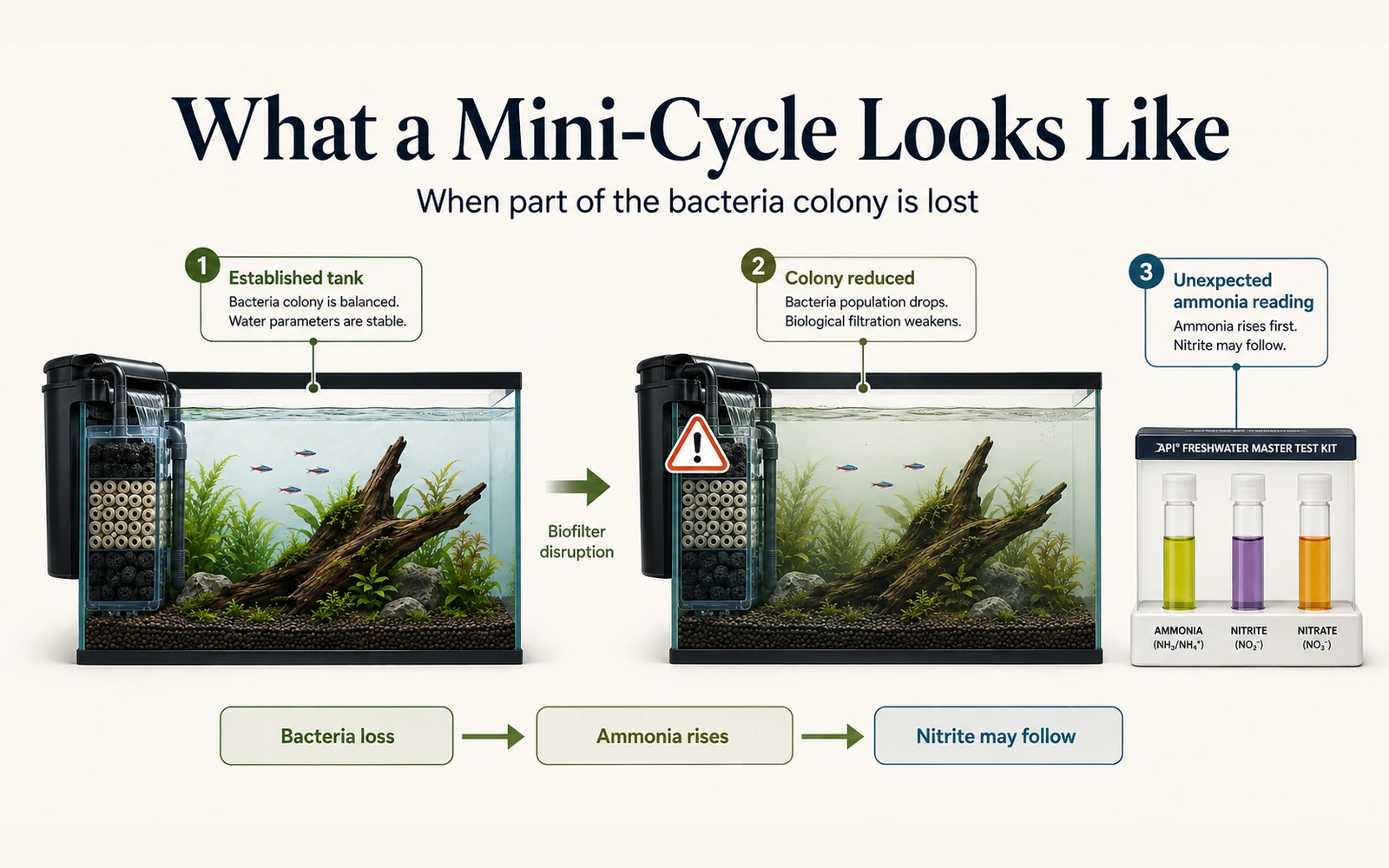
If a chunk of the bacteria population is lost, whatever the cause, the result usually looks like a smaller version of the original cycling process: an ammonia or nitrite reading appears in a tank that had previously read zero for both. This is sometimes called a mini-cycle, and it is not a sign that the tank or the fish did anything wrong; it is a predictable, mechanical consequence of the colony losing surface area. If you see this happen, why a cycle stalls on ammonia and the general troubleshooting approach in that guide apply here as well, since the underlying situation, a bacteria colony that is temporarily smaller than the tank's waste load, is the same one a stalled cycle involves.
FAQ
Where do beneficial bacteria actually live in an aquarium?
Overwhelmingly in the filter media, with a meaningful secondary population in the substrate and a smaller amount on decor. They do not live in any significant, stable quantity in the water itself.
Can I kill the beneficial bacteria by cleaning my tank?
Yes. Rinsing filter media under tap water, replacing all the media at once, letting the filter sit unpowered for an extended period, and using hot water or bleach to clean anything that touches the filter are all common, avoidable ways an established colony gets damaged.
Why does my established tank suddenly have an ammonia reading again?
Some part of the bacteria colony was likely reduced, through an overly aggressive filter clean, a power interruption, or a sudden jump in stocking that outpaced the existing colony. This is sometimes called a mini-cycle and behaves like a smaller version of the original cycling process.
Is it safe to rinse filter media at all?
Yes, as long as it is rinsed in water taken from the tank during a water change rather than under the tap. Tank water does not contain the chlorine or chloramine that would kill the bacteria living in the media.
Does gravel vacuuming kill beneficial bacteria too?
It can reduce the secondary bacteria population living in the substrate if the entire bed is disturbed aggressively in one session. Vacuuming only a portion of the substrate at a time, rotating which section you clean, limits this impact.