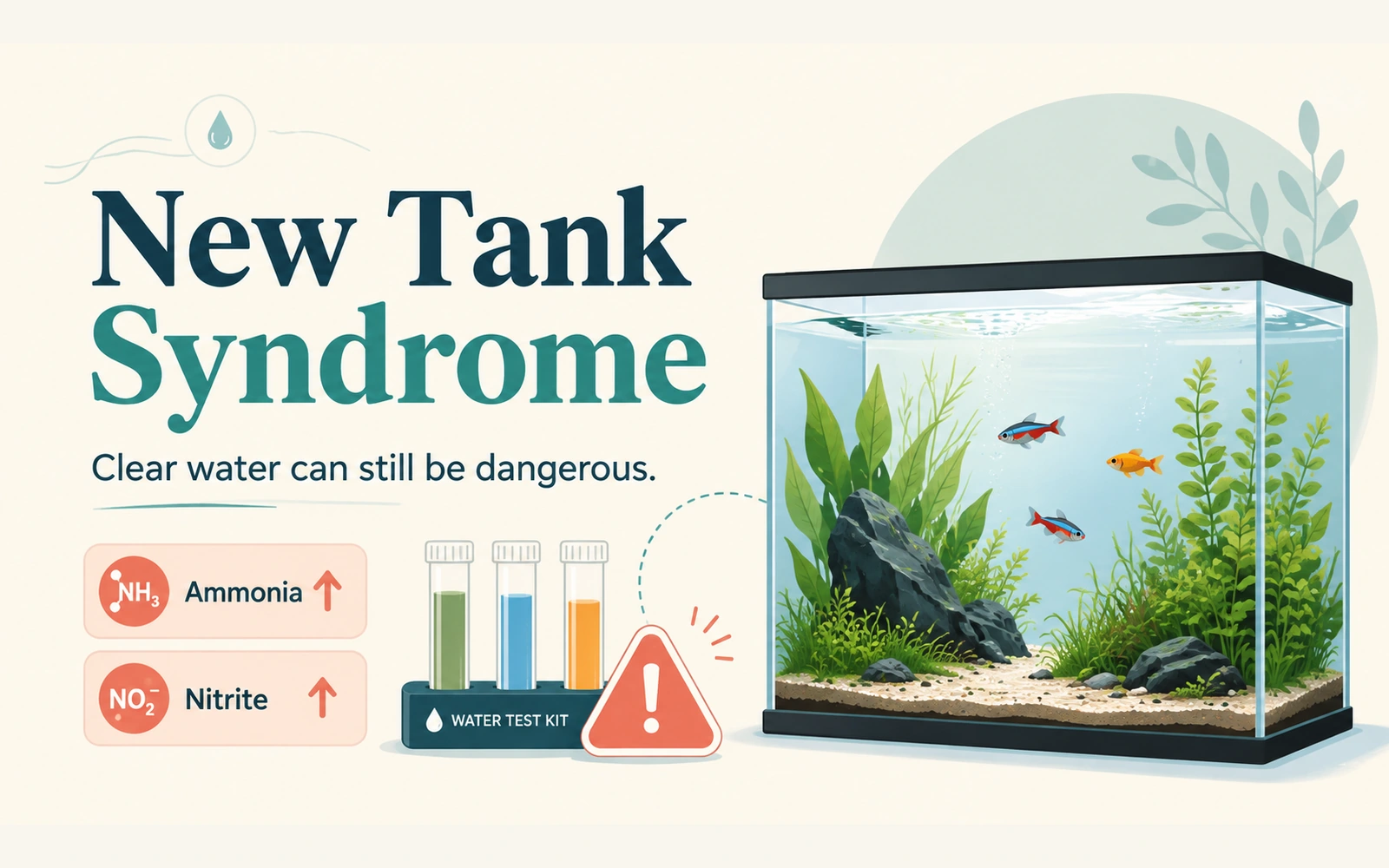
New tank syndrome is what happens when fish are kept in a tank that has not finished cycling, so ammonia and then nitrite build up to dangerous levels even though the water can look completely clear. It is a genuine veterinary-recognized condition, not just a hobby term, and it is the single most common reason fish die in the first weeks of a new aquarium. The core symptoms are gasping at the surface, clamped fins, frantic darting, or the opposite: lethargy, hiding, and refusal to eat. If you are seeing any of these in a tank that is only weeks old, an unfinished cycle is the first thing to check, not the last.
The Direct Answer: What New Tank Syndrome Actually Is
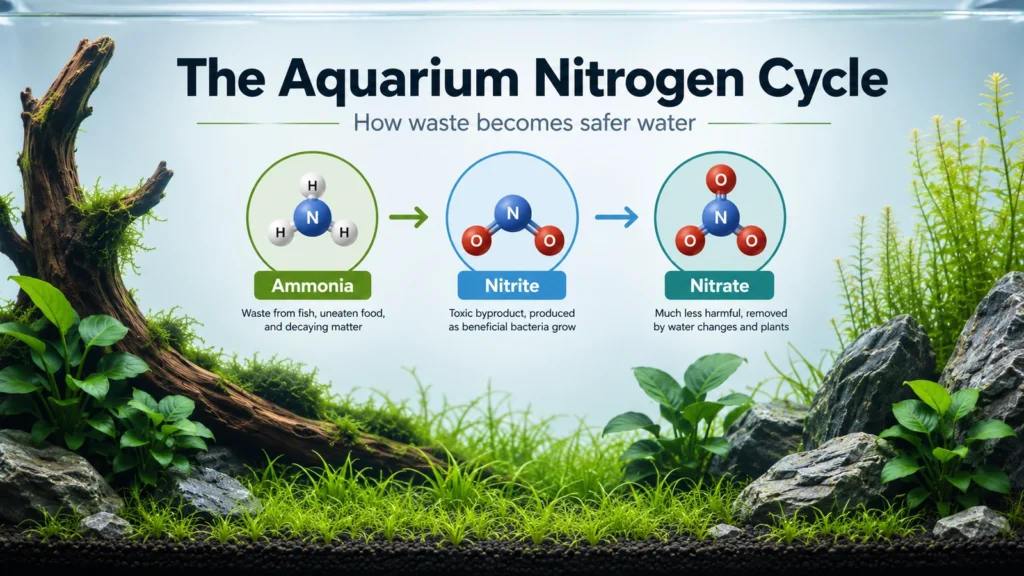
A brand-new tank has essentially no established colony of the bacteria that convert ammonia into nitrite and then into nitrate. Fish waste and uneaten food still produce ammonia from day one, but nothing is there yet to process it, so it accumulates. New tank syndrome is simply the visible result of that gap: fish living inside rising ammonia, and later rising nitrite, while the bacteria colonies that would normally handle both are still too small to keep up. It is described as a recognized condition by veterinary sources such as PetMD, not just informal hobby shorthand, precisely because the physiological damage (gill burns from ammonia, impaired oxygen transport from nitrite) is real and can be severe.
Why the Water Can Look Clean and Still Be Dangerous
This is the part that confuses almost everyone experiencing it for the first time. Ammonia and nitrite are both invisible and odorless at the concentrations that harm fish. A tank can be crystal clear, with a running filter and no visible debris, and still be actively poisoning its occupants, because clarity is a function of suspended particles, not of dissolved toxins. The only way to actually know what is happening is a liquid test kit for ammonia and nitrite; looking at the water tells you essentially nothing about whether it is safe. This is the same underlying mechanism covered in more depth in the nitrogen cycle explainer: the process is chemical, not visual, and it runs entirely out of sight of anyone just looking at the tank.
The Symptoms to Watch For
- Gasping at the surface. Fish crowding near the top of the tank, mouths breaking the surface repeatedly, is one of the most commonly reported signs, since damaged gills struggle to extract oxygen even from well-oxygenated water.
- Clamped fins. Fins held tightly against the body rather than spread naturally is a widely reported general stress sign.
- Frantic darting or erratic swimming. Sudden, repeated bursts of movement without an obvious cause.
- Lethargy, hiding, and loss of appetite. The opposite presentation from darting, and just as commonly reported: a fish that stops eating and stays hidden or motionless near the bottom.
- In severe, prolonged exposure, sudden or multiple deaths. This is the outcome new tank syndrome is named for, and it is what makes early recognition genuinely important.
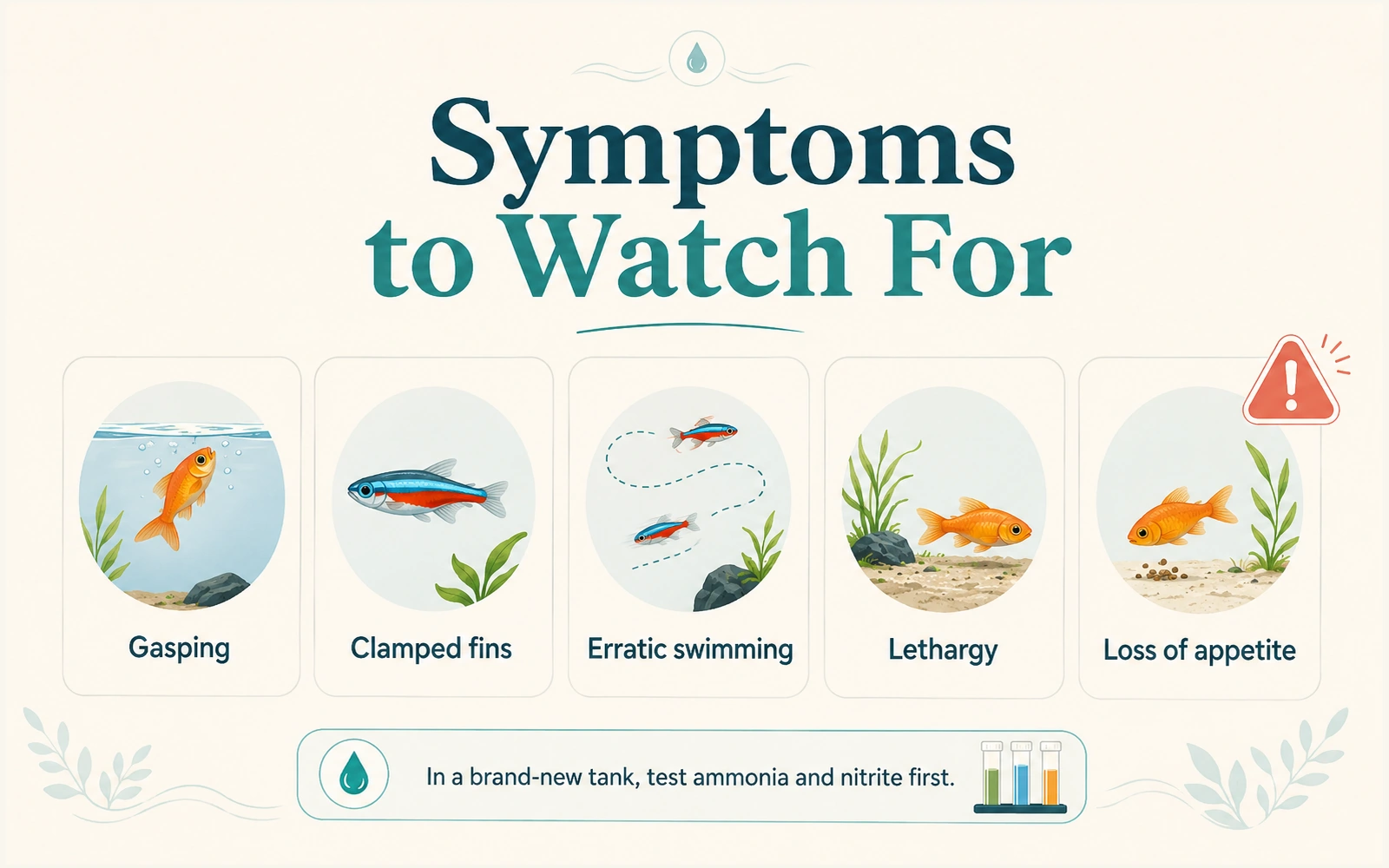
None of these symptoms are exclusive to new tank syndrome specifically; they can also indicate other problems. In a tank that is only weeks old and has not completed the cycling process, an unfinished cycle is nonetheless the first and most likely explanation, and testing ammonia and nitrite immediately is the fastest way to confirm or rule it out.
Not the Same Thing: "Old Tank Syndrome"
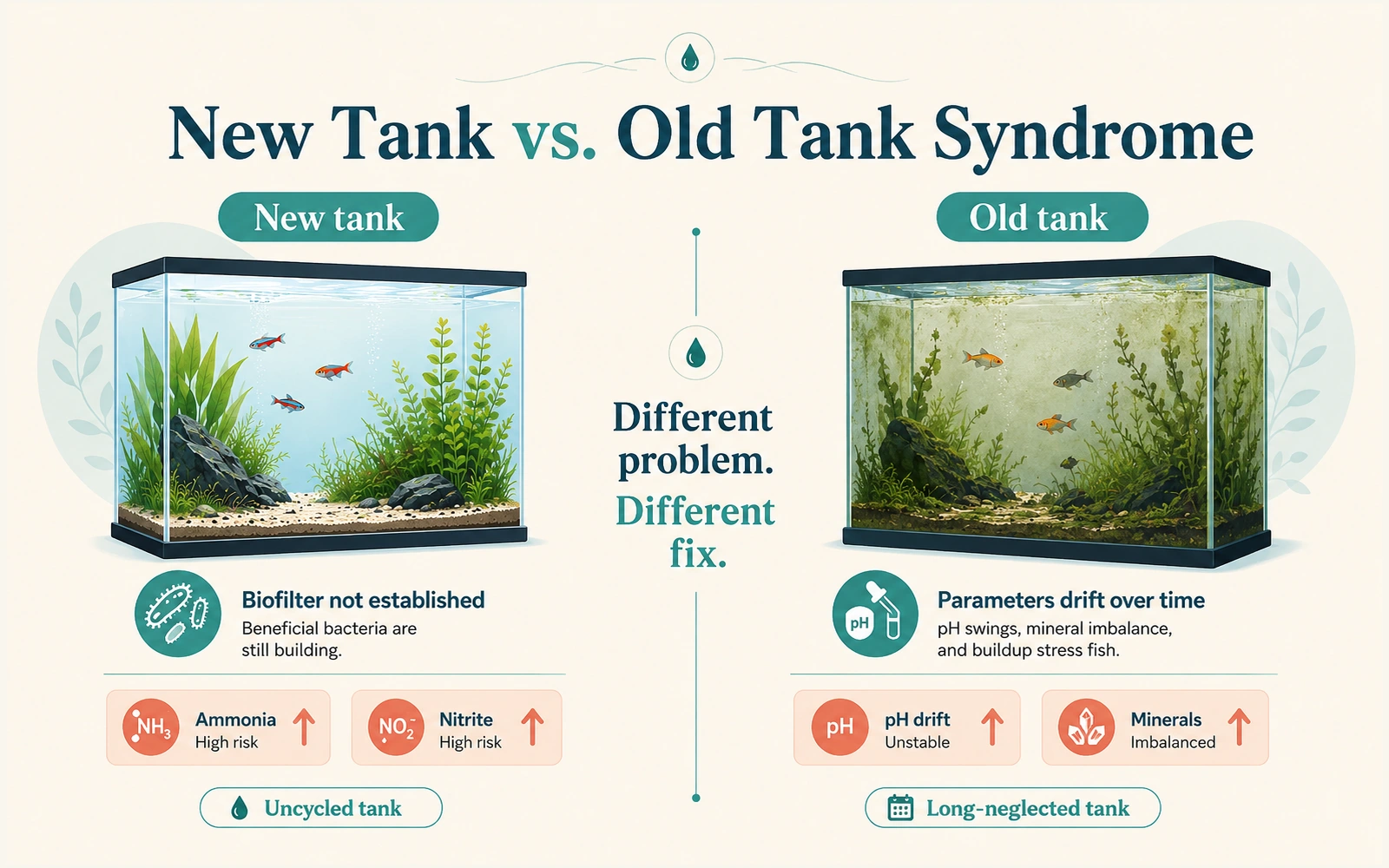
Despite the similar name, "old tank syndrome" describes a genuinely different, largely opposite problem: a long-neglected, well-established tank where water changes have been skipped for an extended period, allowing water chemistry (particularly pH and mineral hardness) to drift slowly away from what the fish were originally acclimated to. Fish in that situation can become dangerously sensitive to a sudden correction back to "normal" parameters, because they gradually adapted to the drifted conditions. New tank syndrome, by contrast, is about a tank that has not yet built the bacteria colony it needs. If your tank is brand new, this article's topic is almost certainly the relevant one; if your tank has been running for a year or more without regular water changes, the situation and the fix are different.
Immediate Triage vs. the Real Fix
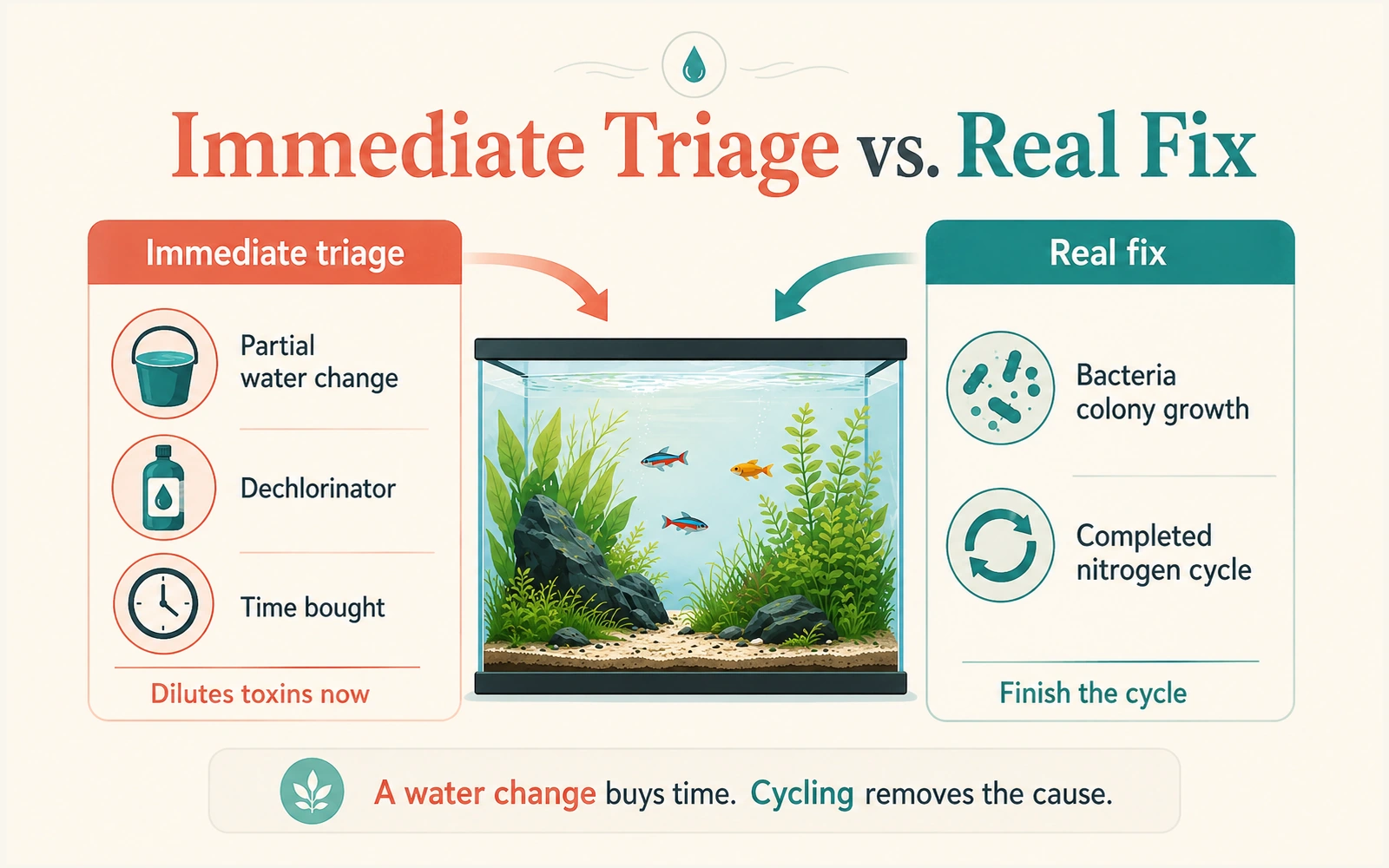
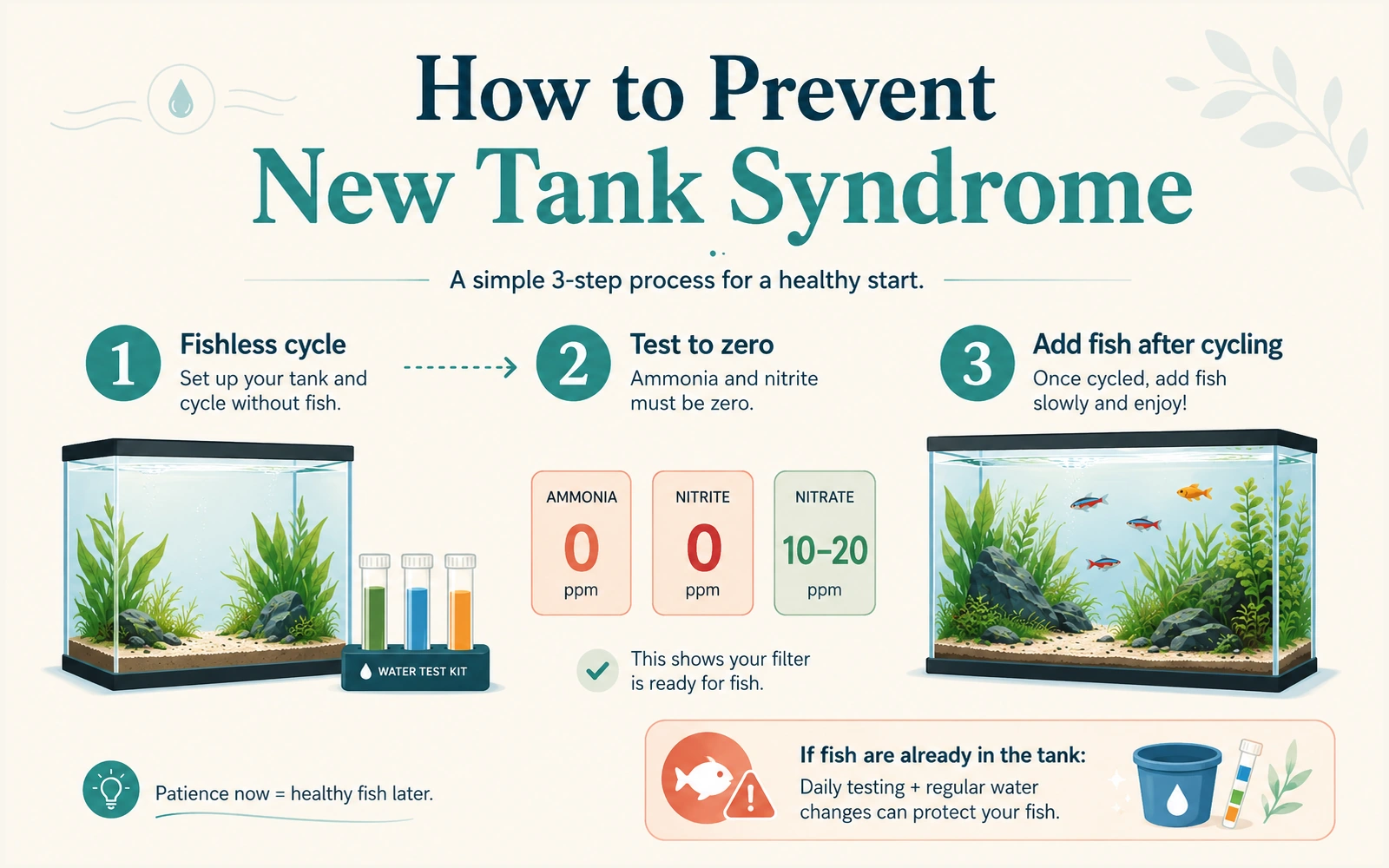
These are two different things, and confusing them is how a fish that survives the first crisis dies from the second one. Immediate triage buys time for a fish that is showing acute symptoms right now: a partial water change to dilute the ammonia or nitrite currently in the tank, using properly dechlorinated, temperature-matched water, is the standard first response, and aquarium emergency help walks through the calm, immediate steps in more detail. The real fix, though, is finishing the cycle itself: growing the bacteria colonies large enough that ammonia and nitrite stop accumulating in the first place. A water change treats the symptom for a day; only a completed cycle removes the underlying cause. If fish are already in the tank while this is happening, that situation is specifically addressed in fish-in cycling, including the daily testing and water-change routine that reduces ongoing harm while the colony establishes.
If symptoms look like an ongoing illness rather than a one-time stress response to water chemistry, for example a fish that continues to decline even after ammonia and nitrite read zero, that has moved beyond what water chemistry can explain and belongs in front of an aquatic veterinarian rather than being guessed at further here.
How to Prevent It Going Forward
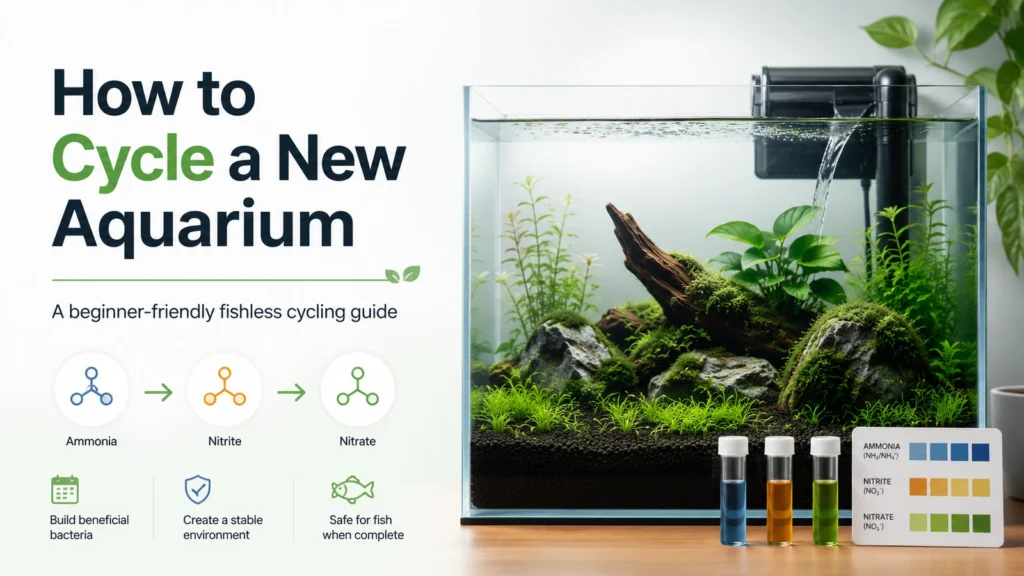
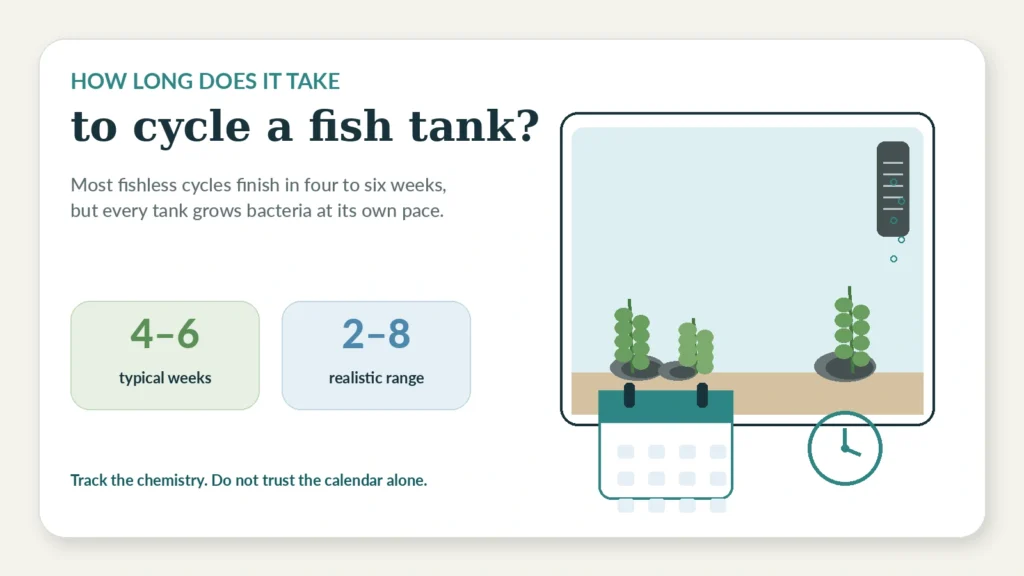
The single most reliable way to prevent new tank syndrome is to avoid the situation that causes it: complete a fishless cycle before any fish are added, exactly as described in how to cycle a new aquarium. That removes fish from the toxic startup period entirely, rather than trying to manage them through it. If fish are already in an uncycled tank, prevention shifts to harm reduction: consistent daily testing and the water-change routine referenced above until the cycle finishes.
FAQ
What are the symptoms of new tank syndrome?
Gasping at the surface, clamped fins, frantic darting, or the opposite pattern of lethargy, hiding, and loss of appetite. In severe or prolonged cases, sudden or multiple fish deaths. These symptoms are recognized by veterinary sources such as PetMD as consistent with ammonia and nitrite toxicity in an uncycled tank.
Can a tank with clear, clean-looking water still have new tank syndrome?
Yes. Ammonia and nitrite are invisible and odorless at the concentrations that harm fish. Water clarity reflects suspended particles, not dissolved toxins, so a tank can look perfectly clean while still poisoning its fish. Testing is the only reliable way to know.
Is new tank syndrome the same as old tank syndrome?
No, they are close to opposite problems. New tank syndrome is caused by an unfinished cycle in a brand-new tank. Old tank syndrome involves a long-established tank where water changes were neglected and water chemistry drifted, making fish sensitive to a sudden correction back toward normal parameters.
How do I stop new tank syndrome once it starts?
A partial water change with properly dechlorinated, temperature-matched water reduces the immediate ammonia or nitrite exposure, but it only buys time. The actual fix is completing the tank's cycle so the bacteria colonies can keep ammonia and nitrite at zero on their own.
How do I prevent new tank syndrome in the first place?
Complete a fishless cycle before adding any fish, so no fish is ever exposed to the toxic startup period. If fish are already in an uncycled tank, daily testing and a threshold-based water-change routine reduce harm while the cycle finishes.