To set up a fish tank for beginners, you need seven things before any fish come home: the tank itself (bigger is easier), a filter, a heater, a light, substrate for the bottom, a bottle of dechlorinator (water conditioner), and a liquid water test kit. Then comes the one rule that decides whether your first fish live or die: you must cycle the tank before you add fish. Cycling grows the beneficial bacteria that turn toxic fish waste into something harmless, and it takes weeks, not days. Buy the gear, set it up, cycle it, then stock it. In that order.
My name is Hossain, and I built this site because my own first tank taught me these lessons the hard way. Here is the checklist I wish someone had handed me.
Start Bigger Than You Think
The most common beginner mistake happens before you buy any equipment: choosing a tank that is too small. A tiny bowl or a 3-gallon desktop tank looks easy and cheap, but it is the hardest thing in the hobby to keep alive.
Here is why. A small volume of water swings fast. Waste concentrates quickly, temperature drifts with the room, and a single problem becomes a crisis before you notice it. A larger tank holds more water, so those same swings get diluted and slowed down. More water is more forgiving, and forgiving is exactly what a beginner needs.
For a first freshwater tank, aim for 20 gallons if your space and budget allow, and treat 10 gallons as the practical minimum. Choose a wide, horizontal shape over a tall, narrow one. Fish breathe at the water surface, and a wider footprint gives more surface area for oxygen exchange. Skip the bowl. It is not the easy option it looks like.
The Equipment Checklist (and Why Each Item Matters)
Every item below earns its place. I am keeping this at the equipment-type level on purpose. Specific brand and model picks belong in a dedicated buying guide, not in a setup checklist.
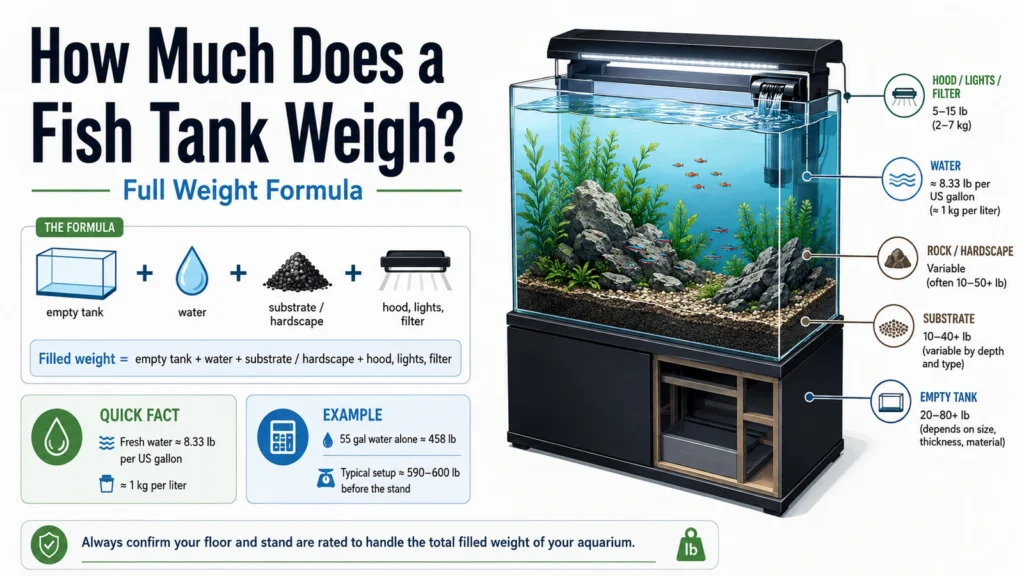
- The tank. Glass or acrylic, both are fine. Buy a stand rated for the weight, because filled water is heavy and an ordinary table or shelf is not built for it.
- A filter. This is the heart of the system. It houses the beneficial bacteria and moves water so waste does not settle. Choose one rated for at least 3 to 5 times your tank volume per hour. A hang-on-back or a sponge filter is beginner-friendly and easy to clean.
- A heater. Most tropical community fish are comfortable between 72 and 82 F. A room that feels warm to you still swings too much at night for tropical fish, so an adjustable heater with a thermostat keeps the temperature stable.
- A thermometer. Cheap, and the only way to confirm the heater is actually doing its job. Trust the reading, not the heater's dial.
- A light. Fish do not strictly need a bright light, but you do need to see them, and live or artificial plants need light. A simple LED with a timer helps control algae by giving a consistent day length.
- Substrate. The gravel or sand on the bottom. Beyond looks, it gives beneficial bacteria more surface to colonize. Rinse it well before it goes in.
- A dechlorinator (water conditioner). Tap water almost everywhere contains chlorine or chloramine to keep it safe for people. Both are toxic to fish and to your beneficial bacteria. A few drops of dechlorinator neutralizes them instantly. You will use this every single water change for the life of the tank. Skipping it is one of the fastest ways to lose fish.
- A liquid water test kit. This is the item beginners skip most often, and it is a mistake that kills fish. A test kit for ammonia, nitrite, nitrate, and pH is the only way to know your tank is cycled and safe. Without it you are guessing, and the water can look crystal clear while being lethal. Liquid kits are more accurate than paper strips.
A net, a dedicated bucket, and an algae scraper round out the basics, but the eight items above are the core.
The Order You Set It Up
Once the gear is home, assembly is simple. Follow this sequence:
- Place the stand and empty tank where it will live, away from direct sunlight and heating vents. Both cause temperature swings. Confirm the surface is level. Once there is water in it, moving it is not an option.
- Rinse and add the substrate. Rinse gravel or sand under plain water until it runs clear, then spread it across the bottom. Never use soap on anything that goes in a tank.
- Install the filter and heater, but do not switch them on yet. Running a heater in an empty tank can crack it.
- Add decorations and any plants, rinsed first.
- Fill the tank with room-temperature tap water. Pour onto a plate or your hand to avoid churning up the substrate.
- Add dechlorinator for the full tank volume.
- Now switch on the filter and heater. Let them run and let the water settle and warm up.
At this point the tank looks finished. It is not ready for fish. This is where the real work begins.
The Golden Rule: Cycle First, Fish Last
If you remember one thing from this checklist, remember this: a brand-new tank cannot support fish yet, no matter how clean the water looks.
Fish constantly produce ammonia through waste and breathing, and ammonia is toxic. In an established tank, colonies of beneficial bacteria convert that ammonia into nitrite (also toxic), then a second colony converts nitrite into nitrate (far less harmful, removed by water changes). This chain is the nitrogen cycle, and it is the single most important idea in fishkeeping.
A new tank has almost none of these bacteria. Add fish on day one and their own waste poisons them, because nothing is there to process it. This is the classic "new tank syndrome" that makes so many first fish die within two weeks. It is not bad luck. It is skipped chemistry.
The fix is to cycle the tank before any fish arrive. You feed an ammonia source into the empty, running tank and use your test kit to watch the bacteria establish, until ammonia and nitrite both read zero and nitrate is present. A fishless cycle typically takes about four to six weeks. Bottled bacteria products can shorten it, but you still confirm with your test kit rather than trusting the clock.
This is exactly why the test kit is not optional. It is the instrument that tells you the tank is finally ready. I have written a full walkthrough in how to cycle a new aquarium, and the target numbers to watch for are in the aquarium water parameters guide.
Choosing Beginner-Friendly Fish (and Not Overstocking)
Once your tank reads a completed cycle, add fish slowly, not all at once. A big batch of new fish produces more ammonia than even a cycled tank can suddenly handle. Start with a few hardy fish, wait a week or two, test the water, and add more only if the readings stay clean.
Hardy, beginner-friendly community fish include species like platies, zebra danios, and many tetras and rasboras. Betta fish are popular for smaller setups, kept singly. Whatever you choose, research the adult size and temperament first. Some cute inch-long fish grow large or need a group.
On stocking numbers, the old "one inch of fish per gallon" rule is a rough starting point at best and easy to abuse. It ignores fish shape, activity, waste output, and swimming space. When in doubt, understock. A lightly stocked tank is more stable, cleaner, and healthier than a crowded one. Overstocking is one of the most common ways beginners overwhelm a tank that was set up perfectly otherwise.
What NOT to Buy on Day One
A quieter piece of advice, because the shops rarely lead with it: you do not need everything at once.
- Skip the crowd of decorations. A few rinsed pieces are plenty. Elaborate ornaments can wait, and some painted or sharp items are not fish-safe.
- Skip the gadgets. Automatic feeders, fancy CO2 systems, UV sterilizers, and airstone light shows solve problems a beginner does not have yet.
- Do not buy fish on the same trip as the tank. This is the big one. If a store sells you a tank and fish together for "today," you have no time to cycle. The fish pay for it.
- Do not skip the boring items to afford the exciting ones. The dechlorinator and the test kit are unglamorous and the two things you cannot do without. Buy those before a single decoration.
Spend on the tank, filter, heater, dechlorinator, and test kit first. Everything else can come later, once the tank is cycled and stable.
The First 30 Days
Setting up is the easy part. The first month is patience: run the tank, cycle it, test the water, and resist the urge to add fish early. After fish arrive, the main ongoing job is regular partial water changes to keep nitrate low, covered in how often to change aquarium water. If anything ever looks wrong once fish are in, our aquarium emergency help page walks through the calm first steps.
Do the setup in this order and your first tank starts stable instead of starting in crisis. Your fish come first, and a cycled tank is the first promise you make them.
FAQ
How long does it take to set up a fish tank before adding fish?
The physical assembly takes an afternoon, but the tank is not ready for fish until it is cycled, which usually takes about four to six weeks. Use a water test kit to confirm ammonia and nitrite both read zero before you add fish.
Can I add fish the same day I set up the tank?
No. A new tank has not built up the beneficial bacteria that process fish waste, so fish added on day one are likely to be poisoned by their own ammonia. Cycle the tank first, then add fish a few at a time.
What size tank is best for a beginner?
Bigger is easier. Aim for around 20 gallons if you can, and treat 10 gallons as a practical minimum. Larger volumes of water stay more stable and forgive mistakes, which is exactly what a first-time keeper needs. Avoid small bowls.
Do I really need a water test kit?
Yes. It is the item beginners skip most and regret most. Clear water can still be toxic, and the test kit is the only way to know your tank is cycled and safe. A liquid kit for ammonia, nitrite, nitrate, and pH is more accurate than paper strips.
What is the most common beginner mistake?
Adding fish before the tank is cycled, usually made worse by a tank that is too small and by skipping the dechlorinator or test kit. Each of those on its own can be fatal to fish. Together they are the reason most first fish do not survive their first month.