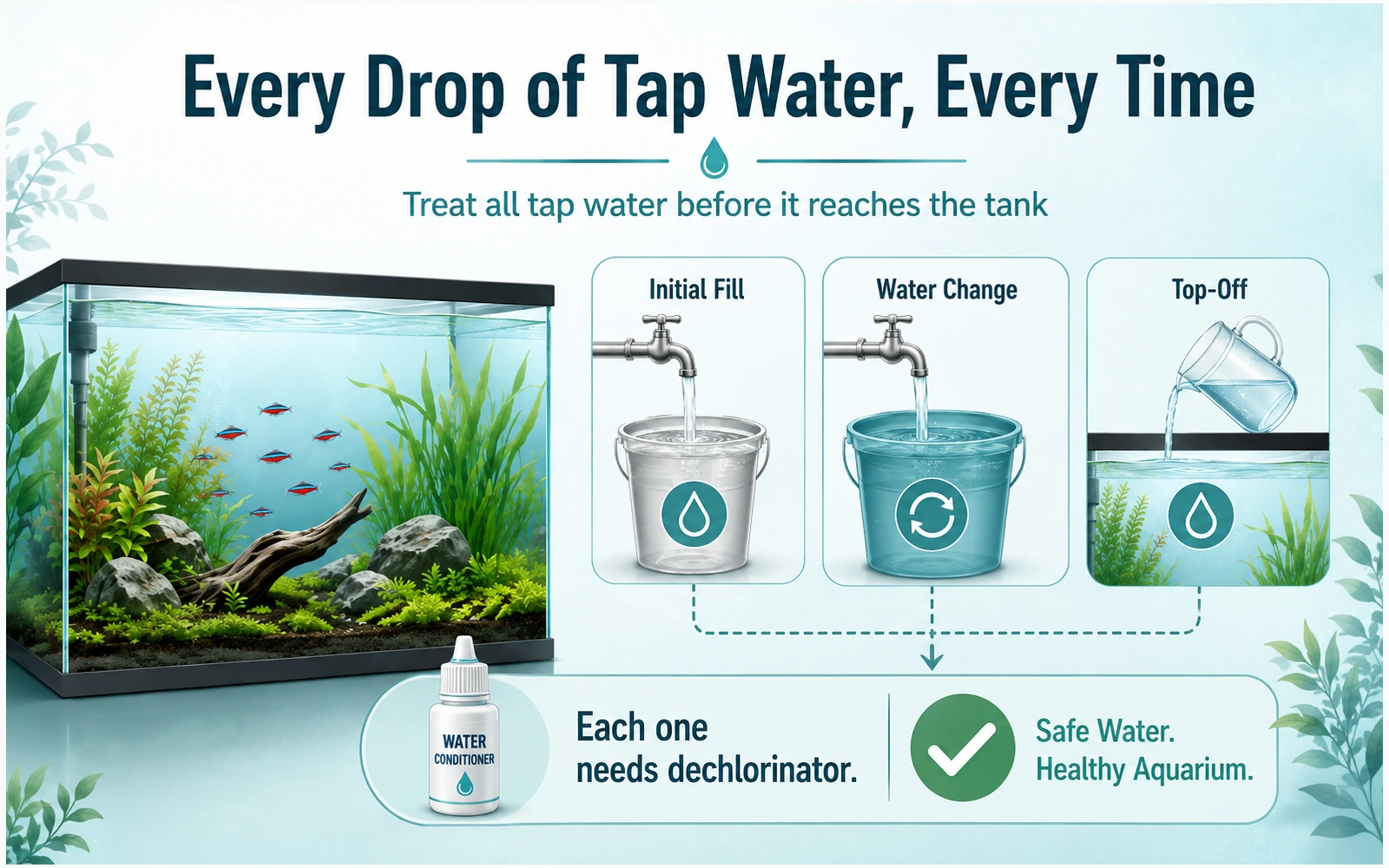
Municipal tap water is treated with chlorine, chloramine, or both, specifically to kill bacteria and make the water safe to drink. That same property makes untreated tap water dangerous to add to an aquarium: it does not distinguish between the bacteria it was designed to kill and the beneficial bacteria your tank depends on. A dechlorinator (water conditioner) neutralizes chlorine and chloramine within seconds of being added, and it needs to go into every drop of tap water that touches the tank, every single time, whether you are filling a brand-new tank, doing a routine water change, or simply topping off water that evaporated.
The Direct Answer: Every Drop of Tap Water, Every Time
There are no exceptions to this rule once tap water is involved: initial fill, every partial water change, and any top-off using tap water all need a dechlorinator added before that water reaches the tank. Skipping it even once can measurably reduce your bacteria colony, and skipping it repeatedly is one of the most commonly reported reasons a cycle refuses to progress.
Chlorine vs. Chloramine: Why "Let It Sit" Doesn't Always Work Anymore
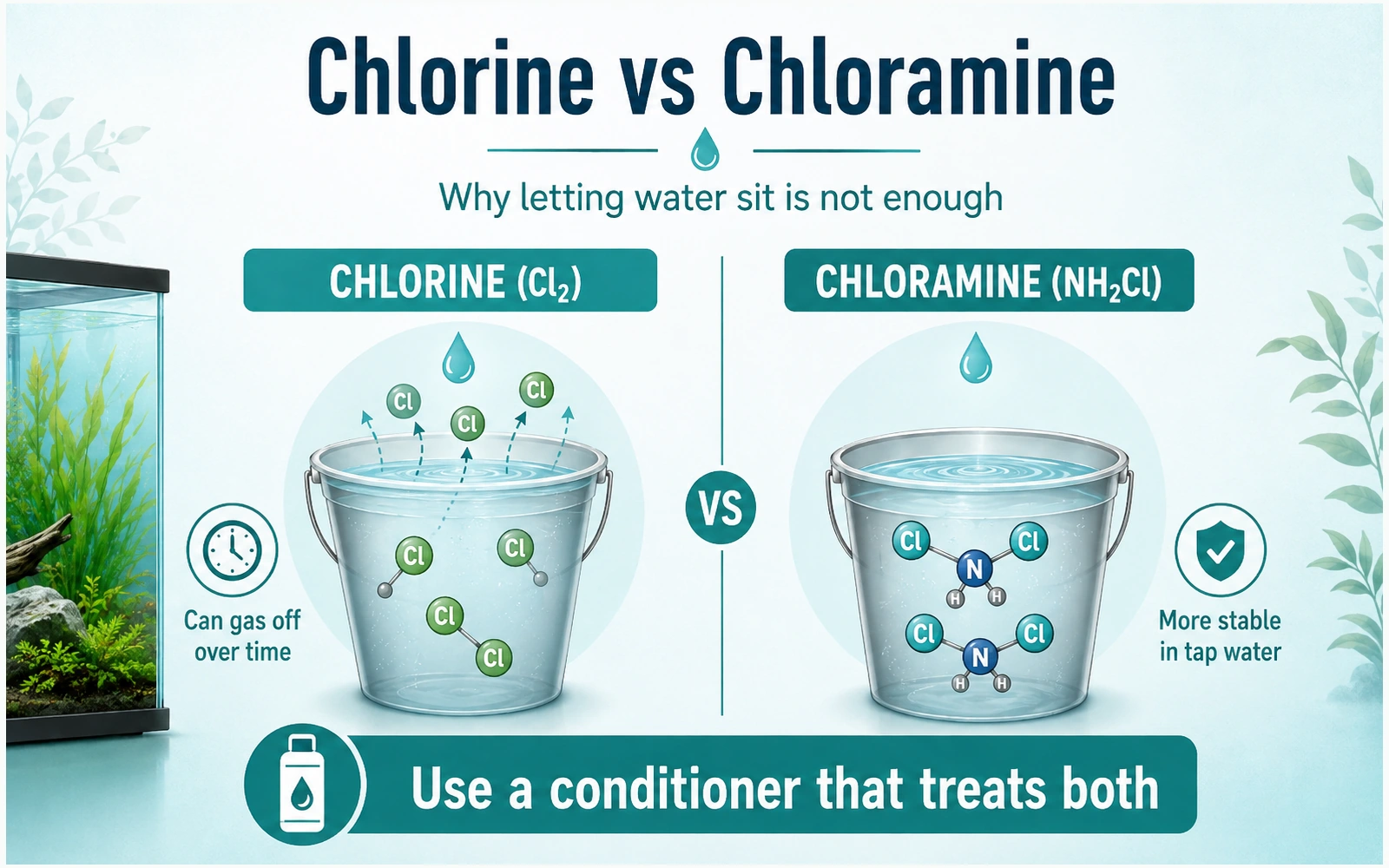
Older hobby advice sometimes suggests letting tap water sit out, uncovered, for a day or two to let chlorine dissipate naturally before adding it to a tank. That advice is only reliable against plain chlorine, which does gas off over time. It is not reliable against chloramine, a more stable compound that many municipal water systems now use specifically because it does not break down and evaporate the way chlorine does on its own. If your water supply uses chloramine, and there is no simple way to know this without checking with your local water provider, letting a bucket sit out overnight does essentially nothing to make it safe. A dechlorinator formulated to neutralize both chlorine and chloramine, used every time, removes the guesswork entirely rather than relying on an old rule of thumb that no longer applies universally.
Why This Specifically Stalls a Cycle or Crashes an Established Tank
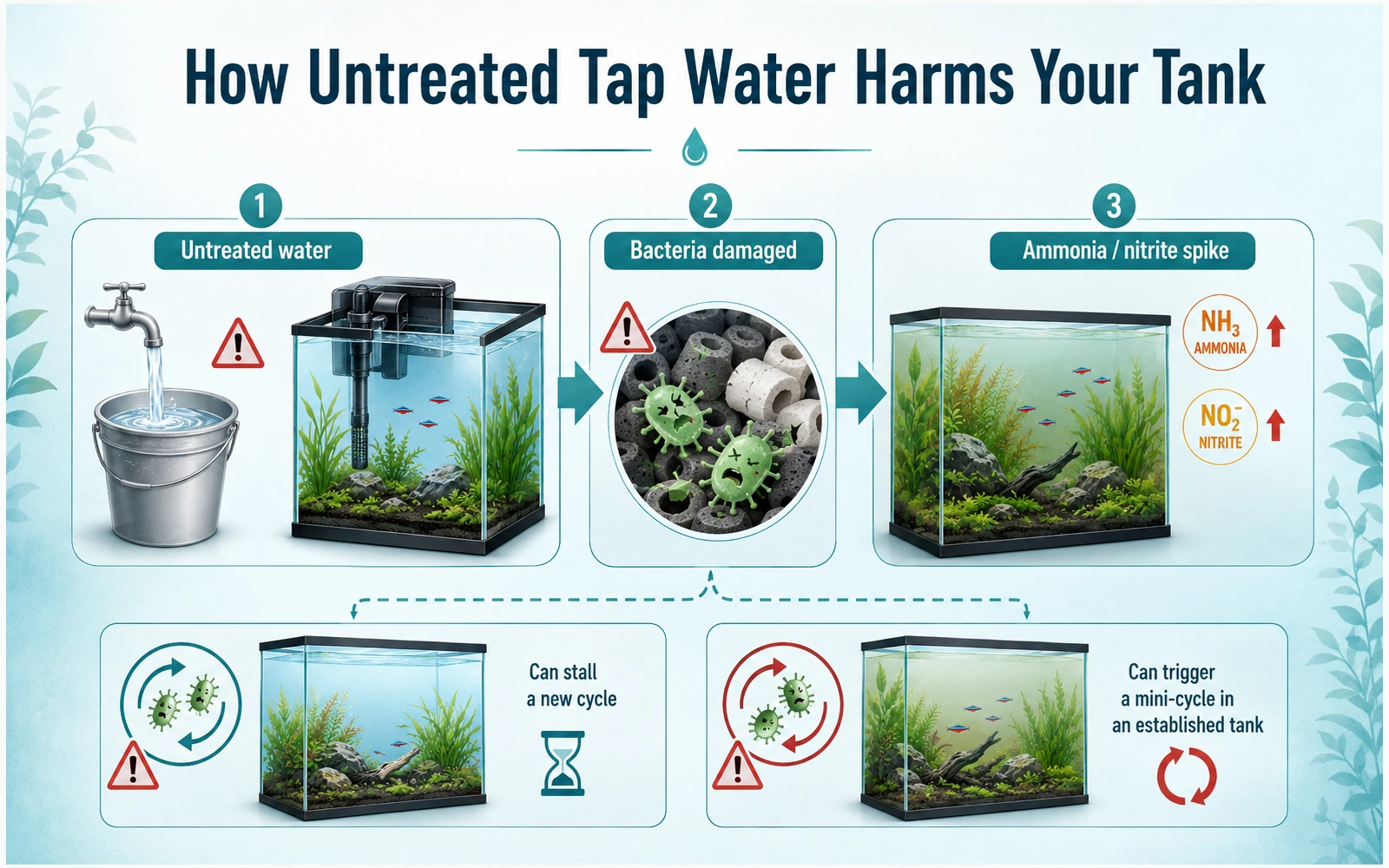
The mechanism is the same whether you are mid-cycle or years into an established tank: chlorine and chloramine kill bacteria, including the nitrifying bacteria living in your filter media and substrate, covered in more detail in where beneficial bacteria actually live. During cycling, repeatedly adding untreated water can prevent the colony from ever building past a small starting population, since a portion is killed off every time fresh, untreated tap water is introduced. In an already-established tank, the same event can knock back a healthy colony enough to produce a temporary ammonia or nitrite spike, sometimes called a mini-cycle, in a tank that had been running perfectly well beforehand.
What a Dechlorinator Actually Does
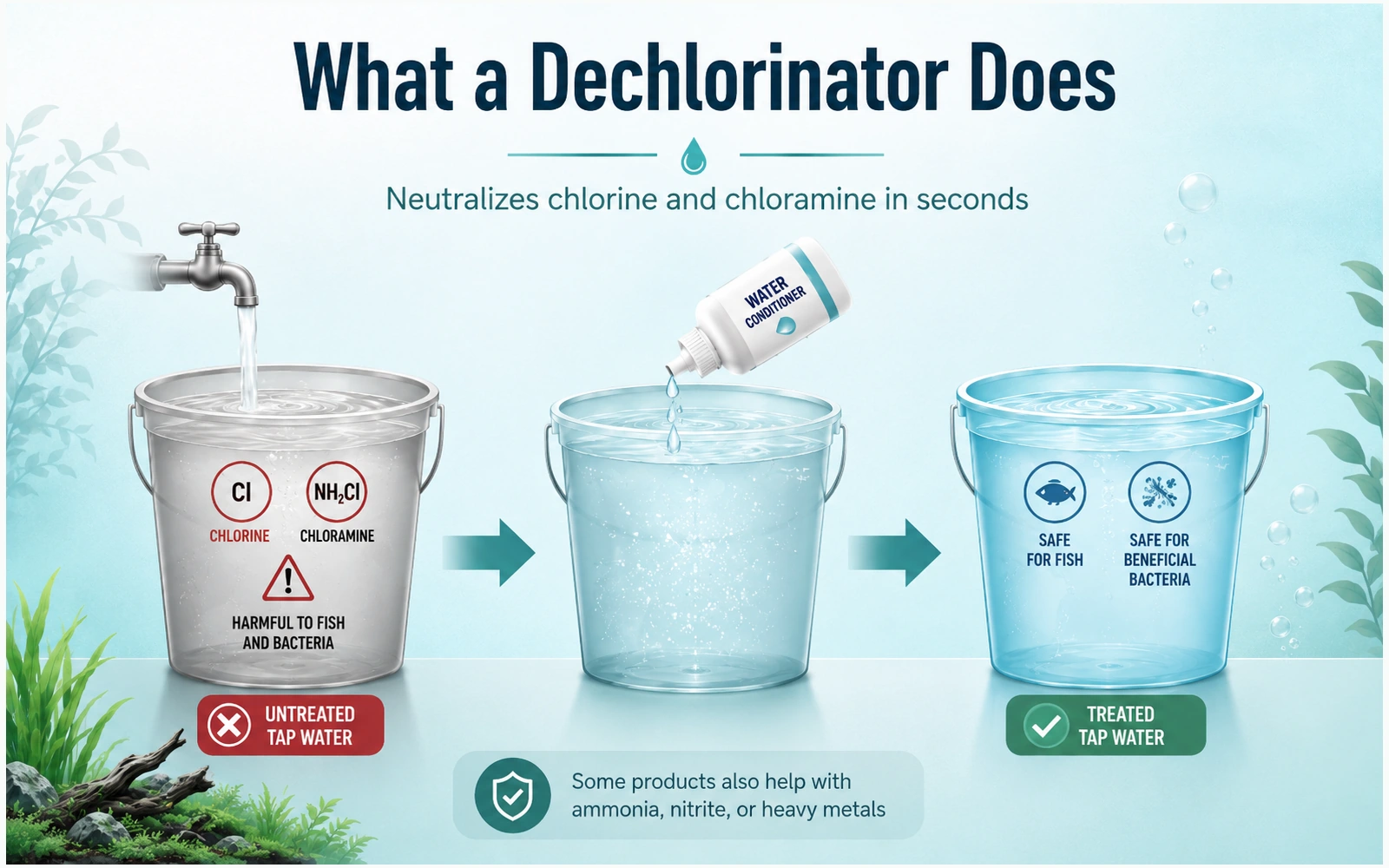
A dechlorinator works chemically, not by filtration: it binds to chlorine and chloramine molecules and converts them into a form that no longer harms fish or bacteria, typically within seconds of contact. This is why it needs to go into the water before or as it enters the tank, rather than being expected to work on water that is already sitting with fish or bacteria in it. Some conditioner formulations also neutralize a limited amount of ammonia or nitrite temporarily, and some bind trace heavy metals that can be present in tap water depending on your local plumbing. These extra properties vary by product and are worth checking on the specific label you are using rather than assuming every dechlorinator behaves identically, but the core job, neutralizing chlorine and chloramine, is universal to the category.
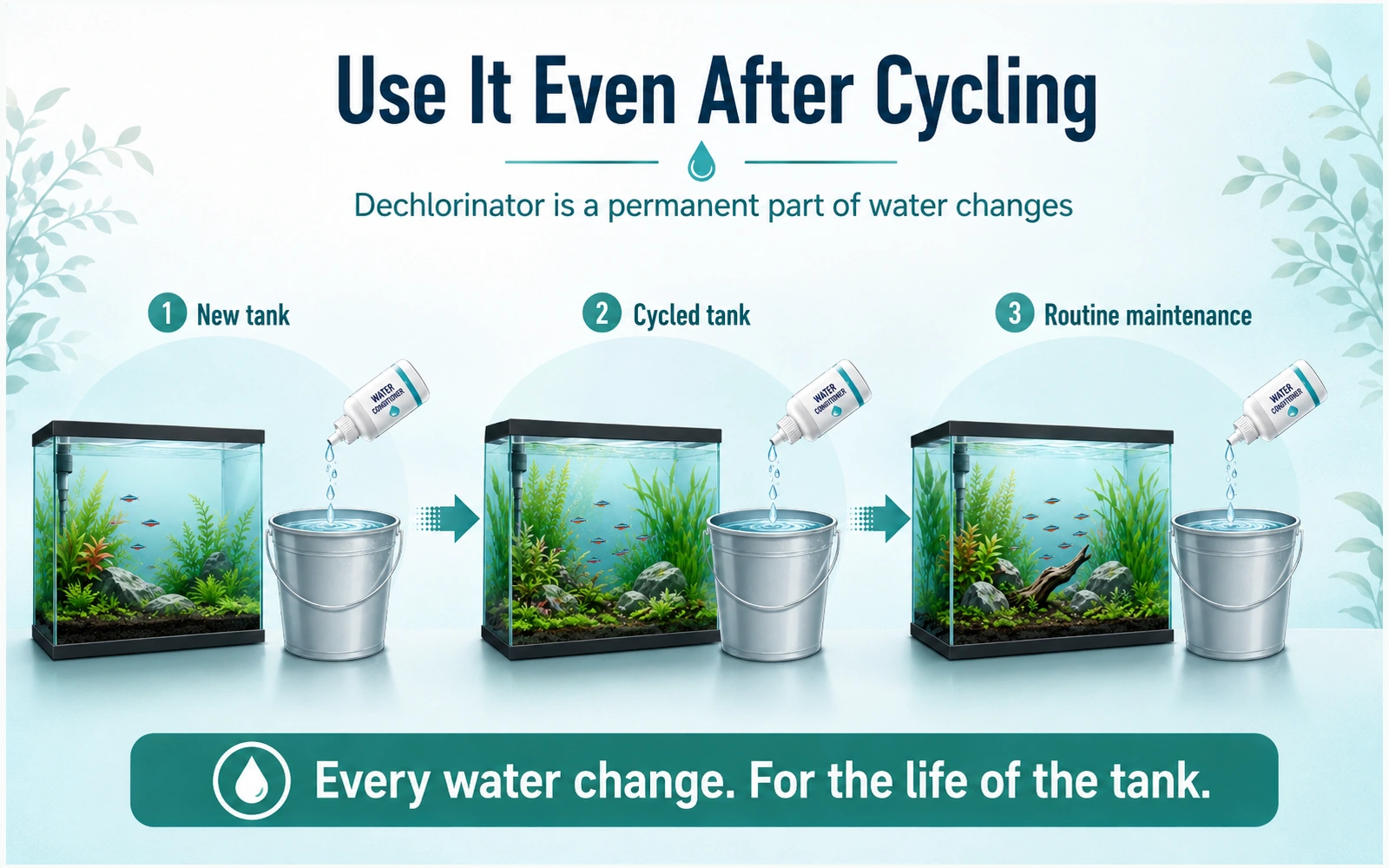
Do You Still Need It Once the Tank Is Cycled? Yes
A common misconception is that dechlorinator is only a cycling-stage requirement, something you can stop bothering with once the tank is established. That is not correct. Every water change for the life of the tank involves adding fresh tap water, and that water carries the same chlorine or chloramine regardless of how long the tank has been running. An established colony is more resilient than a brand-new one, simply because it is larger, but it is not immune, and repeated untreated additions can still cause real, measurable harm over time. Treat dechlorinator as a permanent part of the water-change routine, described in how often to change aquarium water, not a startup-only step.
If You Think This Already Happened to You
If you suspect untreated tap water is the reason your cycle has stalled, or the reason an established tank suddenly shows ammonia or nitrite again, the fix going forward is straightforward: confirm every future water addition is properly treated, then give the colony time to recover. The recovery itself follows the same pattern as any reduced or stalled colony rebuilding: keep the filter running continuously, keep testing, and expect a real wait rather than an instant fix. Why a cycle stalls on ammonia walks through this recovery process, since a bacteria colony set back by chlorine exposure behaves the same way as one set back by any other cause once you correct the underlying problem.
A Practical Habit That Prevents Most Mistakes
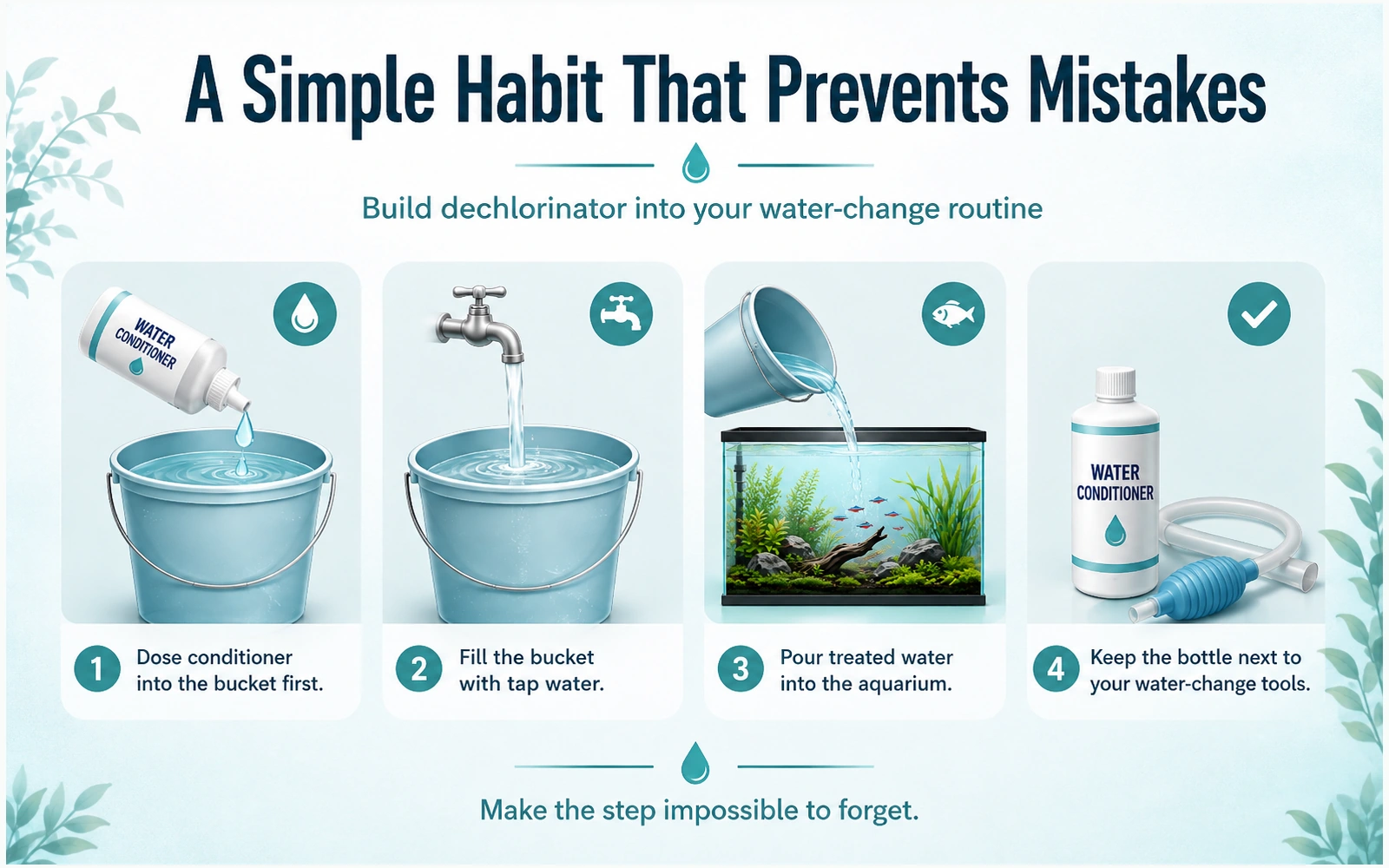
The easiest way to avoid ever skipping this step is to treat dosing dechlorinator as part of filling the bucket, not as a separate step you do afterward and might forget. Add the conditioner to an empty bucket first, then fill it with tap water, or dose it immediately as the bucket fills, rather than filling the bucket completely and relying on remembering to treat it before pouring it into the tank. Keep the conditioner bottle stored next to your water-change equipment, not in a separate cabinet, so the two are physically linked in your routine. This single habit change accounts for a large share of the "I forgot" mistakes reported across cycling and maintenance troubleshooting threads.
FAQ
Do I need to add dechlorinator to every water change, even after my tank is cycled?
Yes. Chlorine and chloramine are present in tap water regardless of how established your tank is, and both can harm your beneficial bacteria and your fish. Treat every addition of tap water, for the life of the tank, not just during the initial cycle.
Does letting tap water sit out remove chloramine?
Not reliably. Letting water sit does help chlorine dissipate over time, but chloramine is more stable and does not break down the same way. Many municipal water supplies use chloramine specifically because of that stability, so a dechlorinator formulated for both is the more reliable approach.
Can untreated tap water actually stall a fishless cycle?
Yes. Chlorine and chloramine kill bacteria, including the nitrifying bacteria you are trying to grow. Repeatedly adding untreated water during cycling can prevent the colony from building past a small population, which looks identical to a stalled cycle from any other cause.
Can this happen to an already-established, fully cycled tank?
Yes. A large, established colony is more resilient than a new one, but it is not immune. Repeated untreated water additions can still reduce the colony enough to cause a temporary ammonia or nitrite spike, sometimes called a mini-cycle.
How do I know if my water supply uses chlorine or chloramine?
There is no reliable way to tell just by looking at or smelling the water. Checking with your local water provider is the only certain way to know, which is exactly why using a dechlorinator formulated to neutralize both, every time, removes the need to guess.