Before assuming a genuine crash, check whether your test kit itself is the problem: this is common enough that it has a well-documented example. Some widely used liquid ammonia kits are commonly reported to settle at a small false-positive reading, often cited around 0.25 ppm, even on water that is actually at true zero, and reagents generally degrade with age and poor storage in ways that push readings in either direction. A single confusing reading is more often a kit issue than a real crash. A consistent, multi-day trend across more than one parameter is what actually indicates something changed in the tank itself.
The Direct Answer: Check the Pattern Before You Believe One Reading
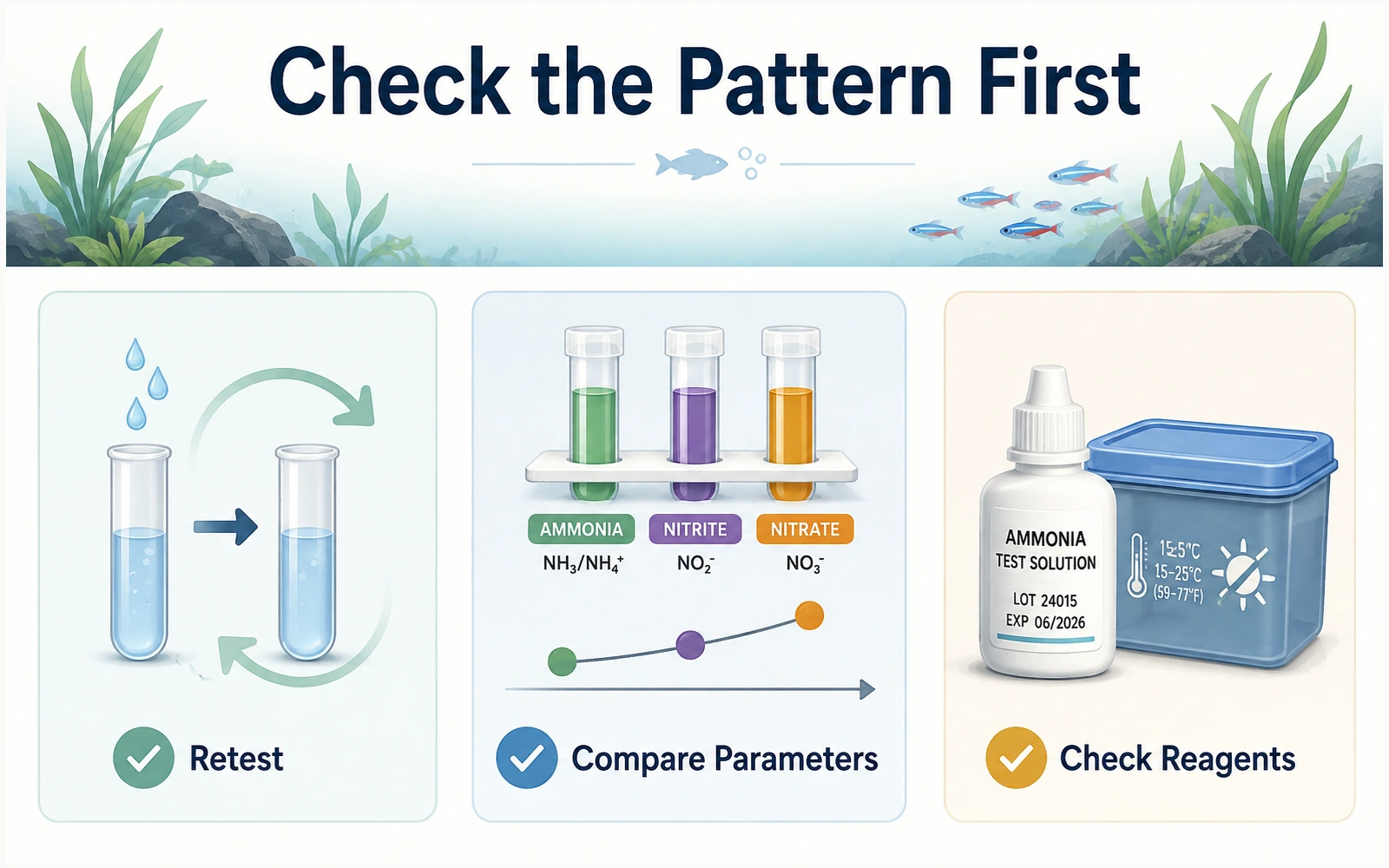
A single odd number is weak evidence on its own. Before concluding your cycle crashed, look at three things together: whether the reading has held steady across a retest with a fresh sample, whether nitrite and nitrate are behaving consistently with what ammonia is telling you, and how old and how well-stored your reagents actually are. A genuine crash shows up as a real, sustained trend across the whole picture, not as one number that looks off.
The Most Common False Positive: Ammonia That Never Quite Reaches Zero
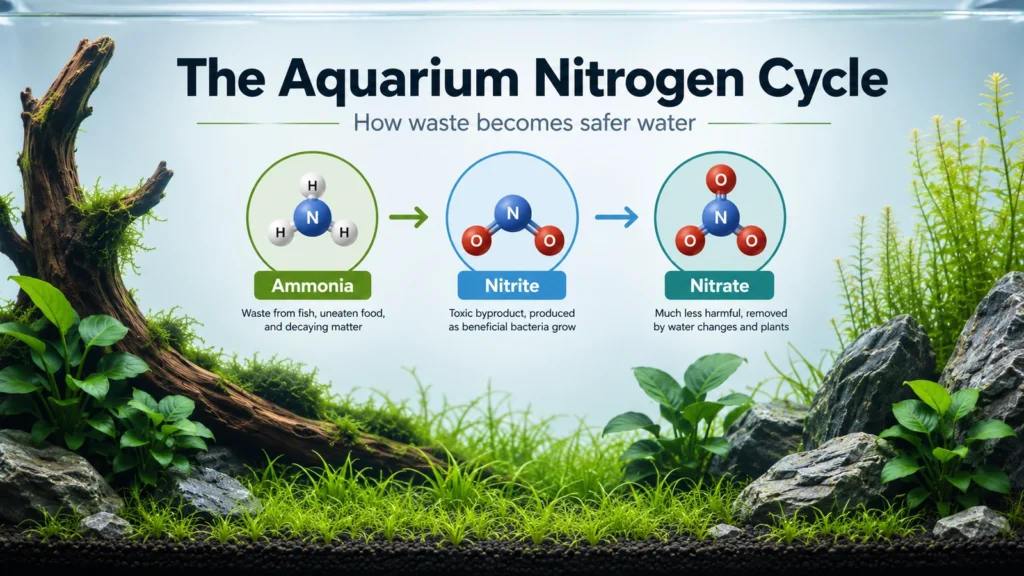
This is worth naming specifically because it causes real, unnecessary distress. Some widely used liquid ammonia test kits are commonly reported to plateau at a small non-zero reading, often described around 0.25 ppm, as a baseline artifact of the reagent chemistry rather than a true reflection of the water. Aquarists who do not know this pattern exists can spend months treating an already-finished cycle as a stalled one, chasing a "true zero" that the kit was never going to show them. If your ammonia reading has been stuck at a small, unchanging low number for a long stretch while nitrite and nitrate both look healthy and stable, that pattern is worth weighing against the possibility that the kit itself has a baseline offset, rather than assuming the cycle is incomplete.
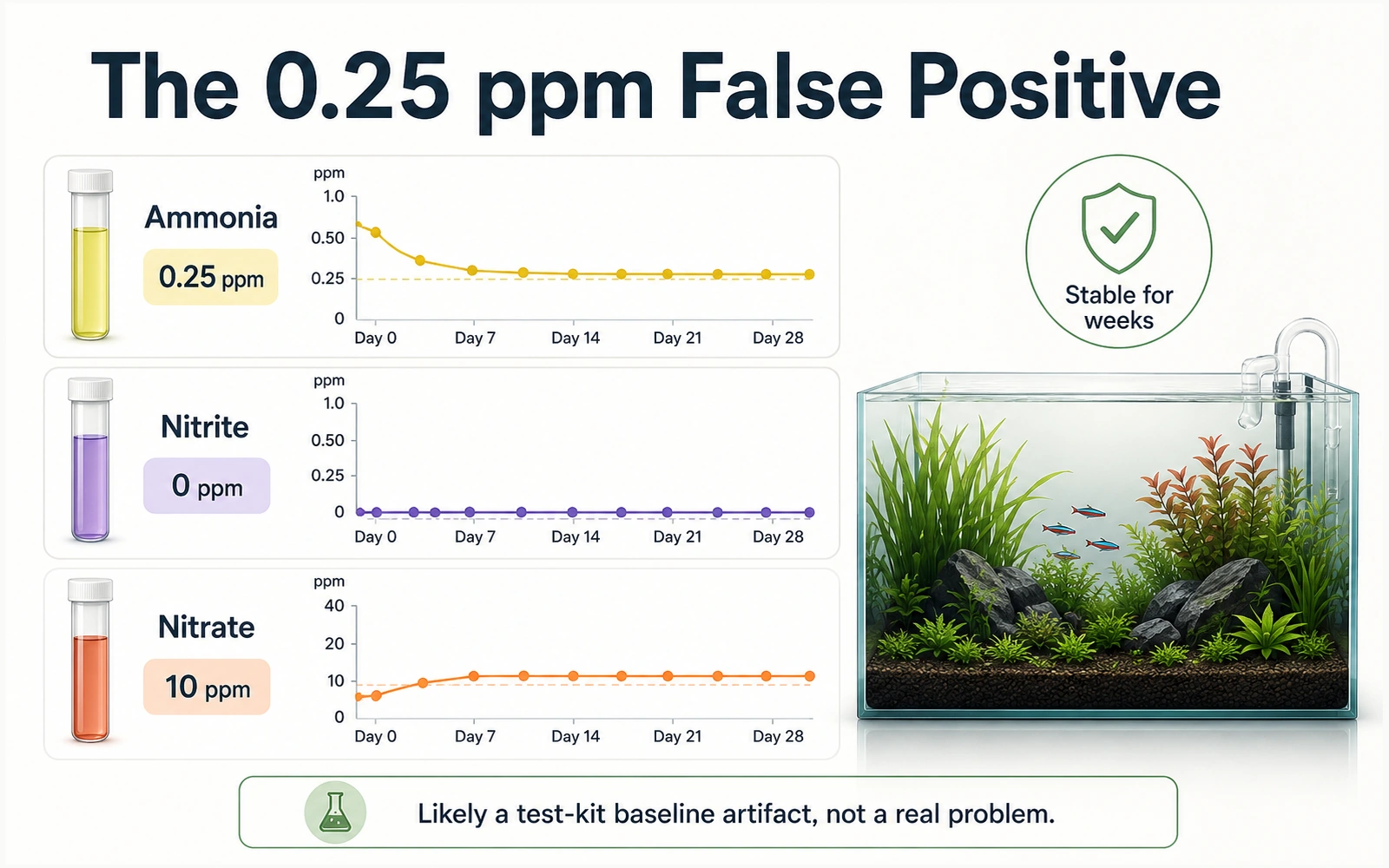
This is not a reason to stop testing, and it does not mean every low reading is a false positive. It is a reason to interpret a small, unmoving number in context rather than in isolation.
Signs Your Test Kit, Not Your Tank, Is the Problem
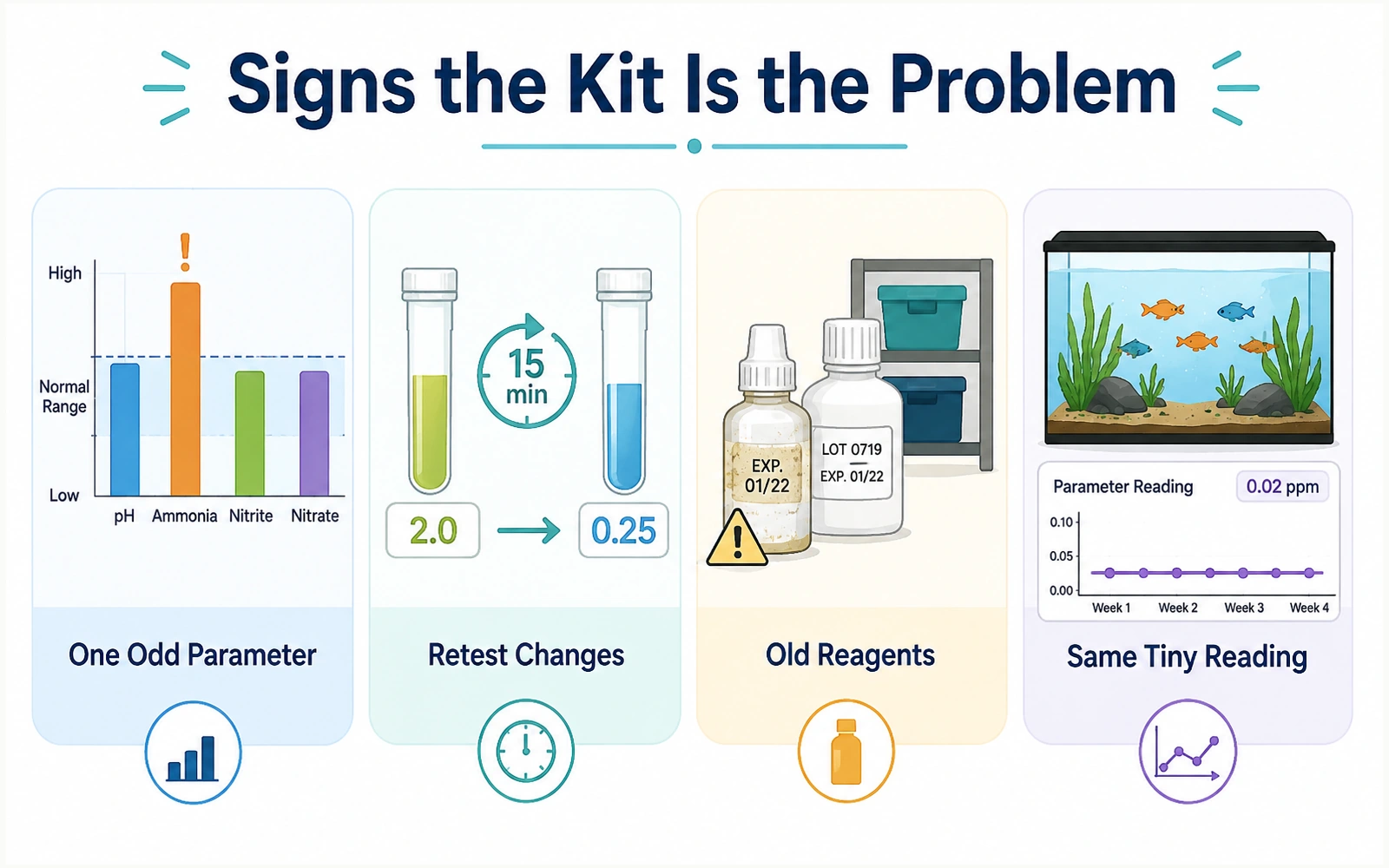
- The odd reading appears in only one parameter, while the others tell a consistent, healthy story. A tank that is genuinely crashing rarely does so in only ammonia while nitrite and nitrate stay perfectly normal.
- A fresh retest with a new sample, mixed and timed exactly per the kit's instructions, gives a different number. Reagent bottles, especially the second bottle in many liquid kits, often need vigorous, extended shaking to read correctly; a rushed test is a common source of a one-off bad reading.
- The kit is old, has been stored somewhere hot or humid, or has been open for a long time. Reagents are chemicals, and chemicals degrade. A kit stored in a garage or a warm bathroom cabinet is more likely to give an unreliable reading than one stored in a cool, dry, stable spot.
- The reading has been the same small number for weeks, with no trend in either direction, while everything else about the tank looks and behaves normally.
Signs It's a Genuine Crash
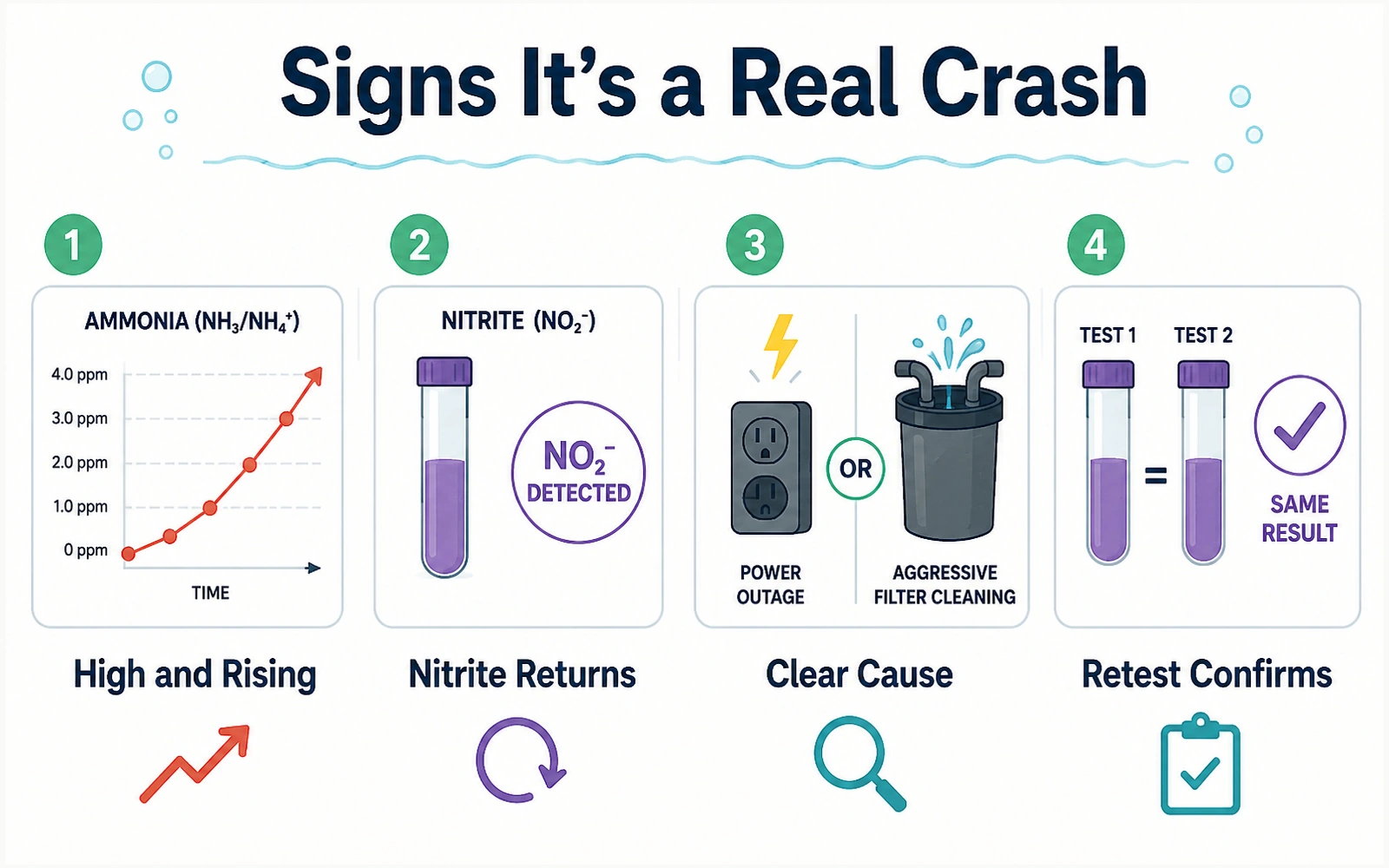
- The reading is high, not just slightly non-zero, and moving in a clearly worsening direction across multiple retests.
- More than one parameter shifts together. Ammonia rising alongside nitrite appearing again, both trending the wrong way, is a much stronger signal of an actual lost colony than one number sitting still.
- There is an identifiable cause. A recent aggressive filter clean, a medication dose, a power outage, or a big jump in stocking are all plausible explanations for a real crash, covered in more depth in where beneficial bacteria actually live, which explains how each of those events can knock back the colony.
- A fresh sample, tested carefully per the kit's instructions, confirms the same result.
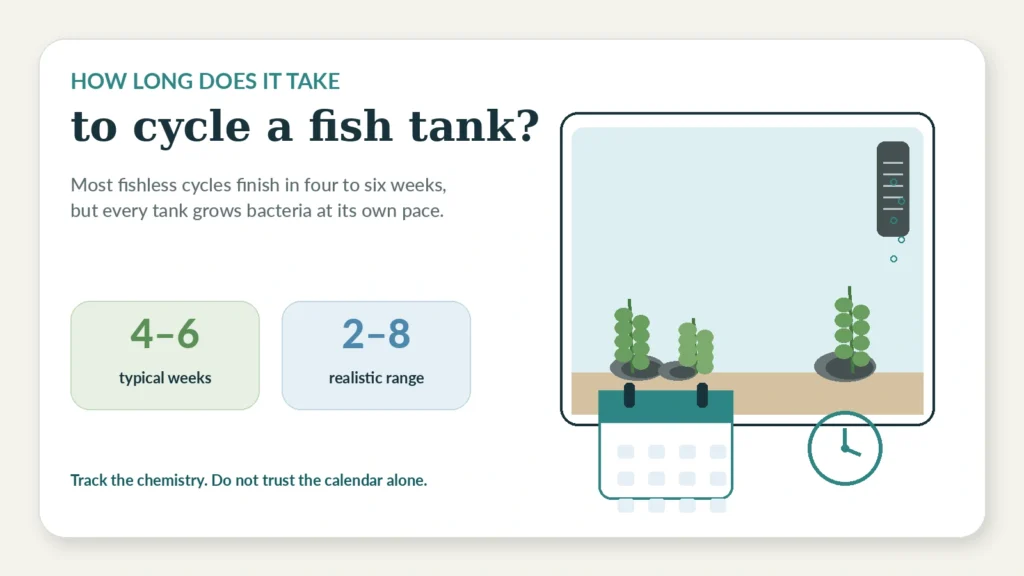
If the pattern points to a genuine crash, treat it the same way you would treat any stalled or regressed cycle: keep dosing ammonia to a moderate level, keep testing daily, and expect the recovery timeline described in why a cycle stalls on ammonia, since a colony rebuilding from a partial loss follows a similar pattern to one building from scratch, just usually somewhat faster if some of the colony survived.
How to Care for Reagents So This Happens Less
Liquid test kit reagents are commonly reported to last roughly three to five years unopened when stored properly, with a shorter useful life once opened, though this varies by brand and by how the bottles are handled. A few habits reduce the odds of a bad reading:
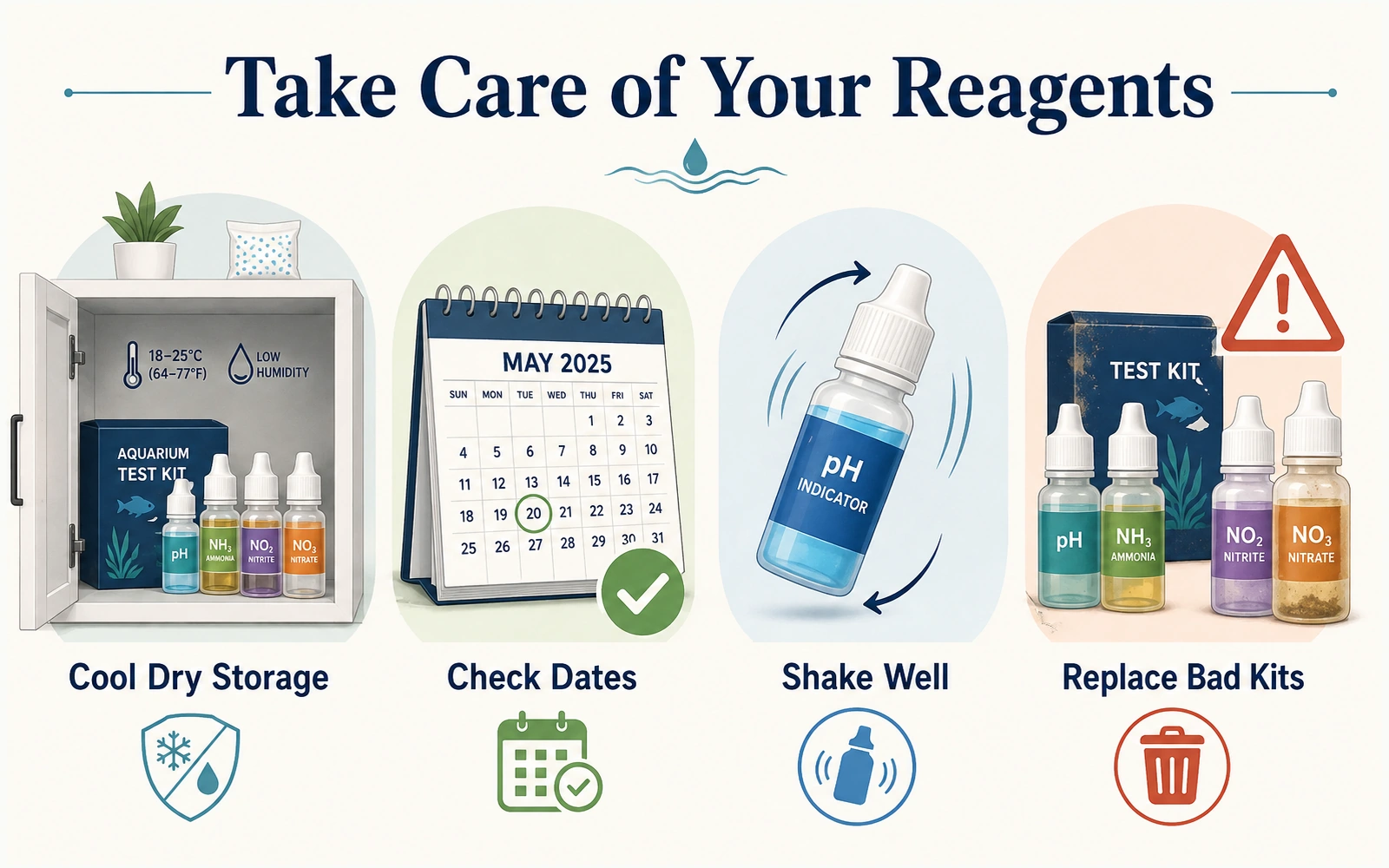
- Store kits in a cool, dry, stable location, away from direct sunlight and temperature swings.
- Check any date markings on the packaging and treat a kit well past that point with more suspicion.
- Shake reagent bottles, especially a second or third reagent bottle in a multi-step test, for the full duration the instructions specify, not a quick few shakes.
- Replace a kit that consistently behaves oddly across multiple parameters rather than continuing to interpret confusing results from it.
What to Do Next, Either Way
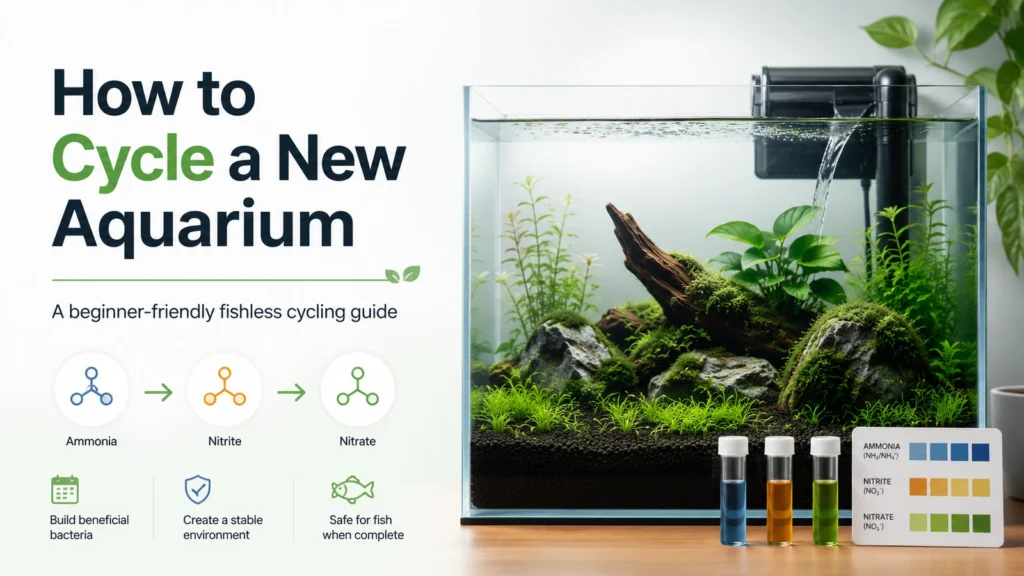
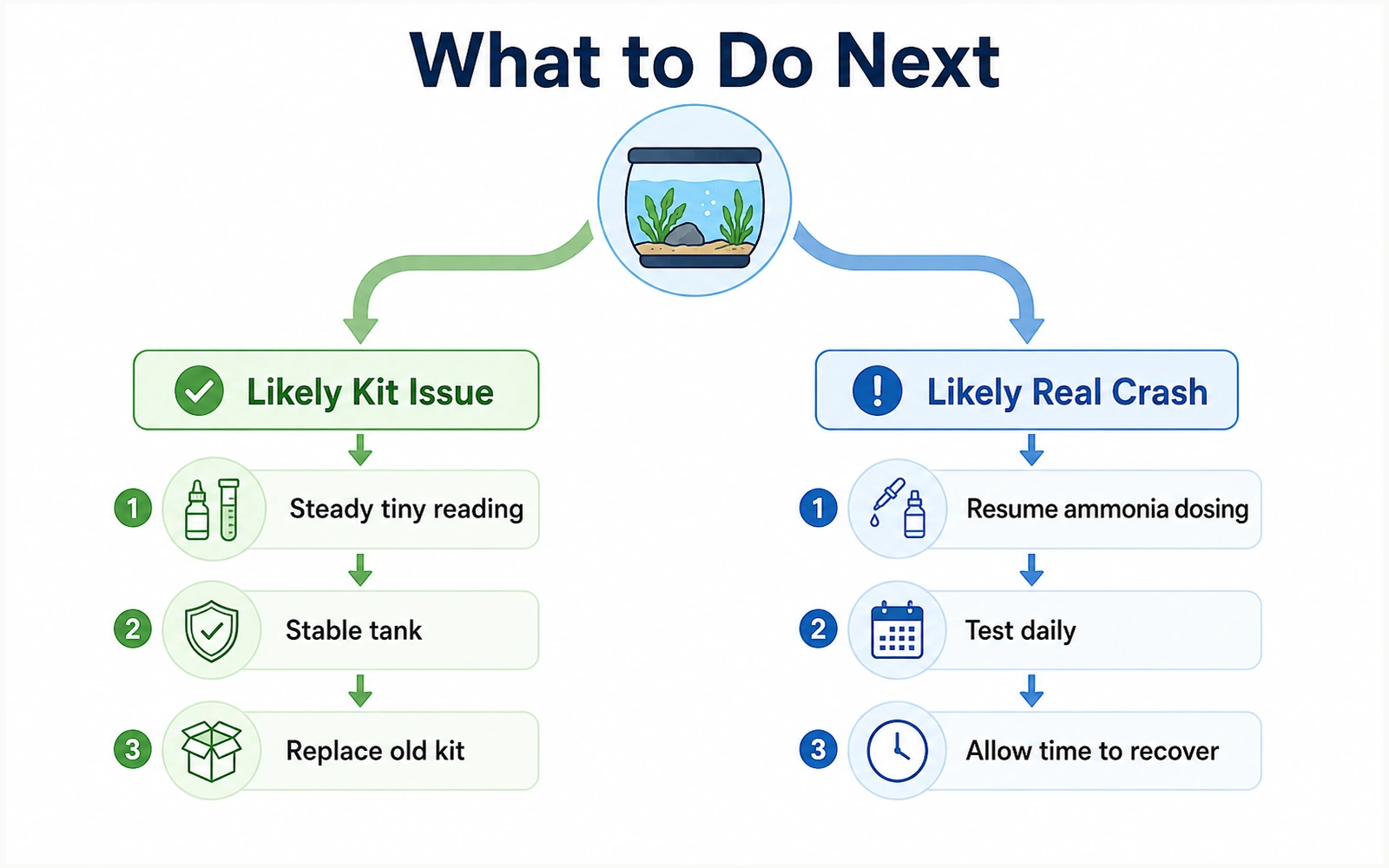
If the evidence points to a test kit issue, the honest fix is simple: interpret the small, steady reading in context, consider replacing an old or poorly stored kit, and trust the overall pattern across ammonia, nitrite, and nitrate rather than chasing a single number to an exact zero. If the evidence points to a genuine crash, the fix is the same process used for any lost or reduced colony: resume dosing ammonia, test daily, and expect the tank to need real time to rebuild, following the same troubleshooting logic covered in how to cycle a new aquarium and why a cycle stalls on ammonia.
FAQ
Can a test kit give a false ammonia reading during cycling?
Yes. Some widely used liquid ammonia kits are commonly reported to settle at a small non-zero baseline reading, often cited around 0.25 ppm, even in water that is genuinely at zero. Reagent age and poor storage can also push readings in either direction.
How do I know if my cycle actually crashed?
Look for a consistent, worsening trend across more than one parameter (ammonia and nitrite both rising together, for example), an identifiable cause such as an aggressive filter clean or a power outage, and a confirmed result on a careful retest with a fresh sample, not just one odd number.
Why does my ammonia never quite reach true zero even after weeks?
This can be a genuine, small, unfinished trace, or it can be a baseline artifact of the specific test kit's reagent chemistry. If nitrite and nitrate both look healthy and stable and the number has not moved in a long time, weigh the possibility that the kit itself has an offset before assuming the tank is still cycling.
How long do aquarium test kit reagents last?
Commonly reported at roughly three to five years unopened when stored properly, with a shorter reliable life once opened. Heat, humidity, and age all degrade reagent accuracy, so a kit stored poorly or used well past any date marking deserves more scrutiny.
What should I do if I genuinely can't tell whether it's my kit or my tank?
Retest with a completely fresh sample, following the kit's shake and wait times exactly, and compare the trend across ammonia, nitrite, and nitrate together rather than relying on a single reading. A kit that gives inconsistent results across careful retests is the more likely explanation.