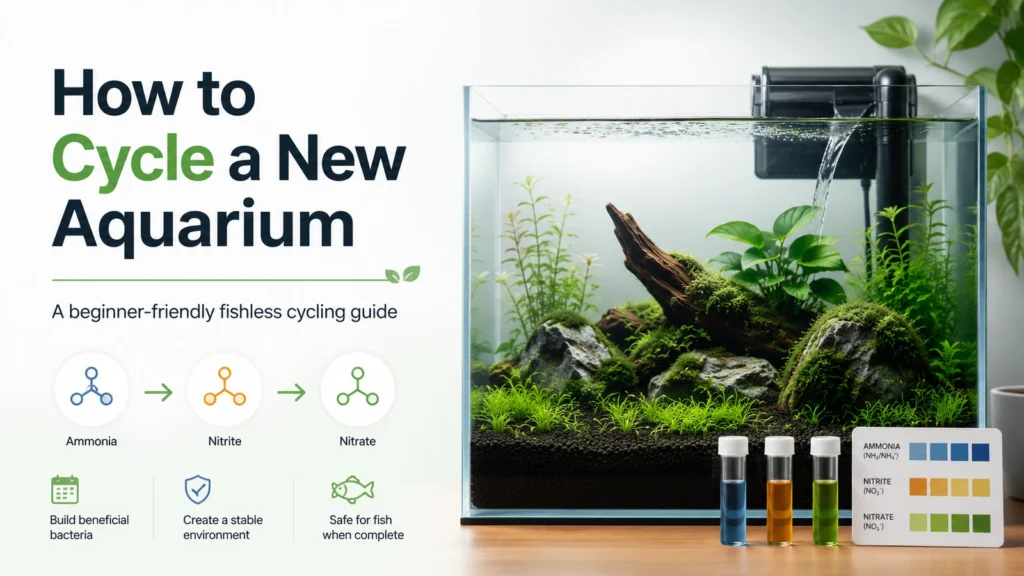
The nitrogen cycle is the process by which two groups of bacteria convert fish waste into progressively less toxic compounds: ammonia first becomes nitrite, and nitrite then becomes nitrate. Ammonia and nitrite are both genuinely dangerous to fish; nitrate is much less so and is removed with routine water changes instead of by bacteria. Every established aquarium runs this process constantly, in the background, for as long as it holds fish. "Cycling" a new tank simply means growing those bacteria colonies large enough, before fish arrive, that the process can keep up with the waste a stocked tank produces. The rest of this guide explains why each compound matters and what the process actually looks like along the way.
The Short Version: Three Compounds, Two Kinds of Bacteria
Fish waste and uneaten food break down into ammonia (NH3). Left alone, ammonia would simply accumulate and poison the water. Two groups of bacteria prevent that:
- One group consumes ammonia and produces nitrite (NO2).
- A second, slower-to-establish group consumes nitrite and produces nitrate (NO3).
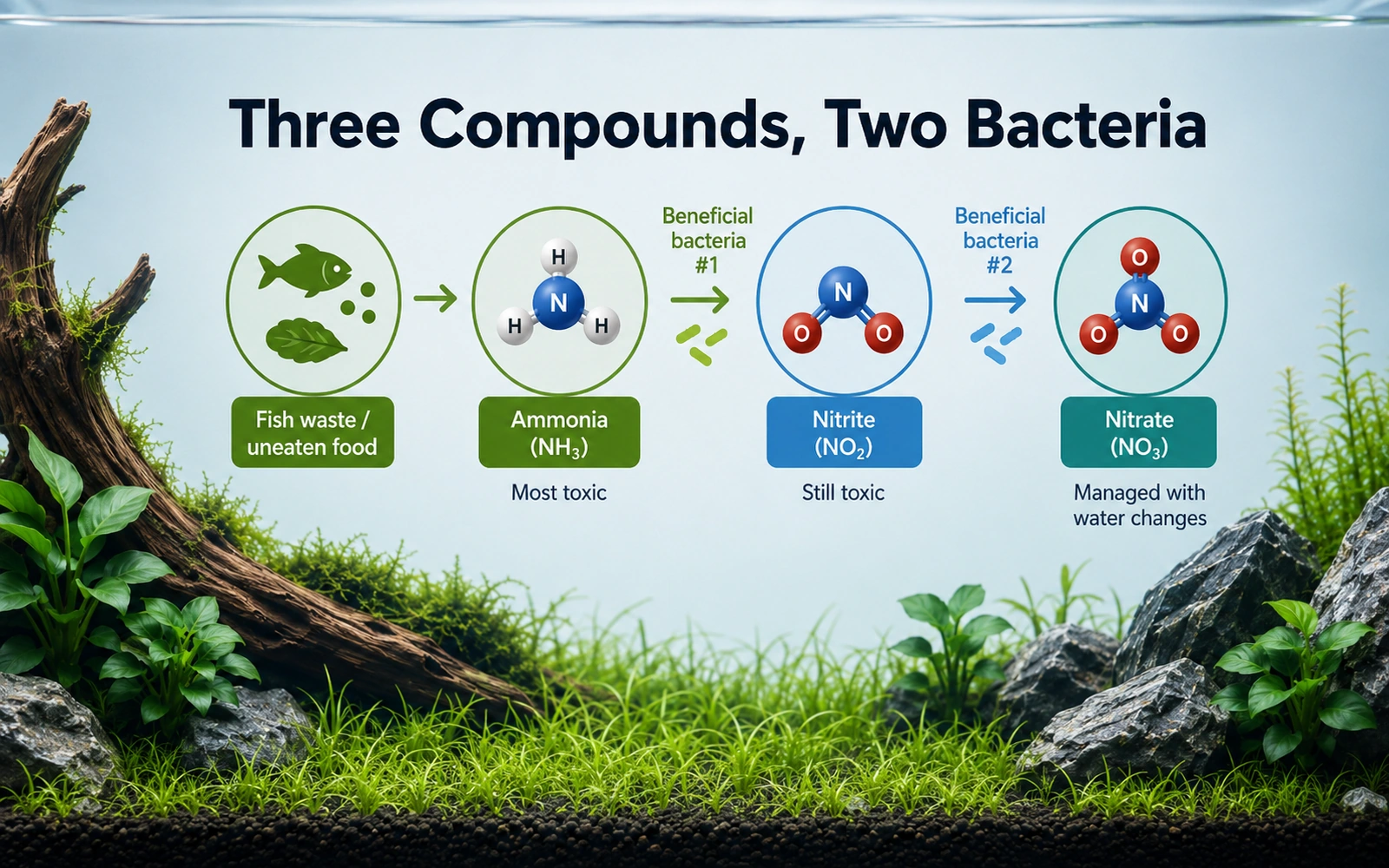
Nitrate is the end product a healthy, cycled tank accumulates, and it is managed with regular water changes rather than broken down further by the tank itself. That three-step chain, ammonia to nitrite to nitrate, is the entire nitrogen cycle. Everything else in this guide is really just explaining why each of those three compounds matters and how to recognize where a tank sits in the chain.
Why Ammonia Is Dangerous, Not Just "Toxic"
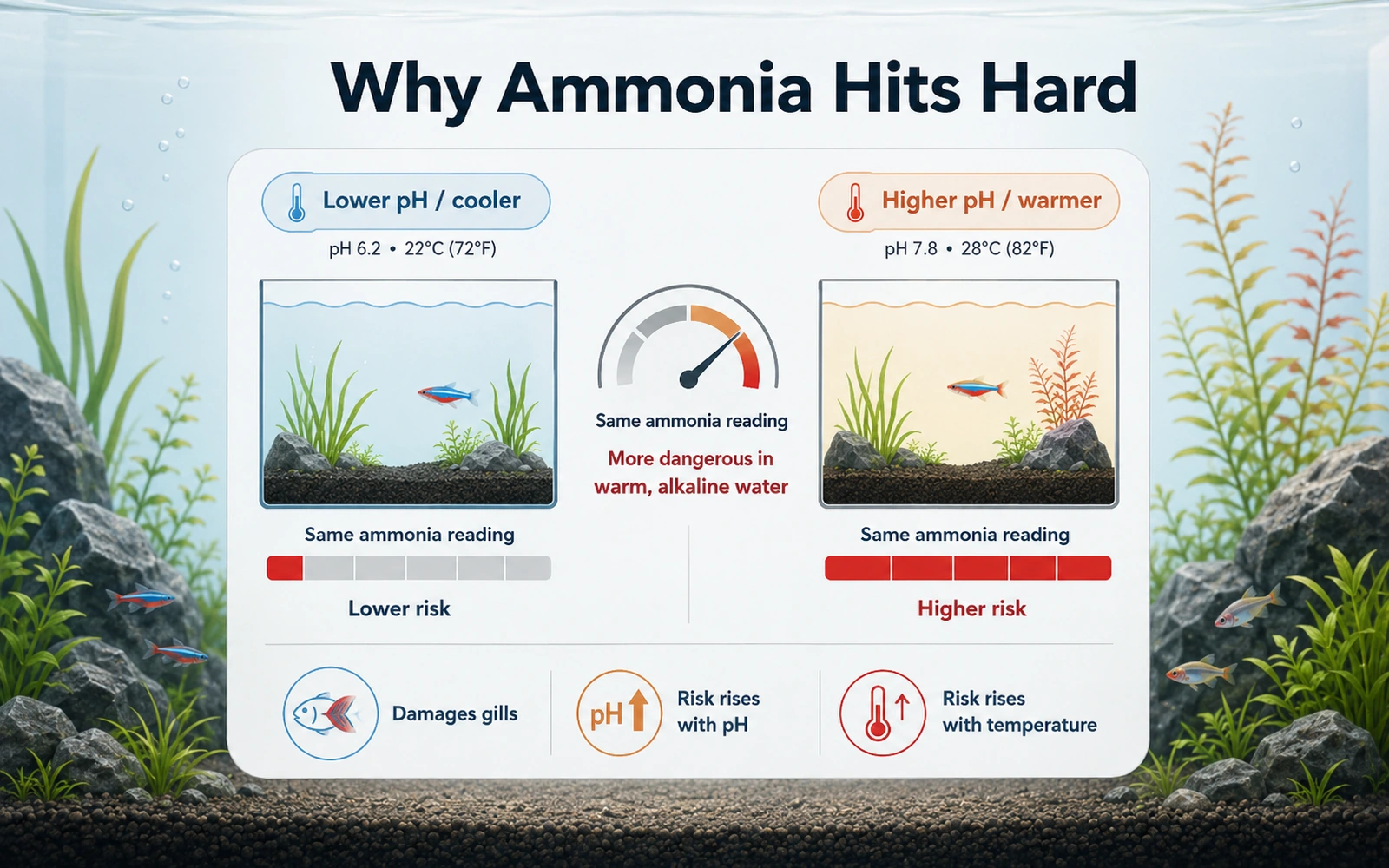
Most guides stop at "ammonia is toxic to fish." The mechanism is worth knowing because it explains a few practical things later in this guide. Ammonia exists in water in two related forms: an ionized form (ammonium) and an un-ionized form. The un-ionized form is the one that damages gill tissue and interferes with a fish's ability to manage its own internal chemistry, and the proportion of un-ionized ammonia in the water rises as pH and temperature rise. This is why the same ammonia reading can be a bigger problem in a warmer, higher-pH tank than in a cooler, more acidic one, and it is one reason a stalled cycle in a very soft, acidic tank behaves differently from one in harder water (more on that in why a cycle stalls).
Practically, this means: do not judge ammonia risk purely by the number on the test kit. The same reading is more dangerous in a warm, alkaline tank than in a cool, slightly acidic one. It does not change what you do (get ammonia to zero, regardless), but it explains why two hobbyists with "the same" ammonia reading can describe very different amounts of fish stress.
Why Nitrite Is Dangerous, and Often Worse Than Ammonia
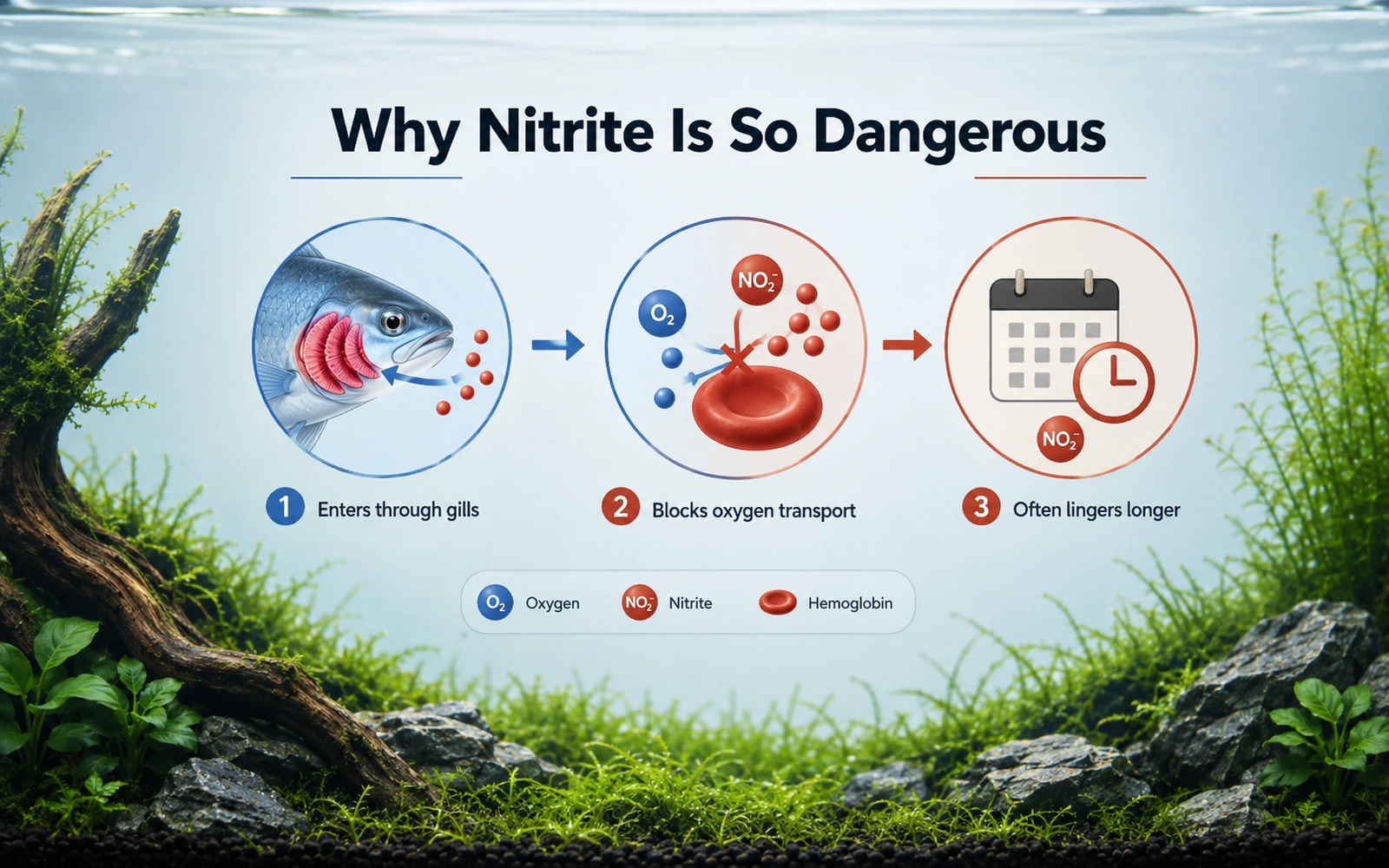
Nitrite does its damage differently. It crosses the gill membrane into a fish's bloodstream and binds to hemoglobin, converting it into a form that cannot carry oxygen properly. Fish exposed to high nitrite can effectively suffocate even in well-oxygenated water, because the oxygen is in the water but their blood can no longer transport it. Long-running hobby literature refers to the visible result in some species as "brown blood disease," because affected blood can take on a brownish tint from the altered hemoglobin.
This is also why nitrite is frequently the more frustrating half of a cycle. The bacteria that consume nitrite establish more slowly than the ammonia-consuming bacteria, so it is common to see nitrite spike hard and sit high for a week or more even after ammonia is already reading zero. That is a normal stage of the process, not a sign that something has gone wrong, and the nitrite-stuck guide covers what to do while you wait it out.
Why Nitrate Is Different
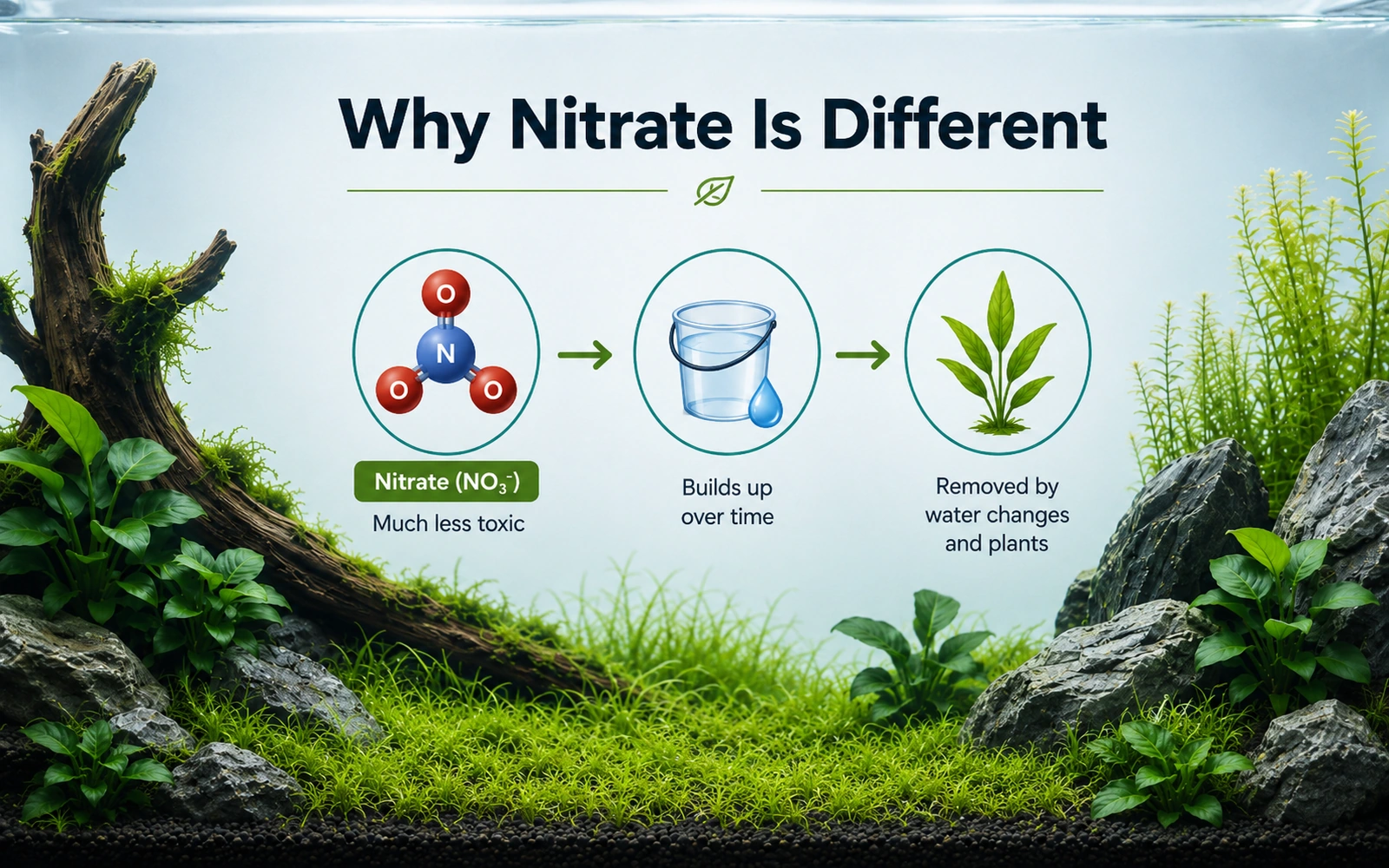
Nitrate is not harmless, but it is dramatically less toxic than ammonia or nitrite at the concentrations a home aquarium typically reaches. The key practical difference: no ordinary tank bacteria colony converts nitrate into something else at a meaningful rate the way the first two stages happen. Nitrate simply accumulates until it is physically removed, mainly through water changes, or taken up by live plants as a nutrient. That is why "the cycle" is described as a three-step chain rather than a closed loop: the chain has a genuine endpoint that requires you, not bacteria, to close it.
For what a specific nitrate reading actually means for your tank and when it is worth acting on, see aquarium water parameters, which walks through what to do with a number once you have one.
The Nitrogen Cycle vs. "Cycling a Tank": Two Different Things People Confuse
These two phrases get used almost interchangeably in the hobby, and that causes real confusion. They are not quite the same thing:
- The nitrogen cycle is the ongoing chemical process (ammonia to nitrite to nitrate) that runs continuously in every stocked aquarium, forever, for as long as fish are producing waste.
- "Cycling" a tank refers specifically to the startup period before fish arrive, when you are growing the bacteria colonies large enough to handle a fish's waste load safely.
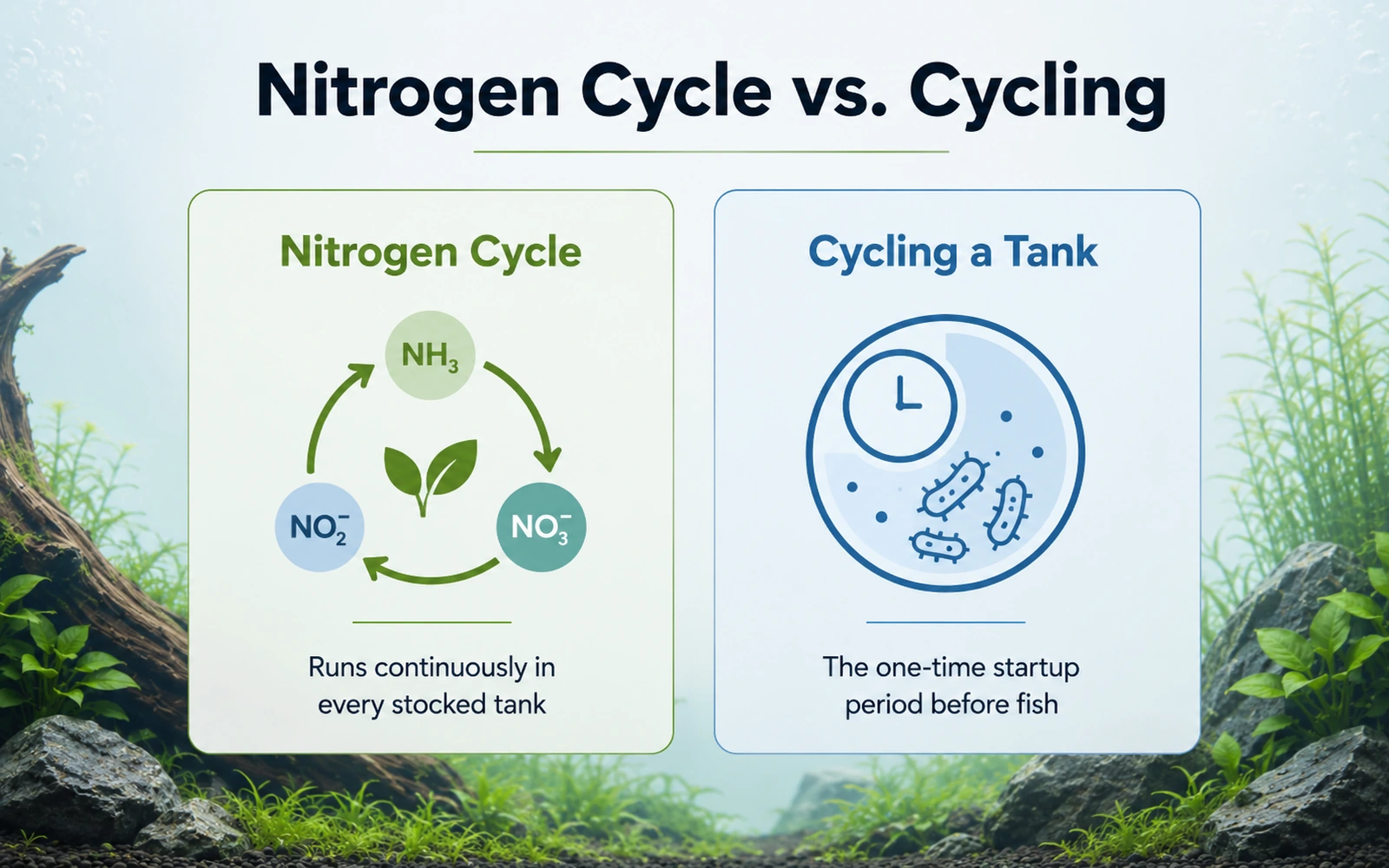
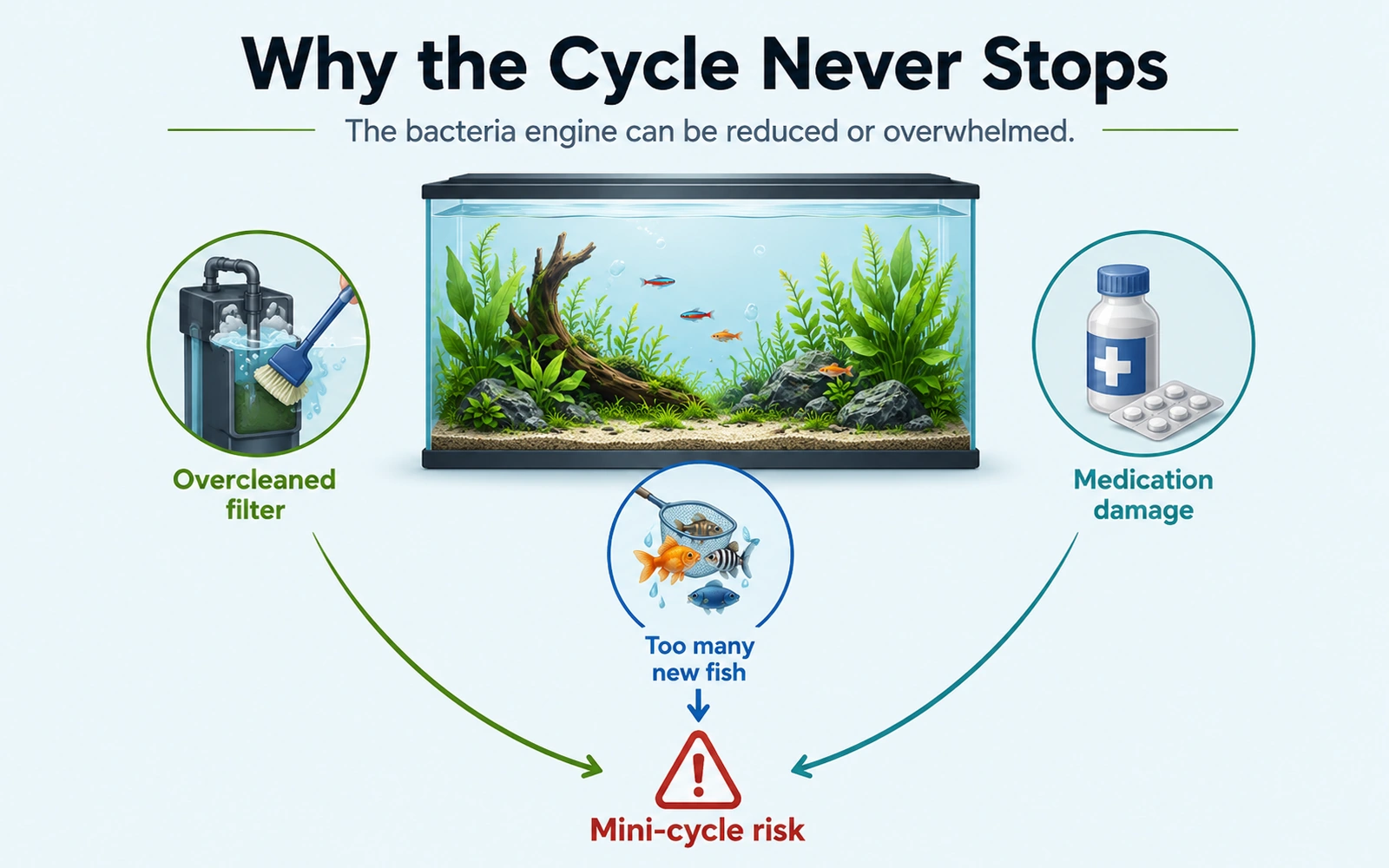
Once a tank is "cycled," the nitrogen cycle does not stop. It keeps running for the life of the tank; it is simply large enough now to keep ammonia and nitrite at zero as fast as they appear. This is also why an established, healthy tank can suddenly show ammonia or nitrite again after a filter is cleaned too aggressively, medication wipes out the bacteria colony, or the bio-load jumps sharply (a lot of new fish added at once, for example): the ongoing cycle is still running, but the bacteria population supporting it was reduced or overwhelmed. That situation is sometimes called a "mini-cycle" and it behaves like a smaller version of the original startup cycle.
What Each Stage Can Look Like From Outside the Glass
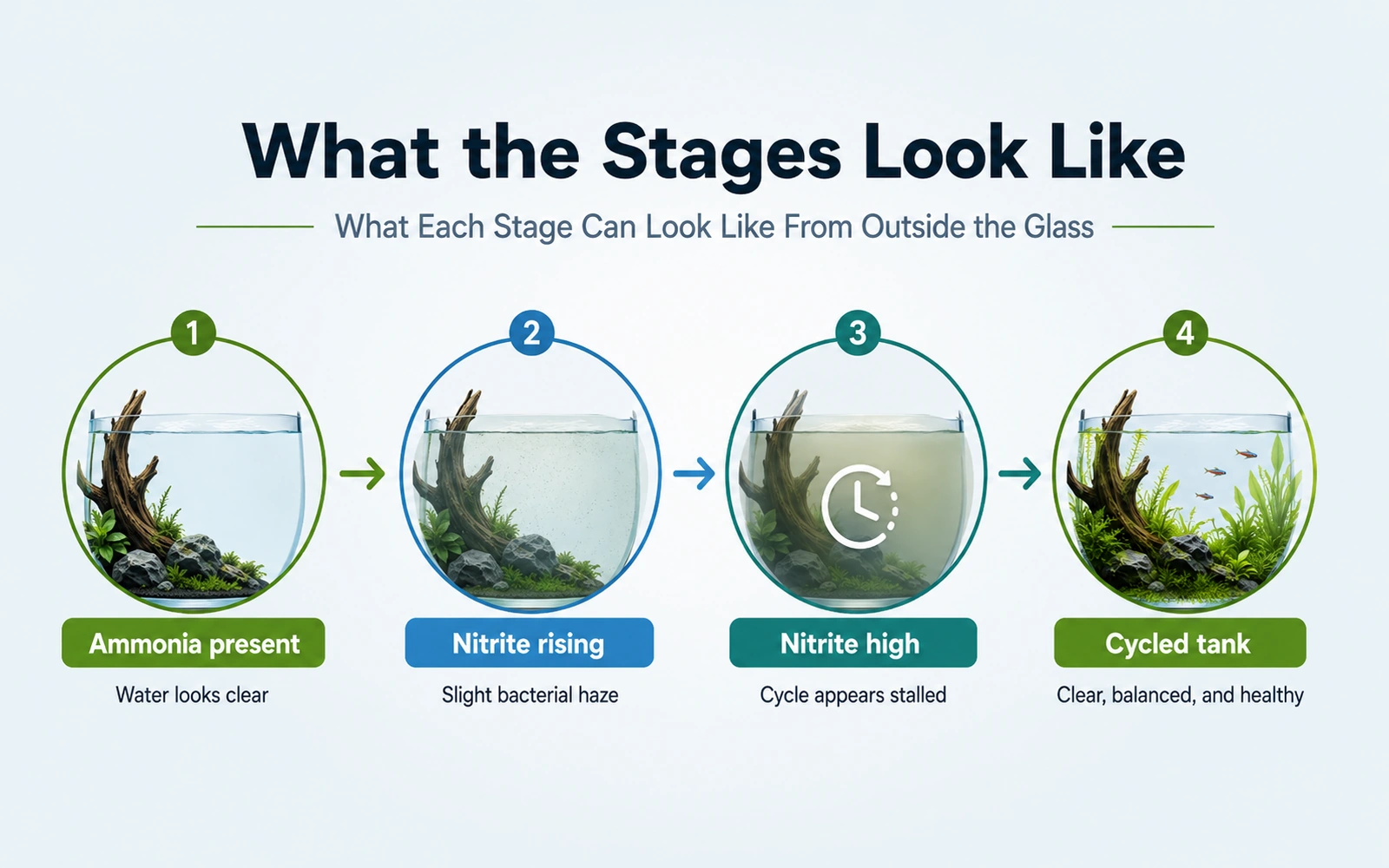
Testing is the only reliable way to know where a tank actually sits in the cycle. What follows is not a substitute for testing; it is a companion to it, describing the kind of indirect signs that sometimes accompany each stage in a new, still-cycling tank. Every tank differs, and any of these signs can also have an unrelated cause, so treat this as context, not diagnosis.
| Cycle stage | What the chemistry is doing | What sometimes accompanies it |
|---|---|---|
| Early (ammonia present, no nitrite yet) | First bacteria colony still small; ammonia builds faster than it is consumed | Water often looks unchanged; little visible difference |
| Ammonia falling, nitrite rising | First bacteria colony established, converting ammonia to nitrite; second colony still small | Some new tanks develop a light bacterial haze as bacterial populations shift; this is not universal |
| Nitrite high, slow to fall | Second bacteria colony still catching up; nitrite accumulates because it is consumed slower than it is produced | This stage often runs longest and can feel like nothing is progressing |
| Both zero, nitrate present | Both bacteria colonies established and keeping pace with the ammonia source | Tank behaves, from the outside, like an established aquarium |
If a fish is already in the tank and showing signs of distress at any of these stages, that is not a moment for troubleshooting the chemistry first. The aquarium emergency help page walks through the calm, immediate steps to take, and anything that reads as ongoing illness rather than a one-off stress event belongs in front of an aquatic veterinarian, not guessed at from a table.
Why This Process Never Actually Stops
It is worth restating plainly: cycling is not something you finish once and then forget. The nitrogen cycle is the permanent biological engine of a healthy tank, running every hour of every day for as long as the tank holds fish. What "finishing" a cycle really means is that the engine is now large enough to keep up with the waste your current stocking produces. Add a lot more fish at once, wipe out the filter media with hot tap water or medication, or let the filter sit unpowered for an extended period, and that same engine can be knocked back down below what your tank needs, producing another temporary ammonia or nitrite spike. Understanding the mechanism, rather than just memorizing "cycle the tank first," is what makes that connection make sense later, when something changes in an already-established aquarium.
FAQ
What is the nitrogen cycle in an aquarium?
The process by which bacteria convert toxic ammonia from fish waste into nitrite, then convert nitrite into much less toxic nitrate. It runs continuously in every stocked tank, not just during the initial startup period.
Why is ammonia toxic to fish?
Ammonia damages gill tissue and disrupts a fish's internal chemistry, and the proportion of the more toxic, un-ionized form rises with higher pH and temperature. That is why the same ammonia reading can be more dangerous in a warm, alkaline tank than a cooler, more acidic one.
Why is nitrite worse than people expect?
Nitrite crosses into the bloodstream and binds to hemoglobin in a way that blocks oxygen transport, so a fish can struggle for oxygen even in well-aerated water. The bacteria that consume nitrite also establish more slowly than the ammonia-consuming bacteria, so nitrite often sits high longer than ammonia did.
Is the nitrogen cycle the same thing as "cycling" a tank?
Related but not identical. The nitrogen cycle is the ongoing chemical process that runs forever in a stocked tank. "Cycling" refers to the one-time startup period before fish arrive, when the bacteria colonies are grown large enough to handle that fish's waste load.
Can an established, already-cycled tank have an ammonia or nitrite spike again?
Yes. Overcleaning the filter media, medications that harm bacteria, or a sudden large increase in stocking can all reduce the working bacteria colony below what the tank needs, producing a temporary spike sometimes called a mini-cycle. The underlying process never stopped; the balance between waste and bacteria did.