Short answer: for most beginner freshwater tanks, changing about 10-25% of the water once a week is a sensible starting point, and a moderately stocked community tank does well around 25-30% weekly. But that number is a starting point, not a rule. The frequency you actually need is set by your nitrate reading and how heavily your tank is stocked, not by a fixed calendar. A lightly stocked, well-planted tank may need less. A goldfish tank or a crowded tank needs more. Test your water, watch the nitrate, and let that number tell you when to change and how much.
I am Hossain, and I built this site because "it depends" is a frustrating answer when you have fish waiting on you. So this guide gives you a place to start, then shows you how to tune the schedule to your own tank instead of guessing.
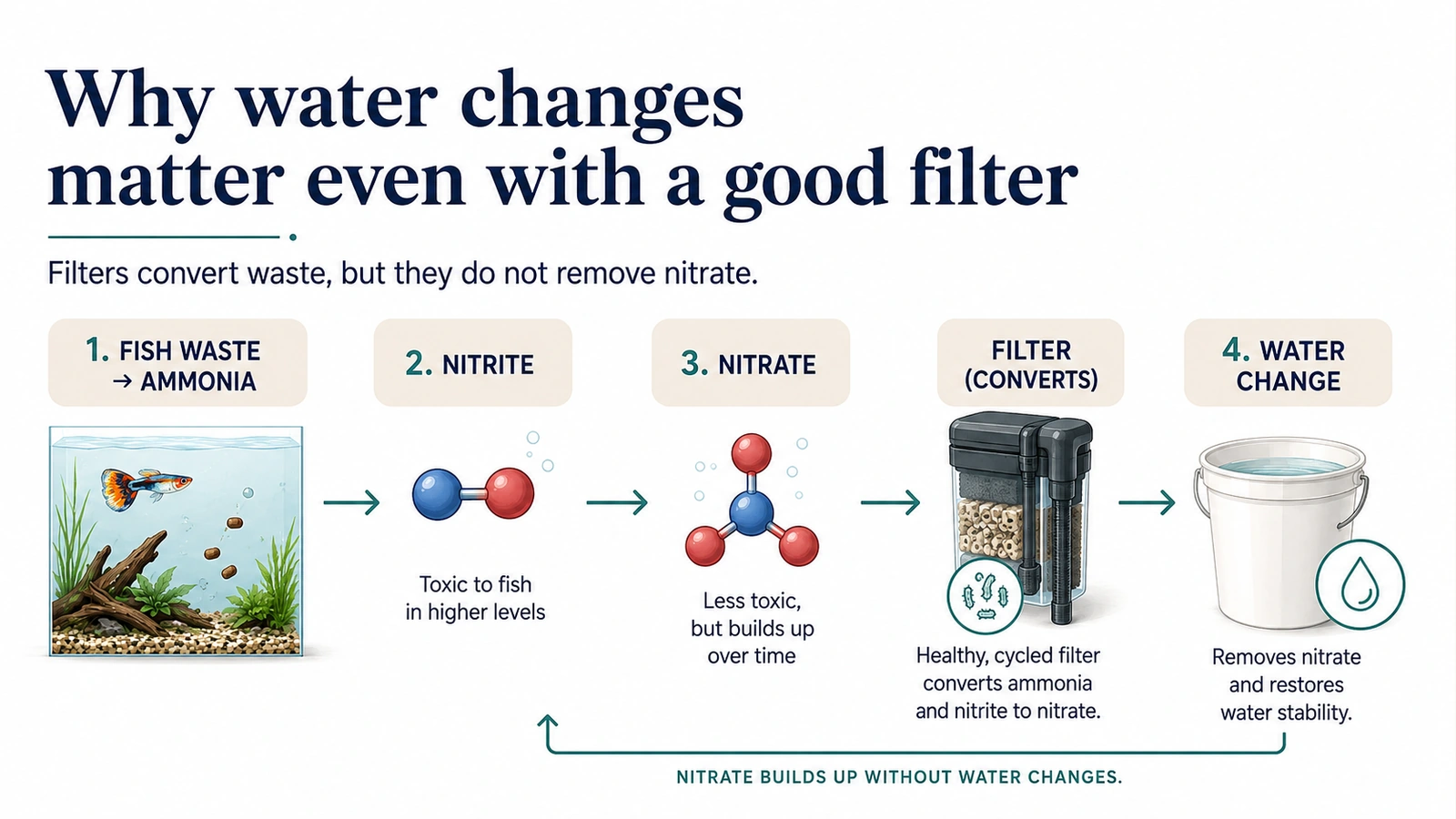
Why water changes matter even with a good filter
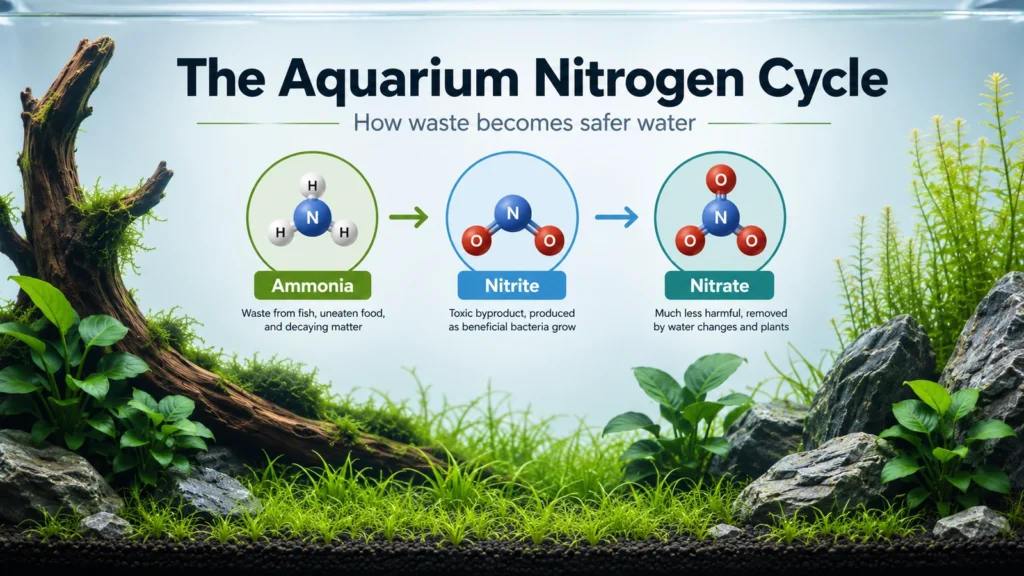
A lot of beginners assume a filter cleans the water, so once it runs, the water must be fine. A filter does one important job well: it grows beneficial bacteria that convert fish waste (ammonia) into nitrite and then into nitrate. Ammonia and nitrite are highly toxic, and a cycled filter keeps them at zero. That part is real, and it is why cycling the tank first matters so much (more on that in how to cycle a new aquarium).
Here is the catch. That process ends at nitrate. Nitrate is far less toxic than ammonia, but it does not disappear. In a normal tank without heavy plant growth, it just keeps building up. Your filter cannot remove it. The only routine way a home aquarist exports nitrate is a water change.
Water changes do a second job too. Over time, fish and evaporation deplete the minerals and buffering capacity in your water, which can let pH drift downward. Fresh dechlorinated water replaces those minerals. So a water change is really two things at once: it takes pollution out, and it puts stability back in. That is why no filter, however good, replaces the bucket.
A sensible starting routine
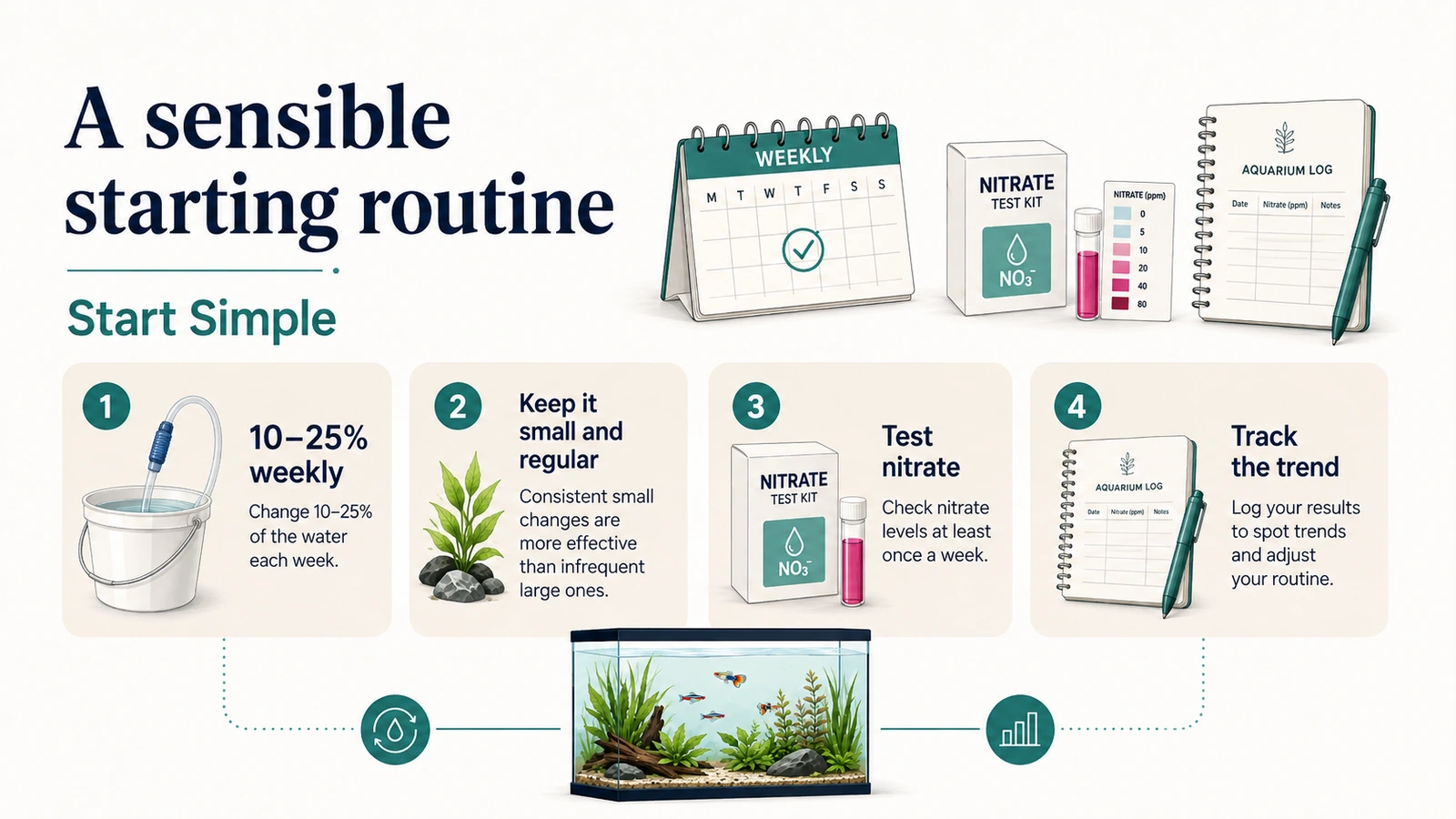
If your tank is cycled and stocked at a normal, unhurried level, start here and adjust from your test results:
- Change about 10-25% of the tank volume once a week.
- Keep it small and regular rather than large and rare. Frequent small changes hold your water chemistry steady, which is easier on fish than a big swing every few weeks.
- Use that first month to learn your tank. Test nitrate before each change and write the number down. Within a few weeks you will see how fast your nitrate climbs, and that pattern is your real schedule.
The goal is not a spotless-looking tank. The goal is stable, low-nitrate water. Many freshwater keepers aim to keep nitrate under roughly 20-40 ppm for typical community fish, and lower is better for sensitive species and fry. Your weekly change is what holds it there.
How stocking, tank size, and plants change the frequency
The same 20 gallons can need wildly different care depending on what lives in it. More fish means more waste, which means nitrate climbs faster, which means more frequent or larger changes. A small tank swings faster than a large one because there is less water to dilute the waste. And live plants actually consume some nitrate as fertilizer, so a heavily planted tank often needs less.
Here are four common beginner setups with a reasonable starting schedule for each. These are illustrative examples to help you find the one closest to your tank, not measurements from specific tanks:
| Example setup | Stocking level | Sensible starting schedule |
|---|---|---|
| 5-gallon betta tank (1 betta) | Light | ~15-25% weekly |
| 10-gallon community tank (small schooling fish) | Moderate | ~25-30% weekly |
| Heavily planted low-tech tank, lightly stocked | Light, plant-heavy | ~10-20% weekly, sometimes every 2 weeks |
| Goldfish tank | Heavy waste producers | ~30-50% weekly |
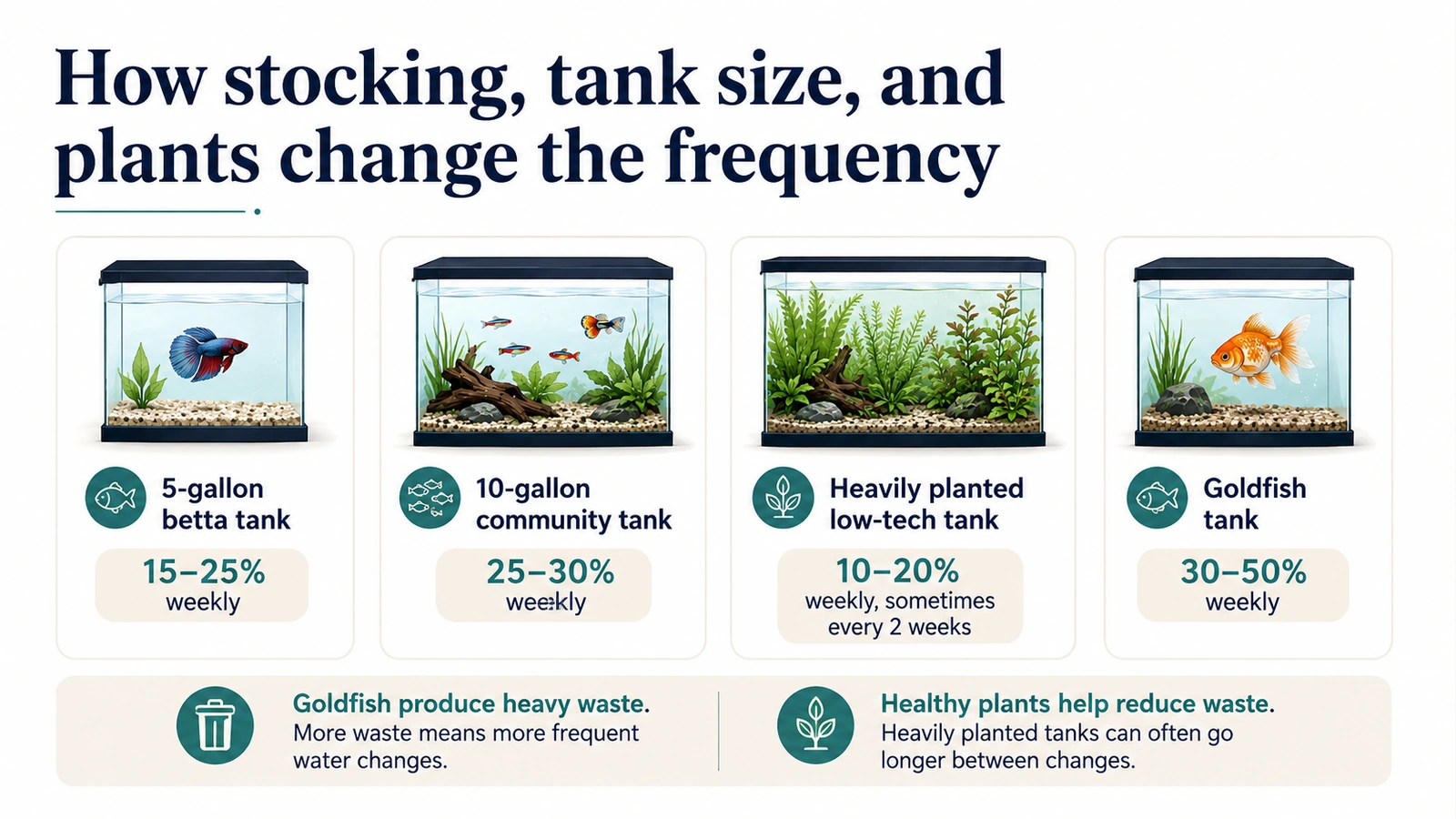
Notice goldfish. They are messy, high-waste fish that are almost always undersized for their tank, so they usually need the most water changed of any beginner setup. If you keep goldfish, plan for more, not less.
Let your nitrate test set the schedule
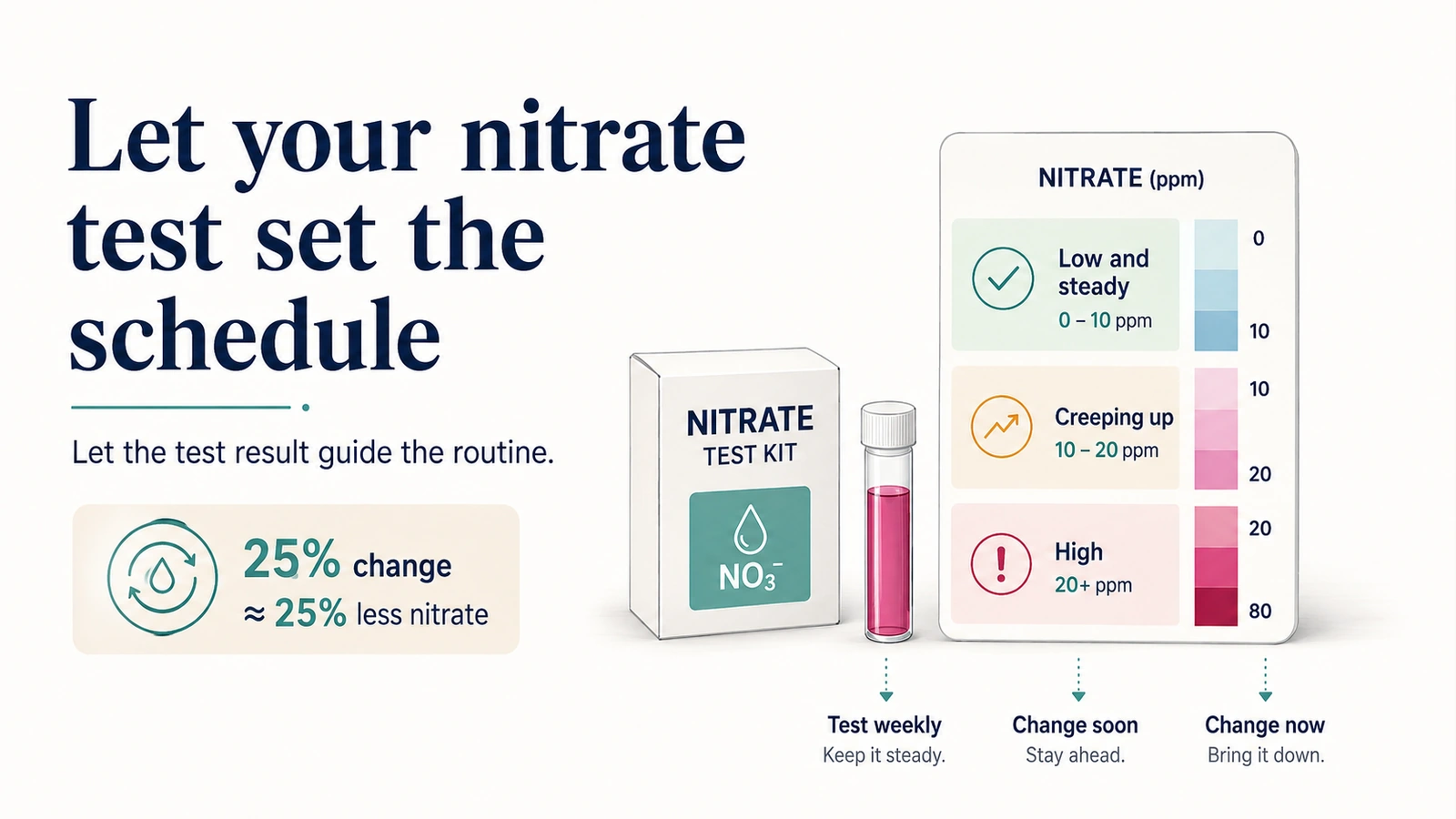
This is the part most guides skip, and it is the single most useful habit you can build. Instead of trusting a number from the internet, let your own nitrate reading tell you what your tank needs. A liquid nitrate test kit is inexpensive and far more reliable than test strips for this. If you want to understand what each reading means, I go deeper in the aquarium water parameters guide.
The logic is simple. The percentage of water you change roughly equals the percentage of nitrate you remove. Change 25% of the water and you lower nitrate by about 25%. So once you know your target and your current reading, the math almost does itself:
- Test nitrate at the same time each week, before you change any water.
- If nitrate is comfortably low and holding steady, your current routine is working. You may even be able to stretch to every other week.
- If nitrate keeps creeping up week after week, your changes are not keeping pace. Increase the percentage or the frequency until the reading holds steady.
- If nitrate is high, bring it down over two or three moderate changes rather than one huge one (more on why below).
After a month of this, you stop guessing. You are no longer asking how often should you change aquarium water in general. You know how often your tank needs it, because your test kit told you.
How to do a water change without stressing your fish
The change itself is simple, but a few steps protect your fish. Skip them and a routine change can do more harm than the old water would have.
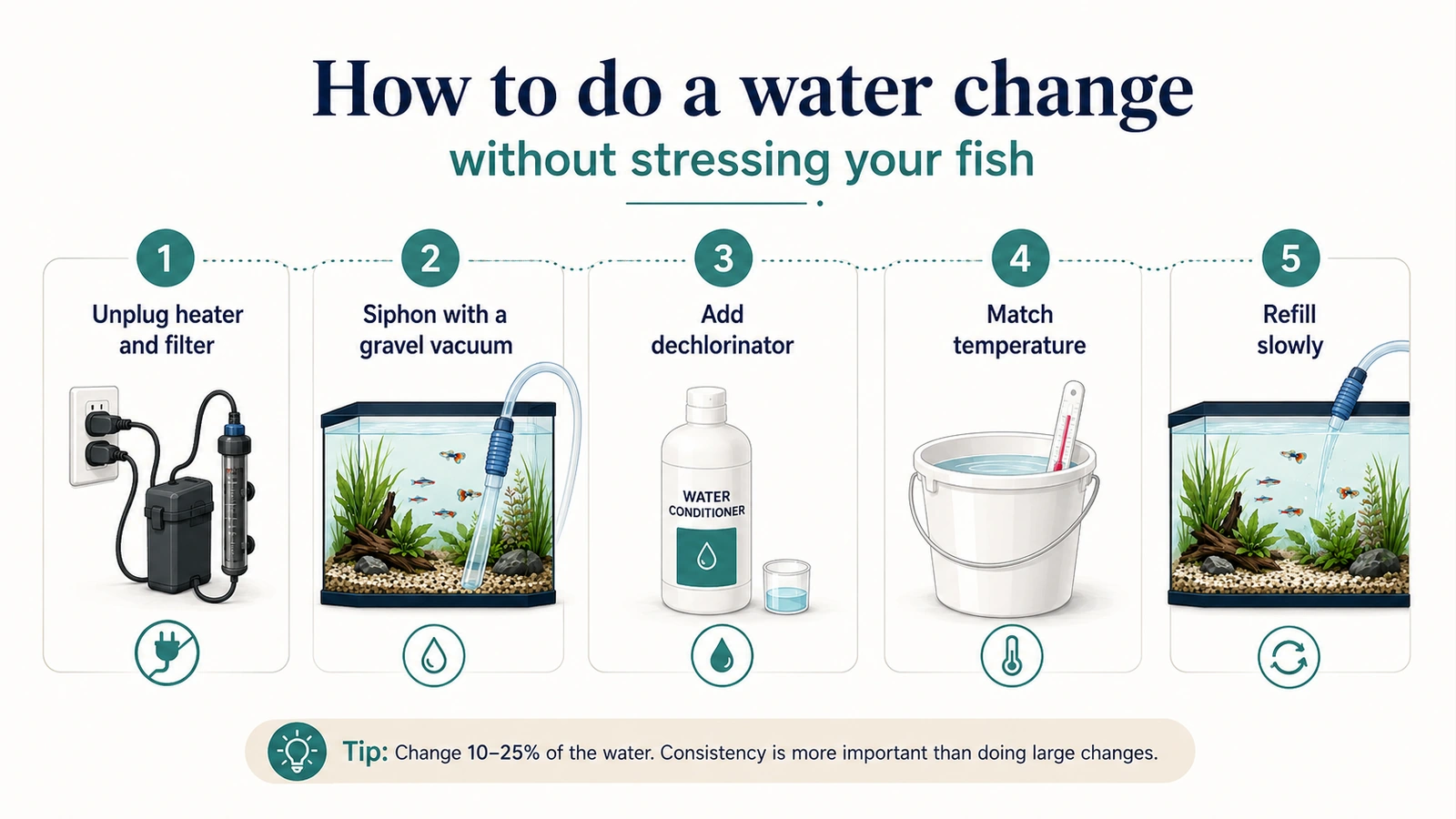
- Unplug the heater and filter so they do not run dry as the water level drops.
- Siphon water out with a gravel vacuum. Push the vacuum into the substrate to pull out the trapped waste as you remove water. Vacuum only about a third to half of the gravel each time so you do not strip out too much of the beneficial bacteria that lives in it.
- Prepare the new water. Fill a clean bucket with tap water and add a dechlorinator (water conditioner). This step is not optional. Chlorine and chloramine in tap water can harm or kill fish and damage your filter bacteria within hours, so treat every bucket before it goes in.
- Match the temperature. Get the new water close to your tank temperature, within a couple of degrees. Pouring in noticeably colder or warmer water shocks fish and can trigger stress or illness. A cheap thermometer settles it.
- Refill slowly, then plug the heater and filter back in.
That is the whole routine. Once it is a habit it takes ten to fifteen minutes on a small tank. If you are still assembling your gear, the first aquarium setup checklist covers the siphon, conditioner, and thermometer you will want on hand.
The honest part: mistakes that quietly make water quality worse
Most articles stop at the schedule. Here are the things that trip up beginners, stated plainly.
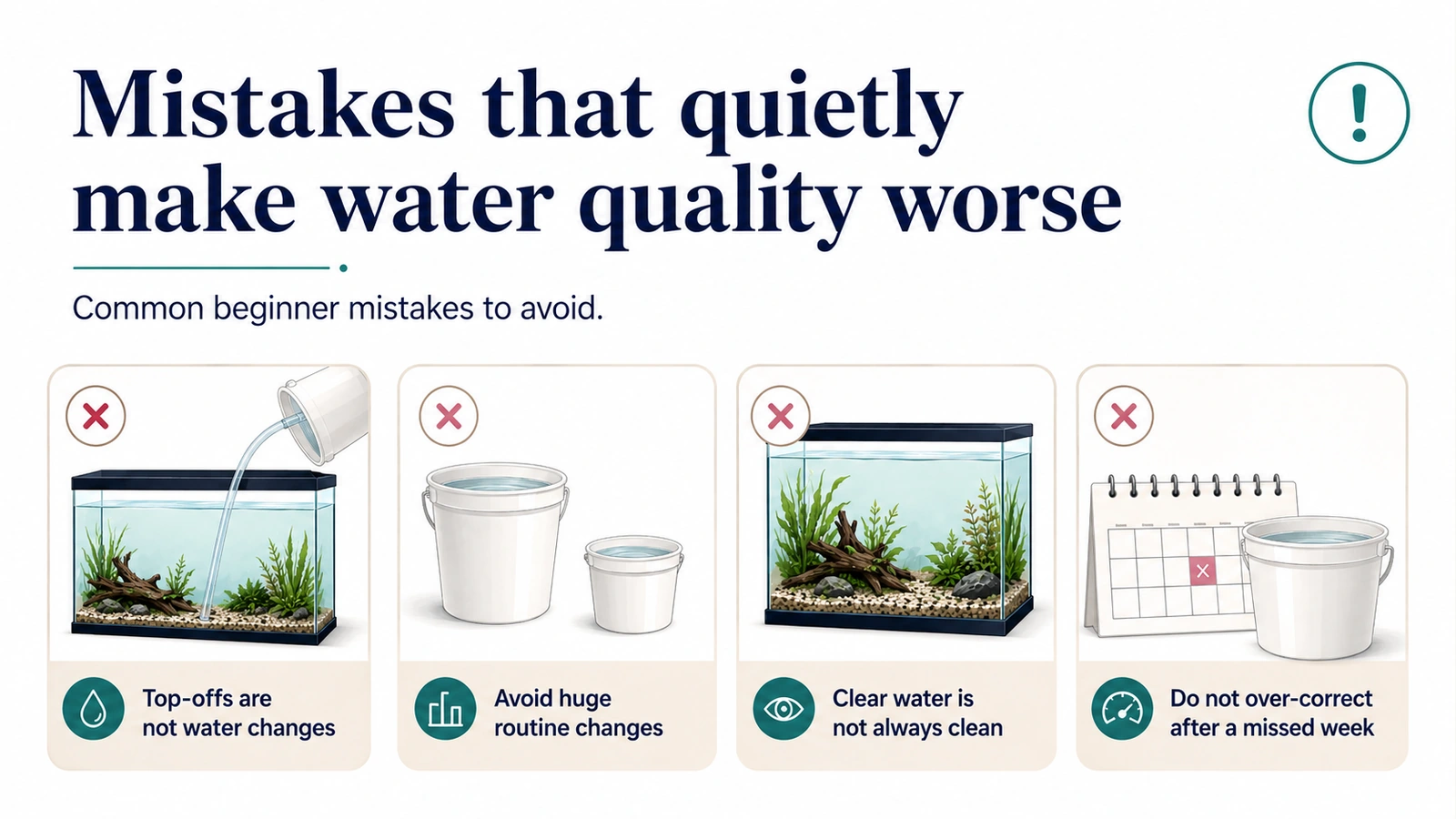
Topping off evaporated water is not a water change. When water evaporates, only the water leaves. The nitrate, minerals, and waste stay behind and become more concentrated. If you only ever top off, your nitrate keeps climbing even though the tank looks full. Use top-offs to hold the water level between changes, but never let them replace the actual change.
Big, sudden changes can shock fish. It feels logical that if 25% is good, 90% must be better. It is not, for routine care. A very large change swaps out too much of the established water chemistry at once, and the sudden swing in temperature, pH, and hardness stresses fish more than slightly high nitrate would. As a general rule, keep routine changes at or below about 50%. Larger emergency changes have their place when something is genuinely wrong, and our aquarium emergency help page walks through those situations, but they are the exception, not the routine.
Clear water is not the same as clean water. Nitrate is invisible. Water can be crystal clear and still be climbing toward levels that stress your fish. Judge water quality by your test kit, not by how the tank looks. This is exactly why the nitrate habit above matters more than any schedule I could hand you.
Skipping weeks and then over-correcting. If life gets busy and you miss a change, do not respond with one massive change to "catch up." That is just a big sudden swing by another name. Do a normal change, then another in a couple of days, and bring things back gradually.
FAQ
How much water should I change in my fish tank?
For most beginner tanks, about 10-25% per week is a sensible default, and a moderately stocked community tank does well at 25-30% weekly. Adjust up or down based on your nitrate reading and stocking level.
Can I change 100% of the aquarium water at once?
Avoid it for routine maintenance. A full change swaps out too much established water chemistry at once and shocks fish. Keep routine changes at or below roughly 50%, and lower high nitrate over several moderate changes instead.
Do I still need water changes if I have live plants?
Usually yes, just less often. Plants consume some nitrate, so a heavily planted, lightly stocked tank may need smaller or less frequent changes. Keep testing nitrate to confirm your plants are actually keeping up.
Do I have to use a dechlorinator every time?
Yes, if you use tap water. Chlorine and chloramine can harm fish and your filter bacteria within hours, so treat every bucket of new water with a conditioner before it enters the tank.
What nitrate level means I should change water more often?
If your nitrate reading climbs week after week instead of holding steady, your current changes are not keeping pace. Many keepers aim to hold nitrate under roughly 20-40 ppm for community fish, so if yours drifts above your target, increase the size or frequency of your changes.